
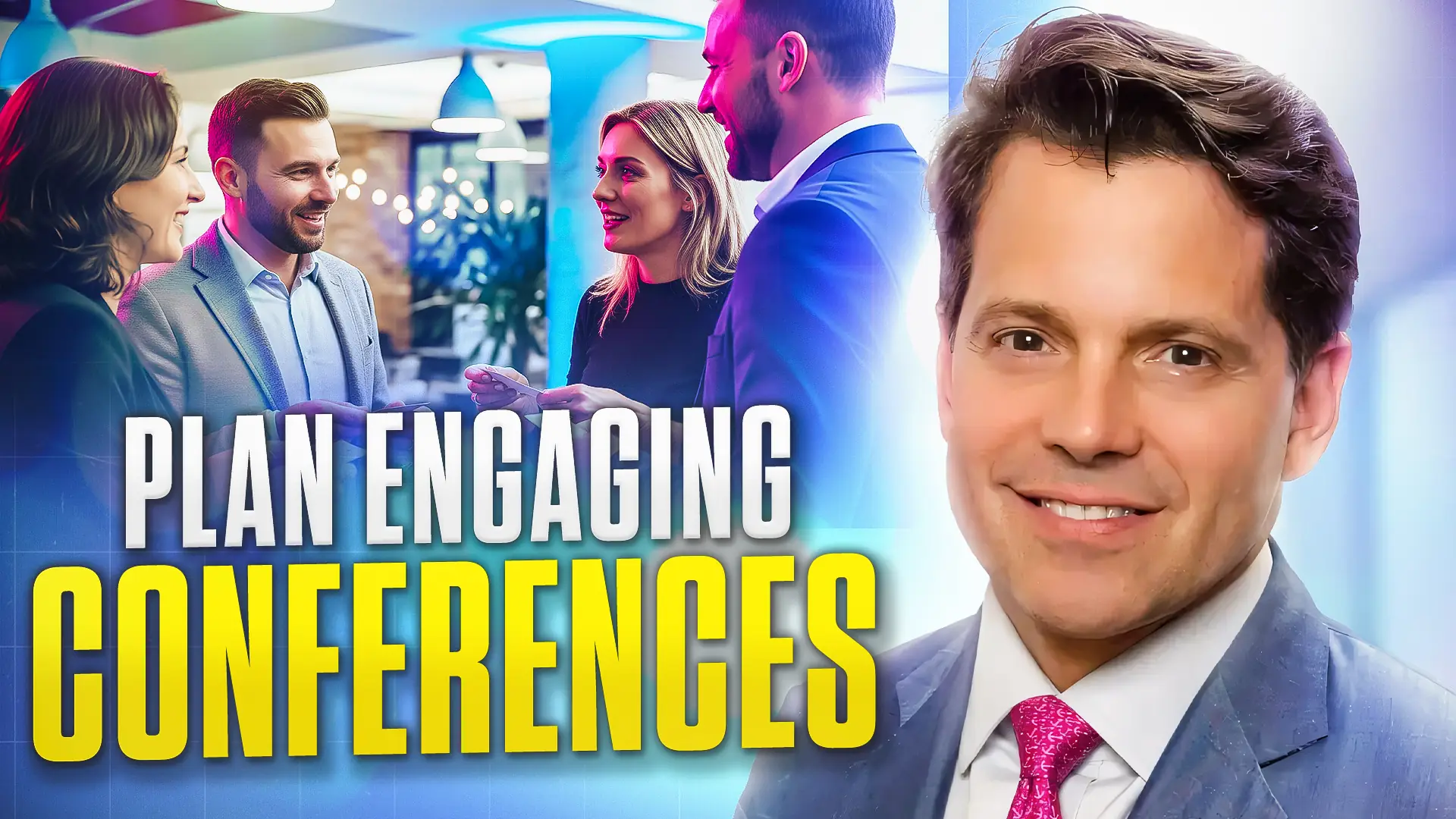
January 23, 2026Events Create Magical Experiences Through Intimate Design Strategy
What happens when you cut your conference attendance by 77% and engagement explodes? Most event planners obsess over bigger venues, higher registration numbers, and more impressive keynote lineups. But Anthony Scaramucci, who's been designing high-level...
What happens when you cut your conference attendance by 77% and engagement explodes? Most event planners obsess over bigger venues, higher registration numbers, and more impressive keynote lineups. But Anthony Scaramucci, who’s been designing high-level investment conferences for 16 years, discovered something that completely contradicts conventional wisdom about events.
I’m going to share a framework that challenges everything you think you know about creating memorable events in our digitally saturated world. Anthony isn’t just some event planner experimenting with formats. He’s the Founder and Co-Managing Partner of SkyBridge Capital, managing billions in global investments. He’s an Ernst & Young “Entrepreneur of the Year” winner, a former White House Communications Director, and the author of three books. For nearly two decades, he’s brought together CEOs, investors, and thought leaders at conferences where real deals get made and genuine relationships form.
His most radical move? Slashing his flagship conference from 2,200 attendees down to 500. The result wasn’t what most people would expect. Instead of diminished impact, he created events that people talk about all year. Events where attendees block their calendars 12 months in advance because they genuinely don’t want to miss the experience.
🎧 Watch and listen to the full interview about planning engaging events here
Events Fail When They Ignore Our Screen Addiction Problem
Here’s the uncomfortable truth about modern events. We’re all drowning in screens. Six hours a day staring at phones, laptops, and video calls. We’re digitally connected but physically isolated. Anthony noticed this cultural shift was fundamentally changing how people experience events, and it forced him to completely rethink his approach.
“We stare at a black mirror most days, and I would even include this conversation. We’re both looking into a black mirror. And we’re distant from each other.”
This observation drives everything about how he now designs events. Most conference organizers treat their gatherings like information delivery systems. They pack schedules with keynote speakers, panel discussions, and breakout sessions designed to share knowledge. But in a world where we can access any information instantly on our devices, that’s the wrong value proposition for events.
Think about the last conference you attended. You probably sat in a massive ballroom with hundreds or thousands of other people. You listened to speakers on a distant stage. During breaks, you grabbed coffee and made awkward small talk with strangers before rushing to the next session. Maybe you exchanged business cards with a few people. Then you flew home, filed away those cards, and never spoke to most of those people again.
That’s not an event. That’s an expensive substitute for watching videos online. The real opportunity for events in our digital age isn’t competing with screens for information delivery. It’s providing the cure for our screen-addicted culture. It’s creating spaces where genuine human connection happens naturally, where relationships form organically, where deals get done because people actually trust each other.
Events Must Solve for Three Specific Outcomes
Anthony’s philosophy centers on three non-negotiable outcomes that every event must deliver. Attendees need to learn something valuable. They need to connect with people who matter to their business or career. And they need to genuinely enjoy themselves throughout the experience. Most events accidentally optimize for only one of these outcomes while sacrificing the others.
Large-scale events often nail the learning component. They bring in impressive speakers. They cover important topics. They deliver information. But they completely fail at facilitating meaningful connections. When you have thousands of people in a space, authentic networking becomes nearly impossible. Everyone’s rushing between sessions. Conversations stay superficial. People exchange contact information but rarely follow up because they met too many people to remember who was actually relevant.
Smaller events flip this dynamic entirely. When you deliberately limit attendance, you create natural scarcity. People who attend feel like they’re part of something exclusive. They’re more present, more engaged, more willing to invest in conversations because they know everyone in the room represents a carefully curated group.
Anthony’s approach to designing events around these three outcomes shows up in every detail. The learning doesn’t just come from staged presentations. It emerges from conversations over dinner, from impromptu discussions in hallways, from the collision of different perspectives in intimate settings. The connections happen because there’s time and space for them. The enjoyment comes from removing the stress and pressure that typically defines large conferences.
Events Should Deliberately Protect Intimacy and Trust
Here’s where most event organizers get it wrong. They fill their events with aggressive vendors who chase high-value attendees around the room. They create sponsor tiers that give certain companies permission to interrupt conversations and harvest contact information. They optimize for short-term revenue from exhibitors instead of long-term value for attendees.
“I want to create a conference where the people are there and interested in meeting the other people there. So think about that.”
This statement reveals Anthony’s core strategy for events. Every single person in the room should want to meet every other person. That’s impossible at events with thousands of attendees. But it’s absolutely achievable at events with 500 carefully selected participants.
Think about how this changes the attendee experience. You walk into a conference knowing that everyone there was specifically chosen because they belong in the conversation. You’re not wasting time filtering through random people hoping to find someone relevant. You’re not dodging aggressive sales pitches from vendors who paid for booth space. You’re not competing with thousands of others for access to the speakers and influential attendees.
Instead, you’re in a space designed for meaningful interaction. The venue itself encourages connection rather than anonymity. The schedule includes actual time for conversations instead of back-to-back sessions that exhaust everyone. The ratio of attendees to speakers creates opportunities for real dialogue instead of one-way presentations.
This intimacy creates trust. When people feel like they’re part of a curated community rather than a massive crowd, they open up differently. They share real challenges instead of polished talking points. They admit what they don’t know instead of pretending to have all the answers. They explore potential partnerships instead of collecting business cards they’ll never use.
Events Need Smaller Venues That Force Real Connection
The physical environment shapes everything about how people experience events. Anthony deliberately chooses smaller, more intimate venues even though he could easily fill larger spaces. This isn’t about cost savings. It’s about forcing real human connection in a world where we’ve forgotten how to connect without screens mediating our interactions.
Large hotel ballrooms create anonymity. When you can disappear into a crowd, most people do exactly that. They find their comfort zone, stick with people they already know, and avoid the mild discomfort of introducing themselves to strangers. The physical space enables avoidance, so people avoid.
Smaller venues make avoidance impossible in the best possible way. When you’re in a room with 500 people instead of 2,200, you can’t hide in the back. You can’t skip the networking reception without it being obvious. You can’t avoid talking to people because the space naturally brings you together.
This forced proximity sounds uncomfortable, but it’s actually liberating. At massive events, there’s social pressure to constantly network, to collect contacts, to maximize your return on investment by meeting as many people as possible. The paradox is that this pressure prevents genuine connection. You’re always thinking about the next conversation instead of being present in the current one.
At more intimate events designed around connection, that pressure disappears. You don’t need to frantically collect contacts because you’ll naturally meet everyone who matters over the course of the gathering. You can have longer conversations because there’s time built into the schedule. You can follow up on interesting ideas because you’ll likely see that person again at dinner or during a break.
Events Fail When Organizers Prioritize Headcount Over Experience
The traditional metrics for measuring successful events are fundamentally broken. Most organizers obsess over registration numbers, total attendance, and year-over-year growth. They measure success by how many people showed up, how many sponsors they secured, and how much revenue they generated. These metrics optimize for the wrong outcomes.
Anthony’s approach to evaluating events focuses on completely different indicators. Do attendees come back year after year? Do meaningful business relationships form at the gathering? Do people talk about the event months later? Do deals get done because people met and built trust at the conference? These are the metrics that actually matter for events designed around connection and impact.
This shift in how you measure success completely changes how you design events. When you’re optimizing for headcount, you focus on attracting as many registrations as possible. You build bigger. You discount tickets to fill seats. You accept anyone who can pay. The inevitable result is a degraded experience where the event feels impersonal and transactional.
When you’re optimizing for experience and impact, you make radically different choices. You limit attendance to maintain quality. You curate attendees to ensure everyone belongs in the conversation. You charge premium prices because you’re delivering premium value. You create scarcity that makes people want to attend rather than discounting your way to full capacity.
The leadership lesson here extends far beyond event planning. In any domain, what you measure determines what you optimize for. If you measure the wrong things, you’ll make decisions that undermine your actual goals. Events optimized for headcount naturally sacrifice intimacy. Organizations optimized for quarterly earnings naturally sacrifice long-term innovation. Teams optimized for activity naturally sacrifice meaningful outcomes.
Events Create Value Through Careful Curation of Attendees
The single most important factor determining whether events succeed or fail isn’t the venue, the speakers, or the agenda. It’s who attends. Anthony’s most powerful insight about events centers on this reality. When you get the right people in the room together, magic happens naturally. When you fail to curate carefully, no amount of production value can compensate.
Most events use a transactional approach to attendees. Anyone who registers and pays gets access. This seems fair and inclusive, but it destroys the very thing that makes events valuable. When attendees include everyone from serious buyers to casual browsers, from industry leaders to complete beginners, from people ready to engage to people just looking for free content, you can’t optimize the experience for anyone.
Think about how this plays out practically. Imagine you’re designing a session on advanced investment strategy. If your attendees include complete beginners, you need to explain basic concepts. But that bores your sophisticated investors, so they check their phones or leave the room. If you optimize for the advanced audience, the beginners feel lost and frustrated. You can’t serve both groups simultaneously without disappointing both.
Careful curation solves this problem. When you ensure everyone attending has a baseline level of expertise, experience, and investment in the topic, you can design much more valuable programming. Speakers can skip the basics and dive into nuanced challenges. Conversations can start from shared understanding rather than getting stuck on definitions. Connections form more easily because people share common context.
This curation extends beyond expertise level to include mindset and intention. Events designed for genuine connection need attendees who actually want to connect. That sounds obvious, but most conferences attract a mix of people seeking different outcomes. Some want to learn. Others want to sell. Some want to network authentically. Others want to collect leads. These competing intentions create friction that undermines the experience for everyone.
Events Must Embrace Exclusivity to Deliver Inclusivity
Here’s a paradox that makes many event organizers uncomfortable. To create genuinely inclusive environments where everyone feels they belong, you must be exclusive about who attends. This seems contradictory, but it’s essential for events focused on meaningful connection.
Inclusivity doesn’t mean letting everyone in. It means creating spaces where the people who do attend feel genuinely welcomed, valued, and able to participate fully. At massive events open to anyone, most attendees feel like outsiders. They don’t know anyone. They’re not sure they belong. They’re intimidated by the crowd and the scale. The supposed inclusivity of accepting all registrants actually creates an exclusive experience where only the most aggressive networkers feel comfortable.
Smaller, curated events flip this dynamic. When you’re selective about attendees, you can design environments where everyone belongs. You can facilitate introductions. You can create shared contexts. You can build communities instead of crowds. The exclusivity of the selection process creates the foundation for genuine inclusivity once people arrive.
Anthony’s work in communication and thought leadership informs how he thinks about this balance. In both domains, impact comes from clarity about audience. When you try to speak to everyone, you connect with no one. When you get specific about who you’re serving, you can deliver messages and experiences that truly resonate.
The same principle applies to events. When you’re clear about who benefits most from attending, you can deliver extraordinary value to that specific audience. When you try to serve everyone, you end up delivering generic experiences that disappoint most participants.
Events Should Treat Every Detail as Communication Strategy
Everything at your event communicates something to attendees. The venue choice signals whether you value intimacy or scale. The catering decisions indicate whether you respect people’s time and preferences. The schedule structure reveals whether you prioritize content delivery or connection. The registration process shows whether you view attendees as community members or transactions.
Anthony approaches events with the same attention to messaging that he brings to his work in politics and entrepreneurial ventures. Every decision is intentional. Every detail reinforces the core promise of the experience. Nothing happens by default or because “that’s how we’ve always done it.”
This level of intentionality shows up in surprising places. The way name badges are designed affects how people introduce themselves. The seating arrangements at meals determine which conversations happen. The ratio of structured programming to open time signals what you value. The presence or absence of vendor booths communicates whether you’re optimizing for attendee experience or sponsor revenue.
Most event organizers make these decisions unconsciously or based on industry conventions. They use standard hotel layouts because that’s what’s available. They fill schedules with back-to-back sessions because content feels productive. They allow aggressive sponsorship because revenue funds the event. Each decision makes logical sense in isolation but collectively creates experiences that fail to deliver on the promise of connection.
When you treat every detail as strategic communication, you make different choices. You might rent a smaller venue even if it costs more per square foot because the intimacy is worth the premium. You might build significant unstructured time into the schedule even though it feels risky because that’s where real connections form. You might turn down lucrative sponsorships that would compromise the attendee experience.
Events Reflect the Financial Sophistication of Their Design
Anthony’s background managing billions in global investments through SkyBridge Capital shapes how he thinks about the finances of events. Most organizers approach event economics with a simple formula: maximize revenue from registrations and sponsorships while minimizing costs for venue, catering, and production.
This approach optimizes for short-term profit but destroys long-term value. When you’re constantly cutting costs and maximizing immediate revenue, you inevitably degrade the experience. You end up with overcrowded events in suboptimal venues with mediocre catering and aggressive sponsor activations. Attendees notice. They start seeing your event as a revenue extraction mechanism rather than a valuable community gathering.
Sophisticated event economics work differently. You invest in creating extraordinary experiences that attendees genuinely value. You charge prices that reflect that value. You limit attendance to maintain quality. You’re selective about sponsors to protect the experience. You optimize for long-term attendee loyalty and word-of-mouth growth rather than short-term revenue maximization.
This financial strategy requires confidence and patience. You might generate less revenue in year one because you’re limiting attendance and being selective about sponsors. But by year three or five, you’ve built something far more valuable than a large conference. You’ve created a community that people fight to join, where the exclusivity drives demand, where attendees gladly pay premium prices because the experience delivers exponential returns.
The economy of events mirrors broader economic principles. Scarcity creates value. Quality commands premium pricing. Community generates network effects. When you understand these dynamics, you design events that become more valuable over time rather than commoditizing themselves through growth.
Events Should Solve for Connection in Our Digital World
We’ve reached a point where digital tools can deliver information more efficiently than physical gatherings. You can watch keynote presentations on YouTube. You can read summaries of panel discussions online. You can access research and insights without traveling to conferences. The information delivery function that traditionally justified events has been disrupted.
This disruption forces us to rediscover the real value of in-person gatherings. Events aren’t about information anymore. They’re about connection in a world where genuine connection has become increasingly rare. They’re about building trust in environments where trust forms through shared experience rather than digital profiles. They’re about creating communities that persist beyond the two or three days when everyone’s physically together.
Anthony’s framework for events directly addresses this shift. He’s not trying to compete with digital information delivery. He’s creating antidotes to our screen-saturated existence. His events deliberately strip away the digital mediation that defines most of our daily interactions. They force us into the mild discomfort of face-to-face conversation. They create space for the serendipitous connections that can’t happen through LinkedIn messages or Zoom calls.
This positioning makes events more valuable than ever, not less. In a world drowning in digital connection, authentic in-person interaction becomes precious. Events that deliver that experience command premium prices and fierce loyalty. Events that try to compete on information delivery become obsolete.
The strategic insight here extends beyond event planning into how we think about world affairs and global connection. Technology promised to bring us together, but it’s often pushed us apart. We’re more connected digitally and more isolated physically than ever before. The solution isn’t rejecting technology. It’s being intentional about creating spaces where technology takes a back seat to human connection.
Events Work When You Design Against Convention
Everything about Anthony’s approach to events contradicts conventional wisdom. The industry pushes toward bigger, not smaller. Toward more sponsors, not fewer. Toward packed schedules, not generous open time. Toward maximizing revenue per event, not optimizing for long-term community value. His success comes from deliberately designing against these conventions.
This willingness to challenge industry norms reflects the same mindset that made him successful as an entrepreneur and investor. In competitive markets, following convention guarantees mediocrity. Everyone’s doing the same thing, so differentiation becomes impossible. Real value creation comes from identifying what everyone assumes is true and testing whether it actually works.
For events, the dominant assumptions all point toward scale. Bigger events generate more revenue. More attendees create more networking opportunities. Larger sponsor commitments fund better production. Each assumption contains a kernel of truth but misses the larger reality. Scale creates its own problems that undermine the core value proposition of gathering people together.
When you’re willing to question these assumptions, entirely new possibilities emerge. What if smaller events create more valuable networking because every conversation matters? What if limiting sponsors protects attendee experience in ways that drive long-term loyalty? What if generous open time facilitates more learning than packed content schedules?
These questions lead to radically different event designs. Designs that prioritize depth over breadth. Quality over quantity. Community over crowd. Long-term value over short-term revenue. The events that result from this thinking don’t look like typical conferences. They look like carefully curated gatherings where real relationships form and meaningful business happens.
Building Events That People Remember All Year
The ultimate measure of successful events isn’t what happens during the two or three days when everyone’s gathered. It’s what happens in the months afterward. Do attendees still talk about the experience? Do the relationships formed there persist and deepen? Do the ideas explored lead to action? Do people eagerly anticipate next year’s gathering?
Anthony’s approach to designing events optimizes for these long-term outcomes. He’s not trying to create impressive moments that photograph well for social media. He’s building experiences that change how attendees think about their work, their relationships, and their possibilities. Events designed around this goal look fundamentally different from events designed around immediate impact.
You build in reflection time so insights can settle. You create small group conversations where people can explore ideas deeply. You facilitate introductions between specific people who should know each other. You design the arc of the entire event to build momentum toward meaningful outcomes rather than frontloading all the excitement.
This long-term orientation requires patience and confidence. It means accepting that the most valuable moments at your event might not be the most visible ones. A quiet conversation between two attendees during a break might generate more value than your keynote presentation. A connection made over dinner might lead to a partnership that lasts years. The insights someone gains from processing everything they experienced might not crystallize until weeks later.
When you optimize events for these long-tail outcomes, you make different choices about everything from schedule to venue to attendee curation. You’re not designing for the Instagram moment. You’re designing for the year-long impact. You’re building communities that persist long after everyone leaves, sustained by the authentic connections formed when people gathered in person.
That’s the vision Anthony brings to events after 16 years of iteration and refinement. Not conferences. Not networking opportunities. Not information delivery mechanisms. But carefully designed experiences that reconnect us to what matters most in our increasingly digital world: genuine human connection, authentic relationships, and communities built on trust.
Watch the full conversation here
Bring Anthony Scaramucci to your event
Let’s design your next conference together
Connect with us at info@thekeynotecurators.com
Discover More Insights



Get in TouchContact US
Fill out the form so we can best understand your needs.
A representative from The Keynote Curators will reach out to you.
Our Services
Keynote Speakers Topics
© 2026 The Keynote Curators. All Rights Reserved | Terms and Conditions
The Keynote Curators, 8275 South Eastern Avenue, Suite 200, Las Vegas, NV 89123
Local (310) 299-4595 | Toll Free (888) 585-8715 | info@thekeynotecurators.com
The Keynote Curators - Top Keynote Agency, USA.