
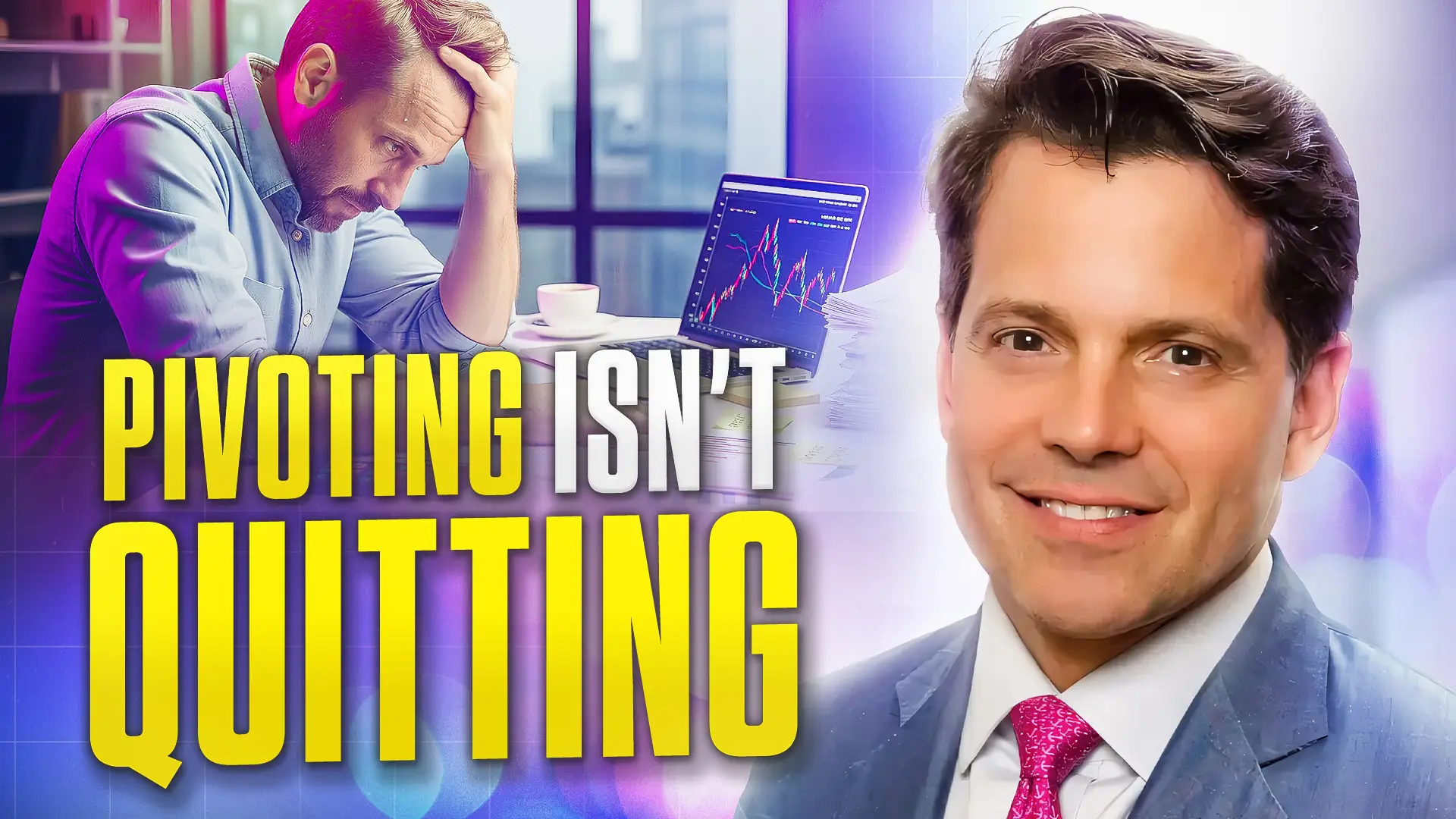
February 2, 2026How Business Leaders Successfully Navigate Constant Market Changes
Most business owners freeze when uncertainty hits. I've watched it happen countless times. The market shifts. Competitors pivot. Economic conditions change overnight. And suddenly, the strategy that worked last quarter feels completely wrong. Keynote speaker...
Most business owners freeze when uncertainty hits. I’ve watched it happen countless times. The market shifts. Competitors pivot. Economic conditions change overnight. And suddenly, the strategy that worked last quarter feels completely wrong.
Keynote speaker Anthony Scaramucci knows this reality better than most. He’s nearly lost everything six different times. The 2008 financial crash. COVID’s brutal 10-day downturn in March 2020. Four other disasters that almost destroyed SkyBridge Capital. His survival wasn’t about perfect predictions or avoiding mistakes—it was about refusing to quit when everyone expected him to walk away.
🎙️ Watch and listen to the full interview about business strategies here
Business Leaders Face Unprecedented Uncertainty in Today’s Market
The economy isn’t behaving the way it used to. Tariffs appear overnight. Supply chains collapse. Consumer behavior shifts in weeks instead of years. Business owners face a level of unpredictability that previous generations never experienced.
I’ve talked to meeting professionals and entrepreneurs who feel paralyzed by this chaos. They’re waiting for stability that isn’t coming. They’re hoping the market will settle so they can make the “right” decision. But Anthony built a multi-billion dollar investment firm by understanding something critical—there is no perfect moment. There’s only the decision to stay in the fight.
The SkyBridge Capital founder spent seven years at Goldman Sachs before co-founding Oscar Capital Management in 1996. He launched SkyBridge in 2005 and has managed billions through multiple recessions, market crashes, and complete industry transformations. Those experiences taught him what actual leadership looks like when everything’s falling apart.
Business Strategy Requires Knowing When to Pivot Without Quitting
Every business owner hits that wall. The moment when everything you built feels like it’s collapsing. Revenue drops. Key clients leave. Your team starts questioning whether the company will survive. That’s when most people quit.
But Anthony learned something crucial through his near-death experiences—pivoting isn’t quitting. Changing your approach doesn’t mean abandoning your mission. When he recognized digital assets and blockchain & cryptocurrency were transforming the investment landscape four or five years ago, he didn’t stubbornly cling to traditional hedge fund strategies. He dialed back aspects of that business and dialed up the crypto side.
That’s not giving up. That’s adaptation. That’s survival. That’s what separates thought leadership from blind stubbornness.
The distinction matters because too many business owners confuse loyalty to a failing strategy with commitment to their company. They think changing course means they failed. They believe admitting a mistake shows weakness. But staying in the fight means being honest about what’s working and what isn’t.
Business Resilience Means Owning Your Mistakes Immediately
In 2008, Anthony made what he calls “some really stupid decisions.” SkyBridge had too much leverage. The firm was positioned completely wrong for the financial crisis. It was a disaster. He almost lost everything he’d built.
Most business leaders try to hide those mistakes. They blame market conditions. They point fingers at competitors. They make excuses about factors outside their control. Anthony did the opposite. He owned it immediately and learned the lessons fast.
The same thing happened in March 2020. He got COVID wrong. He thought it would be like SARS or MERS—a regional health scare that wouldn’t fundamentally change global markets. The last 10 days of March were the worst of his investment career. His hedge fund colleagues who attended the same World Economic Forum presentations made the same mistakes, but that didn’t make it hurt less.
What did he do? He stayed in. He figured out how to adapt. He made things better instead of making excuses. That’s the difference between finances as a concept and financial survival as a practice.
When business leaders own their mistakes immediately, they create space to fix them. They stop wasting time on blame and start investing time in solutions. They turn disasters into data points instead of letting disasters turn into company endings.
Business Success Comes from Studying People Doing Things Right
Humans are mimetic creatures. We learn by copying others. Anthony often reminds people that we’re social organisms who naturally adopt behaviors we observe. If you want to be a great writer, read great writers. If you want to be a great hedge fund manager, study great hedge fund managers. If you want to be a great communication specialist, focus on how the best speakers say things.
This doesn’t mean abandoning your native style. You can’t fake authenticity. But you can pick up techniques, approaches, and strategies that other successful people use and adapt them to your situation.
I get a lot of my good ideas from my peer base. I watch what’s working for other business owners. I pay attention to how they handle crises. I notice the language they use when communicating with teams during uncertainty. Then I take those observations and filter them through my own experience and context.
We’re often a collection of the people we hang out with. That’s not weakness. That’s intelligence. The smartest business leaders actively seek out peers who are doing things right and learn from them without ego getting in the way.
When you’re doing things wrong, talk to people doing things right. They’ll often see the obvious solutions you can’t spot because you’re too close to the problem. They’ll suggest approaches you never considered because they’ve already failed at similar challenges and learned what actually works.
Business Networks Provide Breakthrough Ideas During Crisis
One of the most valuable assets any entrepreneur can build is a strong peer network. Not just contacts or LinkedIn connections—actual relationships with people who understand your industry, respect your judgment, and will tell you the truth when you’re making mistakes.
Anthony leans heavily on his network when SkyBridge faces challenges. He talks to other investors. He compares notes with hedge fund managers. He discusses politics and world affairs with people who understand how policy changes affect markets. Those conversations generate insights he couldn’t develop alone.
Business owners who isolate themselves during tough times make worse decisions than those who actively engage their networks. The isolated ones get stuck in their own thinking patterns. They replay the same failed approaches, hoping for different results. They convince themselves that their situation is unique and nobody else could understand.
Meanwhile, connected business leaders use their networks as sounding boards. They borrow successful strategies and adapt them. They test ideas with trusted peers before implementing them company-wide. They get warned about pitfalls that others already experienced and avoided.
That muscle—the ability to reach out, ask for help, and admit you don’t have all the answers—that’s part of being an effective entrepreneur. It’s not a sign of weakness. It’s a competitive advantage.
Business Adaptation Separates Survivors from Casualties
Toughness isn’t some inspirational poster quote. It’s not about grinding harder or working longer hours. It’s the decision to refuse to stay down. It’s staying in the game long enough to figure out what’s actually working instead of clinging to what used to work.
Every business faces moments when the old playbook stops working. Consumer preferences shift. Technology disrupts entire industries. Economic conditions change the rules of competition. Regulatory environments transform overnight. The question isn’t whether you’ll face these changes—it’s whether you’ll adapt quickly enough to survive them.
Anthony faced that question six times. Each time, he made the choice to adapt rather than abandon. He changed strategies without changing his fundamental mission. He switched tactics while staying true to his core values. He pivoted his approach while refusing to quit on his company.
That’s what business resilience actually looks like. Not perfect execution. Not avoiding mistakes. Just refusing to let failure become permanent. Learning fast. Adapting faster. Never confusing necessary change with defeat.
Business Leaders Must Learn to Distinguish Smart Changes from Giving Up
There’s a critical distinction that every business owner needs to understand. Changing your business model isn’t failure. Switching your go-to-market strategy isn’t quitting. Abandoning a product line that isn’t working isn’t defeat. Those are survival decisions.
Giving up is different. Giving up is walking away when you still have options. Giving up is quitting because it’s hard, not because you’ve exhausted all the probabilities. Giving up is letting temporary setbacks convince you that permanent failure is inevitable.
Anthony has put down plenty of things he was once doing that didn’t work anymore. He’s exited businesses. He’s stopped offering services. He’s walked away from strategies that consumed resources without generating results. But he never walked away from the fight itself.
When business leaders understand this distinction, they make better decisions during crisis moments. They don’t cling to failing approaches out of stubbornness. They don’t quit promising ventures just because they hit temporary obstacles. They evaluate situations clearly and make strategic choices about where to invest energy.
You’ve got to stay in things. You can’t walk away from something just because it’s difficult. But you also can’t be stupid about it. When you’ve exhausted all the probabilities and recognize that a fundamental change is necessary, make the change. Don’t pretend it’s giving up when it’s actually adapting.
Business Survival Depends on Refusing to Make the Same Mistakes Twice
The 2008 crisis taught Anthony about leverage. He made stupid decisions. He positioned SkyBridge wrong. He almost lost everything. But he learned from it. When similar situations appeared in later market cycles, he recognized the patterns and avoided repeating those mistakes.
The COVID downturn in March 2020 taught him about pandemic risk. He got it wrong initially. He listened to experts who were also wrong. The worst 10 days of his investment career resulted. But he didn’t make excuses. He adjusted his thinking about global health risks and how they affect markets.
Every disaster teaches business leaders something valuable if they’re willing to learn. The question is whether you’ll actually apply those lessons or just collect war stories to tell at conferences.
Smart business owners build institutional memory around their failures. They document what went wrong. They analyze why their assumptions were incorrect. They create systems to prevent repeating the same mistakes. They turn painful experiences into competitive advantages.
That’s how you stay in the fight across multiple recessions, market crashes, and industry transformations. Not by avoiding failure. Not by pretending mistakes didn’t happen. By learning faster than your competitors and refusing to make the same error twice.
Whether you’re switching industries, redesigning your business model, or just trying to survive this quarter, the pattern stays the same. Learn fast. Adapt faster. Never confuse change with defeat. Stay in things long enough to figure out what’s actually working.
That’s what separates business leaders who thrive through uncertainty from those who become casualties of it.
🔥 Watch the complete interview here
💡 Book Anthony Scaramucci to inspire your team
📅 Need a resilience strategy session? Schedule here
📧 Let’s talk: info@thekeynotecurators.com
Discover More Insights





Get in TouchContact US
Fill out the form so we can best understand your needs.
A representative from The Keynote Curators will reach out to you.