
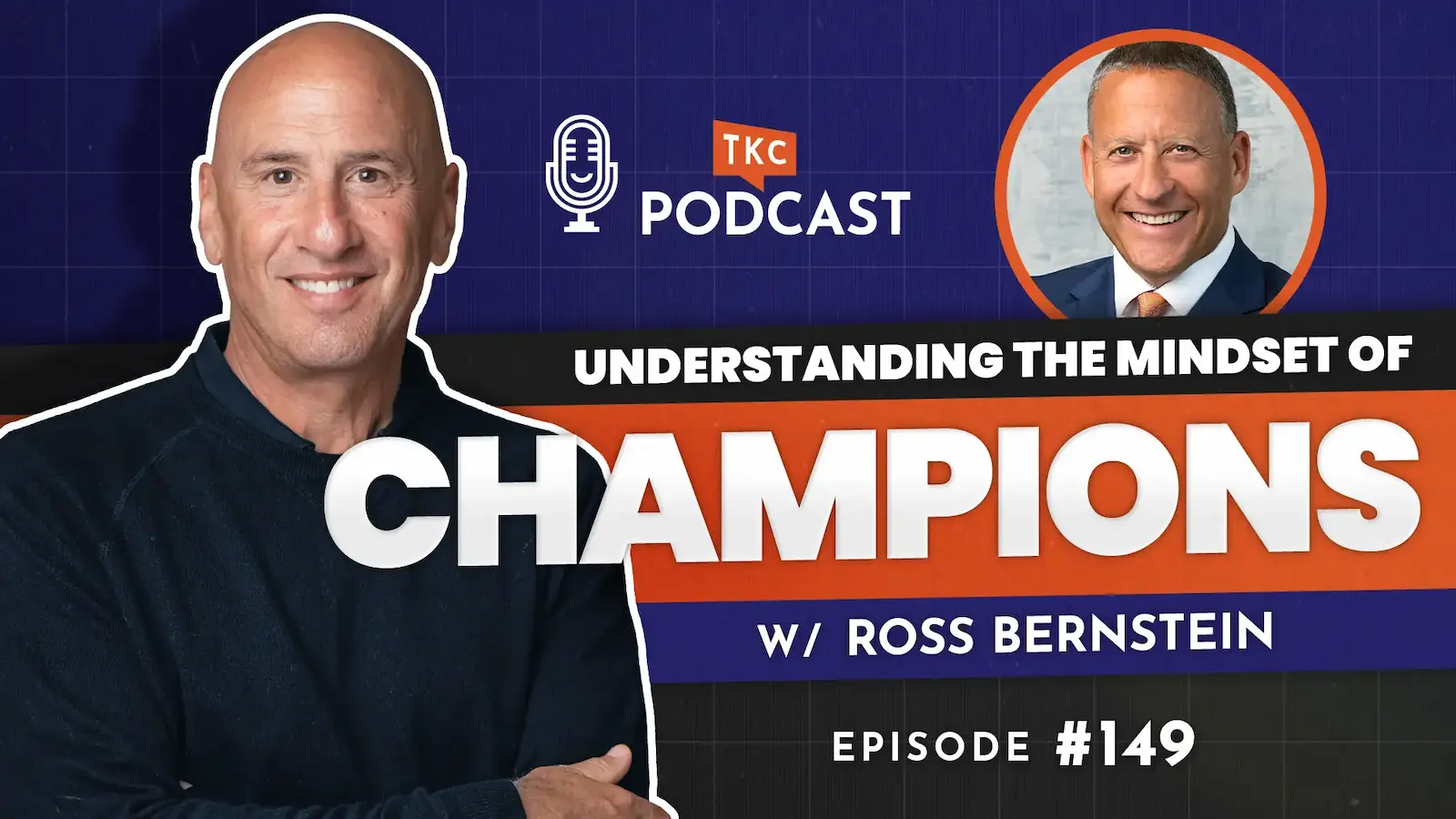
December 18, 2025Insights from Ross Bernstein on What Champions Do When Nobody’s Watching
Learn how champions think differently and build winning habits that transform teams from talented to unstoppable with peak performance speaker Ross Bernstein.
Why Your Team Stays Talented Instead of Becoming Champions
What separates a talented team from a championship team? It’s rarely the highlight reel moments you see on stage or in quarterly reports. Instead, it’s the unsexy, repetitive habits that happen when nobody’s watching. Peak performance keynote speaker Ross Bernstein has spent 25 years studying exactly this question, interviewing thousands of professional athletes and dissecting the DNA of championship teams across all major sports. Additionally, he’s translated those locker-room lessons into actionable frameworks that business teams, sales groups, and event professionals can implement immediately.
Most organizations understand talent. They hire smart people, invest in training, and set ambitious goals. Yet many still plateau at “good enough.” Ross discovered that champions operate on a completely different frequency, one built on boring consistency, uncomfortable feedback, and small decisions that compound over time. His program, “The Champion’s Code,” doesn’t just celebrate winning—it examines what builds sustainable excellence through integrity, accountability, and the willingness to do what others won’t.
For meeting professionals and event planners programming keynotes around performance, leadership, or team culture, Ross offers something rare: real stories from behind the trophies combined with practical plays your audience can run on Monday morning. This isn’t motivational fluff; it’s the actual methodology that turns rosters into dynasties.
? Watch and listen to the podcast episode: YouTube • Spotify • Apple Podcasts • Amazon Music
The DNA of Championship Teams Goes Beyond Talent
When Ross Bernstein walks into locker rooms, dugouts, and press boxes across Minnesota—home to the Vikings, Twins, Timberwolves, Wild, and Gophers—he’s not looking for highlight stats. He’s studying the invisible architecture of winning cultures. Through decades of access to elite performance athletes, Ross identified patterns that successful teams share, patterns that have nothing to do with raw talent.
Championship teams build what Ross calls “relentless pursuit of greatness.” This isn’t about working harder; it’s about working with intentionality on the details everyone else ignores. For instance, Tom Brady became legendary not just for his arm, but for his obsessive preparation, his willingness to watch film longer than anyone else, and his ability to stay humble despite success. Similarly, Magic Johnson’s greatness came from making everyone around him better, not just racking up personal stats.
Ross explains that business leadership teams can adopt this same mindset by focusing on three core elements: servant leadership, creating cultures of excellence, and developing deeper relationships. The best companies separate themselves from competitors not through flashy campaigns but through consistent execution of fundamentals. They treat customer service as a competitive advantage, not a cost center. They hold each other accountable without destroying morale.
During his keynotes at over 100 conferences per year—from Fortune 500 sales groups to large association events—Ross shares the “Good to Great” concept applied to sports. Certain teams win consistently while others don’t, and the reasons are measurable. It comes down to whether leaders prioritize ego or team success, whether they create psychological safety for feedback, and whether they reward the right behaviors even when nobody’s watching.
Building Boring Habits That Separate Contenders from Champions
Champions don’t rely on inspiration; they rely on repetition. Ross Bernstein discovered this truth after interviewing countless athletes who reached the top of their fields. The common denominator wasn’t natural ability—it was their willingness to do mundane, repetitive work that others found too boring or uncomfortable.
Take the 90-10 rule Ross discusses in his presentations. Ninety percent of success comes from showing up consistently and executing fundamentals with precision, while only 10 percent comes from extraordinary moments of brilliance. Most organizations over-index on that 10 percent, constantly chasing breakthrough innovations or game-changing hires, but they neglect the 90 percent that actually determines outcomes. Champions, conversely, make the boring work sacred.
What does this look like in practice? It’s the sales team that reviews call recordings every Friday, not just when numbers drop. It’s the customer experience manager who sends handwritten thank-you notes after every event, not just the big ones. It’s the leadership team that holds weekly accountability check-ins, not just quarterly reviews. These aren’t exciting initiatives, but they compound into cultures where excellence becomes the baseline expectation.
Ross emphasizes that building champion habits requires clarity about what matters most. Elite performers don’t try to be great at everything; they identify their core competencies and double down. For event planners, this might mean perfecting your speaker briefing process, creating airtight timelines, or developing deeper relationships with venues and vendors. The goal isn’t to add more tasks—it’s to make the essential tasks non-negotiable.
Furthermore, champion habits require environmental design. Athletes structure their entire day around performance: nutrition, sleep, recovery, practice. Business teams can do the same by removing friction from high-value activities. If you want your team to provide legendary service, make it easier to over-deliver than to do the minimum. If you want innovation, carve out protected time for experimentation. Champions don’t leave excellence to chance; they engineer it into their systems.
What Tom Brady and Magic Johnson Actually Do in Practice
The posters show Tom Brady hoisting trophies and Magic Johnson flashing his smile. However, sports keynote speaker Ross Bernstein reveals what happens in practice, where championships are actually built. These legends succeeded not because of their highlight moments but because of their daily preparation rituals that most people never see.
Tom Brady’s greatness came from his fanatical attention to detail in film study. While teammates left practice, Brady stayed to analyze defensive schemes, memorize tendencies, and prepare for scenarios that might never happen. He approached football like a chess grandmaster approaches the game—always thinking three moves ahead, always preparing for contingencies. His physical talent was good, but his mental preparation was legendary.
Magic Johnson’s practice habits centered on making everyone around him better. He didn’t just work on his own shot; he studied how to create opportunities for teammates. He learned their preferences, their strengths, their timing. In practice, Magic obsessed over the assists, the passes that led to baskets, the plays that made role players look like stars. This servant leadership approach created championship chemistry that talent alone couldn’t manufacture.
Ross shares these stories not to lionize athletes but to extract transferable principles. Brady’s film study translates to sales teams reviewing customer interactions and competitive intelligence. Magic’s teammate elevation maps perfectly to managers who prioritize developing their people over personal recognition. The specific actions change, but the underlying philosophy remains constant: champions prepare when others rest, and they invest in collective success over individual glory.
During keynotes, Ross uses these authentic behind-the-scenes stories to illustrate that excellence isn’t mysterious. It’s the result of deliberate choices repeated consistently over time. When event audiences hear about Brady staying late to study film, they don’t just feel inspired—they leave with a concrete model for what “extra preparation” looks like in their own context.
The Doorway Metaphor That Reframes Every Setback
One of Ross Bernstein’s most powerful concepts is his “doorway metaphor” for handling failures and obstacles. Instead of viewing setbacks as dead ends, champions see them as doorways—opportunities to walk through and discover what’s on the other side. This simple mental shift transforms how teams respond to challenges, turning potential breaking points into breakthrough moments.
The doorway metaphor works because it removes the finality from failure. When you hit a wall, you have two choices: quit or find the door. Champions automatically search for the door, assuming that growth lives just beyond the current obstacle. Consequently, they approach problems with curiosity rather than defeat. They ask, “What can I learn from this?” instead of “Why is this happening to me?”
Ross applies this framework to real business scenarios during his presentations. A sales team misses quarterly targets—is that a dead end or a doorway to better qualification processes? An event experiences vendor issues—is that a disaster or a doorway to more robust backup planning? A product launch flops—is that a failure or a doorway to deeper customer understanding? The facts don’t change, but the response does.
This reframing matters especially for communication within teams. When leaders model the doorway approach, they create psychological safety for risk-taking and innovation. Team members stop hiding mistakes because they know errors will be treated as data, not reasons for punishment. This openness accelerates learning and improvement across the organization.
Moreover, the doorway metaphor builds resilience. Championship teams don’t avoid adversity—they expect it and prepare for it. They understand that every season brings injuries, slumps, and unexpected challenges. The difference is they’ve trained themselves to immediately look for the opportunity hidden in the obstacle, to find the lesson that makes them stronger.
Turning Feedback Into Fuel Instead of Resentment
Champions view feedback as competitive advantage, not personal attack. Ross Bernstein observed this pattern repeatedly while interviewing elite athletes: the best performers actively seek criticism because they understand it accelerates improvement. Meanwhile, average performers defend their ego and stay stagnant.
The distinction lies in how feedback gets framed. Ross teaches teams to replace “criticism” with “room for improvement.” This linguistic shift might seem trivial, but it changes everything. Criticism feels like judgment; room for improvement feels like opportunity. When a coach tells an athlete “your footwork needs work,” the champion hears “here’s how I can get better,” while the average player hears “you’re not good enough.”
Business teams can adopt this same approach by normalizing feedback as a gift. The best sales teams review lost deals not to assign blame but to extract lessons. The best event planning teams conduct post-mortems after every program, celebrating what worked while honestly examining what didn’t. They’ve created cultures where pointing out gaps feels like helping, not attacking.
Ross emphasizes that receiving feedback well is only half the equation. Delivering feedback with care matters just as much. Championship coaches master the art of critique that motivates rather than deflates. They’re specific about what needs improvement, they connect feedback to shared goals, and they express confidence in the person’s ability to grow. This balance between high standards and genuine support creates environments where people push themselves instead of burning out.
Furthermore, the best teams build feedback loops into their systems. They don’t wait for annual reviews or crisis moments. They create regular touchpoints where honest assessment happens naturally: daily huddles, weekly one-on-ones, project retrospectives. By making feedback frequent and low-stakes, they remove the anxiety and make continuous improvement the norm.
Why Being Coachable Beats Being the Star
In every championship locker room Ross Bernstein has studied, the same truth emerges: humble, coachable players who make others better get more playing time than talented jerks who disrupt chemistry. This principle applies directly to business teams, sales organizations, and event planning crews.
Being coachable means three things. First, it means accepting that you don’t have all the answers. Champions maintain what Ross calls “beginner’s mind”—they approach situations with curiosity even when they’re experts. Tom Brady, despite being the greatest quarterback ever, still listened intently to coaching feedback and adjusted his approach. He never assumed he’d figured it all out.
Second, being coachable means responding positively when challenged. When a coach or manager points out an area for growth, the coachable person says “thank you” and implements changes. The uncoachable person defends, deflects, or ignores. Over time, coaches invest their energy in coachable players because they see returns on that investment. The same dynamic plays out in business—managers develop team members who demonstrate they can absorb and apply guidance.
Third, being coachable means prioritizing team success over personal stats. Magic Johnson exemplified this by measuring his success through assists and team wins rather than personal scoring. He understood that his role was to make everyone around him better, which ultimately made him legendary. Event professionals can adopt this mindset by focusing on overall event impact rather than individual recognition.
Ross points out that organizations often hire for talent but fire for coachability. They bring on brilliant people who refuse to collaborate, accept feedback, or adapt their approach. These “hero ball” players might deliver short-term results, but they poison culture over time. Meanwhile, the humble person who shows up consistently, supports teammates, and implements feedback becomes invaluable.
Love is the common denominator Ross identified across all championship teams. Not romantic love, but genuine care for the craft, for teammates, and for the mission. Champions love what they do enough to endure the boring practice, to accept tough feedback, and to celebrate others’ success. That love sustains them through the grind that breaks less committed people.
Customizing Champion Stories for Your Ballroom Audience
Keynote speaker Ross Bernstein doesn’t deliver generic motivational talks. He spends significant time before each event understanding the audience’s industry, challenges, and goals so he can customize his sports stories to land with maximum relevance.
When Ross speaks to sales teams, he emphasizes the relentless prospecting habits of athletes who make 1,000 free throws daily. When he addresses customer service groups, he highlights how elite athletes study opponents to anticipate needs before they arise. For leadership conferences, he focuses on servant leadership models from coaches like Bill Belichick and Gregg Popovich. The underlying principles remain consistent, but the application changes to match the audience.
This customization extends to his PowerPoint presentations, which feature amazing photos and inspirational sports stories tied directly to ethics, accountability, and doing things the right way. Ross doesn’t just show highlights—he reveals the behind-the-scenes moments that illustrate character, the practices that build excellence, and the decisions that separate winners from also-rans.
Event planners particularly appreciate Ross’s high-energy delivery style, which makes him ideal for opening or closing major conferences. He understands that keynotes need to energize rooms, not just inform them. His presentations balance inspiration with practical takeaways, ensuring attendees leave feeling motivated and equipped with specific actions they can implement immediately.
Ross also brings authenticity that resonates with audiences. As a working media member in Minnesota with access to all the local sports franchises, he shares current stories and fresh insights rather than recycling old anecdotes. He’s in locker rooms and dugouts regularly, giving him ongoing access to new material and maintaining his credibility as someone who truly understands championship cultures.
For meeting professionals programming content around performance, team culture, or leadership development, Ross offers flexibility in topic emphasis. His core program on “The Champion’s Code” can be adjusted to focus more heavily on accountability, integrity, customer service, relationship building, or overcoming obstacles—whatever aligns best with the event’s theme and objectives.
From Locker Rooms to Leadership Teams: Practical Plays for Monday
The ultimate test of any keynote isn’t the standing ovation—it’s whether attendees change their behavior afterward. Ross Bernstein structures his presentations to deliver Monday-morning playbooks, not just Friday-afternoon inspiration. Here are the practical plays teams can implement immediately after experiencing his program.
Start with the 90-10 audit. Have your team list their daily activities, then honestly categorize what percentage goes to fundamentals versus chasing shiny objects. Most organizations discover they’re spending far too much energy on the 10 percent (new initiatives, crisis management, reactive work) and neglecting the 90 percent (core processes, relationship maintenance, skill development). Champions flip this ratio by protecting time for fundamentals.
Implement the doorway practice. In your next team meeting, have everyone share a recent setback, then work together to identify the “door” in that situation. What opportunity for learning or improvement exists in that obstacle? This exercise normalizes failure as part of growth and trains teams to automatically search for the lesson rather than wallow in disappointment.
Create a feedback protocol that removes emotion from critique. Many teams struggle with feedback because it feels personal. Ross teaches organizations to use phrases like “room for improvement” and “growth opportunity” rather than “problem” or “mistake.” More importantly, establish regular feedback rhythms so critique becomes normal rather than alarming. Daily huddles, weekly check-ins, and project retrospectives all create safe containers for honest assessment.
Apply the “make others better” metric. In your next performance review cycle, don’t just measure individual output. Assess how each team member contributes to collective success. Who mentors newer employees? Who shares knowledge freely? Who creates psychological safety for others to contribute ideas? By rewarding servant leadership, you shift culture from individual heroics to championship teamwork.
Build boring habits around your core competencies. Identify the three activities that drive 80 percent of your results, then design systems that make consistent execution inevitable. For event planners, this might mean templated communication protocols, automated follow-up sequences, or standardized quality checklists. The goal is to make excellence your default rather than something you summon through willpower.
Finally, embrace the love test. Ask your team members if they genuinely love what they do. If not, explore why. Champions sustain excellence because love of the craft fuels them through difficult seasons. Organizations that cultivate that love—through meaningful work, recognition, growth opportunities, and strong culture—access discretionary effort that can’t be bought with compensation alone.
Programming a Champions Theme That Delivers Lasting Impact
Meeting professionals choosing Ross Bernstein for their events aren’t just booking a speaker—they’re creating an experience that shifts how attendees think about performance, accountability, and teamwork. His program works exceptionally well for several event contexts and themes.
Leadership conferences benefit from Ross’s focus on servant leadership and creating cultures of excellence. His stories about coaches who develop players rather than just win games provide powerful models for managers who want to build sustainable, high-performing teams. The emphasis on making others better resonates deeply with leaders tired of “hero ball” mentality.
Sales kickoffs and incentive trips gain energy from Ross’s discussion of relentless pursuit of greatness and the habits that separate top performers from average ones. Sales teams immediately grasp the parallel between athletic training and sales skill development. Ross’s framework for handling rejection through the doorway metaphor proves particularly valuable for groups that face frequent setbacks.
Customer experience summits align perfectly with Ross’s emphasis on doing things the right way with respect and integrity. His stories about athletes who build deep relationships with teammates and fans translate directly to creating loyal customer relationships. The servant leadership approach maps beautifully to exceptional service delivery.
Association conferences and franchise events appreciate Ross’s versatility. He’s keynoted on all seven continents for audiences ranging from 10 to 10,000, which means he can adapt to any room size or format. His high-energy style works whether opening a multi-day conference with inspiration or closing with actionable takeaways that send people home energized.
Team-building events and retreats benefit from Ross’s content around trust, accountability, and creating championship chemistry. His behind-the-scenes stories reveal how great teams handle conflict, give each other tough feedback, and align around shared values. These lessons provide frameworks for teams to improve their own dynamics.
For event planners considering Ross, know that his nearly 50 published books and thousands of media appearances (CNN, ESPN, Bloomberg, Fox News, CBS This Morning, Wall Street Journal, New York Times, USA Today) provide exceptional credibility. His “Champion’s Code” and “Perseverance” both reached Top 10 overall on Amazon, demonstrating broad appeal beyond just sports enthusiasts.
Building Your Championship Roster Starts with the Right Speaker
Every organization claims they want championship performance, yet few create the conditions that produce it. The difference isn’t talent—it’s the daily habits, cultural norms, and leadership approaches that either enable excellence or allow mediocrity. Ross Bernstein has spent 25 years studying exactly what separates these two paths, and his keynotes translate that research into frameworks any team can implement.
Champions aren’t born; they’re built through boring consistency, uncomfortable feedback, and small decisions compounded over time. They view obstacles as doorways, criticism as competitive advantage, and service to others as the ultimate form of leadership. These aren’t abstract concepts—they’re practical behaviors that Ross illustrates through authentic stories from locker rooms, dugouts, and championship cultures.
For meeting professionals programming keynotes that deliver lasting impact rather than temporary motivation, Ross offers something increasingly rare: substance wrapped in inspiration. His presentations entertain while educating, challenge while encouraging, and leave audiences with Monday-morning plays they can run immediately. Whether opening a conference with energy or closing with actionable takeaways, Ross customizes his content to serve your specific audience and objectives.
The question isn’t whether your team has talent—most organizations do. The question is whether you’re creating a championship culture where that talent can flourish. Ross Bernstein’s program provides the blueprint for making that shift, drawn from studying the best teams in sports and translating their DNA into business frameworks. Ultimately, becoming champions isn’t about working harder; it’s about working with intentionality on the details everyone else ignores.
Take the First Step Toward Championship Performance
Ready to bring championship thinking to your next event? Ross Bernstein delivers high-energy keynotes that transform how teams think about performance, accountability, and excellence.
View Ross Bernstein’s full speaker profile, topics, client testimonials, and video highlights to see if he’s the right fit for your event.
Programming a champion’s theme or building a performance-focused content block? Visit thekeynotecurators.com to explore our full roster of speakers who deliver lasting impact.
Have questions about speaker selection, program design, or creating championship experiences for your attendees? Email us at info@thekeynotecurators.com and let’s talk about your event goals.
Want to discuss how the right keynote speaker can elevate your event and create championship cultures within your organization? Book a 15-minute discovery call with our team.
The difference between talented teams and championship teams often comes down to a single decision: the commitment to do what others won’t. Make that commitment today.
Discover More Insights






Get in TouchContact US
Fill out the form so we can best understand your needs.
A representative from The Keynote Curators will reach out to you.
Our Services
Keynote Speakers Topics
© 2026 The Keynote Curators. All Rights Reserved | Terms and Conditions
The Keynote Curators, 8275 South Eastern Avenue, Suite 200, Las Vegas, NV 89123
Local (310) 299-4595 | Toll Free (888) 585-8715 | info@thekeynotecurators.com
The Keynote Curators - Top Keynote Agency, USA.