

February 17, 2026Event Engagement Lessons Every Planner Needs in 2026
Event engagement starts with design, not volume. Here's what Bad Bunny's Super Bowl show teaches every event planner about creating moments that matter.
I watched Bad Bunny’s Super Bowl halftime show and had the same thought I always have when an experience really lands: this wasn’t a performance. It was event engagement by design.
Not stage plus lights plus greatest hits. A carefully engineered moment that made millions of people — different languages, different cultures, different everything — feel like they were standing in the same room. CBS called it a party. AP called it historic. Reuters attached a massive viewership number to it. But the detail that matters most for anyone who plans or produces live experiences is this: he performed primarily in Spanish on the most-watched stage in America, without translating himself into palatable little subtitles. That’s the whole lesson right there.
The most unifying experiences aren’t generic. They’re specific. They don’t sand off the edges to reach everyone. They go all in so the room can actually feel something real. And in 2026, with attention shattered and cynicism at an all-time high, that’s the job: not to put on a show, but to design a moment that makes people remember they’re human together.
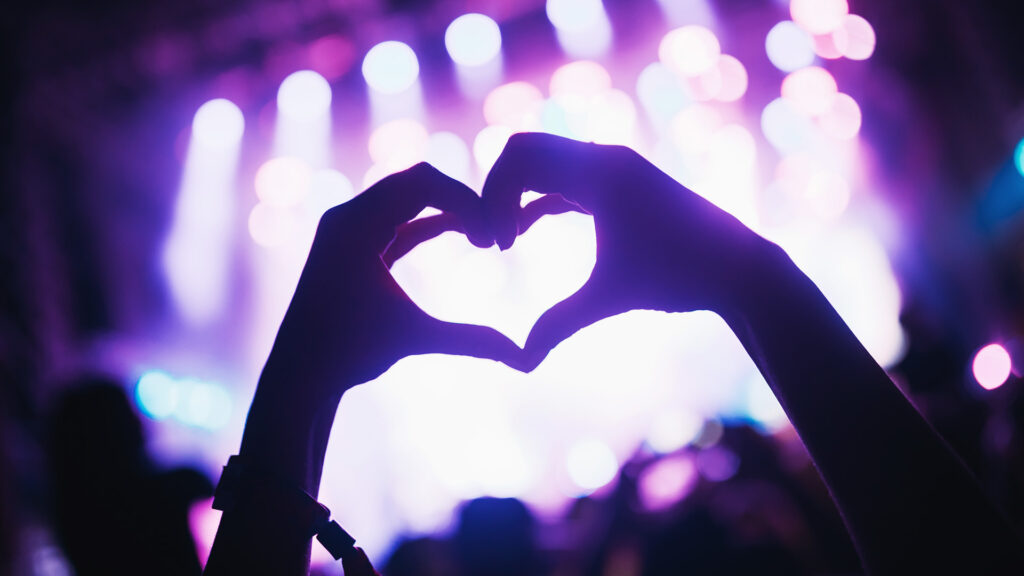
What Bad Bunny Got Right About Event Engagement
He designed the first ten seconds. You don’t warm up a modern audience anymore — you capture them. Bad Bunny didn’t ask for attention; he earned it immediately, with a sound and a visual statement that made it impossible to look away. If there’s one thing I’ve learned watching conference after conference land flat, it’s that most openings still operate like it’s 2009. A slow walk to the mic. A thank-you. Some light housekeeping. A lengthy intro of someone who then introduces someone else. That window is gone. The first moment of any live gathering is the loudest signal you’ll send about whether the rest of it is worth being present for.
The practical event design move here is clear: open with an undeniable hook — a sound, a statement, a visual, a question that creates slight discomfort. Something with an edge. Something that signals immediately: this is different. Then protect that early momentum with the same obsession a film director protects the first scene. Don’t let a logistics announcement kill the temperature you just built. Most well-intentioned agendas do exactly this, and they never recover.
He didn’t try to please everyone — he chose a point of view. The show wasn’t neutral. It was confident. And confidence is magnetic. When planners try to make a program feel relevant to everyone, it usually ends up feeling relevant to no one. Choosing a point of view feels risky. Refusing to choose one is the actual risk. You can’t move a room you haven’t committed to.
Pick one clear emotional promise for your audience: braver, lighter, more connected, steadier, more willing to act. Then build everything — speakers, sequences, spaces, transitions — to serve that promise. Engagement that actually sticks comes from specificity, not from trying to cover every base. The conferences people talk about years later always had a clear identity. The ones that blur in memory tried to be everything.
He made it participatory without making it cringe. The best experiences aren’t interactive in the tech-feature sense. They’re involved. They make the audience feel like part of the story, not like volunteers being managed. There’s a meaningful difference between a crowd being asked to wave their phones in a dark room and a crowd that collectively exhales at the same moment because the room finally said what they were all thinking.
Design for voices. Create intentional prompts and clear structures that give people a way to contribute without overexposure. Build mechanisms that carry the experience past the ballroom and into the following week. The test is simple: could someone who wasn’t in the room feel what it was like from a secondhand account? If yes, the participation was real. If the only people who know what an event produced were physically present and promptly forgot it, it wasn’t.
He built a peak moment on purpose. Great experiences have a spine: build, peak, release. Not constant volume. Not constant stimulation. Just like a great piece of music, the power is in the contrast — the quiet before the crescendo, the space before the statement. If everything in your agenda is treated as equally important, nothing will be remembered.
Design one peak moment that your audience will retell. One. Then protect it from agenda clutter, from the sponsor slide that runs too long, from the networking break that starts eating into the energy you just built. That one moment is the whole gathering. Everything else is scaffolding that either serves it or undermines it.
The Strategic Core: Every Conference Is a Belief-Shaping Machine
A halftime show can move culture because it changes what feels possible. Your event can do the same. Not with louder production — with better design. That’s the shift I keep coming back to when I think about experience design as a discipline. The question isn’t “how do we make the production more impressive?” It’s “how do we make people leave believing something different about themselves, their work, or each other?”
When an experience is designed with that level of intention, the ROI isn’t just in survey scores. It’s in what people do afterward. It’s in the conversation that starts in the Uber on the way to the airport. It’s in the decision that gets made Monday morning that wouldn’t have been made before. It’s in the team that leaves feeling like something shifted, not just like they checked a box. That’s what “delivering impact” actually means in event practice. And it’s why the voices you choose to put on your stage carry so much weight.
The problem I keep seeing is that most event planning conversations start with logistics and end with logistics. What’s the room setup? What’s the catering situation? How many breakout tracks? None of that is wrong — the logistics matter enormously — but they’re not the design. The design is the question: what are people supposed to believe when they walk out? If that question isn’t answered first, the rest of the planning fills the space with content instead of architecture.
This is why the speakers you book aren’t just speakers. They’re belief designers. The sessions you program aren’t just sessions. They’re sequenced interventions. The spaces you arrange aren’t just rooms. They’re environments that either support presence or work against it. Every single element of event experience design sends a signal, whether you intend it to or not. The question is whether those signals are adding up to something coherent.
Event Engagement Experts Shaping the Field
Which brings me to the voices I trust on this topic, specifically because they focus on event engagement outcomes, not just theory. These are practitioners and thinkers who understand that a session isn’t just a slot on the agenda — it’s a designed intervention with a specific purpose.
Event engagement keynote speaker Annette Gregg is pure signal. Her work focuses on what makes experiences feel modern, human, and worth returning for — especially when budgets tighten, and expectations rise. She doesn’t talk about inspiration in the abstract; she talks about what actually shifts behavior in a room and why. If you’re rethinking how your programs are structured from the inside out, Annette is someone to study closely. Her thinking helps planners ask better questions before they build the agenda.
Event engagement keynote speaker Anthony Scaramucci is a masterclass in perception, narrative, and momentum — three things any live program either shapes intentionally or leaves to chance. Anthony understands how stories get built and how they travel, which makes him uniquely valuable for conferences that need to create a stake in the outcome for everyone in the room, not just the people on stage. He brings edge, intelligence, and real-world stakes to a conversation that too often stays polite and safe.
Kara Dickerson lives where content meets community. She turns sessions into assets and conferences into engines that last well beyond the closing keynote. If you’ve ever watched a gathering generate a week of follow-up energy — conversations that keep going, ideas that keep developing — that’s usually the result of the kind of design thinking Kara brings to her events.
Rachel Andrews operates with a rare combination of creative vision and operational precision. She’s practical, clear, and built for planners and leaders who want the “how” of experience design without losing the magic in the process. If you’re working with tight timelines, complex logistics, or skeptical stakeholders, Rachel’s approach translates beautifully into real-world constraints without sacrificing the intention behind the design.
Tavar James works at the intersection of belonging and intentional design. His focus is on making participation safer and more real, so the whole room is actually present, not just the loudest half. Too many programs are unconsciously designed for people already comfortable in those rooms. In the events he helps design, Tavar closes that gap deliberately, which means the experiences he informs tend to create genuine engagement rather than the appearance of it.
Three More Voices That Elevate Experience Design
The discipline of event engagement doesn’t live in one field. Some of the sharpest thinking on it comes from people working adjacent to the space — in customer experience, culture, and organizational strategy — who understand that designing for human attention and behavior is a transferable art.
Event engagement keynote speaker Ron Johnson is one of those rare thinkers who has actually built environments that changed human behavior at scale. As the visionary behind the Apple Store and Target’s design transformation, Ron understands how physical and experiential design shapes decisions, trust, and loyalty in ways most people never consciously notice. The principles translate directly into conference and live gathering design — what people see when they walk in, how they move through a space, where their attention is directed and why. His thinking reframes what “design” actually means in the context of a live program.
Event engagement keynote speaker Holly Ransom works at the edge of modern leadership and culture under pressure. She knows how to build engagement that holds when teams are tired, and attention is fractured — which describes most audiences in the third session after lunch. Holly’s thinking is grounded in what humans actually need to be present and to contribute, not what looks good on a run-of-show. She’s one of the clearest thinkers I know on the gap between program design and human reality.
Event engagement keynote speaker Mark Bonchek brings strategy and transformation thinking to the room. He’s especially sharp on how to design experiences that create genuine alignment rather than just applause — a distinction that matters enormously when you’re trying to move an organization through change. Mark’s frameworks help planners think about what they’re actually trying to shift, and how to architect the program to serve that goal rather than simply fill the schedule.
The Question I’m Still Sitting With About Events in 2026
If a halftime show can make a divided, distracted world feel unified for a few minutes, what could your next gathering make possible? If you designed it with that level of intention — not bigger, not louder, but more true — what would people leave believing that they didn’t walk in believing?
That’s the event engagement question worth carrying into your next planning cycle. Not “what’s on the agenda?” but “what’s the shift we’re designing for?” Not “how do we fill the time?” but “how do we change what feels possible?” Those aren’t the same question. The first one builds programs. The second one builds moments people remember years later.
I’d love to compare notes on your 2026 strategy.
Schedule a 15-minute conversation and let’s think through it together.
Want more like this? Subscribe to our newsletter and get it delivered directly.
Or reach out at info@thekeynotecurators.com — always happy to hear what you’re building. 📩
Discover More Insights

Get in TouchContact US
Fill out the form so we can best understand your needs.
A representative from The Keynote Curators will reach out to you.
Our Services
Keynote Speakers Topics
© 2026 The Keynote Curators. All Rights Reserved | Terms and Conditions
The Keynote Curators, 8275 South Eastern Avenue, Suite 200, Las Vegas, NV 89123
Local (310) 299-4595 | Toll Free (888) 585-8715 | info@thekeynotecurators.com
The Keynote Curators - Top Keynote Agency, USA.