

December 9, 20257 Human Rights Keynote Speakers Who Turn Essentials Into Everyday Action (Real Stories)
Human rights keynote speakers who turn ideals into everyday actions—discover voices bringing dignity, belonging, and courage to your stages.
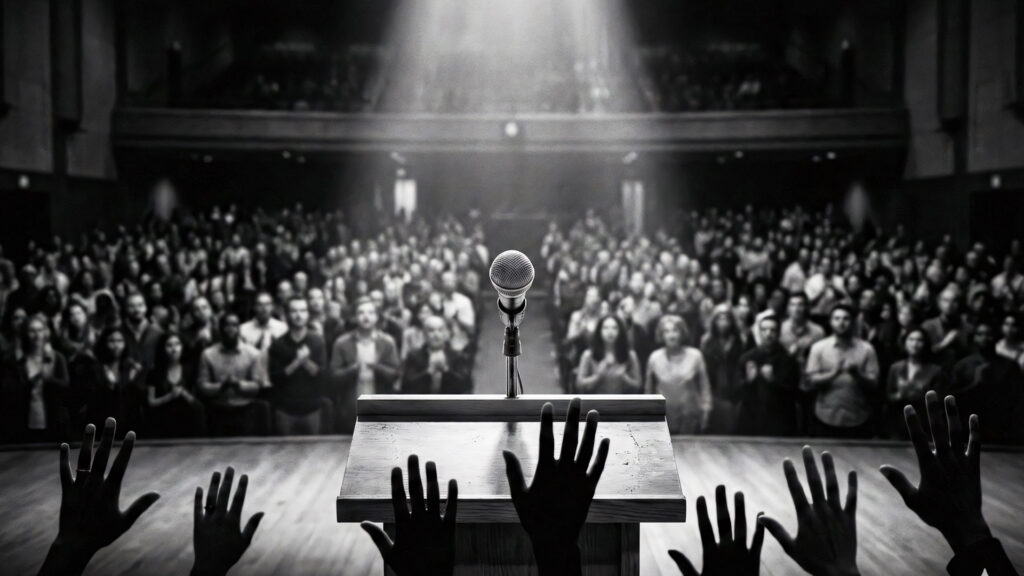
When Your Event Stage Becomes a Human Rights Platform (And Why That Matters Now)
Here’s a question most event planners don’t ask during budget meetings: whose human rights are you designing for?
Not in some theoretical, “let’s put it in the mission statement” way, but in the actual rooms you’re building right now. The stages you’re setting. The voices you’re choosing to amplify. The communities you’re representing—or quietly leaving out.
Tomorrow, December 10, is Human Rights Day. It marks the anniversary of the United Nations adopting the Universal Declaration of Human Rights in 1948, a document that tried to set a shared baseline for dignity, freedom, and equality after witnessing the worst of what humans can do to each other. This year’s theme from the UN is “Our Everyday Essentials.” Not luxuries. Not nice-to-haves. Essentials.
Safety. Belonging. A voice that counts. The chance to build a life that’s actually yours.
If you design events, you’re in the essentials business whether you call it that or not. Additionally, every time you decide who gets the mic, whose story is told, which communities are represented, you’re designing human rights in real time. So instead of treating Human Rights Day like a line on a calendar, I want to treat it like what it really is: a reminder that the rooms we create can either protect these essentials or quietly erode them.
In this post, I’m introducing you to seven voices in The Keynote Curators’ family who live this work with their whole lives, not just their slide decks. These aren’t cookie-cutter diversity talks or compliance training dressed up as inspiration. These are human rights keynote speakers who bring entire rooms to stillness because they’ve turned abstract ideals into concrete, uncomfortable, transformative action.
From Champion Fighter to Champion of the Forgotten
Justin Wren went from champion MMA fighter to living in the rainforest with the Mbuti and Batwa Pygmy peoples. That’s not a career pivot you see coming. But Justin didn’t go there to take photos or write a memoir. He went to listen to stories of displacement, violence, and being treated as less than human. Then he came home and built Fight For The Forgotten, drilling wells, securing land, and standing beside communities the world ignores.
On stage and on our podcast, human rights keynote speaker Justin Wren reminds audiences that human rights start with one simple question: “Who, right now, is easy for you to overlook?” From there, he invites people to turn compassion into infrastructure—clean water, safety, voice, and agency. Not awareness. Not empathy theater. Actual wells in actual ground for actual families who’ve been invisible for generations.
For meeting professionals designing conferences where diversity, equity, and inclusion are line items on the agenda, Justin offers something sharper: a reminder that human rights work isn’t about making your attendees feel good. It’s about making someone else’s life livable. When you bring Justin to your stage, your audience doesn’t leave thinking about human rights. They leave asking themselves who they’ve been overlooking—and what they’re going to do about it tomorrow.
Redesigning Systems That Were Never Built for Everyone
After serving as a White House Presidential Appointee and senior advisor on international disability rights at the U.S. Department of State, Cara Yar Khan founded The Purple Practice, assisting companies and investors design disability-inclusive partnerships and products. She lives with a rare neuromuscular disability herself, so when she speaks about inclusion, it isn’t theoretical.
Cara pushes audiences to move beyond “accommodations” and ask two questions that make everyone in the room uncomfortable: Who never makes it into this room? Who can’t fully participate once they’re here? Those aren’t rhetorical questions. They’re diagnostic tools. Consequently, she turns accessibility from a compliance issue into an act of respect and a non-negotiable human right.
Here’s what I love about Cara’s approach for event planners: she doesn’t let you off the hook with good intentions. You can’t say, “We care about accessibility,” and then host an event where someone in a wheelchair has to use the loading dock entrance while everyone else walks through the lobby. That’s not inclusion. That’s performative kindness covering structural indifference. Cara calls it out, not with anger, but with the kind of clarity that makes you rethink every floor plan, every stage setup, every “standard” room layout you’ve ever approved.
If you’re serious about creating events where health and well-being aren’t just breakout session topics but actual lived experiences for every attendee, Cara’s voice needs to be in your speaker lineup. She helps audiences understand that dignity isn’t something you add at the end of the planning process. It’s the foundation you build on—or it’s missing entirely.
The Man Who Sat Down With Hate and Stayed Until It Changed
Daryl Davis is a blues musician and conflict navigator who has spent decades doing something almost unthinkable: sitting down with members of the Ku Klux Klan, listening to them, challenging them, and walking with them as they left hate groups behind. He’s helped over 200 former white supremacists renounce their beliefs—not with shouting matches, but with stubborn, patient, face-to-face humanity.
In our world of “block,” “mute,” and “unfollow,” Daryl’s message to audiences is simple and uncomfortable: you can’t dehumanize people out of dehumanizing others. That sentence alone is worth the price of admission. It’s also the exact opposite of how we’ve been trained to handle conflict in the social media age. We’ve been taught that cutting people off is self-care, that refusing to engage is boundary-setting, that some conversations aren’t worth having.
Daryl doesn’t argue with that logic. He just sits across from someone wearing a swastika and asks them why. Then he listens. Then he comes back. For instance, one of the Klan members he befriended eventually became the godfather to Daryl’s daughter. That’s not a metaphor. That’s what happens when you refuse to let someone stay a villain in your story long enough for them to realize they don’t have to be one in their own.
For meeting professionals and business leaders who are exhausted by polarization, Daryl offers a different model. He’s not asking you to agree with everyone or tolerate hate speech at your events. He’s asking you to remember that the people in your audience who frustrate you, who hold views you find reprehensible, are still people. And if you design events that write them off before they walk in the door, you’re not creating change. You’re creating echo chambers. Human rights keynote speaker Daryl Davis proves that real transformation happens in the rooms where it’s hardest to stay.
Turning Culture Into a Megaphone for Justice
You know the outlines of his story: rock star, Band Aid, Live Aid, Live 8. Sir Bob Geldof helped prove that culture could mobilize millions of people and billions of dollars around famine relief and poverty in Africa. But what moves me about Bob isn’t the scale—it’s the subtext. Our platforms are more powerful than we think, and more responsible than we’d like to admit.
When he speaks to leaders, he asks two questions that cut through every corporate social responsibility presentation: What are you actually doing with your influence? Who benefits from the way your organization makes money, and who pays the hidden cost? Those aren’t feel-good questions. They’re audit questions. They force you to trace the real impact of your work beyond the press release.
For an audience that feels “too small to matter,” Bob is a living argument that one determined voice can bend an industry toward justice. He didn’t wait for permission to organize Live Aid. He didn’t ask if it was his lane to get involved in African famine relief. He saw a crisis, had a platform, and used it. Then he did it again. And again.
If you’re planning events for leaders who claim they care about world affairs and philanthropy, Sir Bob Geldof is the speaker who won’t let them hide behind good intentions. He’ll ask what they’re actually doing with the rooms full of decision-makers they already have. That question alone can turn a conference from a networking event into a launching pad for actual change.
Freedom Isn’t a Given—It’s a Daily Practice
Garry Kasparov is often introduced as one of the greatest chess players of all time. But for years now, his main arena has been human rights and democracy—chairing the Human Rights Foundation, founding the Renew Democracy Initiative, and speaking out against authoritarianism at real personal risk. When Garry talks to business and civic audiences, he draws a straight line between the freedoms we take for granted and the stability we assume will always be there.
He invites your audience to think in moves, not moments. If we ignore small abuses today, what kind of world are we checking our kids into tomorrow? That’s not abstract philosophy. That’s strategic thinking applied to human rights. Garry understands that autocracy doesn’t announce itself with tanks and declarations. It starts with small compromises: a journalist silenced here, an election rule bent there, a protest shut down for “public safety.”
Similarly, event planners creating spaces for TED speakers and thought leaders need to understand that the conversations you host matter. When you avoid controversial topics because they’re “too political” or “not on-brand,” you’re making a choice. You’re choosing comfort over courage. You’re choosing not to use your platform when it might actually matter. Garry Kasparov doesn’t let audiences off that hook. He reminds them that staying silent about injustice because it’s uncomfortable is, itself, a political choice. It’s just the one that protects the status quo.
For business owners and corporate event planners who think human rights are someone else’s problem, Garry connects the dots between democratic freedoms and the business environment they depend on. Fair courts, free press, safe elections—those aren’t nice-to-haves for a functioning market. They’re the infrastructure everything else is built on. When those erode, your business doesn’t get to stay neutral. You’re already involved. The only question is which side you’re on.
Memory as a Human Right and a Moral Obligation
Marion Blumenthal Lazan survived the Holocaust as a child. She has spent decades standing in school gyms, auditoriums, and conference halls, telling that story so younger generations never confuse “never again” with “it happened so long ago it doesn’t matter.” Her message isn’t abstract history. It’s a gentle but fierce reminder that dehumanization begins with small lies: “Those people don’t really belong here.” “Those families don’t deserve the same opportunities.”
In a culture with a short attention span, Marion teaches audiences that remembering is itself a human rights practice. Nevertheless, it’s not about guilt. It’s about vigilance. It’s about recognizing the early warning signs of hatred before they metastasize into policy, violence, and systems of oppression.
For meeting professionals and event planners, Marion offers something crucial: a reminder that the stories you choose to tell at your events shape what your audience remembers, and what they forget. When you book speakers who only talk about innovation, productivity, and market disruption without ever acknowledging the human cost of those systems, you’re making a choice. You’re choosing to forget. You’re choosing to erase.
Human rights keynote speaker Marion Blumenthal Lazan won’t let your audience do that. She’ll remind them that the Holocaust didn’t start with concentration camps. It started with exclusion, with rhetoric, with small acts of cruelty that people told themselves didn’t matter because they weren’t the target. If you want your events to mean something beyond attendance numbers and social media engagement, you need voices like Marion’s—voices that ground your audience in the reality that history doesn’t repeat, but it rhymes. And right now, we’re hearing some very familiar melodies.
Her work aligns perfectly with speakers focused on resilience and personal development, but it goes deeper. She doesn’t just teach people how to survive hardship. She teaches them how to recognize when their neighbors are being systematically dehumanized—and why that’s everyone’s problem, not just the targets.
Where Capital Meets Conscience and Creates Real Change
Valerie Red-Horse Mohl, of Cherokee ancestry, has spent her career at the intersection of Native leadership, finance, and impact investing—structuring and raising billions in capital for tribal nations and underserved communities. When she speaks, she doesn’t romanticize either side. She talks about real deals, real balance sheets, and real barriers Native communities face accessing the resources everyone else takes for granted.
Her core message: if capital flows around entire communities instead of through them, that’s a human rights problem—not just a market inefficiency. That reframe is everything. It turns conversations about ESG, DEI, and responsible investing from abstract goals into urgent questions: whose lives get better because of how you deploy resources, and whose don’t?
For event planners working with corporate audiences, especially those in finance, tech, and business leadership, Valerie offers a perspective that most speakers can’t. She understands both the language of capital and the lived experience of communities that have been systematically excluded from it. She can walk your audience through the mechanics of impact investing while also making them understand that behind every data point is a family, a community, a child whose opportunities are shaped by whether capital flows toward them or around them.
Valerie’s work intersects beautifully with empowerment, societal issues, and energy and environment topics because she shows audiences that real change happens when you combine moral clarity with financial literacy. You can’t impact-invest your way out of systemic injustice if you don’t understand the systems that created it. And you can’t understand those systems if you never listen to the people on the wrong side of them. Valerie does both. That’s why she belongs on stages where decisions get made, not just discussed.
A Field Guide for Meeting Professionals Who Want to Do More Than Talk
If Human Rights Day feels big and abstract, here are a few small, very human moves you can make this week. These aren’t performative gestures. They’re diagnostic questions and concrete upgrades that change who gets access to your rooms and whose voices get heard.
First, ask one disarming question in your next planning meeting. Before you lock your agenda, ask: “Whose story is missing from this stage?” Then actually change something based on the answer. Don’t let the question sit in the notes section of someone’s laptop. Treat it like a budget question or a safety question—something that has to be addressed before you move forward.
Second, make one concrete accessibility upgrade. ASL interpretation, better captioning, gender-inclusive restrooms, a sensory-friendly space, truly step-free access—pick one upgrade and treat it as non-negotiable going forward. Not “if the budget allows.” Not “we’ll try to accommodate requests.” Non-negotiable. That shift in language changes everything because it signals that accessibility isn’t a favor you’re doing for some attendees. It’s a baseline requirement for all of them.
Third, turn awareness into one act of solidarity. Invite your audience to choose one action after your next event: a conversation they’ll start, a group they’ll learn about, a local organization they’ll support, a policy they’ll speak up on. Make it specific, not performative. “Support human rights” is vague. “Call your representative about this specific bill” or “Donate to this specific organization working with refugees in your city” gives people something they can actually do.
Fourth, measure what really matters. Alongside registration numbers, ask: “Who felt seen? Who felt safe? Who felt like they belonged here?” That data is human rights data. It tells you whether your event actually delivered on the promises in your marketing materials. Most events measure attendance, engagement, and net promoter scores. Almost none measure belonging. That gap tells you everything about what we think success looks like—and what we’re willing to ignore.
These aren’t inspirational and motivational platitudes. They’re operational changes that shift how you design, execute, and measure events. They’re the difference between hosting a conference about human rights and hosting a conference that actually practices them.
Why the Voices You Choose Matter More Than You Think
Here’s what I want you to understand: you don’t control the whole world. You do help design a few rooms in it. And the people you choose to put on those stages can help your audience remember that human rights aren’t just declarations on a wall. They’re promises we keep or break in how we show up for each other every day.
When you bring human rights keynote speakers like Justin, Cara, Daryl, Sir Bob, Garry, Marion, and Valerie to your stages, you’re not just checking a box for women leaders, best-selling authors, or diversity. You’re choosing to center voices that have turned ideals into infrastructure, compassion into policy, and outrage into systems that actually work for people who’ve been ignored.
These speakers don’t traffic in inspiration porn or guilt trips. They offer roadmaps. They show your audience what it looks like to take human rights seriously—not as a moral luxury for people with extra time, but as the foundation of everything else we’re trying to build. If your events are about innovation, you need speakers who remind your audience that innovation without inclusion is just efficiency for the people who were already winning. If your events are about leadership, you need speakers who push leaders to ask who’s paying the cost of their success.
Tomorrow, when Human Rights Day trends for a few hours, most of the posts will be well-intentioned and utterly forgettable. They’ll use the right hashtags, tag the right accounts, and disappear by lunchtime. But the events you’re planning for 2026 are different. Those rooms will be full of decision-makers, influencers, and people with the power to change how resources get distributed, how communities get heard, and whose stories get told.
If you want help curating human rights keynote speakers who bring hope in 2026, not just headlines, grab 15 minutes with me. We’ll look at your 2026 events and ask a simple question: where could your stages quietly become a force for dignity, belonging, and courage?
That’s the work. Not the big declarations or the viral posts. The quiet, persistent choice to make your rooms places where everyone’s humanity is protected, not just acknowledged. Where human rights aren’t a theme. They’re the default.
Your Stages Are Waiting—Choose Voices That Match the Moment
Human Rights Day will come and go. The UN will release its statements. Social media will move on to the next trending topic. But your events—the stages you’re designing right now for Q1, Q2, the second half of 2026—those are still being built. You still have time to ask who’s speaking, whose stories are being told, and what kind of rooms you’re actually creating.
The speakers I’ve introduced you to here aren’t just storytelling experts or teamwork consultants. They’re people who’ve lived on the front lines of human rights work and come back with something more valuable than theory. They’ve come back with proof that this work is possible, that rooms can change, that audiences can be moved from awareness to action.
They’ve also come back with something harder to fake: credibility. When Justin talks about forgotten communities, he’s not speaking from a TED Talk script. He’s speaking from years in the rainforest. When Cara talks about accessibility, she’s not reading from a compliance manual. She’s speaking from her own lived experience of navigating a world that wasn’t built for her. When Daryl talks about dialogue across difference, he’s not theorizing. He’s showing you the robes former Klan members gave him when they left the organization.
That’s the difference between speakers who talk about human rights and speakers who embody them. Your audience can feel it. They know when someone has earned the right to stand on that stage and when someone is just repeating talking points. If you want your events to matter—if you want your stages to be places where transformation happens, not just transactions—you need voices that have been tested, that have failed, that have gotten back up and tried again because the work was too important to abandon.
Human Rights Day is a reminder. But it’s also an invitation. An invitation to stop treating human rights as a once-a-year talking point and start treating them as the foundation of every event you design, every speaker you book, every room you create. Your stages are waiting. The only question is whether you’ll fill them with voices that match the moment we’re in—voices that challenge, that push, that refuse to let your audience leave unchanged.
Because here’s the truth meeting professionals need to hear: your events aren’t neutral. They never were. The rooms you design either move us toward a more just world or they reinforce the one we already have. There’s no third option. There’s no “let’s just focus on the content and stay out of politics.” Every decision about whose voice gets amplified and whose gets ignored is a political decision. Every choice about accessibility, representation, and inclusion is a human rights decision.
So make those decisions count. Make them with intention. Make them with courage. And make them with speakers who can help your audience understand that human rights aren’t abstractions we celebrate once a year. They’re the everyday essentials we protect—or erode—with every room we design.
Ready to transform your 2026 events into spaces where dignity, belonging, and courage are the default?
Schedule a 15-minute call and let’s curate human rights keynote speakers who bring real impact to your stages.
Subscribe to our newsletter for weekly insights on choosing speakers who turn ideals into everyday actions.
Explore more curated speaker topics at The Keynote Curators and discover voices that match the moment your events demand.
Discover More Insights





Get in TouchContact US
Fill out the form so we can best understand your needs.
A representative from The Keynote Curators will reach out to you.
Our Services
Keynote Speakers Topics
© 2026 The Keynote Curators. All Rights Reserved | Terms and Conditions
The Keynote Curators, 8275 South Eastern Avenue, Suite 200, Las Vegas, NV 89123
Local (310) 299-4595 | Toll Free (888) 585-8715 | info@thekeynotecurators.com
The Keynote Curators - Top Keynote Agency, USA.