
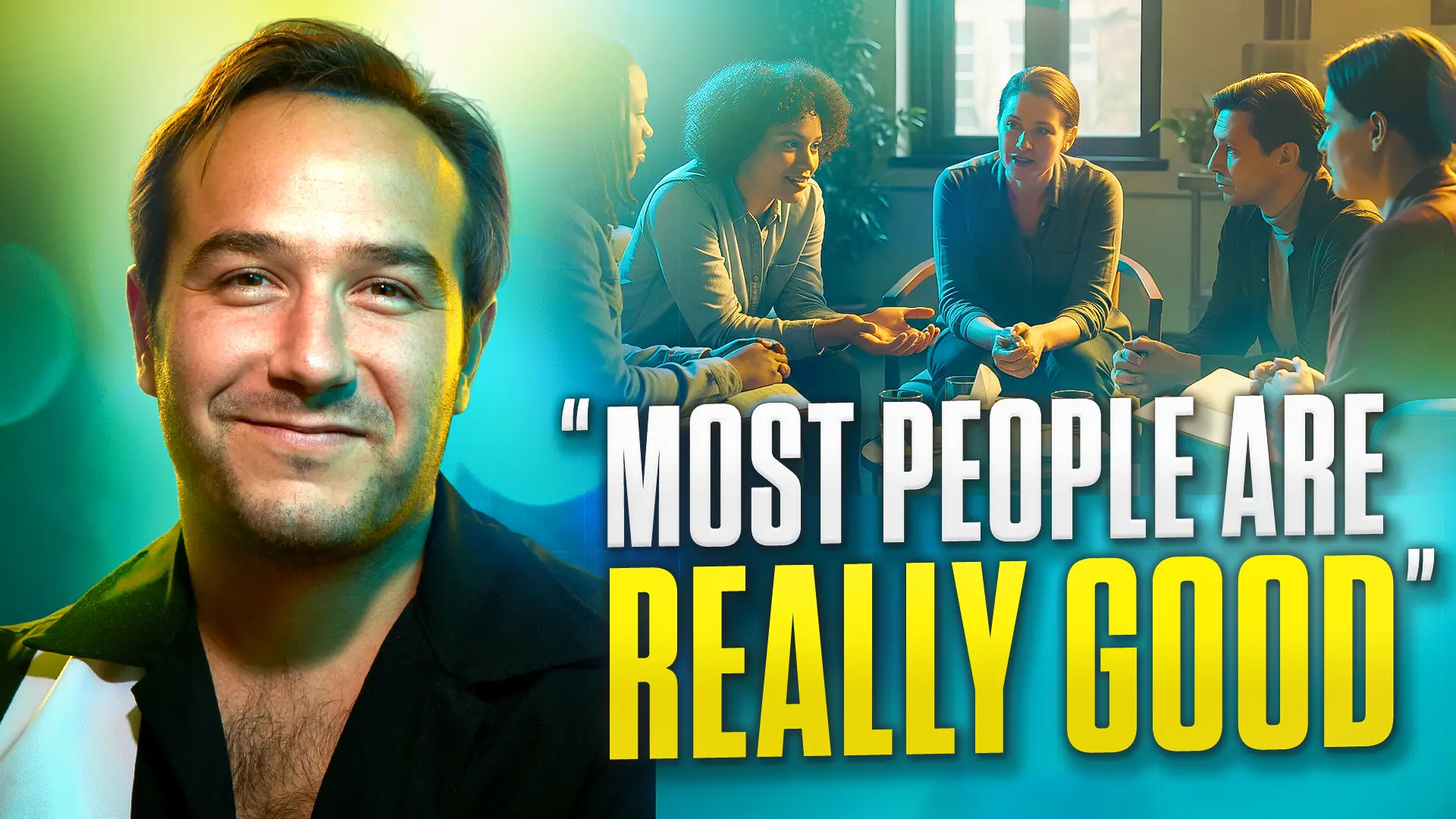
February 17, 2026Inspiration Starts When You Start Nurturing Genuine Connections
What if the inspiration your team desperately needs isn't something you can give them? I've watched countless leaders invest in motivation programs, bring in outside experts, and launch initiative after initiative, trying to inspire their...
What if the inspiration your team desperately needs isn’t something you can give them?
I’ve watched countless leaders invest in motivation programs, bring in outside experts, and launch initiative after initiative, trying to inspire their people. They’re exhausted. Their teams are exhausted. And someho,w everyone feels more disconnected than before.
Then I talked to Chris Schembra, and everything I thought I knew about inspiration got turned upside down.
Chris is a Wall Street Journal bestselling author and founder of the 7:47 Gratitude Experience. He’s spent over a decade sitting with tens of thousands of people, from Google executives to four-year-olds on Skid Row, facilitating real conversations. His viral gratitude campaign honoring veterans earned two Emmy Awards and coverage from The New York Times, Forbes, and Good Morning America.
Here’s what stopped me cold in our conversation: Chris doesn’t claim to inspire people. He only does 49% of the work. The real transformation happens when people choose to show up, open up, and do something meaningful with what they’ve learned.
That’s not just humble talk. It’s the fundamental truth about inspiration that most employee engagement programs completely miss.
🎤 Watch and listen to the full interview about inspiration here
Where Real Inspiration Actually Lives in Your Organization
After sitting with tens of thousands of people over ten years, Chris figured out where inspiration really comes from: the people themselves. Not the keynote speaker. Not the leadership team. Not the latest productivity tool or culture initiative.
“I’ve earned the right, I’ve fought my way to be able to sit with tens of thousands of people,” Chris told me. “And we, I say we as a community, as a collective, as mentors, as coaches, we have observed that people are yearning from the body, from the soul, yearning for meaningful moments of human connection.”
This matters because we’re approaching workplace inspiration completely backward. We treat it like something leaders deliver to employees. A gift from the top down. A spark that needs constant external fuel.
But Chris has seen what actually works across every imaginable context. Whether he’s working with Microsoft executives, Dell teams, or the U.S. Navy, the pattern remains consistent. People aren’t broken. They’re not lacking motivation. They’re lonely. They’re desperate for genuine human connection. And when you create the conditions for that connection, inspiration emerges naturally from within the group.
I’ve planned dozens of corporate culture events where we brought in speakers specifically to inspire teams. Some worked. Most didn’t. The ones that failed all made the same mistake: they tried to inject inspiration from the outside instead of unlocking what already existed inside the people in the room.
Why You Only Control 49% of Any Transformation
“I only do 49% of the work, right?” Chris explained. “I sell the gig. I do the research, I give the speech. I invite the people, I do my part, but the 51% is on the other people. They show up. They choose to bring their heart and soul.”
This completely reframes how you think about bringing speakers to your events or launching any professional development initiative. You can’t force transformation. You can deliver the message and create the space, but the other 51% requires people to show up, ask questions, listen, and take action.
Most event planners and leaders don’t trust this. They want control. They want guaranteed outcomes. They book speakers who promise to deliver specific results, as if inspiration were a product you could manufacture and distribute to passive recipients.
Chris’s approach acknowledges what we all know deep down but struggle to accept: people have to choose to engage. They have to decide whether to bring their authentic selves or just go through the motions. They have to determine whether they’ll actually do something with what they learn or let it fade the moment they return to their desks.
This isn’t resignation. It’s liberation. When you accept that you only control 49%, you stop exhausting yourself trying to force outcomes. You focus on what you actually can do: create the conditions, remove the barriers, and trust people to do their part.
I’ve seen this work in my own events. The sessions that created lasting change weren’t the ones where speakers had the most polished presentations or the most impressive credentials. They were the ones where the speaker created genuine space for connection and then trusted the audience to step into that space.
How Ten Years of Conversations Revealed What People Actually Need
Chris spent a decade building the privilege of sitting with thousands of people from every possible background. Google employees and IBM teams and Citi executives and kids living on Skid Row. What he discovered wasn’t that different groups need different approaches to inspiration. It was that everyone, regardless of status or circumstance, needs the same thing.
“Whether it’s executives or kids, the mission stays the same: help people connect,” Chris said. “Strip away status, titles, and assumptions. Real change happens when humans just connect.”
This insight transforms how you approach teamwork and communication in your organization. You’re not trying to inspire different demographics with tailored messages. You’re removing barriers that prevent humans from connecting as humans.
Think about your last company meeting or conference. How much of the design reinforced hierarchy and status? Reserved seating for executives. VIP lounges. Separate breakout sessions based on title or department. All of those choices, even when well-intentioned, create barriers to the human connection that actually drives inspiration.
Chris’s work with the 7:47 Gratitude Experience strips all that away. When you’re sitting around a table sharing meaningful stories and genuine gratitude, your job title doesn’t matter. Your salary doesn’t matter. The only thing that matters is your willingness to show up as a real person and see others as real people too.
I’ve implemented this thinking in smaller ways at events I’ve planned. Simple changes like circular seating instead of theater style. Starting sessions with brief personal check-ins instead of jumping straight to content. Creating informal connection time instead of packing every minute with programming. The impact on employee engagement and post-event feedback has been dramatic.
Why Earning the Right to Inspire Matters More Than Permission
Chris didn’t wait for someone to anoint him as an expert on human connection and gratitude. He fought his way to these conversations through consistent action and authentic work. “Earn the right to inspire,” he told me. “Don’t wait for permission. Build your credibility by creating meaningful moments, even when it’s hard.”
This matters for anyone trying to drive business growth through better culture and engagement. You can’t purchase credibility. You can’t shortcut your way to trusted messenger status. You have to do the work.
For Chris, that meant ten years of showing up. Ten years of creating spaces where people could be vulnerable. Ten years of honoring their stories and holding their trust carefully. Only after that investment did he earn the right to say he understands where inspiration comes from.
Too many organizations want instant results. They bring in a speaker for a single event and expect everything to change. They launch a culture initiative with a big kickoff and assume momentum will carry itself. They don’t invest in the slow, consistent work of actually building credibility and trust.
Chris Schembra represents what’s possible when you commit to that long-term work. His clients include Google, Microsoft, IBM, Dell, Citi, and the U.S. Navy not because he had the best marketing or the flashiest credentials, but because he spent years proving he could create the meaningful connection people desperately need.
If you’re serious about addressing the epidemic of loneliness and disengagement that plagues 51% of the American workforce, you need to think in years, not quarters. You need to build systems and experiences that consistently create opportunities for human connection, not just one-off events that feel good in the moment but fade quickly.
What Happens When You Let People’s Goodness Fuel Your Work
When you sit with tens of thousands of people and watch them choose vulnerability over safety, something shifts. Chris has seen this pattern repeat across every demographic and context. “Most people aren’t bad—they’re blocked,” he explained. “When you watch thousands choose vulnerability and do something good with it, you realize there’s real hope. Let their transformation fuel yours.”
This is where inspiration actually lives. Not in the speaker or the program or the initiative, but in the moment when someone decides to show up authentically and others respond in kind. When a Google executive shares genuine gratitude and a colleague actually hears it. When teammates who’ve worked together for years finally have a real conversation. When people stop performing and start connecting.
Chris’s own inspiration comes from watching this happen. After a decade of creating these spaces, he’s built the privilege of regularly witnessing human transformation. But he had to earn that privilege through years of consistent, authentic work.
This completely changes how you evaluate the success of inspirational and motivational initiatives in your organization. Stop measuring immediate reactions. Stop counting how many people said they felt inspired on a post-event survey. Start watching for evidence that people are actually connecting differently and carrying that energy forward.
I’ve learned to look for different signals after events. Not whether people loved the speaker, but whether they’re having different conversations with each other afterward. Not whether they felt motivated in the moment, but whether they’re making different choices weeks and months later. Not whether they can recite key messages, but whether they’re building the kinds of relationships that sustain real innovation and creativity.
How Removing Barriers Creates Space for Transformation
Chris’s entire approach centers on removing barriers that prevent connection. In his gratitude experiences, that means stripping away status and titles. In his speaking work, that means creating psychological safety where vulnerability becomes possible. In his broader mission, that means fighting workplace loneliness by acknowledging it exists and giving people tools to address it.
This focus on removing barriers rather than adding programs represents a fundamental shift in how we think about improving corporate culture. Most organizations approach culture challenges by layering on more initiatives, more training, more programs. They’re trying to inspire by addition.
Chris inspires through subtraction. What can you remove that’s blocking people from connecting? What assumptions can you strip away? What formality can you eliminate? What status marker can you dissolve?
When he sits with four-year-olds on Skid Row or with Navy leadership, the core work remains the same. Remove the barriers. Create the space. Trust people to show up. The transformation that follows isn’t something Chris manufactures. It’s something he allows to emerge by getting out of the way.
I’ve applied this thinking to customer experience work beyond just internal events. What if instead of adding more touchpoints and more messaging and more programs, we focused on removing friction and barriers that prevent genuine connection between our people and our customers? What if inspiration in customer relationships worked the same way it does internally—not something we inject, but something we allow to emerge when we clear the path?
Why Your Team Isn’t Tired From Overwork Alone
“They’re not just tired from overwork; they’re lonely,” Chris observed after years of sitting with thousands of people. “Feed that hunger, and you create a ripple you’ll never fully see.”
This reframes the entire conversation about future of work and employee wellbeing. We’ve spent years focused on workload, burnout, work-life balance, and productivity optimization. All important issues. But Chris has identified something deeper that many organizations miss entirely.
People are lonely. They show up to work and go through the motions alongside colleagues they barely know as humans. They attend meetings where everyone performs their role but nobody connects. They achieve metrics and hit targets while feeling fundamentally disconnected from the people around them.
No amount of productivity hacks or efficiency gains will fix that. You can reduce workload and improve flexibility and optimize processes, and people will still feel empty if they’re not experiencing genuine human connection.
Chris’s work directly addresses this through evidence-based frameworks that create meaningful connection opportunities. His 7:47 Gratitude Experience isn’t about making people feel good temporarily. It’s about building muscle for the kind of authentic interaction that combats loneliness and creates sustainable engagement.
I’ve seen this play out in organizations I work with. The ones thriving aren’t necessarily the ones with the best perks or the most generous PTO policies or the most flexible remote work arrangements. They’re the ones where people actually know each other. Where teammates have real conversations. Where vulnerability is safe and connection is normal.
That kind of culture doesn’t happen by accident. It requires intentional work to create spaces and experiences where connection becomes possible. It requires leaders who understand that their job isn’t to inspire through force of personality but to remove barriers and create conditions where people can inspire each other.
What Partnership in Transformation Actually Looks Like
“Transformation is a partnership, not a one-way street,” Chris reminded me. This simple idea contains everything you need to know about creating lasting change in your organization.
You can bring in the best speakers. You can invest in comprehensive programs. You can communicate vision and strategy flawlessly. But if you’re treating inspiration as something you do to people rather than something you do with them, you’ll keep failing.
Chris has spent over a decade perfecting this partnership approach. He shows up fully prepared. He creates carefully designed experiences. He brings genuine care and attitude to every interaction. That’s his 49%.
But he can’t make people choose vulnerability. He can’t force them to engage authentically. He can’t control whether they actually do something with what they learn. That’s their 51%, and it’s the more important part.
When both sides show up fully, transformation happens. When people trust the space Chris creates enough to bring their authentic selves, something shifts. And when they carry that energy forward into their work and relationships, the impact ripples far beyond the original experience.
This is exactly what Chris Schembra means when he says he watches people lean into vulnerability and carry that energy forward. He’s not watching his own work create impact. He’s watching people choose to engage with the opportunity he’s created and then choose to extend that engagement into their daily lives.
I’ve learned to design events and experiences around this partnership model. Instead of trying to deliver perfect content that will change people, I focus on creating the conditions where people can change themselves. Instead of measuring success by how inspired people feel in the moment, I look for evidence of sustained behavior change. Instead of treating attendees as passive recipients, I trust them to do their essential 51% of the work.
How to Actually Address Workplace Loneliness and Disengagement
Chris tackles the epidemic of loneliness, disengagement, and dissatisfaction that plagues 51% of the American workforce with one core belief: people are desperate for genuine human connection. His mission is to reverse this trend by fostering environments of recognition, belonging, and gratitude as the foundation for sustainable growth and innovation.
This isn’t soft skills work or nice-to-have culture building. This is addressing a fundamental crisis that’s destroying productivity, innovation, retention, and growth. When half your workforce is disengaged and lonely, you can’t innovation your way out. You can’t strategy your way out. You have to rebuild the human foundation.
Chris emphasizes that true success comes not from overextending employees but from creating a culture rooted in authentic human connection. I’ve watched organizations ignore this wisdom and pay the price. They push for more output, more efficiency, more optimization. Their people burn out. Their best talent leaves. The culture becomes toxic even when leadership swears they value people.
The organizations winning the war on talent aren’t the ones with the highest salaries or the best perks. They’re the ones where people feel genuinely connected to their colleagues and their work. Where gratitude and recognition are normal, not performative. Where belonging isn’t a diversity initiative but a daily experience.
Chris’s bestselling books Gratitude Through Hard Times and Gratitude and Pasta provide the frameworks and tools to build this kind of culture. His speaking engagements give leaders practical strategies they can implement immediately. His 7:47 Gratitude Experience offers a proven methodology for strengthening client and team relationships.
But none of it works if you’re just looking for quick fixes or one-time interventions. You have to commit to the long-term work of consistently creating opportunities for human connection. You have to trust people to show up. You have to believe that when you remove barriers and create space, transformation will emerge.
Why Your Next Event Should Focus on Creating Space Instead of Delivering Content
Everything I’ve learned from Chris challenges how most events are designed. We pack agendas with content. We book speakers to deliver specific messages. We measure success by how much information we transmitted.
But what if the goal isn’t to fill people with content but to create space where they can connect with each other? What if the speaker’s job isn’t to inspire through brilliant insights but to facilitate the conditions where people inspire each other?
This doesn’t mean content doesn’t matter. It means content serves connection rather than replacing it. The insights and frameworks and strategies are important, but only if they’re delivered in ways that make real connection possible.
I’ve started designing events differently based on this thinking. More time for meaningful conversation. Less time for presentation. More vulnerability from speakers about their actual struggles. Less polished performance of expertise. More opportunities for attendees to share their experiences with each other. Less passive consumption of information.
The feedback has been consistent: people remember these events. They feel different. They create lasting relationships instead of just collecting business cards. They drive actual behavior change instead of just providing momentary motivation.
Human connection keynote speaker Chris Schembra represents what’s possible when you commit fully to this approach. His work has been featured in The New York Times, USA Today, Wall Street Journal, Forbes, and Entrepreneur because he’s solving a real problem with a proven methodology. He’s not just talking about connection. He’s creating it, over and over, with measurable results.
As a Founding Member of Rolling Stone Magazine’s Culture Council and member of the Executive Board of Fast Company Magazine, Chris brings both credibility and practical wisdom to every engagement. But what makes him truly valuable is his willingness to do only 49% of the work and trust people to do their essential 51%.
🌟 Partner with us and keynote speaker Chris Schembra to create meaningful moments that transform your culture.
📞 Let’s discuss how to address loneliness and disengagement in your organization through proven connection strategies. Schedule a 15-minute, pressure-free session today.
📧 Questions about bringing Chris’s gratitude framework to your next event? Email info@thekeynotecurators.com
Discover More Insights



Get in TouchContact US
Fill out the form so we can best understand your needs.
A representative from The Keynote Curators will reach out to you.
Our Services
Keynote Speakers Topics
© 2026 The Keynote Curators. All Rights Reserved | Terms and Conditions
The Keynote Curators, 8275 South Eastern Avenue, Suite 200, Las Vegas, NV 89123
Local (310) 299-4595 | Toll Free (888) 585-8715 | info@thekeynotecurators.com
The Keynote Curators - Top Keynote Agency, USA.