
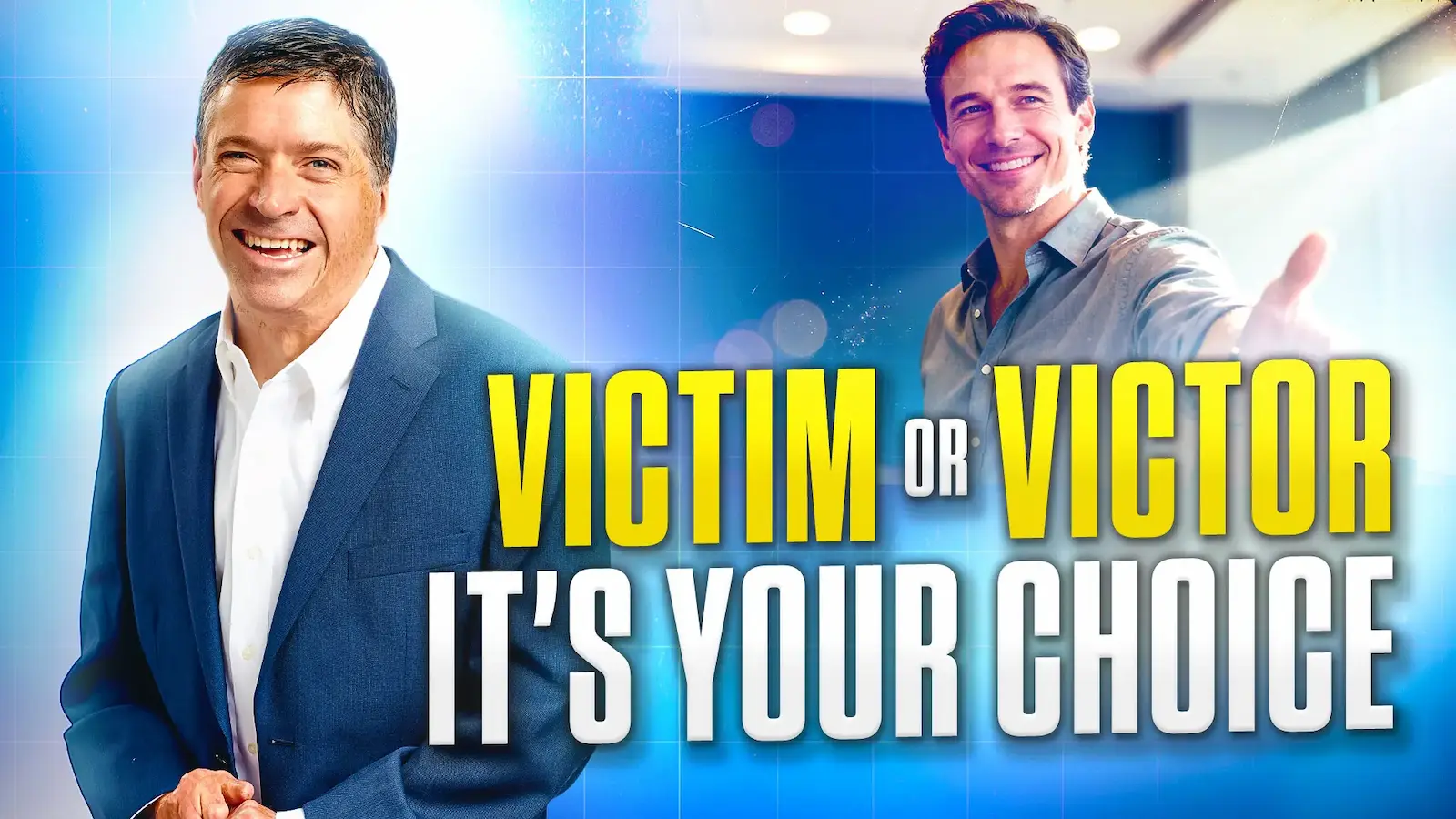
December 19, 2025The One Life Question That Separates Victims From Victors
One powerful question changed how keynote speaker John O'Leary chose to live his life. Discover the victim-or-victor framework that works for any challenge.
When Life Knocks You Down, Ask This Question
What would you do if doctors told you that you had less than a 1% chance of living? Additionally, what if you survived against all odds, but woke up with no fingers and scars covering your entire body? For most of us, it’s impossible to imagine that kind of pain. But for keynote speaker John O’Leary, this wasn’t a hypothetical scenario—it was his reality at just nine years old.
In 1987, John was a curious kid who made a catastrophic mistake while playing with fire and gasoline. The explosion burned 100% of his body, and medical professionals gave his family almost no hope. Months later, after countless surgeries and unimaginable suffering, John came home alive but forever changed. Yet what happened next in his childhwood bedroom would shape not just his recovery but his entire approach to living life with purpose and resilience.
This isn’t a story about toxic positivity or pretending everything’s fine when it’s not. Instead, it’s about a simple yet profound framework that anyone can use when life delivers its harshest blows. Whether you’re facing a career setback, health crisis, relationship struggle, or the daily grind that slowly wears you down, the question John’s father asked him that night offers a path forward.
? Watch and listen to the full interview about John’s life and transformational journey here
The Bedroom Conversation That Changed One Boy’s Life Forever
Picture a young boy lying in bed, angry and confused. John had survived the unsurvivable, but he couldn’t understand why this had happened to him. Why did he have to endure this pain? Why was his body destroyed? Why couldn’t he just be a normal kid? The “why me?” question consumed him, as it would consume anyone facing such trauma.
His father sat on the edge of the bed that night, and what he said next would become the foundation of John’s entire philosophy on life. “My sweet father, who is my hero in life, shuts the bedroom door, comes back over to me, puts his hands on my legs, looks me in the eye, and says, ‘John, darn it, why not you?'” John recalls.
That wasn’t the answer John expected. However, it was exactly what he needed to hear. His dad wasn’t minimizing the pain or suggesting John should be grateful for his suffering. Instead, he was presenting John with the most important choice he’d ever make: victim or victor.
“Victim or Victor, your choice, not mine,” his father told him. Those words became John’s north star, not only during his recovery but throughout his entire life. This wasn’t a one-time decision but a daily practice of choosing his identity, his response, and ultimately, his destiny.
The Framework That Turns Suffering Into Strength
John’s father didn’t just deliver a powerful question and walk away. Consequently, he gave John a practical framework for navigating life’s hardest moments. This framework has since helped tens of thousands of people at John’s more than 100 annual speaking events transform their relationship with adversity. Here’s how it works:
Name the Moment You’re In
The first step isn’t pretending everything’s okay or sugarcoating the pain. John’s dad didn’t tell him, “It’s not that bad” or “Look on the bright side.” He acknowledged the reality: John had been burned on 100% of his body, lost his fingers, and faced a long road ahead. Naming the moment means being brutally honest about what you’re experiencing. If you’re struggling financially, say it. If you’re heartbroken, admit it. If you’re burned out and exhausted, don’t mask it with false enthusiasm.
This honesty creates the foundation for everything else. You can’t choose to be a victor if you won’t first acknowledge that you’re in a fight. Furthermore, pretending your challenges don’t exist only gives them more power over your life. The motivational truth is that acknowledging pain is the first step toward transcending it.
Flip the Question
This is where John’s dad demonstrated true wisdom. Instead of letting John stay stuck in “Why me?” he reframed it to “Why not me?” This shift is subtle but revolutionary. “Why me?” assumes you’re uniquely cursed, singled out by fate for suffering. It positions you as a helpless target of random cruelty.
“Why not me?” acknowledges a different truth: everyone struggles with something. Your neighbor who seems to have it all together might be battling depression. That colleague who always appears confident might be drowning in debt. The friend with the perfect family might be dealing with private heartbreak. No one gets through life without facing significant challenges.
When you ask “Why not me?” you’re not celebrating your pain. Rather, you’re recognizing your membership in the human family. You’re refusing to let your suffering define you as uniquely broken or unworthy. This question doesn’t make the pain disappear, but it strips away the isolation that often makes suffering unbearable. Moreover, it opens the door to the most crucial choice of all.
Choose Your Identity Every Morning
Here’s what makes John’s story so powerful: he doesn’t claim he chose to be a victor once and never struggled again. The choice happens every single day. Some mornings, he wakes up and still feels the weight of what happened to him. The physical limitations remain. The scars are still there. Nevertheless, each morning presents the same question: Who will you be today?
This daily practice of choosing your identity transforms attitude from a vague concept into a practical discipline. You don’t need to feel like a victor to choose to be one. In fact, most days you probably won’t feel like it. The power lies in making the choice anyway, regardless of your feelings. Think of it like brushing your teeth—you don’t wait until you feel motivated to maintain your dental health. You just do it because you’ve decided it matters.
John applies this principle constantly in his life today. As a best-selling author with books like On Fire: The 7 Choices to Ignite a Radically Inspired Life and In Awe: Rediscover Your Childlike Wonder to Unleash Inspiration, Meaning and Joy, he shares this daily choice practice with audiences worldwide. His Live Inspired Podcast, which has generated over 7 million downloads, features conversations with guests like Brené Brown and Mitch Albom about these exact themes of daily choice and intentional living.
Find People Who Challenge You
John’s father didn’t comfort him with empty reassurances. He challenged John to be better than his circumstances. This distinction matters immensely. We all need comfort and support, but we also need people who refuse to let us settle for less than we’re capable of becoming.
The best people in your life aren’t necessarily the ones who make you feel good all the time. Instead, they’re the ones who see your potential and won’t let you ignore it. They’re the friends who call you out when you’re making excuses. They’re the mentors who expect more from you than you expect from yourself. They’re the family members who love you enough to tell you the truth even when it’s uncomfortable.
John’s work in storytelling emphasizes this point repeatedly. He doesn’t just share his story to inspire temporary feelings of motivation. He shares it to challenge people to examine who they’re surrounding themselves with and whether those relationships push them toward growth or enable stagnation. As a result, countless event attendees have restructured their inner circles after hearing John speak, seeking out relationships that elevate rather than simply comfort.
From Victim Thinking to Victor Living
The beautiful thing about John’s framework is that it doesn’t require perfect circumstances to work. You don’t need to wait until your life gets easier or your problems get smaller. The choice between victim and victor is available right now, in whatever situation you’re currently facing.
Consider what victim thinking looks like in daily life. It sounds like: “This always happens to me.” “I never get a fair chance.” “Other people have it easier.” “I can’t do anything about this.” These thoughts feel true when you’re in them, but they’re prisons that keep you stuck. Victim thinking focuses on what you can’t control and uses it as evidence that you’re powerless.
Victor thinking flips the script entirely. It asks: “What can I control right now?” “What’s one small step I can take today?” “Who can I become through this challenge?” “How might this struggle be preparing me for something I can’t see yet?” These questions shift your focus from what’s happening to you to how you’re responding to what’s happening.
The difference between these two mindsets isn’t just philosophical—it’s practical and measurable. John has built an entire career demonstrating this truth through his work with companies and organizations across industries like sales, healthcare, safety, marketing, finance, faith, education, and insurance. Organizations consistently describe him as “the best speaker we’ve ever had,” not because he tells them what they want to hear, but because he challenges them to live differently.
His approach to empowerment isn’t about empty slogans or superficial encouragement. It’s about equipping people with a genuine framework they can apply immediately. When you walk out of a John O’Leary presentation or finish one of his books, you leave with actual tools for transformation, not just temporary inspiration that fades by Tuesday morning.
The Daily Practice of Choosing Who You’ll Be
So, how do you actually implement this in your life? Start with your morning routine. Before you check your phone, before you dive into your to-do list, before you let the world’s demands crowd your consciousness, ask yourself: “Who will I be today?” Not who you feel like being, but who you choose to be.
This question works whether you’re dealing with major trauma like John’s or everyday challenges that slowly erode your spirit. Maybe you’re facing a difficult conversation at work. Maybe you’re struggling in your marriage. Maybe you’re trying to break a destructive habit that keeps pulling you back. Maybe you’re just tired of feeling like life is happening to you instead of being shaped by your choices.
The victim-or-victor framework applies to all of it. Name your moment honestly—don’t pretend the difficult conversation doesn’t scare you or that your marriage struggles aren’t real. Flip the question—recognize that everyone faces hard conversations, relationship challenges, and stubborn habits. Choose your identity—decide that today, right now, you’ll be someone who faces this challenge head-on rather than avoiding it or being defined by it. Seek challenge—find someone who will hold you accountable to being your best self rather than enabling your excuses.
John’s work in innovation often focuses on how this mindset shift unlocks creativity and breakthrough thinking. When you’re stuck in victim mode, all your mental energy goes toward defending yourself and explaining why things can’t change. When you shift to victor mode, that same energy becomes available for problem-solving and opportunity creation. Organizations that embrace this shift see measurable improvements in teamwork, productivity, and employee satisfaction.
The Legacy of a Father’s Wisdom
John’s father passed away recently, but his wisdom lives on in everything John does. That bedroom conversation decades ago created ripples that continue spreading throughout the world. Through John’s speaking, writing, podcasting, and now an upcoming feature film starring Joel Courtney, John Corbett, and William H. Macy, millions of people have encountered the victim-or-victor question.
The film On Fire, expected to be released throughout the country and around the world in 2025, will bring John’s story to an even wider audience. But the medium doesn’t matter as much as the message. Whether you encounter John’s story through a book, a podcast episode, a speaking event, or a movie theater, the core question remains the same: Who will you choose to be?
John’s approach to mindfulness integrates beautifully with this framework. Being mindful means being present to your choices rather than operating on autopilot. It means noticing when you’re slipping into victim thinking and consciously redirecting yourself toward victor living. This isn’t about perfection—John himself admits there are still days when victim thinking creeps in. The practice is in noticing it and choosing differently.
What makes John’s message so powerful is his authenticity. He’s not a motivational speaker who had an easy life and now lectures others about gratitude. He’s someone who faced unimaginable suffering, made the hard choice to be a victor, and continues making that choice every single day. His emotional storytelling, unexpected humor, and genuine vulnerability make each presentation unforgettable because people recognize they’re hearing from someone who truly understands what it means to choose your response when life gives you every reason to give up.
Your Choice Starts Now
Here’s the truth that John’s father understood and passed down to his son: you can’t control what happens to you, but you can absolutely control who you become through it. That nine-year-old boy in the hospital bed couldn’t control the explosion that burned his body. He couldn’t control the months of painful recovery or the permanent scars he would carry. But he could control his response. He could choose to let the tragedy define him as a victim, or he could choose to let it refine him into something stronger.
That same choice exists for you right now. Whatever you’re facing—whether it’s as dramatic as John’s story or as mundane as Monday morning frustration—the question remains: victim or victor? Are you going to let your circumstances write your story, or are you going to choose who you’ll be regardless of those circumstances?
This isn’t about denying reality or pretending everything’s perfect when it clearly isn’t. John’s framework specifically starts with naming the moment honestly. Acknowledge the pain, the frustration, the difficulty. But then flip the question. Ask yourself, why not you? Recognize your membership in the human family where everyone struggles. Choose your identity today. Decide who you’re going to be in life right now, in this moment, with these challenges.
And find people who challenge you to be better. Surround yourself with individuals who see your potential and won’t let you hide from it. Seek out mentors, friends, and family members who love you enough to push you toward growth rather than enabling comfortable stagnation. John’s relationship with his father exemplifies this kind of transformative connection—someone who cared enough to challenge rather than simply comfort.
Living an Inspired Life Through Daily Choices
John considers his greatest success to be his marriage to his wife Beth, their four children, and his relationships with friends and family. This detail matters because it shows that choosing to be a victor doesn’t mean sacrificing connection for achievement. In fact, the opposite is true. When you stop living as a victim of your circumstances, you become more present and available to the people who matter most.
The victim-or-victor choice affects every relationship in your life. When you’re stuck in victim thinking, you bring that energy into your interactions. You’re defensive, closed off, focused on your wounds. When you shift to victor thinking, you show up differently. You’re open, engaged, focused on contribution rather than grievance. This shift transforms not just your individual experience but your entire relational ecosystem.
John’s work with Rising Above Programs demonstrates this principle in action. He doesn’t just inspire individuals to change their mindset—he helps entire organizations shift their culture. When teams embrace the victim-or-victor framework collectively, they create environments where people challenge each other to be better, where accountability is welcomed rather than feared, and where setbacks become springboards for growth rather than excuses for stagnation.
The Live Inspired Podcast brings this philosophy to life through conversations with world-class guests who embody these principles in diverse fields. Listening to John interview people like Jackie Joyner-Kersee or Bob Costas reveals a common thread: successful, fulfilled people aren’t those who avoided adversity but those who chose how to respond to it. They all made the daily choice to be victors in their own lives, regardless of what circumstances they faced.
The Question That Changes Everything
So we return to where we started: what would you do if life knocked you down? John O’Leary’s answer, learned from his father in a childhood bedroom decades ago, remains the most powerful framework available: name your moment, flip the question, choose your identity, and find people who challenge you.
This isn’t a one-time decision but a daily practice. You won’t always get it right. Some days you’ll slip back into victim thinking, and that’s okay. The practice is in noticing it and choosing again. Over time, these daily choices compound into a life that looks radically different from where you started. Not because your circumstances became perfect, but because you became someone who responds to circumstances with intentionality rather than reactivity.
John’s story proves that the most devastating moments in life can become the foundation for the most meaningful existence—but only if you make the choice. The explosion that burned his body could have burned his spirit too. Instead, through his father’s wisdom and his own daily practice of choosing to be a victor, he transformed that tragedy into a platform that now inspires hundreds of thousands of people every year.
Your circumstances might be different, but the choice is the same. Victim or victor. It’s your choice, not anyone else’s. Not your boss’s, not your spouse’s, not your parents’, not fate’s. Yours. What will you choose today?
Make the Choice That Transforms Your Life
The victim-or-victor framework that John O’Leary learned from his father isn’t just theory—it’s a practical tool you can implement immediately. Starting today, you can begin the practice of choosing who you’ll be rather than letting your circumstances choose for you. The question “Why not me?” doesn’t minimize your pain but contextualizes it within the universal human experience of struggle and growth.
As John prepares to share his story with an even wider audience through the upcoming film, the core message remains unchanged: you have more power than you think. Not power over what happens to you, but power over who you become through what happens to you. That power lives in the daily choice between victim and victor. It lives in the moment-by-moment decision to name your reality honestly, flip the question, choose your identity, and surround yourself with people who challenge you to be your best self.
The bedroom conversation that changed John’s life can change yours, too. Not because it offers easy answers or quick fixes, but because it offers something more valuable: a framework for living with purpose, meaning, and dignity regardless of what life throws at you. That’s the true definition of inspirational living—not avoiding adversity, but choosing how to respond to it with courage and intentionality.
Bring This Life-Changing Message to Your Organization
Ready to experience the transformative power of John O’Leary’s message firsthand? Whether you’re planning a conference, corporate event, or team gathering, John’s authentic storytelling and practical framework will challenge your audience to choose victor over victim in their daily lives.
Watch the full conversation to hear John share more about how his father’s wisdom shaped his entire approach to life and success.
Book motivational speaker John O’Leary for your next event and give your team the tools to transform adversity into opportunity.
Schedule a call to discuss how John’s message can elevate your organization and inspire your people to choose their best selves every day.
Reach out directly with any questions about bringing this life-changing presentation to your event.
The choice between victim and victor starts now. Who will you choose to be today?
Discover More Insights




Get in TouchContact US
Fill out the form so we can best understand your needs.
A representative from The Keynote Curators will reach out to you.
Our Services
Keynote Speakers Topics
© 2026 The Keynote Curators. All Rights Reserved | Terms and Conditions
The Keynote Curators, 8275 South Eastern Avenue, Suite 200, Las Vegas, NV 89123
Local (310) 299-4595 | Toll Free (888) 585-8715 | info@thekeynotecurators.com
The Keynote Curators - Top Keynote Agency, USA.