
Book Tali Sharot through The Keynote Curators
Biography
Award-winning author and acclaimed professor, Tali Sharot is a leading expert on decision-making, emotion, influence, motivation, and mental health. She is on the faculty of MIT and UCL, where she directs the Affective Brain Lab. Sharot’s thought-provoking insights have helped organizations and governments induce behavioral change, create decision-making policies, and improve the well-being of employees and customers.
Tali Sharot’s groundbreaking work at the intersection of behavioral economics, psychology, and neuroscience has been used by businesses to improve leadership skills, rethink messaging, and refine strategy. Her books – The Influential Mind: What the Brain Reveals About Our Power to Change Others and The Optimism Bias: A Tour of the Irrationally Positive Brain – have been widely praised, including by the New York Times, TIME magazine, Forbes, and more.
Her book, co-authored with Cass Sunstein, tells the story of how, over time, people stop noticing the good and the bad around them, and how to make these salient again so we can marvel in the good and change the bad.
Tali Sharot is known for delivering engaging talks that are simultaneously lively and informative – explaining deep ideas about human behavior in a simple way and highlighting how those insights can be implemented in a range of fields, including finance, marketing, health, and public policy. Her TED talks have been viewed over 13 million times in total.
Tali Sharot has been a repeated guest on CNN, The Today Show, MSNBC, and co-presented the BBC’s Science Club. Her speaking audiences also include Google, Microsoft, the European Parliament, Goldman Sachs, Prudential, Citibank, Deloitte & Touche, Johnson & Johnson, and the World Economic Forum, among many others. She has written for top publications including TIME magazine, The Guardian, The Washington Post, and the New York Times.
Contact us for Tali Sharot fees and availability
Videos
Speech TopicsExpand each topic to learn more
Even stimulating jobs, breathtaking works of art, exciting new gadgets, lose their sparkle after a while. We desensitize to what is wonderful around us. We also stop noticing what is not-so-great: cracks in a relationship, a culture of fraud that developed slowly within a company or the gradual rise of misinformation. It is not that we are lazy or stupid. It is that our brain evolved to respond to what is new and different, not to things that are constant or change gradually. As a result, we stop noticing what is suboptimal and so fail to try and make changes. We also stop noticing what is good in our lives and so we don’t feel the joy. But what if we could ‘dishabituate’?
Based on her new book Look Again, Sharot shares what psychology and biology tell us about why we stop noticing both the great and not-so-great things around us and how to regain sensitivity in the office, at home, online, and at the store, so we can enjoy what is good and change what’s not.
Change, uncertainty and unrest have taken a toll on people’s well-being. Stress, depression, and anxiety are on the rise, directly impacting our physical health and productivity. What can we do at the workplace and at home to improve the mental health of our colleagues, employees, and customers? What can we do to induce happiness? Sharot’s intriguing answers are based on research in neuroscience, behavioral economics and psychology. Sharot emphasizes the joy of anticipation and the pain of dread, the importance of having a sense of agency for well-being, and the perils of social comparison. She explains why our mind uses a ‘grayscale’ to perceive the world and how we might turn it off to see in color again.
A major goal of managers and companies is to induce behavioral change. We want to influence the actions of our clients, employees and colleagues in positive ways. Sharot has advised some of the world largest companies, including Pepsi, Bank of America and Prudential, on how to do exactly that. In this engaging, thoughtful and humors presentation Sharot shares which factors – according to science – have the largest impact on peoples’ actions, and why. Using her own cutting-edge research she explains how we can use innate human tendencies to nudge people in the right direction, and which commonly used approaches often back-fire. The audience learn powerful practical applications for inducing change and gains a deeper understanding of human behavior.
Making good decisions is key to the success of any company and a critical skill for leaders and investors. Yet, making wise choices, whether regarding finances, business or health, are difficult. We now know that human decision-making is rife with bias; from over-confidence to irrational optimism and future discounting. The good news is that understanding where people go wrong enables us to improve the decision-making process. Sharot occupies a unique spot at the intersection of behavioral economics, neuroscience, and psychology. From this rare seat Sharot integrates up-to-date research in decision science and transforms this knowledge into practical insights. In this lively talk Sharot helps the audience identify systematic decision-making errors and offers creative and practical methods for corrections and improvement.
Part of our daily job is to affect others; we advise our clients, guide our patients, teach our children and inform our online followers. Yet, science shows we systematically fall on to suboptimal habits when trying to change others – from insisting the other is wrong to exerting control. Based on her award-winning book, The Influential Mind, internationally acclaimed behavioral neuroscientist, Tali Sharot, explains how an attempt to influence will be successful only if it is well-matched with the core elements that govern how we think and feel. Sharot explains why providing data and numbers alone can be a weak approach to influence and why emotions and narrative often have strong impact. By understanding the minds and brains of those around us, we become better at advising and communicating information.
Testimonials
Booksby Tali Sharot
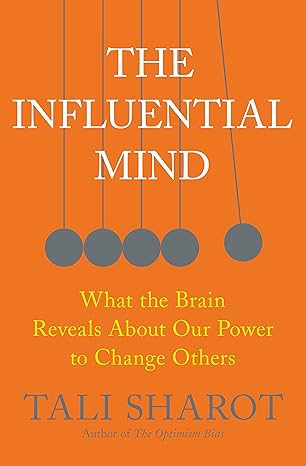
The Influential Mind
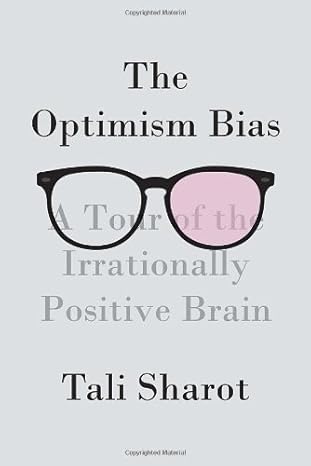
The Optimism Bias
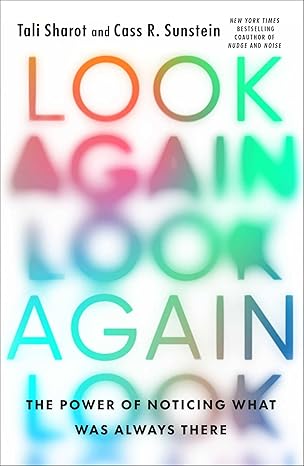
Look Again
For Meeting Planners


Get in TouchContact US
Fill out the form so we can best understand your needs.
A representative from The Keynote Curators will reach out to you.
Blog Posts

Leadership Lessons From a Futurist on Hope and Resilient Teams
Leadership feels heavier right now. Almost every leader I talk with says some version of the same thing. The pace is faster, the news is louder, and the people they lead are tired. Many of...
Read More
Why ‘Better Problems’ Are Better Than Perfect Plans
Learn why better problems beat perfect plans. Jason Feifer shares how to judge ideas by the problems you trade, not the ones you avoid.
Read More
Change Starts When You Embrace Your Emotions, with Cassandra Worthy
Change starts when you embrace your emotions. Cassandra Worthy shows how to read your feelings as signals and turn discomfort into forward movement.
Read More
Breast Cancer Awareness Needs More Than Pink Ribbons and Good Intentions
Breast cancer awareness doesn't end in October. Here is what real workplace support and easier access can look like all year.
Read More
How to Create Event Experiences People Will Always Remember
What makes an event memorable? Dr. Robyne Hanley-Dafoe explains why full presence beats polls, phones, and gadgets in any live room.
Read More
Leadership Succession Planning Is the Advantage No One Is Building
Leadership succession planning is the biggest competitive advantage most companies ignore. Here's why the gap matters and how to close it.
Read More
Workplace Culture Lessons on Trust and Safety with Danny Goldberg
Danny Goldberg explains how leaders can close the gap between the workplace culture they intend and the one employees actually feel.
Read More
Real Productivity Is About Deciding What Not to Finish Before Year-End
Real year-end productivity means finishing fewer things well rather than everything done. Here is how to choose what deserves your time before December 31.
Read More