

March 3, 2026Women’s History Month Keynote Speakers Who Change What Happens Next in 2026
Women's History Month demands more than applause; discover keynote speakers who create recognition that drives real change.
The U.S. women’s hockey team just won Olympic gold. And somehow the conversation still found a way to shrink it.
Not about the overtime win. Not about the records broken. Not about the discipline required to keep showing up in a sport that still doesn’t default to giving women the spotlight. The win was real, undeniable, historic — and yet there it was, sharing oxygen with something much smaller than it deserved.
That’s exactly the point.
Women can accomplish something extraordinary and the world will still try to reframe it. As “inspiring.” As “interesting.” As “a nice story.” Women’s History Month is here — and if we’re going to talk about it honestly, I want to be direct about what recognition actually means versus what we’ve gotten comfortable performing.
I don’t want celebration for its own sake. I want recognition that sticks. The kind that changes who gets trusted. Who gets funded. Who gets believed. Who gets booked. Who gets the mic when the stakes are real and the room is full.
This is personal for me. I’m a proud dad of girls, which means the world is teaching them lessons every day whether I consent to the curriculum or not. So I’d rather offer a better one — and I’d rather do it publicly.
The most powerful thing you can do for women isn’t applaud them. It’s put their voices where decisions get made.
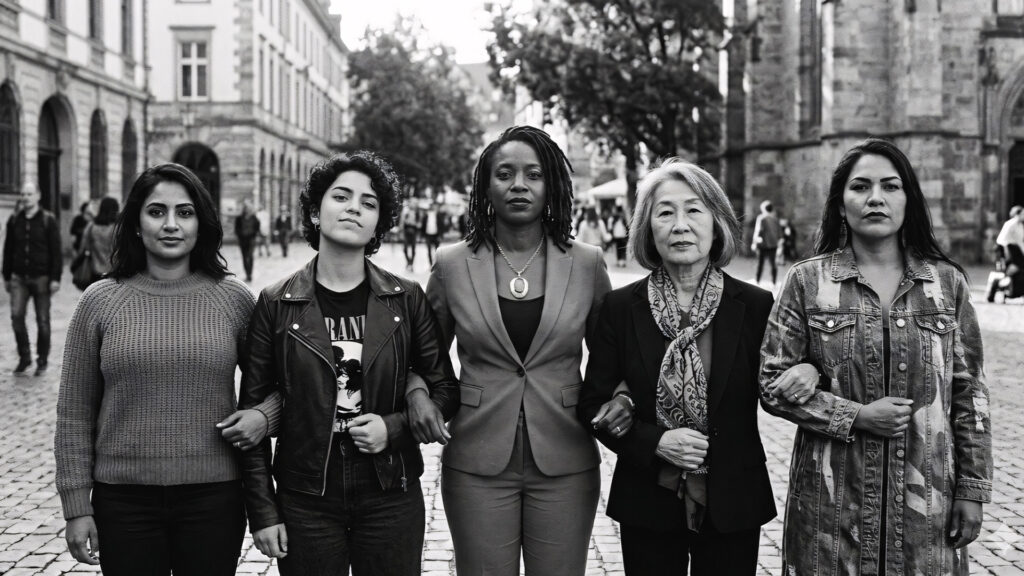
Women’s History Month Deserves More Than Performative Programming
We’ve gotten better at praising women. But we’re still inconsistent at centering them.
You see it in sports, in science, in boardrooms, and in breakout sessions at every major conference. Women are doing world-class work — and then getting asked to share their story on a panel at 8:00 a.m. in a half-full room while the prime slots go to the usual suspects. That’s not celebration. That’s a scheduling choice. And scheduling choices are a form of values statement, whether we intend them to be or not.
So here’s a strategic reframe for anyone designing March programming: don’t treat women as a month. Treat them as a standard. Because when you curate stages, you’re not just filling time — you’re broadcasting who the world should listen to. The agenda is a message. Make sure it says what you actually mean.
The most lasting impact from any event doesn’t come from the catered lunch or the branded lanyard. It comes from who stood at the front of the room and what they made people believe was possible.
If you’re building a Women’s History Month event and you’re still treating it as an obligation box to check, I’d gently suggest: the room will feel it. Your audience always knows.
Women’s History Month Keynote Speakers I recommend in 2026
Jess Ekstrom: Hope With Structure and Strategy
Jess Ekstrom has a rare gift — she makes optimism feel credible. Not the glossy, everything-will-work-out kind. The kind that has survived friction and failure and still functions. She’s for audiences who need permission to believe again, without being given a lie to replace what they’ve lost.
What shifts in the room when Jess speaks isn’t just mood — it’s posture. People stop waiting for confidence to arrive and start building it with what they already have. For Women’s History Month programming, that message carries weight far beyond the event itself.
Gaby Natale: Stop Auditioning for Belonging
Gaby Natale doesn’t just talk about leadership — she talks about ownership. The specific, deliberate decision to stop auditioning for a seat at someone else’s table and start building the one you actually came to build. Her message isn’t abstract. It has texture and teeth.
What shifts in the room is a fundamental question swap. People trade “Do I belong here?” for “What am I actually building?” That’s not a subtle distinction. For any audience grappling with imposter syndrome, gatekeeping, or what it takes to lead as a first in any room, Gaby’s work doesn’t just land — it redirects.
Shelley Paxton: Success Without Self-Abandonment
Shelley Paxton is for high performers who are quietly exhausted by their own ambition. Her work earns the room fast because it doesn’t flinch. She’s honest about identity, about meaning, about what it actually costs to keep saying yes to a version of your life that stopped fitting somewhere along the way.
This isn’t a “work-life balance” keynote wrapped in a different language. It’s a genuine interrogation of what we’ve agreed to, why, and what’s still available if we choose differently. For leadership audiences — especially those who’ve achieved the external markers and still feel something is off — Shelley gives them language they didn’t know they needed.
Rashmi Airan: Integrity Under Pressure
Rashmi Airan doesn’t do inspiration. She does consequence. Her story is built around choices, blind spots, and what it takes to rebuild trust after it breaks — and she delivers it with a clarity that makes you want to look at your own decisions more carefully.
This is a masterclass in accountability without shame. It’s for organizations that understand ethics isn’t a policy document — it’s a daily practice, often tested in moments no one planned for. What shifts in the room is a specific kind of courage: the willingness to look honestly at the messy middle of leadership and own it without deflection.
Vernice “FlyGirl” Armour: Courage With Altitude
Vernice “FlyGirl” Armour doesn’t ask a room to believe in themselves. She challenges them to stop negotiating with their own capacity — and she brings the receipts. As America’s first Black female combat pilot, her credibility isn’t manufactured. It’s operational.
What shifts in the room is action. Not inspiration that fades by the parking garage. Actual movement. People stop shrinking from what they’ve been delaying and start closing the gap between where they are and what they said they wanted. For Women’s History Month programming, Vernice is the kind of voice that makes prime-stage placement feel obvious in retrospect.
More Women I’d Put on Stage This Month
Beyond the five above, there are several more voices I’d recommend without hesitation for the right audience and context.
Courtney Lohmann is built for the realities of modern leadership — emotional intelligence, culture, and performance that doesn’t require burnout as a prerequisite. She’s the kind of voice that makes “soft skills” feel like exactly what they are: high-leverage competencies that drive results.
Emma Seppälä brings science-backed wellbeing that performs in the real world — not self-care talking points but emotional fitness, compassion, and recovery as the skills that keep teams resilient without making them numb.
If your audience is hungry for innovation that’s actually grounded — tech, sustainability, systems thinking — Samantha Radocchia brings the future down to earth in a way that’s usable rather than abstract. She’s exceptional for audiences who want to build what’s next without drowning in buzzwords.
And Lauren Simmons represents disciplined ambition in its most compelling form — the “I didn’t wait for permission” arc, delivered without gimmicks, and particularly powerful for audiences navigating confidence, money, and opportunity.
How to Design Women’s History Month Programming That Isn’t Performative
The question worth sitting with isn’t just who to book. It’s how you design the moment around them.
The simplest and most significant signal you can send is where you place women on the agenda. Not the 8:00 a.m. panel. Not the diversity breakout running in parallel with the session everyone actually came for. The opening keynote. The closing message. The mainstage voice that sets the tone for everything that follows. Women aren’t an add-on to a strong program — they’re the headline. When they’re treated as such, the audience notices, and the message is clear.
Beyond placement, the best events pair story with a mechanism. Applause fades. What stays is structure. A keynote paired with a leadership prompt managers use the following week. A talk followed by mentorship matching or open office hours. A session that ends with a one-page commitment specific enough to measure. The story creates the opening; the mechanism makes it actionable. Without the latter, even the best keynote becomes a memory that competes with everything else on a Monday morning.
The third element is the one most planners overlook: designing what I call the “permission moment.” The best Women’s History Month programming doesn’t just teach something — it creates a moment where someone in the room decides, quietly or loudly, that they’re done waiting. That means building for voice. Better Q&A framing. Small-group reflection that gives quieter people a way to contribute safely. Language from the stage and the facilitation that signals: you’re allowed to try, speak, and lead here. The room doesn’t produce that permission automatically. You have to architect it.
The Question I’m Asking Every Planner This Women’s History Month
If your March stage could do one thing — just one — what would you want it to make possible?
More courage? More clarity? More ownership? More women taking the mic without apologizing for taking up space? I ask this question not as a rhetorical exercise but because the answer tells you everything: which voice fits, how to frame the session, where in the agenda it belongs, and what you’re asking the audience to do differently after they leave.
The world already knows how to clap for women. What it needs is more rooms that change what happens next. More moments designed not to celebrate the past but to alter what gets decided, built, and led in the months ahead. That’s the difference between a Women’s History Month event that people remember in March and one they’re still referencing in November.
If you want to compare notes on what kind of voice fits your audience this month, I’d love to hear from you. Tell me your audience and industry, the type of event — conference, kickoff, leadership summit — and what you want to be different after. I’ll send back a few speaker recommendations and share how I’d frame the session so it lands and actually sticks.
Delivering impact, by design.
Seth
Ready to find the right voice for your Women’s History Month stage?
Schedule a conversation here or reach out directly at info@thekeynotecurators.com — and if you want more programming ideas, speaker recommendations, and event strategy in your inbox, subscribe to our newsletter and start receiving updates. ✉
Discover More Insights





Get in TouchContact US
Fill out the form so we can best understand your needs.
A representative from The Keynote Curators will reach out to you.
Our Services
Keynote Speakers Topics
© 2026 The Keynote Curators. All Rights Reserved | Terms and Conditions
The Keynote Curators, 8275 South Eastern Avenue, Suite 200, Las Vegas, NV 89123
Local (310) 299-4595 | Toll Free (888) 585-8715 | info@thekeynotecurators.com
The Keynote Curators - Top Keynote Agency, USA.