
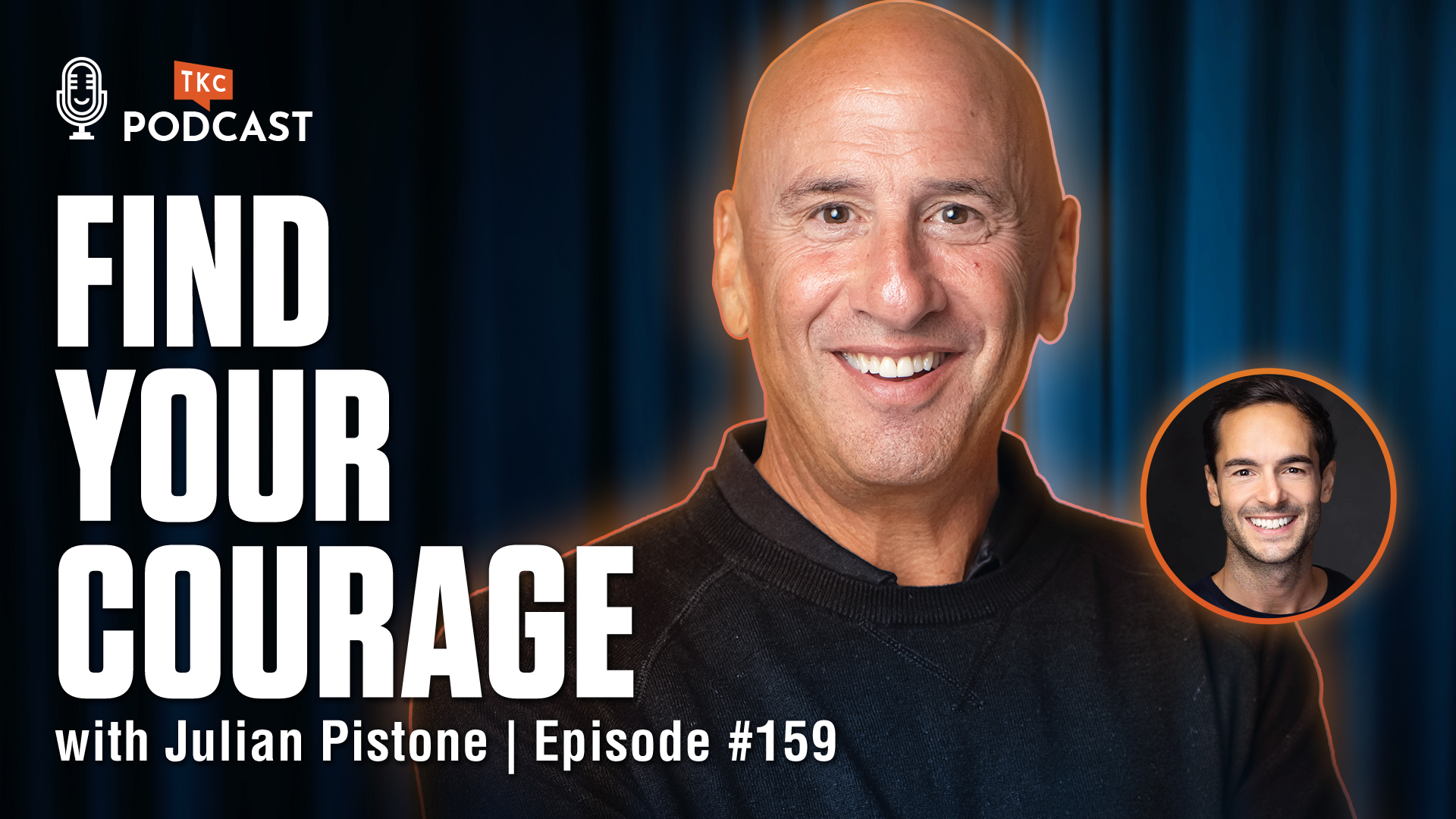
March 12, 2026Courage in Leadership That Turns Fear into Purpose and Action, with Julian Pistone
Discover how courage in leadership transforms fear into purpose and action, with insights from keynote speaker Julian Pistone.
Courage doesn’t announce itself. It shows up quietly, in the moment you decide to have the honest conversation you’ve been avoiding, to make the call you’re not sure about, or to lead in a direction that hasn’t been proven yet. And in a world moving as fast as ours, that kind of courage isn’t optional anymore — it’s the difference between leaders who shape what’s next and those who simply react to it.
I sat down with keynote speaker Julian Pistone, a former Google leader who has spent over two decades helping CEOs, investors, and policymakers transform disruption into momentum. What Julian brought to our conversation wasn’t a motivational script or a list of leadership platitudes. It was something more grounded — a framework rooted in neuroscience, cinematic storytelling, and real field research gathered from some of the most courageous humans on the planet. His perspective on what it actually takes to lead courageously is one of the most practical and human things I’ve heard in a long time.
🎧 Watch and listen to the podcast episode: YouTube • Spotify • Apple Podcasts • Amazon Music
Courage in Leadership Starts Where Fear and Purpose Intersect
One of the first things Julian said that stopped me was this: “Courage comes alive the moment fear meets purpose.” It sounds simple until you sit with it. Most of us have been taught to treat fear as a signal to slow down, to reassess, to protect ourselves. But Julian flips that entirely. He sees fear as a compass — something that tends to point directly at the things that matter most.
This isn’t wishful thinking. It’s backed by how the brain actually works. When we feel fear around a decision or a relationship or a direction we’re considering, it’s often because there’s genuine weight there. Something meaningful is at stake. And that meaning, Julian argues, is exactly what courage runs on. Strip away the purpose, and courage becomes recklessness. Add purpose back in, and suddenly fear becomes something you can move through rather than something that stops you.
For leaders operating in environments defined by change, this reframe is everything. The volatility isn’t going away. The uncertainty isn’t going away. What can change is how leaders orient themselves inside that uncertainty — and whether they’re using fear as data or letting it drive.
The Courage Triangle Is the Framework Leaders Have Been Missing
Julian introduced something during our conversation that I’ve been thinking about ever since: what he calls the courage triangle. It’s a three-part process, and it’s deceptively simple. Name the fear. Connect it to a bigger purpose. Choose one action. That’s it. That’s courage in motion.
What makes this powerful isn’t the elegance of it — it’s the practicality. Most leadership frameworks ask you to think bigger, to reframe your mindset, to shift your perspective. The courage triangle does all of that, but it always ends with a concrete move. One action. Not a strategy, not a transformation plan, just a single step that you can take today that reflects what you actually believe and what you’re actually afraid to do.
I’ve spoken with a lot of thought leadership voices over the years, and what sets Julian apart is that he doesn’t let you stay in the abstract. He keeps pulling the conversation back to the specific and the personal. What is the fear? Not fear in general — your fear, right now, about this decision or this relationship or this direction. What purpose does it connect to? And what is the one honest, intentional action that would move you toward it?
That specificity is where courage actually lives.
What Two Decades of Global Work Taught Julian About Courage
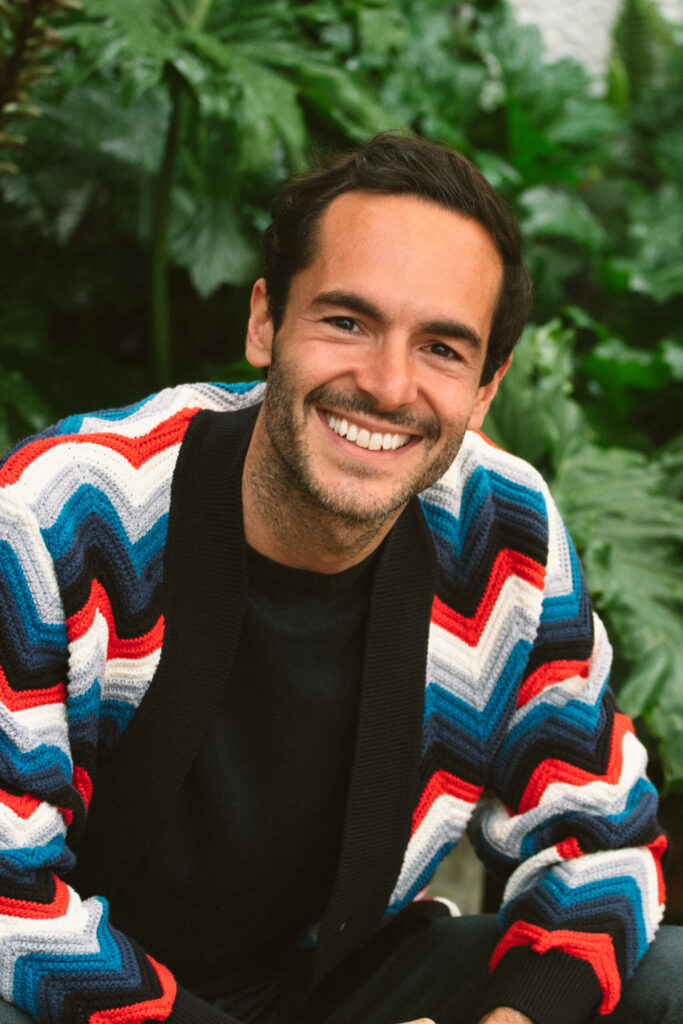
Julian has spent ten years inside Google, worked alongside executives from McKinsey, IBM, YouTube, Uber, and the Gates Foundation, and co-founded Corage, a global impact network that brings together changemakers across business, government, science, and philanthropy. He’s also traveled the world for the Cor-age Series documentary, produced with award-winning filmmakers from Netflix, National Geographic, and MTV4REAL, capturing the stories of people doing genuinely brave things under impossible circumstances.
What all of that fieldwork taught him is that courage is not a personality trait. It is not something some people have, and others don’t. It is a practice. It is a skill. And like any skill, it responds to repetition, to intentional development, and to the kind of environment that either supports or suppresses it.
This matters enormously for anyone thinking about business leadership in the current moment. If courage is a practice rather than a fixed quality, then it can be built. It can be modeled. It can spread through an organization in ways that actually change how people show up, communicate, and make decisions under pressure. Julian’s work is devoted entirely to making that possible — and the cinematic approach he brings to it, built with Pulitzer- and Emmy-winning filmmakers, is part of why it lands so differently than a standard keynote.
How Courage Spreads Through Teams and Organizations
One of the most important things Julian and I talked about was the contagious nature of courage. Brave actions, he said, ripple outward. When a leader is honest about uncertainty rather than performing false confidence, something shifts in the room. When someone speaks the truth that everyone else has been tiptoeing around, others feel permission to do the same. That permission is not nothing — it is the foundation of a culture where people actually say what they think, make real decisions, and hold themselves accountable to outcomes that matter.
The inverse is also true. When leaders consistently model avoidance — soft-pedaling hard truths, delaying the necessary conversation, hedging every decision into meaninglessness — that ripples outward too. Teams learn from what they see, not from what they’re told. And if what they see is a leader who flinches at the critical moment, they will flinch too.
This connects directly to the future of work conversations happening inside organizations right now. As AI reshapes roles, workflows, and expectations, the human qualities that cannot be automated — courage, judgment, the willingness to make a call when the outcome isn’t certain — become more valuable, not less. Julian argues that the greatest risk in the age of AI isn’t technology. It’s hesitation. It’s the leaders and organizations that respond to disruption by going quiet and waiting for someone else to define what’s next.
Legacy Is How Courage Ultimately Gets Measured
There’s a moment in our conversation where Julian shifts from the tactical to the deeply personal, and it’s one of the parts that has stayed with me most. He talks about legacy — not in the abstract, self-help sense, but in a very direct and almost urgent way. “What people remember most comes back to how you loved, led, and impacted them.”
This is courage reframed as something long-term. It’s not just about the decision in front of you today. It’s about what you’re building across all the decisions you make, across all the relationships you hold, across the entire arc of your leadership. When you think about it that way, the courage triangle isn’t just a decision-making tool. It’s a way of living in alignment with what you actually want your leadership to mean.
For anyone working in inspirational and motivational spaces — coaches, speakers, event professionals, organizational leaders — this framing is particularly resonant. It takes courage from being a momentary act of bravado and turns it into a sustained commitment to something larger than any single outcome.
Why Event Professionals Already Practice Courage Every Day
Here’s something I don’t think gets said enough in our industry: curating speakers, building programs around high-stakes themes, and guiding clients toward decisions that will define a room full of people’s experience of an event — all of that takes courage. Real courage. The kind that means recommending someone because they’re right for the audience, not because they’re the safe, familiar choice. The kind that means having the honest conversation with a client when the brief doesn’t match the goal.
Leadership in events isn’t just logistical. It’s deeply human. And when we apply the courage triangle to the work we do — naming the fear of a bold recommendation, connecting it to the purpose of delivering a genuinely transformative experience, and taking one clear action — we are practicing exactly what Julian teaches.
That’s not a coincidence. It’s what courage looks like in a professional context.
Innovation and Courage Are Inseparable Forces
Julian’s work sits at the intersection of innovation and human behavior, and one of the through lines in our conversation is that real innovation — the kind that changes something, not just the kind that sounds interesting in a pitch deck — requires courage at every stage. It takes courage to name the problem everyone else is walking past. It takes courage to propose the solution that doesn’t have a proven track record. It takes courage to implement it, to own the failure if it comes, and to iterate through the discomfort until something works.
Technology is accelerating all of this. The rate of change inside organizations, industries, and entire economies is moving faster than most leadership frameworks were built to handle. And what Julian offers is not a framework for managing change from a safe distance — it’s a practice for engaging with it fully, with your whole self, in ways that are grounded in both neuroscience and genuine human experience.
The societal issues dimension of this is worth naming too. Geopolitical uncertainty, institutional fragility, the erosion of trust across almost every major system — these are not background noise. They are the context inside which leaders are making decisions today. And Julian’s argument is that courage, applied at scale, through networks like Courage and through the leaders he works with globally, is one of the few forces capable of producing the systemic change that the moment actually demands.
Small Courage Muscles Built Through Daily Honest Action
Courage doesn’t only show up in dramatic, high-stakes moments. Julian is clear about this. Some of the most important courageous work happens in the small, daily decisions: giving honest feedback instead of vague encouragement, having a direct conversation rather than a circular one, saying clearly what you mean when ambiguity would be easier.
These small acts compound. They build what Julian describes as courage muscles — a habituated capacity to act with intention and honesty even when it’s uncomfortable. And because courage is contagious, these small acts don’t just strengthen the individual. They signal to everyone around that leader that directness is safe, that honesty is valued, that the culture rewards conviction over comfort.
This is practical world affairs thinking brought into the everyday. The qualities we need in our institutions, in our governments, in our global systems — we can practice them in our conversations, our meetings, and our decisions. And when enough people do that, something larger shifts.
If courage is the missing key in an age of AI-led disruption and geopolitical uncertainty, then every honest conversation, every intentional act of leadership, every moment of naming the fear and choosing the purposeful action anyway — those are the moments that actually build the future.
Ready to bring this kind of courage to your next event?
Book Julian Pistone for your stage and give your audience a keynote experience that will genuinely change how they lead.
Want to talk it through first? Schedule a 15-minute conversation here, and let’s see if Julian is the right fit for your audience and theme. 📩
You can also reach me directly at info@thekeynotecurators.com with your audience details and goals — I’ll come back to you with an honest answer.
Discover More Insights



Get in TouchContact US
Fill out the form so we can best understand your needs.
A representative from The Keynote Curators will reach out to you.
Our Services
Keynote Speakers Topics
© 2026 The Keynote Curators. All Rights Reserved | Terms and Conditions
The Keynote Curators, 8275 South Eastern Avenue, Suite 200, Las Vegas, NV 89123
Local (310) 299-4595 | Toll Free (888) 585-8715 | info@thekeynotecurators.com
The Keynote Curators - Top Keynote Agency, USA.