

May 1, 2026Courageous Leadership Skills Every Event Planner Needs
Discover the courage mindset event planners need to lead with confidence, manage risk, and thrive in high-pressure event environments with insights from Julian Pistone.
What if the most important skill for your career as an event planner has nothing to do with logistics, vendor contracts, or run-of-show documents?
If you have spent any time in this industry, you already know that an event can fall apart in a dozen different ways before lunch. You manage risk at a scale most professionals never encounter, and you do it while keeping a calm face for your clients, your team, and your speakers. But here’s what I’ve noticed after more than 20 years of working closely with meeting professionals: most of them don’t actually recognize what they’re doing as courage. They just call it the job.
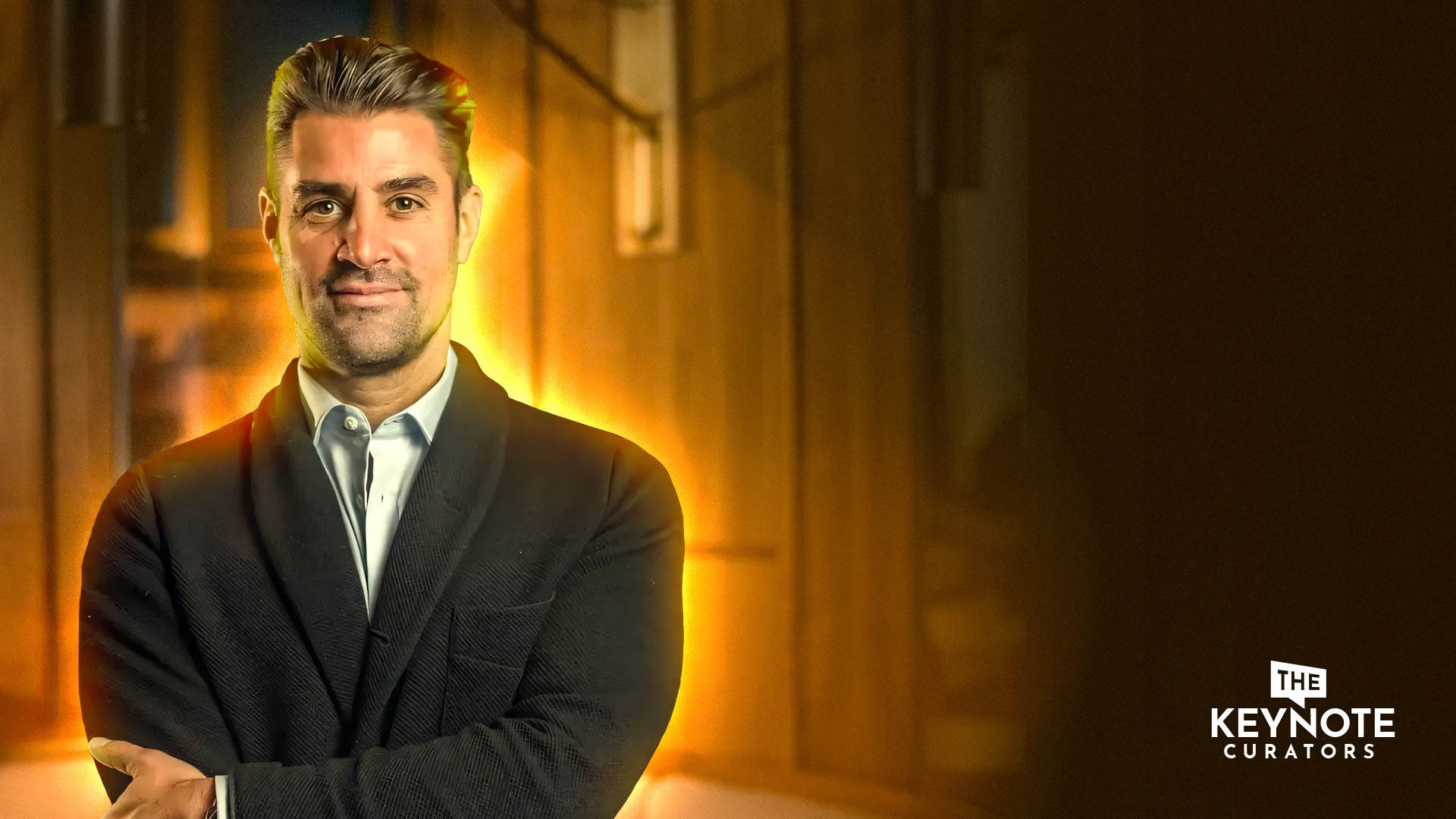
That framing is worth challenging, and it’s exactly what Julian Pistone, a former 10-year Google leader turned global keynote speaker, helped me rethink in a recent conversation. Julian has built a neuroscience-backed courage framework, developed alongside Dr. Stephen Sideroff of UCLA, that he uses with executives, policymakers, and board-level leaders at organizations like the Gates Foundation, McKinsey, and AB InBev. When I applied that framework directly to the world of event planning, the conversation opened up in ways I did not expect.
In this post, I want to share what I learned, why courageous leadership is already baked into the event profession, and how understanding that changes the way you show up at work, in those high-stakes internal conversations, and on the day itself.
🎬 Watch and listen to the full interview about event planning and courageous leadership here
The Event Profession Demands Courageous Leadership Whether You Ask for It or Not
One of the things Julian said early in our conversation stopped me cold:
“I believe events and being the person managing the event is probably amongst the most stressful jobs that you can have, which automatically means you’re being courageous because there’s so much risk that you’re managing.”
I’ve said similar things to event planners for years, but hearing it framed through the lens of courage, and backed by a scientific model, gave it a different weight. This isn’t just validation. It’s a structural argument: if the definition of courageous behavior includes moving forward in the presence of significant risk, then event planners are practicing courageous leadership as a baseline function of their role.
Think about what that actually covers. You are booking speakers and attaching your professional name to that recommendation. You are making a case to a CEO, a board, or a budget committee that this speaker, this venue, this format, this spend is the right one. You are coordinating moving parts across vendors, AV teams, catering, transportation, and talent, knowing that any one of those can go sideways on the day. And then, when event day comes, you are the calm center of a storm that no one in the room can see.
That is not project management with a few soft skills sprinkled on top. That is courageous leadership applied in real time, under pressure, with real professional consequences.
Most event professionals, as Julian pointed out, probably don’t even realize how courageous they already are. The goal isn’t to become brave; it’s to recognize that you already are, and to learn how to use that recognition strategically.
Understanding the Courage Triangle and What It Means for Your Event Career
Julian’s courage framework, the model he brings to C-suite retreats and leadership conferences around the world, is built around what he calls the courage triangle. Its three points are: fear, purpose, and action. Understanding how those three elements interact is the starting point for developing courageous leadership in any professional context, including event planning.
Fear, in Julian’s model, is not a sign that you shouldn’t proceed. It is a signal that what you are about to do matters. If you feel nothing when you’re pitching a $400,000 speaker to a skeptical CFO, that might mean you’re either completely detached or have nothing at stake. Fear, in other words, is a data point. It tells you that risk is real, that your professional investment is real, and that the outcome matters. That reframe alone can change how you walk into a difficult conversation.
Purpose is the second point, and for event planners, this one is often already in place even if it isn’t named. When Julian works with event professionals, he notices they tend to carry what he calls a deep purpose in their work. They genuinely want the event to land well for the audience. They want the keynote to shift something in the room. They want attendees to leave differently than they arrived. That is a noble cause, and it is the engine that makes courage possible. You can tolerate the fear when the purpose is clear enough.
Action is the third point. In the courage triangle, action doesn’t mean recklessness or going it alone. It means moving forward despite the fear, with the purpose in view. For event planners, this looks like sending the proposal before you feel fully ready, having the hard conversation with the speaker whose session underdelivered, or making the internal case for a budget that feels like a stretch. Action is where the courage triangle becomes real.
Why Introverted Event Planners Are Often the Most Courageous People in the Room
Here’s something I’ve observed over my career that Julian’s framework helps explain: the event industry draws a disproportionate number of introverts into roles that require extroverted behavior. Meeting professionals often prefer to operate behind the scenes, to be the producers rather than the performers, and yet the job consistently requires them to pitch ideas to C-level executives, advocate for decisions in rooms full of skeptics, and lead teams through high-pressure moments.
That gap, between natural preference and professional demand, is itself a form of courageous leadership. It requires introverts to stretch outside their instincts, not occasionally, but as a recurring part of their work. That stretch has a cost. It takes more energy. It requires more deliberate preparation. And it can produce the kind of dread that makes people second-guess whether they belong in the role at all.
Julian’s model helps reframe that dread. The discomfort you feel before walking into a room to make a case for your speaker selection isn’t weakness. It is the courage triangle doing its job. Fear is present because the stakes are real. Purpose is present because you believe in what you’re recommending. And action is what you’re about to take. The introvert who walks into that meeting anyway is practicing courageous business leadership in exactly the way Julian describes it.
What’s interesting is that many of the most respected meeting professionals I know have learned to use this dynamic strategically. They don’t try to eliminate the nerves before a big internal pitch. They’ve learned, consciously or not, to read those nerves as a sign that they care, and caring is what makes their advocacy credible.
Rebuilding Courage Through Memory: A Practical Technique for High-Pressure Events
One of the most actionable pieces Julian shared in our conversation involves what he describes as rebuilding courage through memory. The neuroscience behind it is straightforward: the brain can strengthen existing neural pathways by revisiting them, and that includes the pathways associated with past courageous behavior. In practical terms, this means that when you’re heading into a moment of high stress, one of the most effective things you can do is deliberately recall a time when you navigated something similarly hard, and made it through.
“The best way of recreating courage neural pathways in your brain is to remember how you’ve done it in the past,” Julian told me. “So when that really stressful moment comes, when you’re like, whoa, and you go into panic zone, remember, you’ve been there before.”
For event planners, this technique has an enormous amount of material to work with. You have already survived events that went sideways. You have made calls in the middle of a crisis with incomplete information and still brought it home. You have had the uncomfortable conversation with a client whose expectations were unrealistic, and you worked through it. Every one of those moments is a resource you can draw on when the next hard moment arrives.
This is not the same as positive thinking. It is memory as infrastructure. Julian’s point is that your past courage creates the biological foundation for future courage. That’s why the narrative you carry about your own career matters, and why event professionals who dismiss their hard-won track record as just doing my job are leaving a powerful resource untapped.
Before your next high-stakes event, before the pitch meeting or the keynote reveal or the difficult post-event debrief, spend five minutes walking through a moment from your past where the stakes were high and you delivered. Let that memory settle in. Then walk in.
Courageous Leadership in Change Management: What Event Planners Can Teach Organizations
Event planners are, in a structural sense, some of the most skilled change managers in any organization. Every event is a change initiative. You are asking a group of people to invest time, travel, attention, and often budget into an experience designed to shift something, their thinking, their behavior, their relationships, their sense of what’s possible.
Getting buy-in for that kind of initiative requires more than a well-organized proposal. It requires the kind of courageous leadership that Julian talks about in his work on innovation and organizational change. You have to advocate for a vision before the outcome is guaranteed. You have to make the case for a speaker people haven’t seen, for a format people haven’t tried, for a level of investment that makes some stakeholders nervous. And you have to do all of that in the face of institutional inertia, competing priorities, and the very human tendency to prefer the known over the better.
Julian’s work with organizations on thought leadership and change emphasizes that the courage to advocate for something new is one of the most valuable things any professional can bring to their organization. Event planners are doing this constantly, and they are doing it in a context where the results are public, time-bound, and highly visible. If the keynote misses, everyone in the room knows it. If the format falls flat, it is apparent in real time. That level of accountability concentrates the courage requirement in a way that most change management roles don’t.
What Julian’s framework adds to this is the language and the structure to name it. When you’re making the case for something bold internally, you’re not just doing your job. You’re practicing courageous leadership. That distinction matters, because naming it correctly changes how you prepare, how you recover when things go wrong, and how you build the credibility to make even bolder choices in the future.
The Small Acts of Courage That Actually Shape Your Event Career
One of the most important things Julian said in our conversation was a reframe I keep coming back to. When people think about courage, they tend to think about the dramatic moments: the crisis call on event day, the decision to recommend a controversial speaker, the moment you stand your ground with a difficult client. But Julian was emphatic that courage is also, and maybe more importantly, built in the small moments.
“It is not the big enormous heroic acts, but sometimes it’s the small, courageous acts we don’t even realize are courageous, like having that difficult conversation or giving feedback to the speaker that maybe didn’t deliver.”
That landed for me because I’ve seen how those small acts compound over a career. Giving a speaker honest feedback after a session that didn’t land is a courageous act. Telling a client that their vision for the event is at odds with the audience they’re trying to reach is a courageous act. Advocating for a production upgrade when you know the current budget is going to produce a mediocre result is a courageous act. None of these feel heroic in the moment. All of them require you to move through discomfort and say the true thing anyway.
This is where the future of work conversation connects to the event industry in a way that often goes unnoticed. As AI reshapes how organizations function and what they expect from professionals, the premium on human judgment, human courage, and human communication is only going up. The event planner who can walk into a room and say what needs to be said, who can hold the line on quality, who can tell a speaker that their talk needs to be restructured, is not going to be replaced by a scheduling algorithm. That kind of courageous leadership is exactly what organizations are struggling to develop in their own ranks.
Julian’s work on societal issues and the world affairs implications of AI-driven disruption reinforces this. The professionals who will matter most in the years ahead are the ones who can make bold calls in conditions of genuine uncertainty. Event planners have been training for that their entire careers.
Applying the Courage Framework to Speaker Selection and Internal Advocacy
Let me make this concrete, because the courage triangle isn’t just a concept for keynotes and corporate retreats. It applies directly to one of the most high-stakes recurring decisions in event planning: choosing and recommending a speaker.
When you book a speaker, you are doing several things at once. You are making a professional judgment about who has the insight and the presence to deliver what your audience needs. You are making an internal case, often to people who don’t attend the kinds of events you attend and who don’t have your instincts about what works on stage. And you are attaching your name to that decision. If the speaker lands brilliantly, the audience’s experience is enriched and your credibility grows. If the speaker misses, you carry that.
That is courageous professional behavior, full stop. The fact that it’s your job doesn’t reduce the courage involved. Julian’s point is that recognizing the courage in what you’re doing isn’t just self-congratulatory, it’s strategically important. When you understand that fear in those moments is a signal rather than a warning to stop, you make better decisions. You don’t avoid the bold recommendation because it feels risky. You make it, with your purpose in mind and your track record behind you.
The internal advocacy piece deserves its own attention. Many of the most talented event planners I know have had the experience of knowing exactly what would make an event extraordinary and then watching something smaller and safer get approved instead, not because the idea was wrong, but because they didn’t make the case with enough courage. Julian’s framework offers a way to approach that dynamic differently. The next time you’re preparing to advocate for something that matters, name the fear, connect to the purpose, and then act. That sequence doesn’t guarantee the outcome, but it changes the quality of the advocacy.
Building a Courageous Inspirational and Motivational Culture Within Your Event Team
One of the implications of Julian’s framework that doesn’t get enough attention is what it means for the teams event planners lead. Courageous leadership isn’t just something you practice as an individual; it’s something you model and cultivate in the people around you.
When you acknowledge the difficulty of what your team is doing, when you name the courage it takes to manage a live event with a hundred variables and a live audience, you give your team permission to recognize their own capacity. That recognition has real operational value. Teams that understand they are doing courageous work are more likely to speak up when something is going wrong, more likely to have the difficult conversation with a vendor or a venue before the problem becomes a crisis, and more likely to advocate for what the event actually needs rather than what’s easiest to approve.
Julian’s work in technology leadership and innovation consistently surfaces this dynamic: the organizations that navigate disruption best are not the ones with the smartest strategies. They are the ones with the cultures where people feel equipped and encouraged to act courageously. For event teams, building that culture starts with the conversation Julian and I had: naming what courage actually looks like in this work, and giving people a framework to recognize it in themselves.
If you’re a senior meeting professional or an event director, that conversation is worth having explicitly with your team. Not as a pep talk, but as a reframe: here is what we are actually doing when we do this job well, here is the courage that’s already in this room, and here is how we can draw on it more deliberately when the pressure is highest.

The Purpose Behind Your Events Is the Fuel That Makes Courage Possible
Julian closed our conversation with an observation about purpose that I want to end with here, because I think it’s the piece that ties everything together. In his courage triangle, purpose is not motivational fluff. It is the structural element that makes action possible in the presence of fear. Without a clear sense of why the work matters, fear wins. With a compelling enough why, fear becomes manageable.
For event planners, the purpose is usually not hard to find. You want people to leave the room differently. You want the keynote to unlock something in the audience that changes how they think, how they lead, or how they approach the challenges in front of them. You want the association’s annual conference to remind its members why they chose this field. You want the corporate retreat to rebuild something that months of remote work have eroded.
That is a meaningful purpose. It is worth the risk of the bold speaker recommendation. It is worth the discomfort of the internal advocacy conversation. It is worth the stress of event day and everything that can go wrong between doors open and closing remarks.
Julian’s work, from his cinematic keynotes built with Pulitzer and Emmy-winning filmmakers to the global impact network he co-founded, is built on the premise that courage is not a personality trait you either have or don’t. It is a skill you can understand, practice, and build systematically. For event planners, that reframe is both validating and practically useful.
You are already practicing courageous leadership. The question is whether you’re doing it consciously, with a framework to guide you, or whether you’re leaving that resource untapped. After my conversation with Julian, I know which one I’m aiming for.
📆 If you’re looking to bring a speaker who challenges your audience to lead with more courage, especially in the face of AI-driven disruption and organizational uncertainty, book Julian Pistone for your next event,
🤝 Schedule a 15-minute consultation here
📩 or reach out directly at info@thekeynotecurators.com
Discover More Insights



Get in TouchContact US
Fill out the form so we can best understand your needs.
A representative from The Keynote Curators will reach out to you.
Our Services
Keynote Speakers Topics
© 2026 The Keynote Curators. All Rights Reserved | Terms and Conditions
The Keynote Curators, 8275 South Eastern Avenue, Suite 200, Las Vegas, NV 89123
Local (310) 299-4595 | Toll Free (888) 585-8715 | info@thekeynotecurators.com
The Keynote Curators - Top Keynote Agency, USA.