
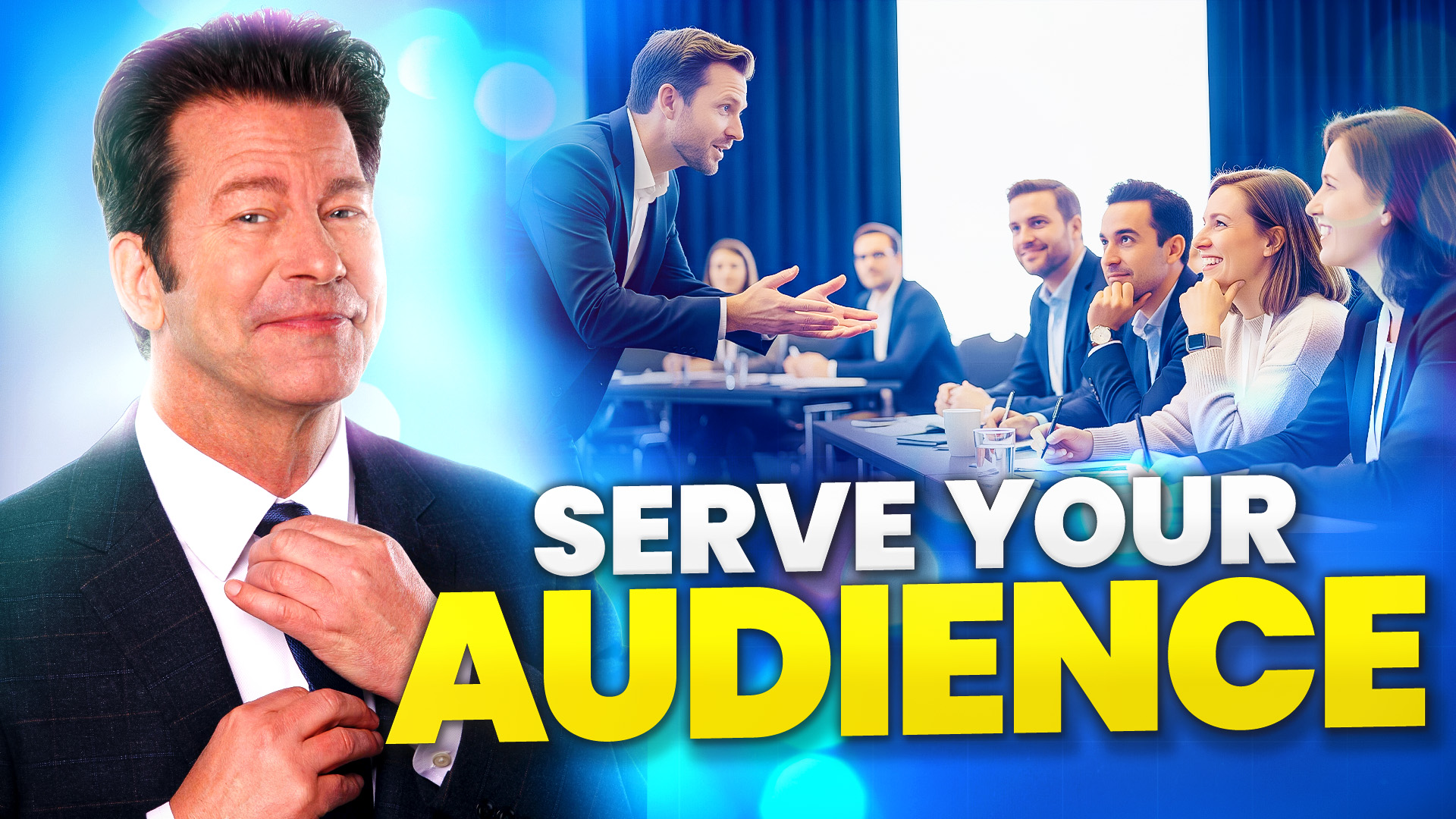
December 1, 2025How Top Speakers Shift Attention to Their Audience and Increase Event Engagement
Learn from emcee Scott Bloom how shifting your attention from yourself to your audience creates transformative speaking experiences that drive real engagement.
What if everything you’ve been taught about great presentations is backwards? Most speakers walk onto that stage thinking they need to impress, dazzle, and prove their expertise. But keynote speaker and emcee Scott Bloom discovered something that completely flips this script: the best speakers aren’t the ones you remember—they’re the ones whose message you can’t forget.
After two decades performing everywhere from Comedy Central to corporate boardrooms for companies like FedEx, IBM, and Pfizer, Scott figured out the secret. The transformation happens when you stop making it about you and start making it entirely about your audience. It sounds simple, but this shift in attention creates speaking experiences that don’t just entertain—they actually change behavior.
In this post, you’ll discover why directing your attention toward your audience instead of yourself creates deeper connections, how to model the exact energy you want your room to embody, and the practical strategies that turn passive listeners into active participants. Whether you’re planning your next company meeting or hiring a keynote speaker, understanding this fundamental principle will completely transform how your events land.
? Watch and listen to the full interview about how to best engage your event’s audience here
The Attention Paradox That Changes Everything
Here’s the paradox that most speakers never figure out: the more you try to shine, the less your message penetrates. Scott Bloom learned this the hard way, moving from stand-up comedy stages to business keynotes. In comedy clubs, the performer feeds off the crowd’s energy and attention. However, corporate audiences need something entirely different—they need transformation, not just entertainment.
The shift happened when Scott realized he needed to “disappear” as a personality so his message could hit harder. This doesn’t mean becoming bland or forgettable; instead, it means redirecting every ounce of your attention toward serving your audience’s needs rather than showcasing your own talents. When speakers make this transition, something remarkable happens—the audience stops watching and starts experiencing.
Think about the last corporate event you attended. Which speakers do you actually remember? Chances are, it’s not the ones who told you how accomplished they were or how many stages they’ve graced. You remember the ones who made you feel something, who understood your challenges, and who gave you tools you could actually use the next day. That’s the power of audience-focused attention.
Scott discovered that this principle applies whether you’re hosting an awards ceremony as a professional moderator, host & emcee or delivering a transformative keynote. The moment you shift your focus from “How am I doing?” to “What does this room need right now?” everything changes. Your delivery becomes more natural, your message lands deeper, and your audience actually does something with what they’ve learned.
Modeling Energy Before Demanding It
One of Scott’s most powerful insights centers on a truth that event planners often miss: you cannot ask your audience to do something you’re not willing to model yourself. “I’m trying to get them to lighten up, to get out of their head,” Scott explains. “And you know, when you have an emotional response to something, it’s more visceral. It’s less cerebral.”
This isn’t just motivational speaking theory—it’s a practical communication strategy. If you want your audience engaged, you have to be genuinely engaged first. If you want them energized, you need to bring authentic energy. Consequently, if you want them to open up emotionally, you can’t stay locked in your head delivering bullet points.
Scott’s background in comedy & humorist speaking gives him a unique advantage here. Comedians instinctively understand that audience energy is contagious—but it has to start somewhere. That somewhere is you, the speaker, the facilitator, or the event host. You’re not just delivering content; you’re modeling the exact behavior and energy you want to see reflected back.
This modeling principle applies to every element of your presentation. Want people leaning forward in their seats? Lean forward yourself when you share key insights. Want laughter and lightness? Start by not taking yourself too seriously. Want genuine dialogue during Q&A sessions? Ask questions with authentic curiosity, not performative interest. Your audience takes their behavioral cues directly from you, which means your internal state becomes their external experience.
Meeting professionals planning corporate events need to think about this from the design phase. When you’re selecting speakers or planning your agenda, consider who can authentically model the energy and engagement you want in the room. A speaker who talks about employee engagement while standing stiffly behind a podium reading slides won’t inspire engagement—regardless of how good their content might be. The medium truly is the message.
From Cerebral to Visceral: Creating Emotional Experiences
Corporate audiences spend most of their workday in their heads—analyzing data, solving problems, managing logistics. Therefore, when they show up to your event, the last thing they need is more cerebral content delivered in the same analytical tone they’ve been swimming in all week. They need something visceral, something that creates an emotional response that bypasses their usual defenses.
Scott’s approach focuses on shifting meeting energy from purely intellectual to genuinely experiential. This doesn’t mean abandoning substance for style or replacing strategy with fluff. Rather, it means wrapping your valuable insights in experiences that people can feel, not just think about. When you create emotional responses during your presentations, your audience remembers your message longer and implements it more consistently.
The science backs this up completely. Emotional experiences create stronger neural pathways than purely cognitive ones. When your audience feels something—whether it’s inspiration, recognition, humor, or even productive discomfort—they’re encoding that memory with multiple sensory markers. Later, when they’re back in their office facing the exact challenge you addressed, they’ll remember not just what you said but how it made them feel.
Business speaker Scott Bloom accomplishes this shift through several deliberate techniques. First, he uses personal stories that reveal vulnerability rather than just competence. Second, he creates moments of surprise that break pattern recognition. Third, he involves the audience physically when appropriate—getting them to actually do something rather than just observe. Finally, he reads the room constantly and adjusts his approach based on what the audience needs in that specific moment.
Event planners can support this visceral approach by designing the entire experience—not just the content—with emotional impact in mind. Room setup matters; forcing people into theater-style seating when you want interaction creates immediate dissonance. Lighting affects mood significantly. Music choices during breaks set emotional tone. Even the timing of your sessions impacts whether people can access emotional responses or whether they’re too tired, hungry, or overstimulated to feel anything.
Designing Experiences People Actually Want to Attend
Here’s an uncomfortable truth about corporate events: many people dread them. They show up because attendance is expected, not because they’re genuinely excited about the experience. Scott nails this reality perfectly: “It’s a business meeting, but at the end of the day, you wanna enjoy being there. And I think sometimes people forget that, that you have to make an experience where people wanna be there, they’re having a good time, and they wanna come back.”
This statement should be tattooed on every event planner’s brain. Your event isn’t successful just because people attended—it’s successful when people genuinely wanted to be there and would choose to come back. That requires fundamentally rethinking how you design every element of your gathering with your audience’s actual desires in mind, not just your organizational objectives.
Start by asking yourself what your audience truly wants from this experience. Not what you want them to want, but what would actually make them mark this event as a highlight rather than an obligation. For most corporate audiences, this includes feeling valued and heard, gaining insights they can immediately apply, connecting authentically with peers, having some moments of genuine enjoyment, and leaving energized rather than depleted. Notice that “sitting through six hours of PowerPoint presentations” doesn’t make the list.
When you design with these authentic desires front and center, every decision changes. Your speaker selection shifts from “who has impressive credentials” to “who can create the experience our audience actually needs.” Your agenda transforms from “how much content can we pack in” to “what’s the optimal flow for energy and retention.” Your follow-up strategy evolves from “send the slide decks” to “how do we keep this transformation going.”
Scott’s work in entertainment and business keynotes gives him a unique perspective here. He understands that even serious business content can be delivered in ways that people genuinely enjoy. This doesn’t mean turning your strategy session into a comedy show; rather, it means respecting that your audience members are whole humans who respond to storytelling, humor, surprise, and authentic connection—even in professional contexts.
Meeting professionals who adopt this audience-first design philosophy see measurable differences in their outcomes. Attendance improves when people know your events are genuinely worthwhile. Engagement increases when the experience respects people’s time and attention. Implementation of key messages accelerates when content is delivered in memorable, enjoyable ways. Most importantly, your events build anticipation rather than resignation.
The Sales Professional’s Secret: Make Them the Hero
Sales professionals understand a fundamental truth that translates perfectly to speaking and event design: people don’t buy your product—they buy the better version of themselves your product enables. Similarly, your audience doesn’t care about your speaking credentials; they care about who they’ll become after experiencing your message. This audience-centric approach to sales thinking should inform every speaking opportunity.
Scott Bloom’s corporate clients—including powerhouses like MetLife, PepsiCo, Pfizer, and Verizon—bring him back repeatedly because he makes their teams the heroes of every story. His comedic routines are built around the company and corporate culture, not around making Scott look clever. When employees see their own challenges, wins, and culture reflected back with humor and insight, they feel seen and valued. That’s when transformation happens.
This principle requires genuine humility from speakers. You have to be willing to step back from the spotlight and shine it directly on your audience instead. For many speakers, this feels counterintuitive—after all, they’re the ones on stage, they’re the experts, they’re being paid for their knowledge. Nevertheless, the speakers who create lasting impact understand that their role is more guide than guru, more facilitator than focal point.
Practically speaking, this means several things. First, your stories should feature your audience’s challenges as the central conflict, not your own achievements. Second, your solutions should be presented as tools they can implement, not impressive theories they should admire. Third, your language should reflect “we” and “you” far more than “I” and “me.” Finally, your follow-up should focus on their progress rather than your performance.
Event planners can evaluate potential speakers through this lens. When you’re reviewing speaker reels or conducting interviews, notice where their attention lives. Do they talk about their accomplishments or their audience’s transformations? Do they share stories that make them look good or that create recognition for your team? Do they ask questions about your audience’s needs or just describe their standard presentation? The answers reveal whether this speaker will serve your audience or just perform for them.
Why Quick Adaptability Matters More Than Perfect Planning
Even with meticulous planning, live events are inherently unpredictable. Technology fails, timing shifts, energy dips unexpectedly, or breaking news changes the entire context of your gathering. The speakers who truly excel aren’t the ones who deliver their scripted content flawlessly—they’re the ones who can turn unexpected moments into corporate gold, as Scott does consistently.
This adaptability stems directly from audience focus. When your attention is genuinely directed toward your audience rather than your own performance, you notice subtle shifts in energy, engagement, and emotional state. You catch the confused looks that signal you need to clarify a point. You sense the restlessness that means you need to shift gears or introduce movement. You feel the curiosity that tells you to go deeper into a particular topic.
Scott’s comedy background trained him in this real-time responsiveness. Stand-up comedians live or die by their ability to read a room and adjust instantly. Consequently, when a joke doesn’t land, they pivot. When the audience is particularly engaged with a topic, they expand on it. When energy sags, they change pace. These same skills translate directly to corporate speaking, where the ability to adapt in the moment often determines whether your message resonates or falls flat.
For meeting professionals, this means several things when selecting speakers. First, prioritize adaptability over polish during your vetting process. A speaker who can genuinely read and respond to your audience will create better outcomes than one who delivers perfect but inflexible content. Second, give your speakers enough context about your audience that they can customize effectively. Third, build some flexibility into your agenda so speakers have room to adjust based on what the room needs.
Organizations that embrace this adaptability principle create space for magic to happen. Some of the most powerful moments in corporate events are completely unscripted—they emerge from a speaker’s ability to notice what’s happening in real-time and respond authentically. These moments can’t be planned, but they can be enabled by choosing speakers who prioritize audience connection over personal performance.
Building Authentic Connection in Professional Settings
The word “authentic” gets thrown around constantly in business contexts, but what does it actually mean when you’re speaking to a corporate audience? For Scott Bloom, authenticity means being relatable despite—or perhaps because of—being a media personality who’s been featured on Comedy Central and VH1. He’s smart, funny, clean, and always engaging, yet people describe him as genuine and relatable. That combination doesn’t happen by accident.
Authentic connection in professional settings starts with recognizing that everyone in your audience is a complete human being, not just a job title or organizational role. They have families, hobbies, fears, dreams, and the same fundamental needs for belonging and significance that you do. When speakers acknowledge this shared humanity rather than maintaining professional distance, connection happens naturally.
This doesn’t mean oversharing personal information or trying to be everyone’s best friend. Rather, it means allowing your own humanity to show through your expertise. It means sharing not just your successes but the struggles that taught you valuable lessons. It means laughing at yourself occasionally instead of maintaining a perfectly polished image. Paradoxically, this vulnerability makes you more credible, not less.
Scott’s ability to walk and talk the corporate brand and business while remaining authentic demonstrates an important balance. He becomes fluent in his clients’ culture and language without losing his own voice. He respects the professional context without becoming stiff or corporate. He delivers business value while ensuring people genuinely enjoy the experience. This balance is what keeps clients bringing him back year after year.
Event planners face a similar challenge when designing meetings. How do you create professional experiences that still allow for authentic human connection? Consider building in structured networking time that goes beyond awkward small talk. Create small-group discussions where people can be honest about their challenges. Choose speakers who model vulnerability alongside competence. Design your space to feel welcoming rather than institutional. These choices signal that authentic connection is valued, not just tolerated.
The Ripple Effect of Audience-Focused Speaking
When a speaker truly focuses on serving their audience’s transformation, the impact extends far beyond the immediate event. People don’t just hear the message during the keynote and forget it by lunch. Instead, they carry those insights back to their teams, implement new strategies, and become advocates for the principles they experienced. This ripple effect multiplies the value of your event investment exponentially.
Scott’s work demonstrates this multiplier effect clearly. When he hosts an event or delivers a keynote that genuinely serves the audience, executives feel confident enough to deliver better presentations themselves. The energy and approach he models becomes contagious, spreading through the organization. Attendees reference the experience months later when facing challenges the speaker addressed. The transformation initiated during that brief speaking engagement continues long after the event concludes.
This lasting impact happens because audience-focused speakers create experiences that people integrate rather than just observe. When you’re truly seen, understood, and served by a speaker, you don’t file that experience away as “content delivered at a meeting.” You integrate it into your operating system. It becomes part of how you think about your work, your team, and your approach to challenges.
Meeting professionals should measure success with this longer-term impact in mind. Don’t just evaluate whether people enjoyed the speaker in the moment—track whether they’re actually implementing the insights weeks and months later. Survey attendees about lasting behavior changes, not just immediate satisfaction. Ask executives whether the event genuinely moved strategic initiatives forward or just provided a nice day away from the office.
Organizations that prioritize this lasting impact make different choices about speakers, format, and follow-up. They invest in speakers who provide implementation tools, not just inspiration. They design events that build momentum rather than just marking calendar obligations. They create follow-up mechanisms that sustain the transformation rather than letting it evaporate. These choices reflect a fundamental understanding that the event itself is just the beginning of the change process.
What Meeting Professionals Need to Know Right Now
If you’re responsible for planning corporate events, this audience-first philosophy should reshape your entire approach. Start by getting brutally honest about whether your past events were designed for your audience’s benefit or your organization’s convenience. Did you choose speakers based on who would transform your people or who had an impressive name? Did you design the experience around optimal learning conditions or around filling time slots?
The most successful meeting professionals recognize that their job isn’t just logistics—it’s experience design with transformation as the goal. This means thinking deeply about your audience’s current state and desired state. What are they struggling with right now? What insights would genuinely help them? What kind of experience would they actually want to attend? These questions should drive every decision from venue selection to speaker choice to agenda design.
When evaluating potential speakers, look for evidence of audience focus in everything they do. Review their testimonials for language about transformation rather than just entertainment. Watch their speaker reels to see where their attention lives—on themselves or on their audience. Ask specific questions during interviews about how they customize content and adapt to real-time feedback. The speakers who can articulate a clear audience-focused philosophy will deliver better results than those who talk primarily about their credentials.
Consider the entire ecosystem surrounding your event as well. Your pre-event communication should build anticipation and prime people to engage fully. Your registration process should gather information that helps speakers serve your audience better. Your venue selection should support the kind of experience you’re trying to create. Your post-event follow-up should reinforce key messages and support implementation. Every touchpoint either reinforces or undermines your audience-first intention.
Finally, remember that this philosophy applies to you as the meeting professional, not just to your speakers. Your attention should be constantly directed toward serving your attendees’ needs rather than impressing your executives or following industry conventions. When you genuinely put your audience first, you make braver choices, design better experiences, and create events that people actually remember for the right reasons.
Why This Changes Everything About Your Next Event
Understanding where to direct your attention—toward serving your audience rather than showcasing yourself—fundamentally transforms speaking, hosting, and event design. Scott Bloom’s journey from comedy stages to corporate keynotes taught him that the best speakers make their message memorable by making their audience the hero of the story. This isn’t just feel-good philosophy; it’s a practical strategy that drives measurable results.
The principles Scott demonstrates apply whether you’re a speaker preparing for a keynote, an emcee hosting an awards ceremony, or a meeting professional designing a corporate gathering. Shift your focus from impressing to serving. Model the energy and behavior you want your audience to embody. Create visceral experiences, not just cerebral content. Design events people genuinely want to attend. Make your audience the hero of every story.
These strategies work because they align with a fundamental truth about human psychology: people transform when they feel genuinely seen, understood, and equipped. They don’t change because someone impressive stood on stage and talked at them for an hour. They change when someone directs genuine attention toward their challenges, models solutions authentically, and creates experiences that bypass intellectual defenses to land at an emotional level.
Your next event deserves this level of intentionality. Whether you’re planning a company-wide gathering, selecting speakers for your annual conference, or preparing to deliver a presentation yourself, the question remains: Where will you direct your attention? Choose audience focus, and everything else falls into place.
Ready to Transform Your Next Event Experience?
Creating audience-focused events that drive real transformation requires the right speakers who understand this philosophy at a deep level. Scott Bloom brings two decades of experience turning corporate gatherings into experiences people genuinely want to attend, combining business insight with comedic timing and authentic connection.
Want to discuss how audience-focused speaking can elevate your next event? Schedule a 15-minute consultation to explore speaker options that put your audience first.
Looking for speakers who create transformation, not just presentations? Contact our team to discover how the right keynote speaker changes everything.
Curious about Scott’s insights on event design? Listen to the No More Bad Events podcast episode featuring The Keynote Curators’ president, Seth Dechtman.
Ready to see how audience-first speaking works in action? watch the complete interview with Scott Bloom to experience his philosophy firsthand.
Discover More Insights




Get in TouchContact US
Fill out the form so we can best understand your needs.
A representative from The Keynote Curators will reach out to you.
Our Services
Keynote Speakers Topics
© 2026 The Keynote Curators. All Rights Reserved | Terms and Conditions
The Keynote Curators, 8275 South Eastern Avenue, Suite 200, Las Vegas, NV 89123
Local (310) 299-4595 | Toll Free (888) 585-8715 | info@thekeynotecurators.com
The Keynote Curators - Top Keynote Agency, USA.