
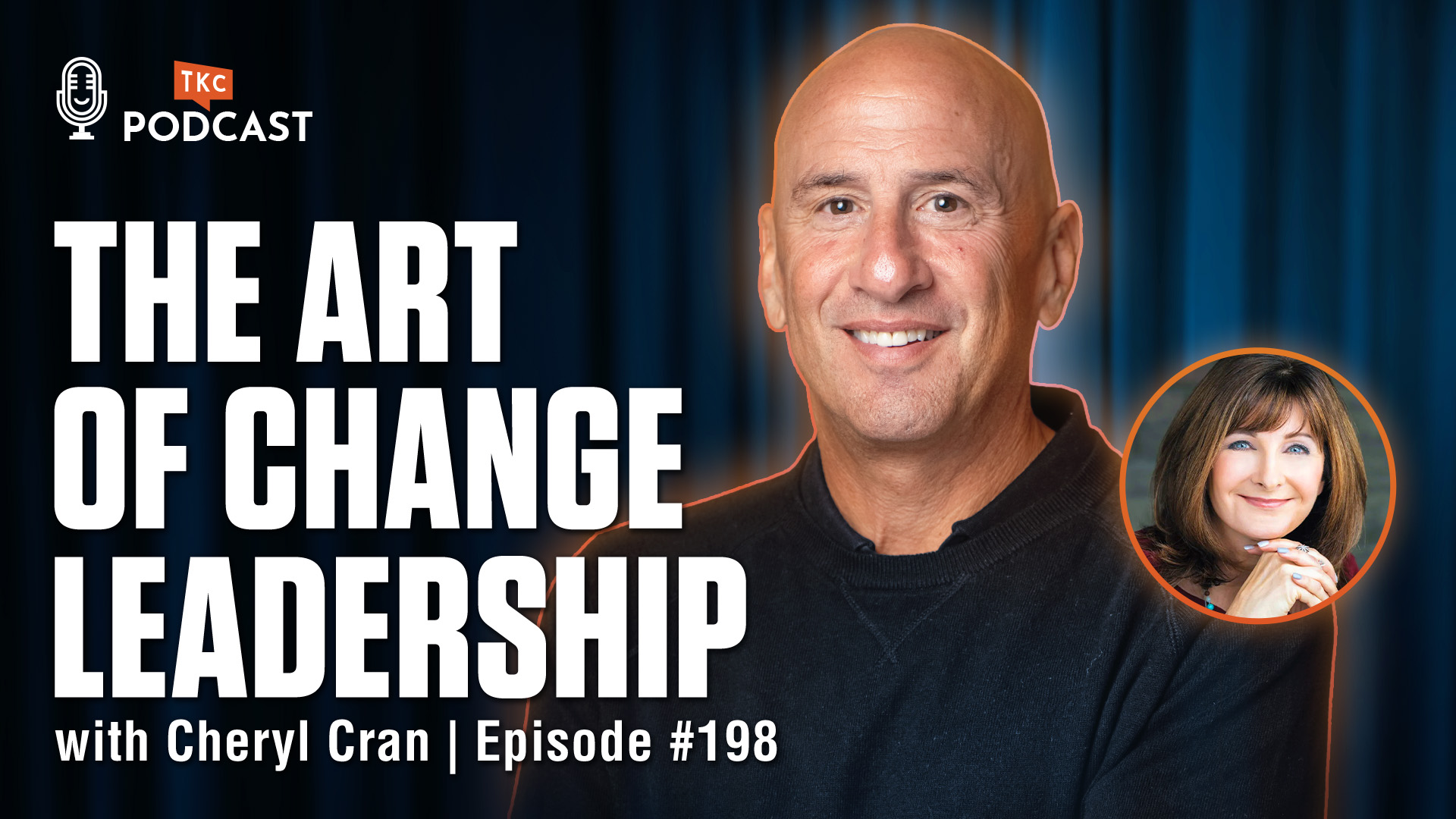
October 29, 2026Change & Future of Work Lessons From Cheryl Cran on Leading People First
Future of work keynote speaker Cheryl Cran shares why people-first leadership matters most when technology changes how we work.
Most talks about the future of work begin with a tool. A new app, a new platform, a new kind of software. Then everyone rushes to learn it. I have sat in many of those meetings, and they often miss the point.
Future of work keynote speaker Cheryl Cran starts somewhere else. She starts with people. That one choice changes how you think about the future of work, how you lead through change, and what you build a team around.
Cheryl is ranked the number one future of work influencer by Onalytica, and she has written nine books on the subject. But what stayed with me was not her résumé. It was the order she puts things in: people first, digital second. In this article, I want to think through what that order means for leaders, for teams, and for anyone trying to make sense of where work is going. I do not think it is a small idea. I think it is the idea the future of work depends on, and I want to explain why.
I have been thinking about our conversation for a while now. What struck me most is that Cheryl never made the future sound scary or magical. She made it sound like something you can prepare for, and that felt rare. Most of what I read about the future of work is either hype or fear. Hers was neither. It was calm, practical, and focused on how people actually feel at work.
🎧 Watch and listen to the podcast episode: YouTube • Spotify • Apple Podcasts • Amazon Music
Why the Future of Work Starts With People
I want to start with the order of things, because I think it matters more than it first appears. Cheryl describes her whole body of work through a people-first and digital-second approach. Many leaders say they believe this. Fewer build their plans around it. When I look at how most companies talk about the future of work, the technology comes first in the sentence, the budget, and the calendar. People show up later, usually as a training topic.
That sequence tells you what a company values. If the tool comes first, then people become the ones who must adjust to it. If people come first, the tool becomes something chosen to serve them. Those are two very different workplaces, even if they buy the same software. I have seen both. In the first, employees feel like they are keeping up with a machine. In the second, they feel like the machine is keeping up with them.
This is why I keep coming back to Cheryl’s goal of creating a more human future. A more human future of work does not mean less technology. It means being clear about who the technology is for. When a leader asks what a new system will do for their people before asking what it will cost, the whole conversation changes.
There is also a practical side to this. Teams that feel respected tend to adopt change faster. They ask better questions. They tell you when something is not working. This is where leadership earns its name. Leaders who put people first get more honest information, and honest information is what good decisions are made from. So this is not only a kind idea. It is a smart one. That is the first thing I took from my conversation with Cheryl, and it shapes everything else in this article. The future of work will reward the leaders who understand that.
What Anticipate, Navigate, and Create Asks of a Leader
Cheryl built a framework called NextMapping™ to help leaders prepare for the future of work. It is also the name of her book, and the full title says it plainly: NextMapping™, with the subtitle Anticipate, Navigate and Create the Future of Work. The second edition has a companion workbook, which tells me she wants leaders to practice, not just read.
Those three verbs are worth slowing down on, because each one asks for a different kind of thinking, and each one shapes how you prepare for the future of work. To anticipate is to look ahead before you are forced to. It is the habit of noticing what is changing in your industry, your customers, and your own team, and asking what it might mean. Most of us only do this in a crisis. We wait until the market shifts or a competitor moves, and then we react. Anticipating is quieter work. It happens in the calm weeks, when nothing seems urgent, and that is exactly why it gets skipped.
To navigate is to move through change while people are still in the room. This is where I think many organizations lose their way. A plan on paper is easy. Getting two hundred people to follow it on a Monday morning is not. Navigating means listening, adjusting, and being honest when the map and the ground do not match. And to create is to stop treating the future of work as something that happens to you. It is something you can shape. That last verb is the one I find most hopeful.
What I like about this sequence is that it puts leaders back in charge of their own story. So much talk about the future of work sounds like weather: it is coming, you cannot stop it, so bring an umbrella. NextMapping says something different. You can see the clouds early, you can find your way through them, and you can decide what to build next. Whether you run a small company or lead a team inside a large one, I think that shift from passive to active is where leadership really begins.
Change Is a Leadership Skill, Not a Project Plan
Long before the current wave of talk about the future of work, Cheryl was writing about change. Her book The Art of Change Leadership, with the subtitle Driving Transformation In a Fast-Paced World, was published by Wiley in 2015. I find the title telling. It calls change leadership an art, not a process. A process can be copied from a template. An art needs practice, feel, and judgment.
I think that is the quiet lesson inside her work. Many organizations treat change like a project. There is a kickoff, a timeline, a slide deck, and a closing date. Then they are surprised when the people side does not follow the schedule. Change does not end on a closing date. People move through it at different speeds, with different fears, and a good leader knows how to hold all of that at once. This is the heart of business leadership in the future of work, and it is a skill that can be learned.
Consider a simple example. A company brings in new software to speed up reporting. The rollout plan is perfect. But half the team quietly keeps using the old spreadsheets because nobody explained why the change was needed, and nobody asked what they were worried about. The software was fine. The leadership was missing. This is what I mean when I say the future of work is a people challenge before it is a technology challenge. The tool is the easy part.
What would the art of change leadership look like in daily practice? To me it looks like three habits. Say why the change is happening, in plain words. Ask what people are afraid of losing. And check back after launch, not just before it. None of this is complicated. But it takes patience, and patience is hard to find in a fast-paced world. That is why leaders who practice it stand out, and why the future of work will belong to them.
Generations at Work and the Future of Work
One of Cheryl’s earlier books is called 101 Ways to Make Generations X, Y and Zoomers Happy at Work. It came out in 2010, and it tells me she was thinking about the human side of work long before it became a popular topic. I have always found generational talk a little risky. It can turn into stereotypes fast. But when I look at the idea behind her work, I see something more useful: different people want different things from work, and leaders who ignore that pay for it later.
Think about what this looks like on a real team. One person wants clear structure and a steady path. Another wants freedom to work in their own way. A third wants to know the job matters beyond the paycheck. None of them is wrong. A leader who offers only one style of work will keep some people and lose others. Understanding what makes each person happy at work is not a perk. It is how you keep talent and get good work from them. This sits at the center of professional development, because growth looks different for each person too.
I also think this ties directly to the future of work. The next few years will bring even more mix: remote and in-person, full-time and flexible, people at the start of their careers beside people near the end. A one-size approach will not hold. The leaders who do well will be the ones who are curious about their people rather than sure about them. I have learned that the fastest way to understand someone is to ask, and then to actually act on the answer.
That last part matters. Asking without acting is worse than not asking at all, because it teaches people that their input does not count. Cheryl’s focus on happiness at work reminds me that engagement is not a poster on the wall. It is a daily result of whether people feel seen. If we want a future of work worth looking forward to, that is where we have to start.
Technology Should Make Outcomes Better for People
Cheryl is not against technology. Far from it. Her view is that technology in the workplace must be used to prepare for the future, with a focus on how it can improve outcomes for people. I like how specific that is. It does not say technology should be exciting, or fast, or new. It says it should improve outcomes for people. That is a test any leader can apply.
Here is how I think about it. Before adopting a new tool, ask three questions. Who does this help? What gets easier for them? How will we know it worked? If you cannot answer those, you are not ready to buy it. This is how I read innovation when it comes to the future of work. It is not about having the newest thing. It is about solving a real problem for real people in a way that holds up over time.
I have seen companies spend heavily on tools that nobody asked for. The demo looked great. The rollout was loud. A year later, usage was low, and the team had quietly gone back to their old habits. That is not a technology failure. It is a failure to start with people. When the future of work is shaped by what is possible instead of what is useful, we get more noise and less progress.
The opposite is also true. When a leader starts with a real human need, such as less time on repetitive tasks or clearer information for decisions, technology becomes a quiet helper. People feel the benefit without needing a pep talk about it. That, to me, is the better version of the future of work. It is not louder. It is calmer, and it gives people more room to do the things only people can do, like think, connect, and care.
Communication and Teamwork Hold the Whole Thing Together
If you look at the topics tied to Cheryl’s work, two keep standing out to me: communication and teamwork. They are not flashy. But I would argue they decide whether any plan for the future of work succeeds. You can have a smart strategy and the right tools. If people cannot talk honestly with each other, none of it lands.
Good communication in times of change has a few plain features. It is early, so people hear news from leaders rather than rumors. It is clear, so no one has to decode it. And it goes both ways. Leaders who only broadcast get silence in return. Leaders who ask, listen, and respond get information they can use. I have noticed that the quality of a team’s conversations often predicts how it handles pressure. Teams that can say hard things calmly tend to adapt faster. Strong communication is a core skill for the future of work.
That is where teamwork comes in. Teamwork is not a group of people sitting in the same meeting. It is a shared sense that we are in this together and that each person’s work affects the others. In a world with more remote work and more moving parts, that sense does not happen by accident. Leaders have to build it through clear roles, regular check-ins, and room for people to be human with each other. This is a big part of how Cheryl frames the future of work. The future is not built by individuals working alone. It is built by teams that trust each other.
I find this a useful reminder when things feel complicated. Before reaching for a new framework, check the basics. Do people know what is expected? Do they feel safe speaking up? Do they know how their work connects to the goal? If not, fix that first. The best plan for the future of work still depends on those simple things being in place.
Who Gets to Shape the Future of Work
Cheryl is also known as a futurist, and I think a good futurist does something specific. They do not predict. They prepare people to think. Her work has appeared in outlets like Forbes, Entrepreneur Magazine, and HuffPost, and it has been less about announcing what will happen and more about helping leaders ask better questions. That is a form of thought leadership I respect, because it hands the reader something to do rather than something to admire.
It also raises a question I find important: who gets to shape the future of work? If the answer is only a small group of executives and technologists, we will build a narrow future. A wider group gives us better ideas. That includes women leaders, whose voices are still too often missing from the rooms where big decisions about work are made. Cheryl has been a visible leader in this space for over two decades, and her example shows what it looks like when a woman builds a strong body of work and a lasting business around it.
It also includes entrepreneurs. Many of the biggest changes in how we work start in small companies that try something different. Cheryl has worked with mid-sized companies and entrepreneurs as well as large clients like AT&T, Manulife, and Gartner, across industries such as technology, health, agriculture, finance, and insurance. I find that range interesting. The same people-first principles hold in a farm co-op and a global telecom. That tells me they are not trendy ideas. They are basic truths about how people work together. It is also why organizations invite future of work keynote speaker Cheryl Cran to help their leaders see what is coming.
And it includes the bigger societal issues that sit behind work. How we organize jobs affects families, communities, health, and trust. When leaders talk about the future of work, they are also talking about how people live. I think that is why Cheryl’s goal of changing the world through business stays with me. Business is where most of us spend our days. If it gets more human, a lot of other things can follow.

Changing the World Through Business Starts With a Human Choice
When I step back from my conversation with Cheryl, what I notice is how consistent her message is. Across nine books, two decades of client work, and many articles, the thread stays the same: put people first, use digital to serve them, and lead with enough courage to shape what comes next. Her message about the future of work has not drifted with each new trend. I think that consistency is a sign of a real idea. Trends change every year. Principles last.
The future of work is going to bring faster tools, new ways of organizing teams, and questions we have not thought of yet. I cannot tell you exactly what it will look like, and neither can anyone else. But I can tell you what I believe will separate the leaders who do well from the ones who struggle. They will anticipate instead of react. They will treat change as a skill to practice. They will pay attention to every generation on their team. They will choose technology that helps people. And they will work on communication and teamwork before they need to.
That may sound like a lot. It really comes down to one choice, made again and again: will I treat people as the point or as the cost? Future of work keynote speaker Cheryl Cran gives a clear answer, and after hearing her out, I find it hard to argue with. If you want to see how this plays out in business and in leadership more broadly, I would encourage you to listen to the full conversation. The future of work is not something to fear. It is something to build, and it will be built by those who start with people.
🎤 Book future of work keynote speaker Cheryl Cran for your next event.
🎥 Watch the full interview on YouTube.
🔭 Explore more future of work keynote speakers who help leaders prepare for what is next.
🧭 Find more leadership speakers who put people first.
Discover More Insights




Get in TouchContact US
Fill out the form so we can best understand your needs.
A representative from The Keynote Curators will reach out to you.