
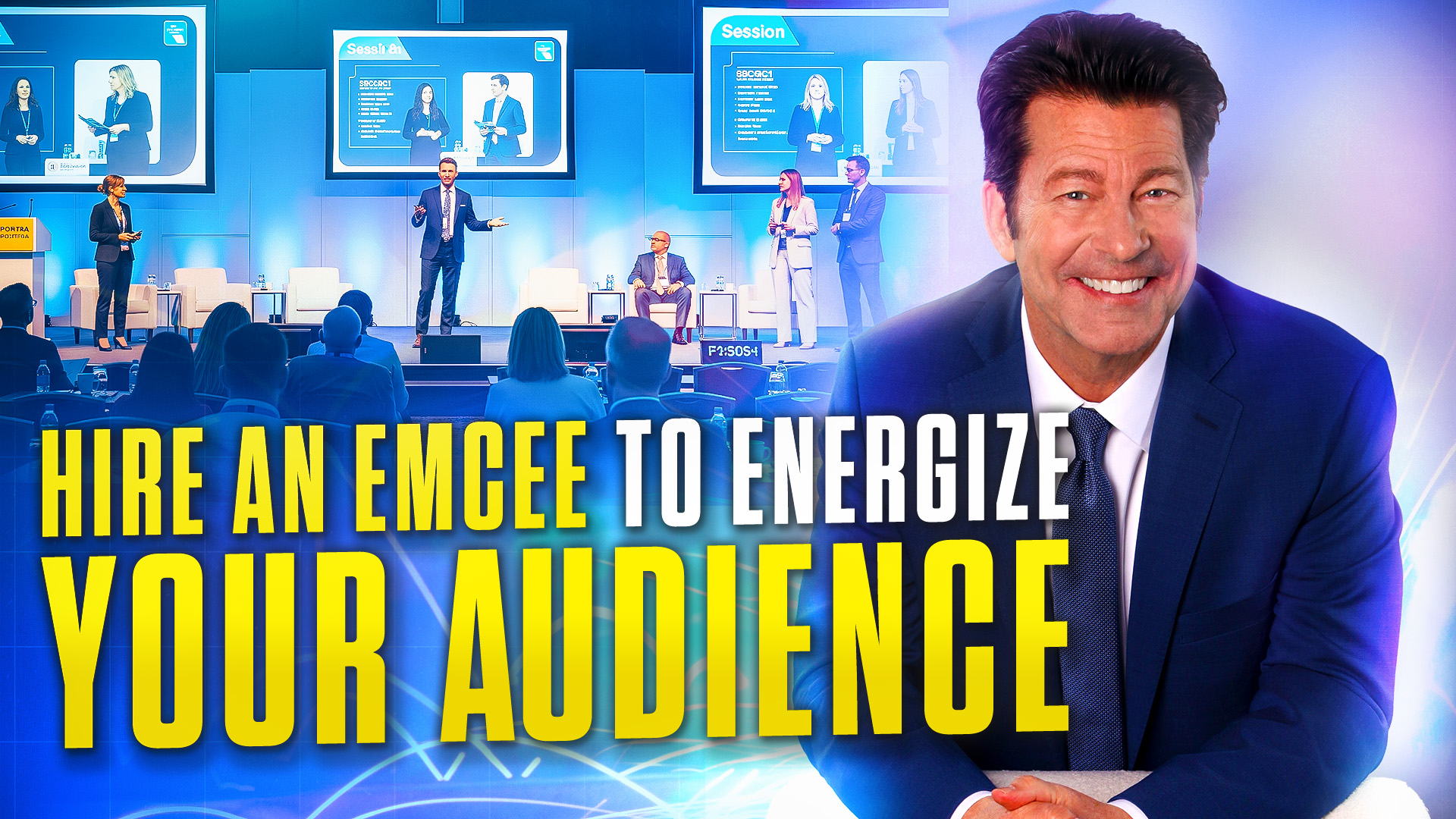
December 15, 2025The Event Budget Mistake Most Planners Make
Learn with Scott Bloom why smart event planners invest in professional emcees instead of expensive keynotes to create unforgettable multi-day event experiences.
The Budget Decision Nobody Talks About
Your event budget might be sabotaging your success. Most meeting professionals default to the same pattern: dedicate the bulk of their speaker budget to one big-name keynote, then scramble to fill the remaining time slots with whatever’s left over. It feels safe because it’s what everyone does. But what if this conventional wisdom is costing you audience engagement, event momentum, and ultimately, return on investment?
Event keynote speaker Scott Bloom has spent two decades watching this scenario play out repeatedly. As both a professional emcee and keynote speaker who’s worked with FedEx, Ford, IBM, MetLife, PepsiCo, Pfizer, and Verizon, he’s seen both sides of the equation. His observation? The events that audiences rave about afterward rarely succeed because of one expensive speaker who delivers brilliantly for ninety minutes then disappears. Instead, they work because someone professional is guiding the entire experience from start to finish.
This article challenges the standard event budgeting approach that meeting professionals have followed for years. We’ll explore why investing in a professional emcee often delivers more value than allocating everything to a single keynote speaker, how to reallocate your budget strategically, and the specific production elements that transform disconnected sessions into cohesive experiences. If you’re planning multi-day corporate events, sales meetings, or conferences, this shift in thinking could fundamentally change your results.
? Watch and listen to the full interview about event strategies here
What Your VP of Sales Gets Wrong About Hosting
Here’s a scenario that happens at countless corporate events: the VP of Sales volunteers to emcee. After all, they’re charismatic, comfortable on stage, and know the business inside and out. What could go wrong? Scott explains that while these executives often have genuine stage presence, they lack the specific expertise that professional event hosting requires.
The problems emerge gradually. Your VP might nail their opening remarks but then struggle with timing throughout the day. They ad-lib when they should stick to script, consequently throwing off carefully planned transitions. They don’t know how to recover when technology fails or a speaker runs long. Most critically, they’re so focused on their own company’s message that they forget to create space for the audience to process and engage with content.
Consider what professional emcees bring beyond charisma. They understand energy management across hours or days, knowing when audiences need activation versus when they need reflection time. They’ve mastered the timing nuances that keep events flowing smoothly—when to extend applause, when to cut it short, when to add a quick joke to shift energy. They know how to make presenters look good by setting them up properly and gracefully handling the unexpected moments that always occur.
Furthermore, professional moderators and hosts aren’t distracted by operational concerns or political dynamics. Your VP of Sales is thinking about quarterly targets, internal relationships, and how their performance will be perceived by leadership. A professional emcee is focused entirely on one thing: making your event successful. That singular focus creates dramatically different outcomes.
The expertise gap becomes especially obvious during multi-day events. An executive might maintain energy for a few hours, but sustaining momentum, creating callbacks that build continuity, and adjusting approach based on audience response over multiple days requires skills that come only from extensive experience. This isn’t a criticism of internal talent—it’s recognition that event hosting is a distinct professional discipline, just like financial analysis or marketing strategy.
The Real Value Professional Hosts Create
When Scott describes the value professional emcees bring, he’s not talking about simply introducing speakers on time. Instead, he’s describing the invisible architecture that transforms separate sessions into unified experiences. This architecture operates at multiple levels simultaneously, each contributing to the overall impact your event creates.
At the most basic level, professional hosts manage logistics that audiences should never notice. They handle timing adjustments when speakers run long or short. They coordinate with audio-visual teams to ensure seamless transitions. They know when to call breaks and how to bring people back efficiently. These operational elements might seem mundane, but when they go wrong, they destroy the professional polish your event needs.
More importantly, professional emcees manage energy and attention throughout your program. Think about how your energy fluctuates during a typical conference day. You start alert, but attention dips mid-morning. After lunch, people struggle to focus. Late afternoon brings renewed fatigue. A skilled host recognizes these patterns and adjusts their approach accordingly—adding humor when energy lags, slowing down when important content needs to land, creating interactive moments that snap people back to attention.
Scott’s background in comedy and entertainment brings another dimension to this work. He builds routines around specific companies and corporate cultures, consequently creating moments where audiences see themselves reflected in the content. This isn’t generic corporate humor—it’s customized material that demonstrates the emcee has done their homework and genuinely understands your organization. That specificity makes audiences feel seen and valued in ways generic hosting never achieves.
Professional hosts also serve as connective tissue between speakers and sessions. Without this connection, events feel like a series of isolated presentations rather than a cohesive narrative. “Without an emcee, it’s just, you know, a blip. You have a meeting, they leave a blip, you have a meeting, they leave. You wanna have some continuity, and you want your audience to really be engaged and really wanna be there,” Scott explains. The emcee creates that continuity by referencing earlier content, building themes across sessions, and helping audiences understand how different pieces fit together.
For meeting professionals focused on employee engagement, this continuity becomes especially valuable. Engaged employees aren’t just consuming content—they’re connecting ideas, seeing applications to their work, and feeling invested in the overall experience. Professional emcees facilitate that deeper engagement through careful attention to flow and connection.
Smart Budget Allocation That Actually Works
Now we arrive at the controversial budget recommendation that makes expensive keynote speakers uncomfortable. Scott’s suggestion? “You got $35,000 for your keynote, and the $35,000 keynotes are not gonna wanna hear this… Get yourself a $20,000 keynote, get yourself a $25,000 keynote, and use that extra money for an emcee. Do you want that money going for just one hour in the meeting, or do you wanna take that money and put it over two, three days where you can get some real value?”
This reallocation strategy makes mathematical sense when you consider value per hour of audience impact. A $35,000 keynote speaker typically delivers for sixty to ninety minutes. That’s roughly $388 to $583 per minute of stage time. A professional emcee working a three-day event might cost $15,000 to $20,000 but delivers value across fifteen to twenty hours of programming. The per-hour investment drops dramatically while the total impact increases substantially.
Additionally, this approach mitigates risk. When you invest heavily in a single keynote, you’re betting everything on one person connecting with your audience. If that speaker misses the mark—wrong tone, content doesn’t resonate, delivery falls flat—you’ve spent a significant portion of your budget on disappointment. By diversifying across a solid keynote plus professional emcee, you’ve built redundancy into your program design.
The budget reallocation also allows for better content matching. Instead of feeling pressured to find the one perfect expensive speaker who somehow addresses all your themes, you can select a strong keynote that specifically addresses your primary message, then rely on the emcee to connect it to other sessions and reinforce themes throughout your event. This division of labor often produces clearer messaging than asking one speaker to cover too much ground.
For sales meetings specifically, this strategy proves particularly effective. Sales teams need motivation and inspiration, but they also need practical content, recognition moments, and sustained energy. A professional emcee can balance these elements across your agenda in ways a single keynote speaker cannot, regardless of price point.
Meeting professionals often worry about the perception of choosing a less expensive keynote. Won’t attendees notice? The reality is that audiences rarely know or care about speaker fees. They care about whether content resonates and whether the overall experience feels valuable. A $25,000 keynote speaker who’s the right fit for your audience, paired with professional hosting that creates excellent flow, delivers far more perceived value than a $40,000 name who speaks and disappears while the rest of your event feels disjointed.
Creating Continuity Across Multi-Day Events
Single-day events present their own challenges, but multi-day conferences and meetings amplify every production decision. Without intentional continuity, each day feels like a separate event, consequently preventing the momentum and narrative arc that create truly memorable experiences. Professional emcees transform multi-day events by building coherent experiences where each day builds on the previous one.
This continuity starts with callbacks and references. A skilled emcee remembers significant moments, quotes, or jokes from earlier in the event and weaves them back into later sessions. These references create insider moments where attendees feel part of a shared experience. They also help reinforce key messages by repeating them in different contexts throughout the event.
Scott emphasizes that professional emcees working across multiple days create value by maintaining relationships with the audience. By Day Two, the emcee isn’t a stranger—they’re a familiar presence who’s been part of the journey. This familiarity creates comfort and trust that makes audiences more receptive to content and more willing to participate in interactive elements.
The emcee also manages the emotional arc of multi-day events. Day One typically needs high energy and excitement to set the tone. Day Two might require more reflection and depth as content becomes more substantive. Day Three often needs celebration and inspiration as people prepare to return to their regular work. Professional hosts adjust their approach to support these shifting emotional needs, something that’s impossible when different people host different days or sessions.
For meeting professionals planning multi-day events, the emcee becomes your on-stage partner in program design. While you’re managing logistics backstage, they’re managing experience onstage. This partnership allows you to make real-time adjustments based on how content is landing, how energy is flowing, and how attendees are responding. That flexibility can mean the difference between an event that feels rigid and one that feels responsive to audience needs.
Furthermore, professional emcees help manage the challenge of repeated content. In multi-day events, you often need to acknowledge previous sessions without boring people who were present or excluding people who missed them. Skilled hosts navigate this balance naturally, providing enough context for everyone while moving forward efficiently.
Production Pitfalls Professional Emcees Prevent
Beyond creating positive experiences, professional emcees prevent the costly mistakes that plague poorly hosted events. Scott has witnessed these pitfalls repeatedly and knows exactly how professional hosting prevents them. Understanding what can go wrong helps meeting professionals appreciate the full value professional emcees provide.
Timing disasters rank among the most common and damaging issues. A speaker runs twenty minutes over, throwing off the entire afternoon schedule. Break times get shortened or eliminated, leaving attendees frustrated. The closing session rushes through important content because earlier segments consumed extra time. Professional emcees manage these situations through a combination of diplomatic intervention and strategic adjustment, keeping events on track without creating awkward confrontations.
Technical failures present another area where professional experience proves invaluable. Microphones malfunction, slides won’t advance, video clips won’t play—technology problems are inevitable. Amateur hosts freeze or apologize awkwardly while technicians scramble. Professional emcees have seen every technical issue imaginable and know how to fill time entertainingly while problems get resolved. They turn potential disasters into moments of authentic connection with the audience.
Energy crashes represent a more subtle but equally damaging pitfall. After heavy content or a large meal, audience attention plummets. Without intervention, the next speaker faces a room of people checking phones or fighting sleep. Professional emcees recognize these moments and insert what Scott calls “palate cleansers”—brief five-minute energy resets that might involve movement, humor, quick interactions, or perspective shifts that restore alertness before the next session.
The timing of award ceremonies illustrates another production mistake that professional emcees prevent. Scott specifically mentions that awards should never clash with salad—meaning you shouldn’t try to run recognition programs while people are eating. Professional hosts understand the meal service timeline and know when to conduct awards so recipients get appropriate attention while not competing with food service logistics.
Awkward transitions between speakers create another common problem. Without professional hosting, you get long silent gaps while the next speaker sets up, or rushed introductions that fail to properly frame what’s coming. Professional emcees manage these transitions seamlessly, maintaining momentum while giving each speaker the setup they need to succeed.
Perhaps most critically, professional emcees prevent the loss of key messages. In poorly hosted events, important content gets buried or forgotten because nothing connects the dots. Professional hosts reinforce critical messages throughout your event through strategic repetition, helping ensure that your investment in content actually produces behavior change and retention.
Why Authentic Connection Beats Polished Scripts
Scott’s approach to event hosting reveals something that many meeting professionals miss: the most effective emcees aren’t the ones with the most polished scripts. Instead, they’re the ones who create authentic connections with audiences while maintaining professional standards. This balance of preparation and presence defines truly excellent event hosting.
Authenticity starts with genuine curiosity about your organization. Before Scott hosts an event, he studies the company culture, understands the business challenges, and identifies what matters to attendees. This research allows him to speak about the organization from an insider’s perspective rather than as an outsider reading generic corporate material. Audiences immediately recognize when someone has done their homework versus when they’re faking familiarity.
The communication style of professional emcees also emphasizes relatability over perfection. Scott describes himself as smart, funny, clean, and engaging—qualities that make audiences comfortable. He’s not trying to be the most clever person in the room. Instead, he’s creating space where everyone feels included and valued. This approach proves especially important for corporate events where audiences might include everyone from frontline employees to C-suite executives.
Being quick on your feet represents another critical element of authentic hosting. No matter how carefully you plan events, unexpected moments occur. A speaker doesn’t show up, a fire alarm goes off, breaking news affects your industry—professional emcees turn these surprises into “corporate gold” by responding authentically rather than panicking. Their ability to improvise while staying on brand demonstrates the deep expertise that comes from years of experience.
Scott’s comedy background contributes significantly to this authentic connection. Good comedy requires reading the room, adjusting to audience response, and finding humor in shared experiences rather than at anyone’s expense. These same skills make for excellent event hosting. The humor isn’t about the emcee showing off—it’s about creating moments where the audience laughs together, building the communal experience that makes events memorable.
Professional emcees also create confidence among executives and speakers. When presenters know someone capable is managing transitions and will make them look good, they relax and perform better. This ripple effect means your entire speaking lineup delivers more effectively because they trust the emcee to set them up for success. That’s why many of Scott’s clients bring him back year after year—he’s not just hosting their events, he’s making their entire program stronger.
The Strategic Event Experience Decision
Ultimately, the decision to invest in a professional emcee represents a fundamental choice about what kind of event you’re creating. Are you producing a series of disconnected presentations, or are you crafting a cohesive experience that attendees will remember and act upon? The difference often comes down to whether someone professional is guiding the journey.
Meeting professionals sometimes view emcees as unnecessary luxuries—nice to have but not essential. Scott’s experience suggests exactly the opposite. In an era where attendees have infinite demands on their attention and countless alternatives to in-person events, creating experiences that justify the investment of their time has become non-negotiable. Professional hosting is how you transform required attendance into genuine engagement.
Consider the goals you typically set for events. You want attendees to learn specific content, feel inspired and motivated, build relationships with colleagues, and return to work ready to implement new approaches. Achieving these goals requires more than good speakers—it requires carefully designed experiences where content, emotion, and connection work together. Professional emcees orchestrate these elements in ways that feel effortless to audiences but require significant expertise to execute.
The budget reallocation Scott recommends isn’t about spending less on quality. It’s about strategic investment that maximizes value. You’re not choosing between an expensive keynote and a professional emcee—you’re choosing between spending everything on one hour of brilliance versus distributing investment across an entire event that works cohesively. The return on investment calculation becomes clear when you measure outcomes rather than simply counting speaker fees.
For meeting professionals worried about making this shift, start with one event. Test the model where you invest in professional hosting alongside solid keynote content rather than betting everything on one expensive name. Measure the difference in attendee feedback, engagement during sessions, and post-event application of concepts. The results typically speak for themselves, making future budget decisions much easier.
Making the Professional Emcee Case to Leadership
Even when you’re convinced that investing in a professional emcee makes strategic sense, you still need to convince stakeholders who control budgets. Here’s how to build a compelling case that addresses the concerns leadership typically raises.
Start by reframing the conversation away from cost and toward value. Don’t present hiring an emcee as an additional expense—present it as a reallocation that increases return on investment. Show the math: X dollars for Y hours of professional guidance across your entire event versus the same amount for one keynote hour. The per-hour value becomes obvious when presented this way.
Next, connect professional hosting to specific business outcomes your leadership cares about. If your event aims to drive sales performance, explain how professional emcees maintain the energy and focus that keeps sales teams engaged with content. If you’re focused on employee engagement, demonstrate how cohesive experiences create the sense of belonging and purpose that drives retention. Link the investment to outcomes that matter to your organization.
Use comparative evidence from past events. If previous events felt disjointed or received mediocre feedback, acknowledge those challenges and present professional hosting as the solution. If you’ve had events with professional emcees that performed exceptionally well, highlight that data. Before-and-after comparisons make abstract benefits concrete.
Address the “but our VP can do it” objection directly. Acknowledge your executive’s strengths while explaining that event hosting requires specialized expertise, just like financial planning or legal counsel. You wouldn’t ask your VP to perform those functions, even if they’re generally capable. Professional hosting deserves the same respect as other specialized disciplines.
Emphasize risk mitigation. Professional emcees prevent the costly mistakes that occur when events go sideways—timing disasters, awkward moments, lost messages, energy crashes. Calculate what it costs when an event fails to achieve its goals: wasted attendee time, lost productivity, diminished morale, need to repeat messaging. Professional hosting is insurance against these expensive outcomes.
Finally, offer a trial approach if leadership remains skeptical. Propose testing professional hosting at one event and measuring results carefully. When stakeholders see the difference firsthand, future approvals become much easier. Sometimes the best argument is simply demonstrating value in practice.
Building Your Event Excellence Strategy
Moving forward, think about professional emcees as infrastructure rather than decoration. They’re not an extra element you add if budget permits—they’re foundational to creating events that achieve their goals. This mindset shift changes how you approach event design from initial planning through final execution.
Start by involving emcees earlier in your planning process. Rather than hiring them to execute your finalized plan, bring them in during design phases. Professional emcees like Scott offer insights about flow, timing, energy management, and audience engagement that can fundamentally improve your event architecture. Their experience working hundreds of events provides perspective that internal teams often lack.
Think about emcees as partners rather than vendors. The best relationships between meeting professionals and emcees involve collaboration where both parties contribute expertise toward shared goals. You bring deep knowledge of your organization, audience, and objectives. They bring specialized understanding of what makes events work on stage. Together, you create something neither could achieve alone.
Build flexibility into your event design that allows emcees to adjust in real time. Rigid schedules and scripts prevent professional hosts from responding to how content is actually landing with audiences. Create space for palate cleansers, allow time for callbacks and reinforcement, and trust your emcee’s judgment about when to extend moments that are working and when to move past content that isn’t resonating.
Invest in briefing your emcee thoroughly. Provide background on your organization, audience demographics and concerns, key messages you need reinforced, political sensitivities to navigate, and specific outcomes you’re trying to achieve. The more context professional emcees have, the more specifically they can tailor their approach to your needs. This briefing time is as valuable as the stage time itself.
Finally, evaluate event success through the lens of overall experience rather than individual components. Don’t just measure how the keynote speaker performed or whether logistics ran smoothly. Assess whether attendees felt the event was cohesive, whether they stayed engaged throughout, whether they understood how different sessions connected, and whether they left inspired to act. These holistic measures reveal the true value professional hosting creates.
The Events That People Actually Remember
Here’s what meeting professionals sometimes forget: attendees don’t remember events as collections of separate moments. They remember overall experiences—how the event made them feel, whether they stayed engaged, if they formed connections with colleagues, and whether they left with clarity about next steps. Professional emcees are the architects of these holistic memories.
Think about events you’ve attended that stuck with you. Chances are, they weren’t memorable because of one brilliant speaker, although great content certainly helps. They were memorable because the entire experience flowed beautifully, felt personalized and relevant, created moments of surprise and delight, and left you feeling energized rather than drained. These qualities emerge from careful attention to the complete attendee journey, which is exactly what professional emcees facilitate.
The events that generate genuine enthusiasm—the ones where attendees actively recommend future attendance rather than treating participation as an obligation—share common characteristics. They respect attendees’ time through efficient pacing. They balance content delivery with processing time. They create emotional variety that prevents fatigue. They make everyone feel included regardless of role or tenure. Professional emcees orchestrate all these elements simultaneously.
Scott’s two decades of experience hosting corporate events for major organizations demonstrates what happens when you prioritize experience design. Companies like FedEx, Ford, IBM, and Verizon continue bringing him back not because they can’t find alternatives, but because they’ve learned that professional hosting directly impacts event outcomes. When your event succeeds, people notice. When it becomes the standard other events get measured against, you’ve achieved something truly valuable.
Your next event represents an opportunity to shift from conventional approaches that produce conventional results to strategic investments that create exceptional experiences. The question isn’t whether you can afford to hire a professional emcee. The question is whether you can afford not to when your event’s success depends on audience engagement, message retention, and overall impact.
The budget conversation Scott encourages isn’t really about dollars—it’s about values. What do you value more: the prestige of booking the most expensive keynote name or the success of your overall event? The safe choice of doing what everyone else does or the strategic choice of investing where it creates maximum value? One keynote hour or three days of professional guidance? The answers to these questions reveal how seriously you take event excellence.
Ready to transform your next event? Here’s how to move forward:
Book Scott Bloom to emcee your upcoming corporate event, sales meeting, or multi-day conference
Watch the full interview where Scott shares additional insights on event production and hosting
Schedule a strategy session to discuss how professional emcees can maximize your event ROI
Contact us directly with questions about emcee options for your specific event needs
Listen to Scott’s podcast No More Bad Events featuring insights from industry experts on creating exceptional experiences
Discover More Insights




Get in TouchContact US
Fill out the form so we can best understand your needs.
A representative from The Keynote Curators will reach out to you.
Our Services
Keynote Speakers Topics
© 2026 The Keynote Curators. All Rights Reserved | Terms and Conditions
The Keynote Curators, 8275 South Eastern Avenue, Suite 200, Las Vegas, NV 89123
Local (310) 299-4595 | Toll Free (888) 585-8715 | info@thekeynotecurators.com
The Keynote Curators - Top Keynote Agency, USA.