
Book Peter Attia, MD through The Keynote Curators
Biography
Peter Attia, MD, founded Early Medical, a medical practice that applies the principles of Medicine 3.0 to patients to lengthen their lifespan and improve their healthspan.
He is the host of The Drive, one of the most popular podcasts covering the topics of health and medicine.
He is also the author of the #1 New York Times bestseller, Outlive: The Science and Art of Longevity.
Dr. Peter Attia received his medical degree from the Stanford University School of Medicine and trained for five years at the Johns Hopkins Hospital in general surgery, where he received several prestigious awards, including Resident of the Year.
He spent two years at the National Institutes of Health as a surgical oncology fellow at the National Cancer Institute, where his research focused on immune-based therapies for melanoma.
He lives in Austin, Texas, with his wife and three kids.
He is licensed in Texas (S8803), California (A96452), and New York (281406-1).
Contact us for Peter Attia, MD fees and availability
Videos
Speech TopicsExpand each topic to learn more
When it comes to life, quantity is equally important as quality, according to Peter Attia. More than ever, people want to know what they can do to increase their chances of living longer and healthier. Dr. Attia believes he has the answers. We face about a 75% chance of dying from one of four diseases, he explains. And any effort to reduce aging – to maximize longevity and performance – begins with an understanding of the individual risks and susceptibilities and the tools necessary to combat them. To delay death and simultaneously optimize life, one must have clear command of the longevity toolkit.
Dr. Attia discusses his eight “drivers of longevity,” all of which depart from the concept of preventing the onset of chronic
disease and are proven to improve length and quality of life. These include optimal nutrition, exercise, sleep habits, hormone optimization, stress management, sense of purpose/social connections, medications, and avoidance of harmful behaviors. Attendees of this highly interactive session walk away understanding how to apply the longevity toolkit to their
life, and can differentiate between maximizing and optimizing with respect to lifespan and healthspan.
The American healthcare system is broken. At one end of the continuum, the most intimate interactions with patients – the
human elements – appear broken. At the other end, there is a structural elephant in the room; the root cause of why the U.S. is the only country spending 18 percent of its GDP on healthcare, despite not getting the value we’d expect.
How do we fix healthcare in this country? Dr. Peter Attia asks –and answers – this provocative and ever-relevant question. Dr. Attia weaves a double narrative within one story – two ends of the same book. The first narrative describes what he calls the two “best, worst experiences” of his life, telling of a string of personal events that no one would ever want to relive, though in retrospect, you’re better for having endured. These events changed the way Dr. Attia thinks about – and manages – human interactions.
The second narrative takes a stark look at the flow of money into and out of the U.S. healthcare system, and comes to a startling conclusion: there is no system on earth that would ever function properly with the incentives underpinning this system.
Our healthcare system can be fixed, but to do so, we must change the way we approach it from both ends of the spectrum.
Breakthroughs are often born from a question – from someone asking, “What if?” or even more simply, “Why?” It’s fairly well understood that we must question assumptions in order to innovate. In fact, according to recent research, which studied
some 3,000 creative executives, those who don’t stop asking questions are more apt to become our top innovators and business leaders. So why are so many of us reluctant to challenge conventional wisdom? Drawing from past personal
experiences and a current impassioned mission to upend a long-believed medical certainty (the relationship between obesity and diabetes), Dr. Peter Attia offers a compelling case for confronting the status quo from which every business and leader should learn. And by examining the path from question to breakthrough, he shares an inspiring story about the power of questions to trigger innovation and change.
By 2030, half of all Americans will be obese and nearly 80 percent will be overweight or obese, according to the Center for Disease Control. It’s an epidemic, and the social and economic consequences are dire. Dr. Peter Attia believes the root of the problem doesn’t lie with people who don’t care about their health, are too lazy or eat too much. Rather, he challenges the science behind today’s mainstream diet and wrong (or at least unproven) information given to us by the “experts” – doctors. The good news is that it’s entirely solvable. Drawing on his background in medicine, his personal journey of self-experimentation and his passion for improving human health and performance, Dr. Attia discusses how.
Most of us have been told countless times that we shouldn’t eat saturated fat or cholesterol. But how convincing is the evidence that saturated fat and dietary cholesterol are harmful? Surprisingly, most of the dietary recommendations made in the U.S. are not firmly grounded in well-controlled science, and the implications are profound. In this presentation, Dr. Peter Attia takes a close look at one of the major pillars of dietary dogma – saturated fat and cholesterol as causes of heart disease – and explores the ethics of making wide-reaching policy changes with incomplete and inaccurate information.
Testimonials
Booksby Peter Attia, MD
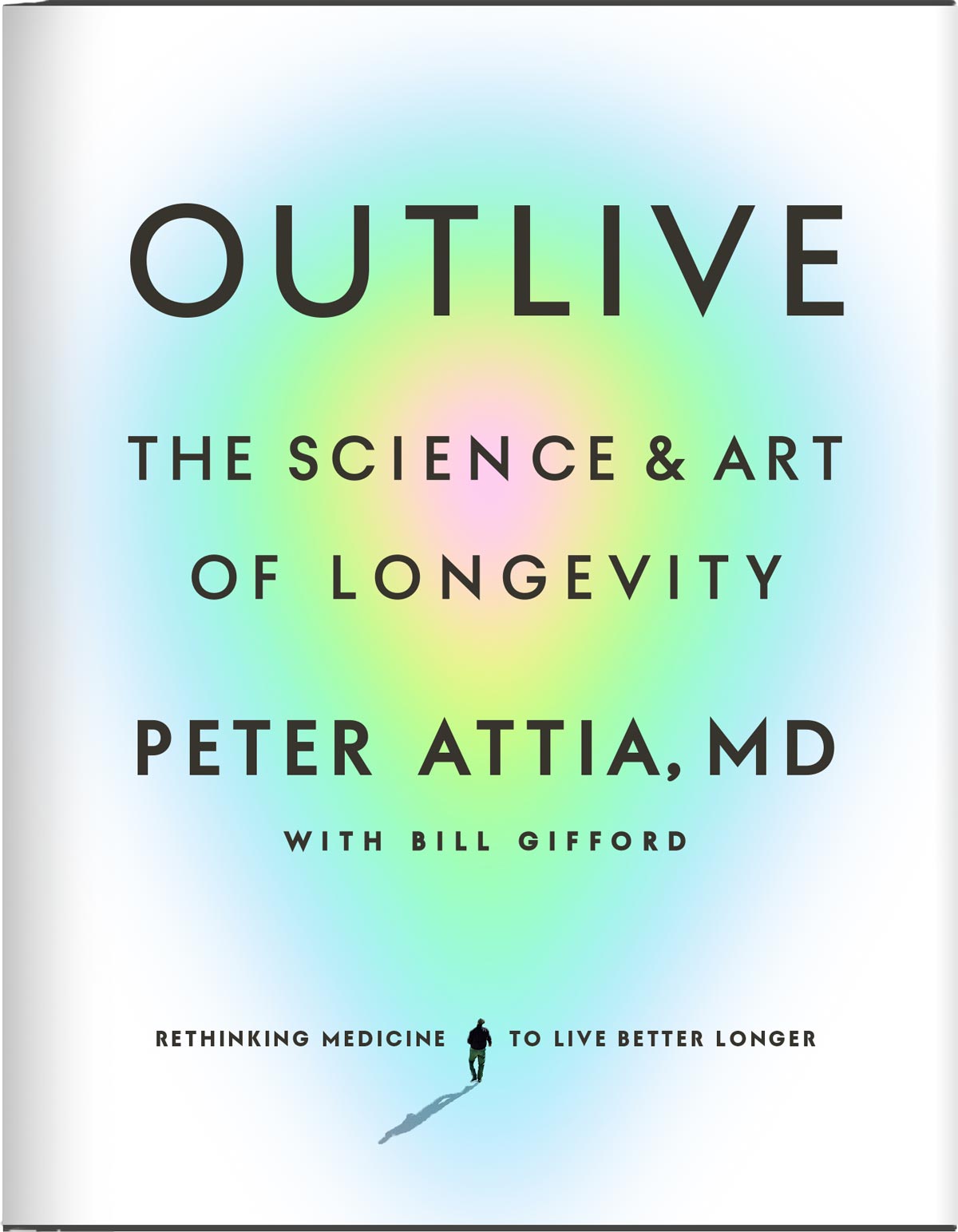
Outlive: The Science & Art of Longevity
For Meeting Planners


Get in TouchContact US
Fill out the form so we can best understand your needs.
A representative from The Keynote Curators will reach out to you.
Blog Posts

Leading Through Uncertainty Starts With One Forward Step at a Time
Leading through uncertainty does not require the whole path. A story of loss, a marker, and the next step that keeps leaders moving.
Read More
Leadership Lessons From a Futurist on Hope and Resilient Teams
Leadership feels heavier right now. Almost every leader I talk with says some version of the same thing. The pace is faster, the news is louder, and the people they lead are tired. Many of...
Read More
Why ‘Better Problems’ Are Better Than Perfect Plans
Learn why better problems beat perfect plans. Jason Feifer shares how to judge ideas by the problems you trade, not the ones you avoid.
Read More
Change Starts When You Embrace Your Emotions, with Cassandra Worthy
Change starts when you embrace your emotions. Cassandra Worthy shows how to read your feelings as signals and turn discomfort into forward movement.
Read More
Breast Cancer Awareness Needs More Than Pink Ribbons and Good Intentions
Breast cancer awareness doesn't end in October. Here is what real workplace support and easier access can look like all year.
Read More
How to Create Event Experiences People Will Always Remember
What makes an event memorable? Dr. Robyne Hanley-Dafoe explains why full presence beats polls, phones, and gadgets in any live room.
Read More
Leadership Succession Planning Is the Advantage No One Is Building
Leadership succession planning is the biggest competitive advantage most companies ignore. Here's why the gap matters and how to close it.
Read More
Workplace Culture Lessons on Trust and Safety with Danny Goldberg
Danny Goldberg explains how leaders can close the gap between the workplace culture they intend and the one employees actually feel.
Read More