
Book Vikram Mansharamani through The Keynote Curators
Biography
Dr. Vikram Mansharamani is a global trend-watcher who shows people how to anticipate the future, manage risk, and spot opportunities. He is the author of the recently-released THINK FOR YOURSELF: Restoring Common Sense in an Age of Experts and Artificial Intelligence and BOOMBUSTOLOGY: Spotting Financial Bubbles Before They Burst. He has been a frequent commentator on issues driving disruption in the global business environment. Vikram’s ideas and writings have also appeared in Bloomberg, Fortune, Forbes, The New York Times and a long list of other publications. Linkedin twice listed him as their #1 Top Voice for Money, Finance and Global Economics and Worth has profiled him as one of the 100 most powerful people in global finance. Millions of readers have enjoyed his unique multi-lens approach to connecting seemingly irrelevant dots.
Vikram is currently a lecturer at Harvard University, where he teaches students to use multiple perspectives in making tough decisions. Previously, he was a Lecturer at Yale University. In addition to teaching, he also advises several Fortune 500 CEOs to help them navigate the radical uncertainty in today’s business and regulatory environment. He has a PhD and two Masters degrees from MIT and a Bachelors degree from Yale University, where he was elected to Phi Beta Kappa. Vikram lives in Lincoln, NH with his wife, daughter, son, golden-retriever, and two cats, one of which he believes may be clairvoyant.
Contact us for Vikram Mansharamani fees and availability
Videos
Speech TopicsExpand each topic to learn more
In this stimulating and entertaining talk, Dr. Vikram Mansharamani applies a unique combination of practitioner experience and academic perspective to help audiences navigate the seemingly unending crosscurrents of global economic, financial and geopolitical uncertainty. He explains how we got to the current world of protectionism, nationalism, populism, and currency conflicts and explores how the combination of political, social, technological, demographic, and economic pressures will impact future trends. After presenting several scenarios, he considers the risks and opportunities emerging from a recession or an escalation of global tensions. While audiences often find themselves agreeing with Dr. Mansharamani each step of the way, they’re frequently surprised by what turn out to be unconventional conclusions.
One of the greatest independent thinkers of our time, Dr. Mansharamani offers an informed outsider’s perspective on the deeply polarized political culture of our time. As a former candidate for federal office in New Hampshire, he has developed a unique and fresh perspective on the political process and believes that patriotism may offer a path for us to move beyond our current divisive dynamics. Perhaps most importantly, Dr. Mansharamani also helps audiences make sense of what various US political scenarios might mean for the economy, geopolitics, and the business environment in 2025 and beyond.
In a fast-paced world driven by complex and changing factors, connecting the dots is often more important than developing them. As a result of the overwhelming flood of information that pours at us daily, we run headlong into the arms of experts and technologies. We’ve stopped thinking for ourselves and now habitually – perhaps unconsciously – outsource our thinking about important decisions. Rather than turn to specialists, Dr. Mansharamani guides us to think bigger and look across the silos of expertise, leaving listeners empowered and energized to think for themselves. This memorable talk is filled with stories from a variety of industries and settings about how we got to where we are and how we can reclaim control.
Our dynamic global economy seems to be producing boom and bust cycles more frequently than in the past. There’s always something that seems ahead of itself, having reached unsustainable levels. In direct contrast to the prevailing academic thinking, Dr. Vikram Mansharamani believes it’s possible to identify financial (and other) bubbles before they burst. Drawing on entertaining examples from art markets, architecture, and popular culture (as well as economics and politics), he powerfully demonstrates that you need not be an expert to anticipate the future. Audiences leave this talk feeling empowered to think independently and connect the obvious dots to generate not-so-obvious conclusions.
Testimonials
Booksby Vikram Mansharamani
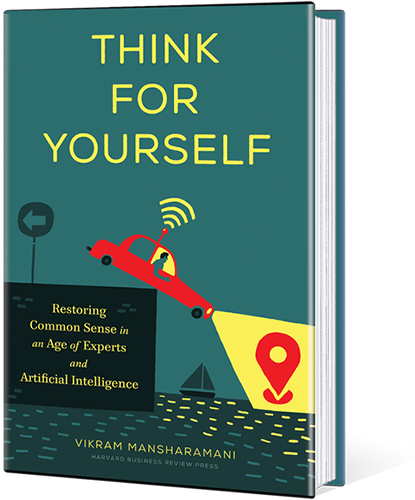
Think For Yourself
Boombustology: Spotting Financial Bubbles Before They Burst


Get in TouchContact US
Fill out the form so we can best understand your needs.
A representative from The Keynote Curators will reach out to you.
Blog Posts

Why ‘Better Problems’ Are Better Than Perfect Plans
Learn why better problems beat perfect plans. Jason Feifer shares how to judge ideas by the problems you trade, not the ones you avoid.
Read More
Change Starts When You Embrace Your Emotions, with Cassandra Worthy
Change starts when you embrace your emotions. Cassandra Worthy shows how to read your feelings as signals and turn discomfort into forward movement.
Read More
Breast Cancer Awareness Needs More Than Pink Ribbons and Good Intentions
Breast cancer awareness doesn't end in October. Here is what real workplace support and easier access can look like all year.
Read More
How to Create Event Experiences People Will Always Remember
What makes an event memorable? Dr. Robyne Hanley-Dafoe explains why full presence beats polls, phones, and gadgets in any live room.
Read More
Leadership Succession Planning Is the Advantage No One Is Building
Leadership succession planning is the biggest competitive advantage most companies ignore. Here's why the gap matters and how to close it.
Read More
Workplace Culture Lessons on Trust and Safety with Danny Goldberg
Danny Goldberg explains how leaders can close the gap between the workplace culture they intend and the one employees actually feel.
Read More
Real Productivity Is About Deciding What Not to Finish Before Year-End
Real year-end productivity means finishing fewer things well rather than everything done. Here is how to choose what deserves your time before December 31.
Read More
What is Psychological Flexibility and Why Leaders Need It Before a Crisis Hits
Psychological flexibility keeps leaders steady in a crisis. Dr. Jannell MacAulay shares what the cockpit teaches about calm under pressure.
Read More