
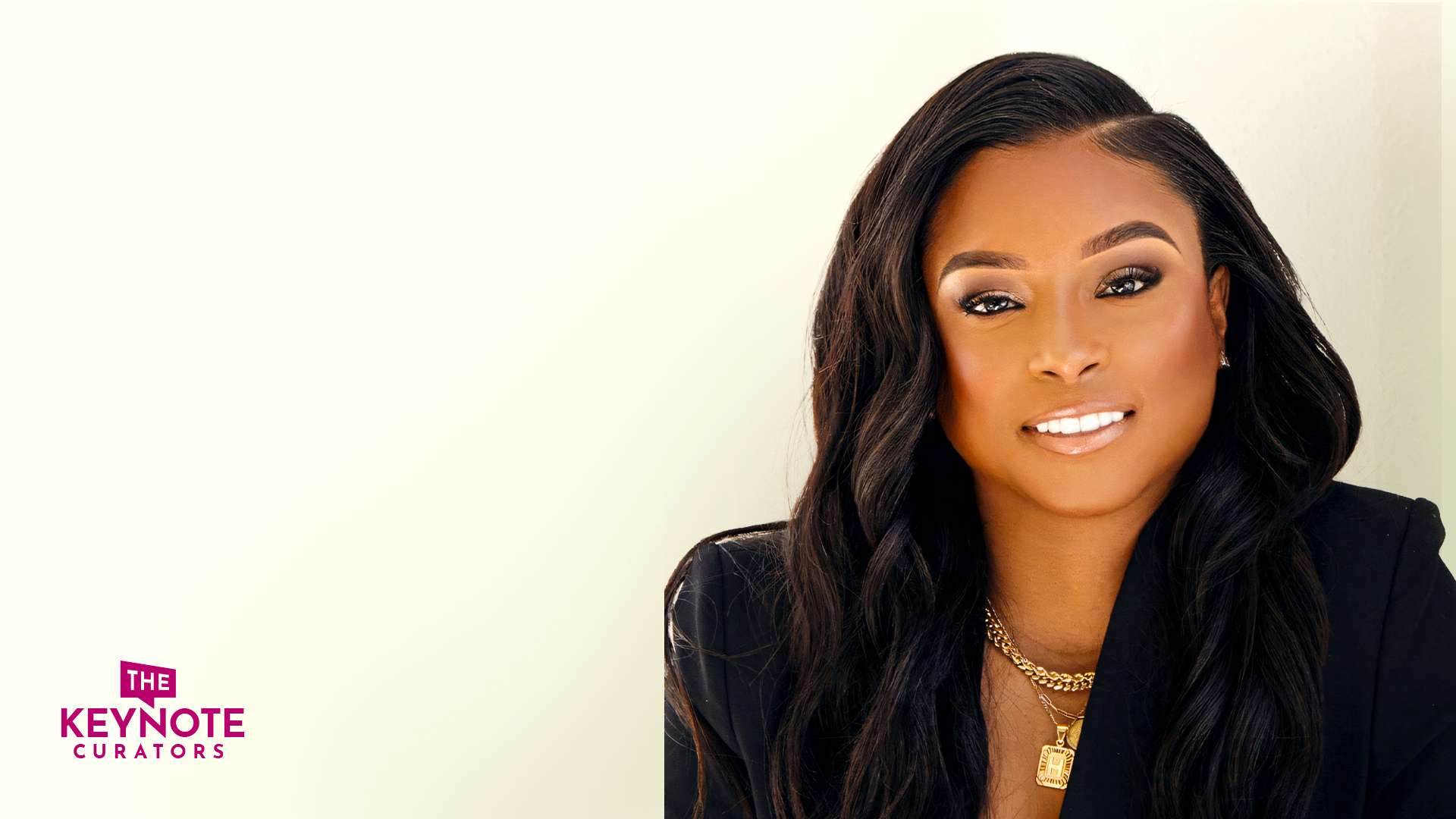
August 3, 2026How Trust Holds Teams Together When Layoffs and Change Hit the Workplace
Minda Harts explains why trust, not certainty, is what keeps teams together during layoffs, reorgs, and workplace change.
Layoffs are happening across nearly every industry right now. Reorgs show up with little warning. And most employees have quietly accepted that job security isn’t something anyone can promise them anymore. So what’s actually left for leaders to offer their teams? According to workplace consultant and bestselling author Minda Harts, the answer is trust. Not the guarantee that everyone keeps their job. Not the promise that hard news won’t land. Just the honest, human kind of trust that tells people they’ll be treated with respect no matter what’s happening around them.
I sat down with Minda Harts to talk about what this actually looks like inside a company going through hard change, and what struck me most was how simple her framework really is. Leaders can’t control the market. They can’t always control headcount. But they can control how they communicate, and that one choice is often what decides whether trust survives a crisis or breaks apart completely.
🎥 Watch and listen to the full interview about trust here
When Layoffs and Marketing Campaigns Collide
One of the sharpest observations Minda Harts made during our conversation was about timing. She’s watched companies run big, glossy marketing campaigns in the same week they’re laying off a chunk of their workforce. On paper, these look like two separate decisions made by two separate departments. In practice, employees experience them as the same message, and it’s a message that erodes trust fast.
What struck me most about this is that layoffs by themselves don’t destroy that relationship. People understand that businesses face financial pressure and have to make hard calls. What breaks trust is the appearance that leadership cares more about optics than about the people losing their paychecks. When a company spends money on a big brand moment while quietly cutting staff, it tells the employees who remain something uncomfortable: the story the company tells the outside world matters more than the story happening inside its own walls.
I’ve come to think this is one of the most avoidable mistakes a leadership team can make. Nobody expects a company to pause every external commitment because internal news is hard. Product launches still need to ship. Campaigns still need to run. But timing and tone are choices, not accidents, and a company that spends real thought on how a campaign lands with customers should be willing to spend at least that much thought on how a layoff lands with the people still on the team the next morning.
This is where corporate culture gets tested in ways no mission statement can fix. A strong culture isn’t built during the good years. It’s built, or broken, in exactly these moments, when leadership has to choose between protecting appearances and being honest with the people who make the company run. Minda Harts has watched both choices play out across dozens of organizations, and the pattern holds up. Companies that acknowledge the tension, even awkwardly, keep more of that credibility than companies that pretend nothing is happening.
I’ve seen this same pattern outside of layoffs too. Any time there’s a gap between what a company says publicly and what employees experience privately, trust takes the hit. The gap itself is the problem, not the individual decisions sitting on either side of it. Leaders who understand this stop trying to manage the story and start trying to close the gap.
Why Trust Has to Be a Two-Way Street
If there’s one idea Minda Harts kept coming back to, it’s this: trust cannot be a one-way expectation. Too many organizations quietly assume employees will show up, work hard, stay loyal, and absorb whatever changes come their way, without ever asking what leadership owes employees in return. Minda Harts put it directly.
“Trust has to be a two-way street. As leaders, we can’t just expect that, okay, our employees are gonna show up on time. They’re gonna do the work, they’re gonna work really hard, they’re gonna be loyal, and then we don’t offer that back to them.”
I’ve been thinking about how often this imbalance hides in plain sight. Most leaders would never say out loud that trust only flows in one direction. But the way many companies actually operate tells a different story. Performance expectations are detailed and enforced. Communication expectations from leadership are vague and optional. Employees are told constantly what’s required of them. They rarely hear what’s required of leadership in return.
This matters because trust, like any relationship, doesn’t survive on effort from only one side. A team can work hard and stay loyal for a long stretch of time, but if leadership never reciprocates with honesty, that loyalty eventually runs out. Not because people stop caring about the work. Because they stop believing the relationship is fair.
This is where leadership and employee engagement are more connected than most companies realize. Engagement isn’t a perk program or a survey score. It’s a direct reflection of whether people believe the confidence they’re extending is being matched. When leaders treat trust as something employees owe them by default, engagement quietly erodes long before anyone files a complaint or updates their resume.
The fix isn’t complicated, even if it’s uncomfortable. Leaders have to ask themselves what they’re actually offering back. Not perks. Not slogans. Real information, real respect, and real accountability for the decisions that affect people’s lives.
Why Silence Reads as Betrayal
Minda Harts had a line that stuck with me long after our conversation ended. People can smell the smoke. They know when something is off inside their organization, whether it’s a hiring freeze nobody explained, a leader who suddenly stopped showing up to meetings, or a budget conversation that got quietly cancelled. And when leadership responds to that unease by insisting everything is fine, it doesn’t calm anyone down. It confirms their worst suspicion, which is that leadership either doesn’t see the problem or doesn’t trust them enough to talk about it honestly.
This is the part of trust that gets overlooked the most. Most leaders think it’s about delivering good news well. Minda Harts argues the harder, more important version of trust is being willing to name the hard news at all, even before there’s a clean resolution.
What makes this especially interesting is how counterintuitive it feels in the moment. Every instinct tells a leader to project calm during uncertainty, to keep the meeting upbeat, to avoid saying anything that might spook the room further. But Minda Harts’s point is that people are already spooked. Naming the concern out loud doesn’t introduce anxiety that wasn’t there. It gives people a way to stop carrying it alone.
“Trust isn’t just, ‘we do a trust fall, and everything’s great.’ It’s also identifying what the elephants in the room are so that people can say, ‘oh, okay, well, at least we’re talking about it.'”
That distinction matters more than it sounds like it should. A trust fall is a performance of it. Naming the elephant in the room is the actual practice. One is a team-building exercise. The other is a leadership habit. And it’s the habit, repeated in small moments over months and years, that actually determines whether people believe their leaders when it counts.
I think about how often organizations invest in the performance version of it while skipping the harder practice version. They’ll fund the offsite. They’ll run the survey. What they won’t always do is stand in front of a team and say, out loud, “here’s what’s uncertain, and here’s what we don’t know yet.” That sentence alone does more for trust than almost anything else a leader can offer.
Getting Return to Office Right
The chapter of our conversation on return-to-office mandates was one of the clearest examples Minda Harts gave of trust being built or broken in real time. Plenty of companies have rolled out in-office requirements as a flat directive. Show up three days a week, effective immediately, no explanation given. Minda Harts pointed out how differently that decision lands depending on how it’s delivered.
A mandate handed down without context tells employees that their time, their commute, their caregiving responsibilities, and their reasons for preferring flexibility simply don’t matter to the people making the decision. Even if the underlying business reasoning is sound, the delivery alone can wipe out months of goodwill. People don’t just resist the policy. They start questioning whether leadership actually understands what their day-to-day life looks like, which is its own quiet form of losing trust.
Compare that to a return-to-office conversation that includes actual reasoning. Maybe it’s about rebuilding collaboration across teams. Maybe it’s about mentoring junior employees who need more in-person guidance. Whatever the reason, when leadership explains it and acknowledges the real cost the change creates for employees, the same policy becomes something people can accept, even if they don’t love it. The decision doesn’t change. The trust around the decision does.
This connects directly to how teamwork actually functions inside a company. Teams don’t rally around policies they don’t understand. They rally around leaders who treat them like adults capable of hearing the full picture. A return-to-office plan built on shared context and honest reasoning will always outperform one built on a memo and a deadline, because people can tell the difference between a decision explained to them and a decision handed down at them.
How to Humanize a Hard Conversation
What I appreciated most about Minda Harts’s approach is how practical it is. She’s not asking leaders to become therapists or to soften every hard decision into something painless. She’s asking them to treat the people affected by a decision like humans instead of headcount numbers on a spreadsheet.
Humanizing a hard conversation starts with acknowledging the weight of what’s being said before rushing to the logistics. If a team just heard about layoffs, a leader who jumps straight into next steps and reorg charts is technically doing their job while completely missing the moment. People need a beat of acknowledgment. They need to hear that leadership understands this is hard before they hear what happens next.
It also means being honest about what leadership doesn’t know yet. Minda Harts pushes back on the instinct to project total confidence during uncertain moments. Pretending to have all the answers when you don’t is its own quiet betrayal, because eventually people find out the truth, and once they do, they remember that leadership chose to perform certainty instead of being honest about the unknown.
The deeper implication here reaches well beyond layoffs. Any hard conversation—a missed promotion, a project cancellation, a performance concern—benefits from the same approach. Acknowledge the human impact first. Be honest about what’s known and what isn’t. Then move into next steps. It’s a simple sequence, but very few leaders actually follow it under pressure, which is exactly why it stands out so much when someone does.
What Trust Actually Sounds Like in Practice
I asked Minda Harts, in different words, what all of this sounds like when it’s happening well. Her answer wasn’t a script. It was a posture. Leaders who build trust during hard times tend to say things like “here’s what we know, here’s what we don’t, and here’s when we’ll update you next.” They set a timeline for the next piece of honest communication instead of leaving people to wonder when they’ll hear anything at all.
That small habit, naming when the next update will come, does more for trust than most people realize. Silence between hard conversations is where anxiety fills in the gaps with worst-case scenarios. A committed follow-up date, even if the news at that point is still uncertain, gives people something steady to hold onto.
As a best-selling author, Minda Harts has spent years translating exactly this kind of language into frameworks leaders can actually use, most recently through her Seven Trust Languages framework. It’s the kind of work that sits at the intersection of research and lived experience, which is probably why it resonates with so many leaders who already sense something is broken in how their organizations communicate, but haven’t had the language to name it.
This is really a question of thought leadership in the truest sense. Not thought leadership as a personal brand exercise, but as the discipline of turning a hard, abstract problem like trust into something concrete enough that a manager can actually practice it on a Tuesday afternoon before a difficult meeting.
Trust as a Long-Term Business Strategy
It would be easy to file all of this under soft skills and move on. Minda Harts would push back on that framing, and honestly, so would I. Trust isn’t a nice-to-have sitting next to the real work of running a company. It’s directly tied to retention, productivity, and how quickly a team can recover after a hard period.
Think about what happens inside a team that has lost trust in leadership. People stop raising concerns early because they don’t believe anything will change. They stop volunteering for stretch projects because they’re protecting themselves instead of investing in the company’s future. They start job searching quietly, which means the best people, the ones with options, leave first. None of that shows up immediately on a balance sheet, but all of it shows up eventually, usually right when the company can least afford it.
This is why trust belongs in conversations about business growth and not just conversations about culture. A company can have the sharpest strategy in its industry, but if the people responsible for executing it don’t believe in leadership, execution slows down, quietly and constantly, in ways that are hard to trace back to a single cause. Strong business leadership treats trust as infrastructure, not decoration. You maintain it before you need it, not after it’s already gone.
The more I sit with this, the more I think trust is one of the few genuine competitive advantages left. Almost anything else—a product feature, a pricing strategy, a marketing campaign—can be copied by a competitor within a quarter. A high trust culture, built over years of consistent honesty, is much harder to replicate, which is exactly why so few organizations manage to build one.
I’ve noticed that the leaders who understand this tend to talk about trust the same way they talk about revenue or retention: as something measured, monitored, and actively managed rather than assumed. They ask for feedback and actually change something in response to it. They track how people describe leadership in exit interviews, not just why people say they’re leaving. None of this is glamorous work. It rarely shows up in a keynote slide about innovation. But it’s the quiet infrastructure that determines whether everything else a company tries to build actually holds up under pressure.
Building a Culture That Can Survive Uncertainty
Uncertainty isn’t going away. Layoffs, reorgs, market shifts, and leadership changes are simply part of how organizations operate now, and pretending otherwise doesn’t protect anyone. What Minda Harts offers instead is a way to hold onto trust even when the ground keeps moving.
The organizations that manage this well share a common thread. They don’t promise outcomes they can’t guarantee. They don’t pretend certainty exists where it doesn’t. Instead, they commit to something more durable, which is honest communication delivered consistently, even when the news is hard. That consistency is what allows trust to survive a crisis instead of collapsing under it.
This reminded me of something worth repeating to any manager who feels like they’re constantly delivering bad news right now. The problem was never that the news is hard. Hard news, delivered honestly and on time, rarely breaks a team’s trust in leadership. What breaks it is silence, spin, and the sense that people were the last to know something that clearly affected them. The news itself is rarely the crisis. The way it’s handled usually is.
I keep coming back to something Minda Harts said almost in passing, about how trust is tested most in the moments nobody’s watching closely. Not the big town hall with the polished slides, but the small update sent to a team of six people who just watched their department shrink. Those are the moments that quietly decide whether a business keeps its best people through hard times or loses them the moment something better comes along.

The Real Work Is Consistency, Not Certainty
The lesson I keep returning to from this conversation is that trust was never about removing uncertainty. It was about how leaders choose to show up inside it. Minda Harts didn’t offer a formula for guaranteeing job security or eliminating hard news, because that formula doesn’t exist. What she offered instead was something more useful: a way of communicating that treats people like they deserve honesty, even when the truth is incomplete.
Leaders can’t promise their teams that nothing bad will happen. What they can promise is that when something does happen, people will hear about it with context, with respect, and with enough honesty to make sense of it. That promise, kept consistently over time, is what trust actually is. Not a slogan on a wall. A pattern of behavior that people learn to count on, especially when everything else feels uncertain.
If there’s one thing worth carrying out of this conversation with Minda Harts, it’s that trust is built in the hardest moments, not the easiest ones. Any leader can seem trustworthy when things are going well. The real test, and the real opportunity, shows up during the layoff announcement, the reorg memo, and the return-to-office mandate nobody asked for.
🌟 Hire workplace trust speaker Minda Harts for your next event
🗓️ Let’s design a better trust strategy for your team
Discover More Insights





Get in TouchContact US
Fill out the form so we can best understand your needs.
A representative from The Keynote Curators will reach out to you.