
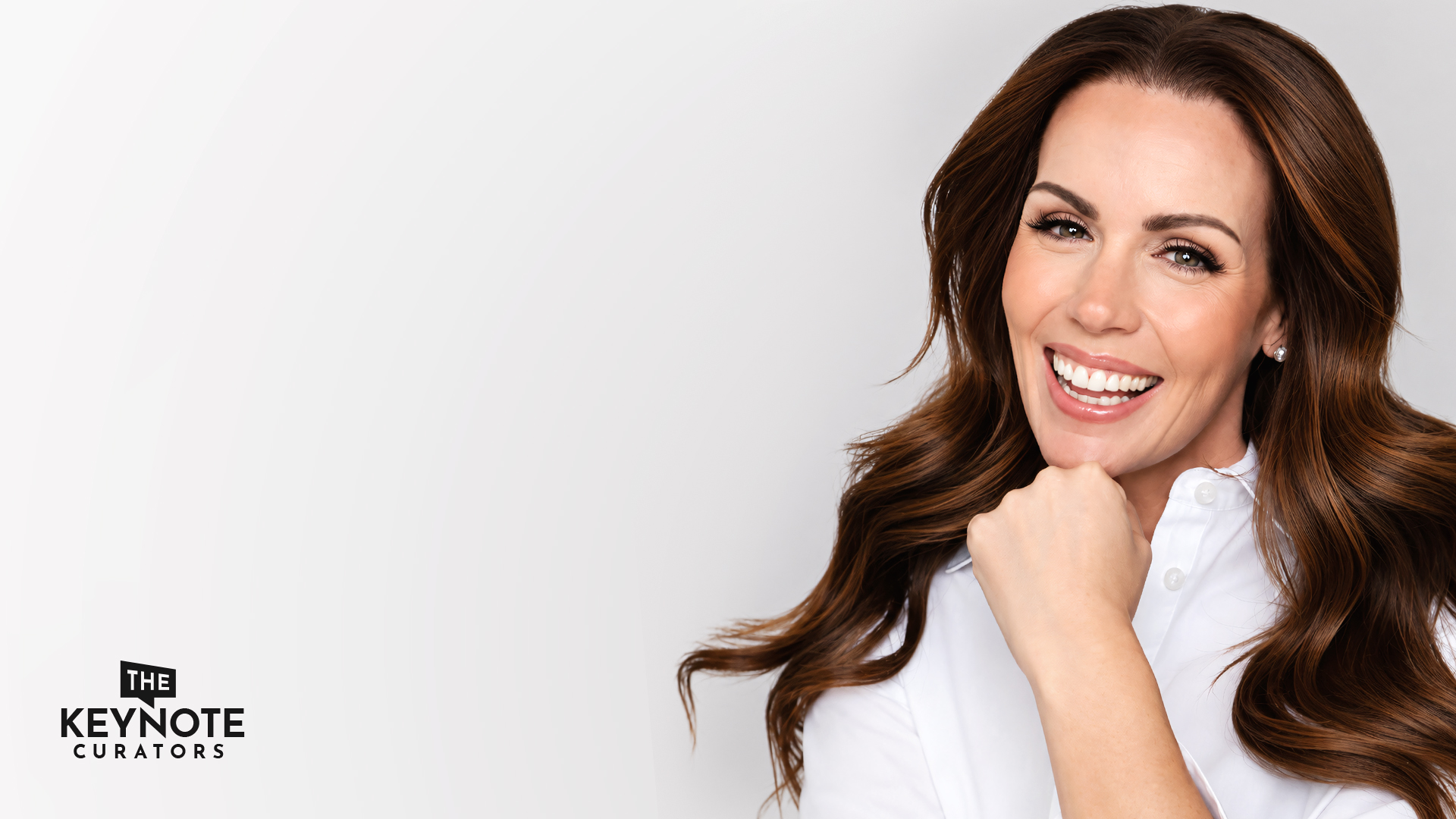
October 5, 2026How to Create Event Experiences People Will Always Remember
What makes an event memorable? Dr. Robyne Hanley-Dafoe explains why full presence beats polls, phones, and gadgets in any live room.
Most people who plan an event ask the same question. How do we get the audience to do more? More polls. More apps. More screens. More prompts to tap, vote, and share. It feels like progress, because activity is easy to see and easy to count.
When I sat down with Dr. Robyne Hanley-Dafoe, she turned that question around. A great event, she told me, is not built on how much people interact. It is built on whether they feel fully present. And that is much harder to create than it sounds.
She is a keynote speaker who brings a rare mix of research and real life to the stage. She is a psychology and education behaviorist who studies how people connect, learn, and stay well under pressure. She has delivered more than 2,000 keynotes worldwide and writes weekly for Psychology Today. So when she talks about what happens inside a live room, she is not guessing.
I’ve kept thinking about her answer since our talk. What if the best event is the one that asks the least of people’s attention and gives the most back? That question changed how I look at every agenda, every tool, and every minute on the schedule. In this article, I want to walk through what she shared and, more importantly, what I think it means for anyone who brings people together.
🎥 Watch and listen to the full interview with Dr. Robyne Hanley-Dafoe here
Why More Interaction Is the Wrong Goal for Any Event
Most of us measure what is easy to measure. At an event, that usually means counting the visible things, like how many people voted in the poll, how many downloaded the app, and how many used the hashtag. Those numbers go into a report, and the report says the event was a success.
What struck me most in my conversation with Dr. Robyne is how calmly she questions that habit. She does not say interaction is bad. She says it is the wrong target. The target is full presence, which means people are in the room with their whole attention, not split between the speaker and a screen. In her words,
“So when people are at an event, and we want them to have an experience, we wanna make it as seamless as possible so that they can be fully immersed in it, and they’re not having these interruptions.”
I think this is a bigger idea than it first looks. Every event is a bet on attention. People give up time, travel, and money to be there. The least we can do is protect the one thing they can never get back once it is spent. If an activation pulls attention away, it costs the audience something, even when the dashboard looks great. Interaction is only useful when it serves presence. When it replaces presence, it becomes noise that looks like energy.
This is where the thinking of a good leader shows up. Leaders fall into the same trap in meetings, town halls, and team check-ins. It is tempting to add another format or another tool because adding feels like action. Removing is harder. Removing means trusting that the core of the experience is strong enough to stand alone. That fits with the wider work of business leadership, where the best leaders often edit more than they add.
Her question to planners is simple and a little uncomfortable. Does this help people be fully present, or does it only make them do something? Ask that about every poll, every screen, and every clever add-on. Some will pass. Many will not. I’ve been asking that question about my own work since we spoke, and it has changed how I read any event agenda. A packed schedule is not the same as a meaningful one. A full room is not the same as a present one.
What Poll Data Revealed About Phones and Attention
One detail from our conversation has stayed with me. At one event, the team tracked audience poll data. They expected the polls to raise engagement. What they saw instead was a drop. Engagement fell once people picked up their phones to respond.
Think about what that means. The tool was built to pull the audience in. But the moment someone reached for a phone, their attention left the room. A poll question might take twenty seconds. The phone, though, is never just a poll. It is also messages, notifications, and a quiet pull toward everything else. Nobody in the room was fully there anymore, and the poll itself was the reason.
What I find interesting is how invisible this problem is. From the stage, a room full of people looking at their phones can look like participation. Heads are down, thumbs are moving, and the numbers on the screen climb. It feels like engagement. But the data told a different story, and I’m grateful that someone at that event was honest enough to look at it. Many planners never check. They assume more activity means more connection.
This is a lesson about measurement as much as design. If we only count taps, we will keep building for taps. If we ask whether people remember the content, feel connected, or leave with something they can use, we build for something else. Dr. Robyne’s background as a behaviorist shows up here. She looks at what people actually do, not what we hope they do.
There is also a point about strategy in this. A strategy that never tests its own assumptions is just a habit with a nice name. The team that found the drop in engagement did something rare. They treated the event as an experiment and let the evidence change their minds. That kind of humility is worth more than any new gadget. Whenever I see a team willing to look at data that contradicts its favorite idea, I trust that team more.
The practical lesson is plain. Before you add a tool to your next event, ask what it takes away. Every device has a cost in attention, and that cost almost never shows up on the budget line.
Why a Good Story Beats a Gadget at a Live Event
If polls and gadgets scatter attention, what holds it? According to Dr. Robyne, the answer is older than any technology. A good story. Engaged storytelling held the room in ways that polls and gadgets did not.
I wasn’t surprised, but I was reminded of something I tend to forget. Nobody has to be told to pay attention to a good story. They just do. There is no instruction, no QR code, no login. Attention follows meaning on its own.
That says something about what a live event is for. We can send information in an email. We can share slides afterward. What a room can do that a screen cannot is create a shared moment where people feel something together. A story does that. It slows people down, gives them a reason to care, and lets them see themselves in what they hear.
There is real skill behind this, and it isn’t easy. Telling a story that holds a room takes honesty, structure, and the courage to be a little vulnerable. It is much easier to put a poll on a slide. It is easier to ask the audience to vote than to earn their attention. I think that is part of why polls spread so widely. They are a shortcut that looks like a connection.
This connects to the way communication works at its best. Good communication is not about delivering more content. It is about helping people feel included in an idea. A leader who tells a clear, true story at a team meeting often gets more buy-in than one who sends a long survey. Stories move people toward a decision. Polls only record where they already stand.
Dr. Robyne’s own path shows why this matters. She is a former high school dropout who became a university professor, a bestselling author, and a mother of three. Her work is known for making complex research simple and human, or what her bio calls science with heart. That is exactly what a story does. It carries an idea into a person in a way a data point can’t. The best stories also leave people feeling capable, which is the heart of empowerment. That is why story is not decoration at a good event. It is the engine.
How to Remove Phones Without Taking People by Surprise
Then comes the bold part of our conversation. At one event, the organizers took phones away completely. Dr. Robyne and I talked through what happened, and the engagement results surprised even the people running it. I’ll leave the specifics for the interview, because hearing her tell it matters. But the thinking underneath it is worth exploring here.
Taking phones away sounds extreme. For many people it also sounds stressful. We carry our phones everywhere, and the idea of a whole session without one can feel like being left outside without a coat. So the way the idea is introduced matters as much as the idea itself.
This is the small detail in her thinking that is easy to miss. People resist when something is taken from them without warning, even when it is a good idea. A phone-free session works better when attendees hear about it ahead of time. That way it feels like a choice they were part of, not a rule dropped on them at the door.
I’ve thought a lot about this because it applies far beyond any event. Change lands better when people see it coming. A reorganization, a new process, or a new meeting rhythm can succeed or fail partly on how it is introduced. Surprise creates a feeling of lost control. And when people feel they have lost control, they push back, even against things that would help them.
It is also a mental health point. A sense of autonomy is tied to well-being. A rule delivered without warning chips away at it. A choice offered with context protects it. The same idea, delivered two different ways, can feel like care or like control.
So the practical step is easy to say and easy to skip. Tell people early. Explain why. Let them prepare, arrange coverage at work, and arrive ready to be present. When attendees feel they were part of the decision, the empty hands can become a relief instead of a restriction. I’ve noticed that most people enjoy being given permission to put the world on hold for a while, as long as they are trusted to agree to it. The success of an event often depends on that small act of respect.
The Minutes Between Sessions Are the Real Event
Dr. Robyne also makes the case for protecting something that schedules tend to cut first. Time for people to talk to each other.
Agendas get crowded. Speakers want more minutes. Sponsors want more slots. Breaks are the easy thing to trim, so they shrink to a quick walk past the coffee line. But learning sticks better when it is shared. When people turn to the person next to them and ask what they took from a session, the idea moves from the stage into their own thinking. In those unplanned minutes between sessions, a crowd begins to feel like a community.
I find this idea hopeful. It means the most valuable part of an event may not be on the program at all. It happens in hallways, at tables, and in small groups that form without anyone organizing them. We tend to think of those moments as extras. I now think of them as the point.
For any entrepreneur who attends a conference to grow a network, this is both good news and a warning. The relationships that matter are rarely made during the keynote. They are made after it. If the schedule leaves no space for that, the event has been designed against its own purpose.
It also changes how I think about the people running the room. A planner who protects open time is making a quiet statement of trust. They are saying that the attendees are not just an audience to be managed. They are adults who can find the conversations they need. That kind of trust is rare, and people feel it.
When I look at an agenda now, I look for white space first. If the white space is gone, I know the planners are optimizing for content, not for people. Content is easy to schedule. Connection needs room.
What Distraction Does to Empathy and Community
Phones and screens are not the only way attention breaks. But they are the most common one, and Dr. Robyne talked about what happens when people lose real contact with each other. She described the pattern this way:
“We start to see empathy scores go lower. We start to see compassion start to decrease. We start to see a lot of us-versus-them thinking.”
I want to be careful here. She was not blaming one thing for every problem, and I don’t want to flatten her point. What I took from it is this. Empathy needs attention. You can’t feel what another person feels if you are half somewhere else. Compassion needs eye contact, shared silence, and the small cues we read without thinking. When those get crowded out, something shifts. People begin to see each other as categories instead of humans.
Think about what this means at a live event. A room of strangers is a fragile thing. People arrive with different jobs, different views, and different levels of trust. A good session helps them see what they have in common. A distracted one leaves them as separate individuals sitting in the same chairs. The seats are full, but nobody has actually met.
This is why I think of presence as a form of care. When you design a room so people can be fully there, you are telling them their attention matters, and so do the people next to them. That belief sits at the center of Dr. Robyne’s work on resilience. Her research keeps returning to connection. People who feel they belong tend to handle pressure better, because they don’t carry it alone.
It matters for teams, too. Leaders talk a lot about culture, but culture is built from small moments of attention. Did I listen when you spoke? Did I look up from the screen? Over time those moments add up to trust or to distance. A conference or an offsite is a concentrated chance to build that trust. If we fill it with interruptions, we waste the chance. I often wonder how many teams leave a big gathering after an event having heard a lot and connected very little.
Build Your Next Event Around What Comes Out, Not What Goes In
So what can a planner actually do with all of this? When I put Dr. Robyne’s ideas side by side, I see four moves, and none of them needs a bigger budget. Remove distractions so people can be fully immersed, instead of adding more devices or prompts. Choose engaged storytelling over polls or gadgets when you want people to pay attention. Warn people in advance if you are asking them to give up their phones. And build in moments for people to connect with each other, since shared experience makes learning and community stronger.
What I like is that each move is either a subtraction or an act of trust. None of them is flashy. That may be why they get skipped. Budgets reward addition. A new platform, a new vendor, or a new feature each has a line item. Removal has no line item, so it rarely gets proposed. But the strongest event experiences I can think of were usually the ones that did less, and did it with care.
This is the line of her thinking I keep returning to. Look at your next agenda and ask what could come out of the experience, not just what could go in from your budget. It is a small shift in wording that changes the whole design process. Instead of asking what to put on the schedule, you ask what the schedule is getting in the way of.
From a business view, this is also a smart question. Every event is an investment of money and of people’s time. If the design pulls attention away from the message, the return shrinks, no matter how polished the production looks. Presence is not a soft goal. It is how the investment pays off.
It carries over into personal development as well. Growth rarely comes from more input. It comes from having room for ideas to land. I’ve noticed the same pattern in my own learning. The talks I remember best were not the ones with the most slides. They were the ones where I was fully there. The best inspirational and motivational talks work for the same reason. People can only be moved when they are present enough to be reached.
The best part is that these ideas travel. A meeting, a workshop, a family dinner, and a one-on-one all follow the same rule. Attention is the real currency. Anyone who learns to protect it, in their own room or someone else’s, is practicing leadership in a very practical form.

A Room Where Nobody Is Half Somewhere Else
When I think back over the conversation, one picture stays with me. A room full of people who are fully there. Nobody is checking, scrolling, or waiting for the next prompt. They are listening to a story, then turning to talk with the person beside them. Nothing about it is complicated. And yet it is rare.
That is what I take from Dr. Robyne Hanley-Dafoe’s view of the event experience. The goal is not more interaction for its own sake. The goal is full presence. Every decision, from the polls to the phones to the length of the breaks, should be tested against that goal. If it helps people be there, keep it. If it pulls them away, let it go.
I also see a quiet link to the idea at the center of her latest book, I Hope So, which treats hope as a practical skill. Presence is a skill too. It can be designed for, practiced, and protected. A leader who learns it does more than run a better event. They show people what it feels like to be taken seriously.
So the next time you plan an event, try her question. Ask what could come out, not just what could go in. You may find that the strongest room you build is the one with the most space in it.
🎬 Watch the full conversation with Dr. Robyne Hanley-Dafoe
🤝 Bring Dr. Robyne Hanley-Dafoe to your next event
📆 Let’s set up a time to talk
✍️ Drop us a line
Discover More Insights




Get in TouchContact US
Fill out the form so we can best understand your needs.
A representative from The Keynote Curators will reach out to you.