
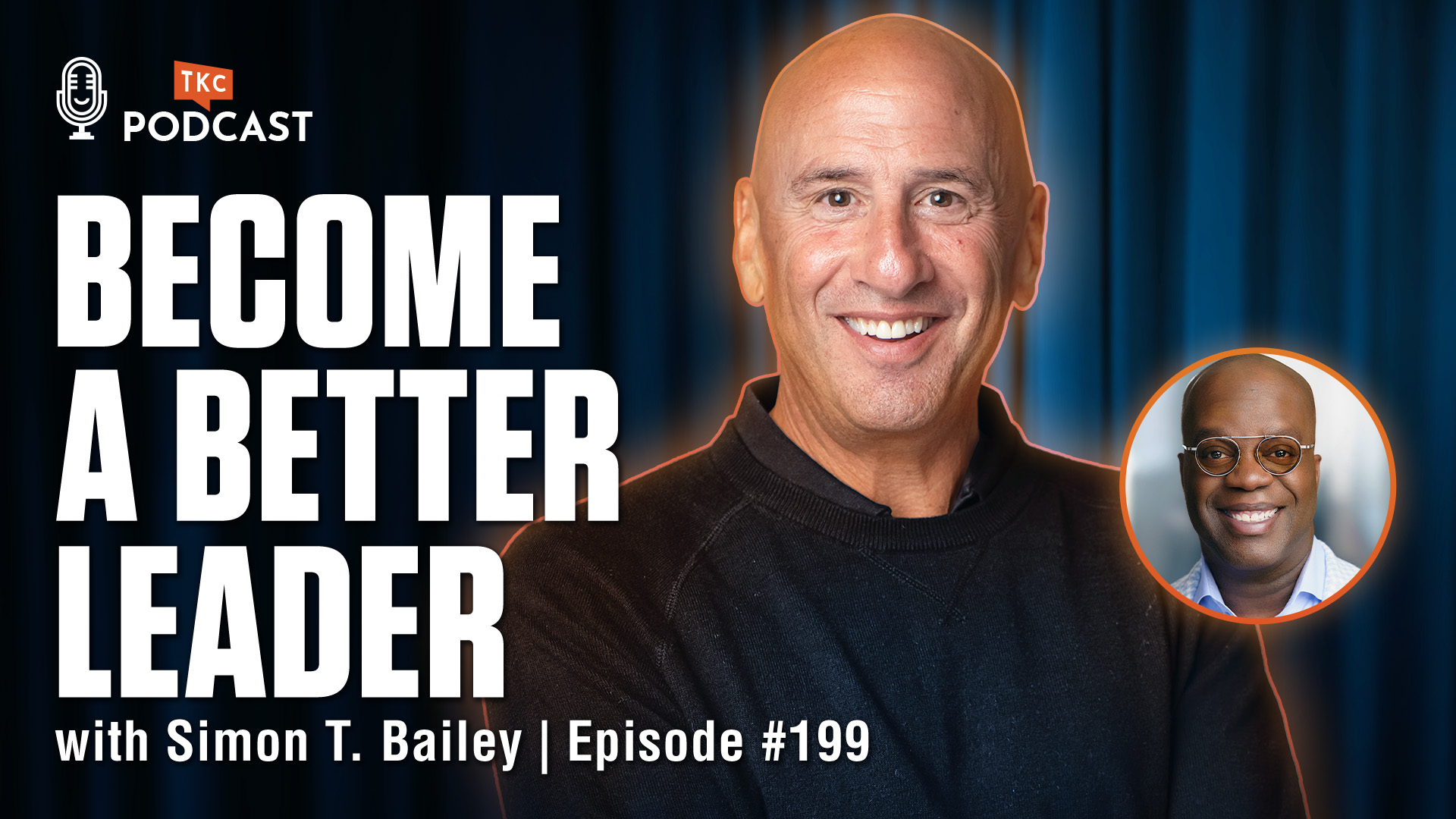
November 2, 2026Becoming the Type of Leader People Want to Follow with Simon T. Bailey
Learn how to become a leader people want to follow. Simon T. Bailey shares practical ideas on hope, recognition, and empowerment.
Most of us can name a leader we would follow anywhere. Most of us can also name one we quietly tried to avoid. The difference rarely comes down to a title, a degree, or a polished strategy deck. It comes down to how that person made us feel about what happens next.
I kept returning to that idea after my conversation with Simon T. Bailey on The Keynote Curators Podcast. Simon is a keynote speaker who has spoken to more than 2,600 organizations in 55 countries, and he has spent his career studying what he calls hope-powered leadership. His point is simple and a little uncomfortable. People do not follow someone because they have every answer. They follow the one who helps them believe they can take the next step.
That is a high bar, and it is a different bar than most of us were taught. We tend to picture strength as knowing more, deciding faster, and carrying the weight alone. Simon describes something else. A leader, in his view, is someone who helps people see what they can control and then trusts them to act on it. The more I think about that, the more it changes how I look at my own work. This is my attempt to explain why.
🎧 Watch and listen to the podcast episode: YouTube • Spotify • Apple Podcasts • Amazon Music
Hope Is Something a Leader Does, Not Something a Leader Feels
When people hear the word hope, many of them picture a soft feeling. They imagine crossed fingers and a wish that things will work out. Simon does not define it that way, and what struck me most is how practical his definition is. Hope, as he describes it, is a behavior. It shows up when someone in charge helps people look at a messy situation and find the one part they can actually influence.
Think about what that does inside a team. When the future is unclear, people tend to freeze. They wait for instructions, or they wait for the storm to pass. Offering hope as a behavior breaks that freeze. The message is not “everything will be fine.” The message is “here is what we can do today, and I believe you can do it.” That is a far more honest message, and it is also far more useful.
I have seen this pattern in my own career. The leader who pretends there is no risk loses trust quickly, because people can see the risk with their own eyes. The leader who names the uncertainty and then points to a next step earns something deeper. People feel respected. They feel like adults who are being told the truth and then given a role to play.
This is why I think hope belongs in any serious conversation about thought leadership. It is not a motivational poster. It is a skill anyone can practice, and like any skill, it gets stronger with use. It also connects directly to resilience, because a team that has learned to act under uncertainty becomes a team that can bounce back. Simon’s work suggests that resilience is not just a trait some people have. Good leadership can build it on purpose.
Why People Choose Inspiration Over a Paycheck
One of the ideas from our conversation that I keep thinking about is that people often prefer inspiration to a paycheck. At first that sounds naive. Rent is due, and bills do not care about inspiration. But I do not think Simon is saying money does not matter. I think he is saying money is the starting line, not the finish line.
A paycheck gets someone through the door. It does not get them to care. Caring comes from somewhere else, and the person in charge has more influence over that source than most of us admit. When people feel their work connects to something larger, they put in a different kind of effort. They notice problems before they become crises. They help a coworker without being asked. They stay late because they want the result, not because someone is watching.
That is the heart of employee engagement, and it is worth saying plainly: engagement cannot be ordered. You can demand attendance, but you cannot demand enthusiasm. The only path is to create conditions where people want to give more. That means giving them a reason to believe the work matters and a reason to believe they matter to the person leading them.
This is where inspirational and motivational messages often miss the mark. A big speech can light a spark, but it fades if the daily experience of work does not match it. Inspiration that lasts is built in small moments, in how people talk, listen, and respond when something goes wrong. Someone who understands this stops treating inspiration as an event and starts treating it as a habit.
Specific Praise Shows a Leader Is Paying Attention
Simon makes a point about recognition that sounds small but carries real weight. Specific praise creates more initiative than generic praise. When I first heard it, I nodded along, then realized how rarely I had put it into practice.
Consider the difference. “Great job on the project” feels nice for about ten seconds. It could be said to anyone about anything. Now consider this: “The way you rewrote that client email to answer their real concern saved us a week of back and forth.” That second sentence tells the person three things. I noticed what you did. I understand why it mattered. And I would like to see more of it.
What this reveals is attention. Generic praise costs nothing, and people can tell. Specific praise requires a leader to actually watch the work, think about it, and name what was good. That effort is the message. It says, “You are not invisible to me.”
I think this is also why specific recognition leads to more initiative. When people know exactly what was valued, they know what to repeat. They also feel safe to try again, because they have proof that effort gets seen. A leader who names the specific behavior is, in a quiet way, teaching the team what good looks like. Over time that teaching shapes the whole culture. This is the kind of detail that makes corporate culture real instead of something written on a wall.
A Leader Who Puts People First Builds a Team Worth Following
Simon spends time on the idea of taking care of your team first. In a business setting, that can sound backward. Shouldn’t the customer come first? Shouldn’t the numbers? What I took from the conversation is that putting employees first is not a rejection of customers or results. It is the way to earn both.
Simon began his career in hospitality, where he learned that great service is not about transactions. It is about lifting the human experience. That lesson applies inside a company as much as outside it. A team that feels cared for treats customers with care. A team that feels used treats customers like a task list. The customer experience is almost always a mirror of the employee experience, and the person at the top sets the tone for that mirror.
This is where teamwork becomes more than a slogan. Real teamwork grows when people trust that the leader has their back. They share ideas faster. They admit mistakes sooner. They ask for help before a small problem turns into a big one.
Simon also talked about letting core values guide tough decisions, and I found that connection important. Putting people first is easy when business is good. The real test comes when money is tight, or when a hard call has to be made. A leader with clear values does not have to invent a principle on the spot. The values do the heavy lifting. People may not like every decision, but they can trust the reasoning, because it matches what has always been said to matter. That consistency is a quiet form of respect, and it is one of the strongest reasons people stay loyal through difficult seasons.
Micromanagement Creates Stress and Empowerment Removes It
If there is one habit that drains a team, it is micromanagement. Simon is direct about this. Micromanagement creates stress, and empowerment removes it. I would add that the stress runs in both directions. The people being watched feel distrusted, and the leader doing the watching feels exhausted.
I have thought about why so many people micromanage. Usually it is not because they enjoy control. It is because they are afraid. They fear that if they let go, something will break and the blame will land on them. That fear is human, and I do not want to dismiss it. But a leader who acts on that fear sends a clear message to the team: “I do not believe you can handle this.”
Empowerment sends the opposite message. It says, “I trust you, and I will be here if you need me.” That is not the same as walking away. Good empowerment includes clear goals, honest feedback, and support. But it leaves room for people to make decisions and, yes, to make mistakes. Those mistakes are how judgment grows.
Simon also made a point that I found surprisingly practical: help your team understand how money is made. This is a form of empowerment that many companies skip. When people see how the business actually works, they can make better choices without waiting for permission. They understand why a cost matters or why a client matters. This is real business leadership. It treats employees as partners in the work, not as hands to be directed. And sharing that knowledge builds more leaders, which is exactly the point.
You Do Not Need a Title to Be a Leader
Another chapter in our conversation challenged a belief many of us carry without noticing. We assume that being a leader requires a promotion. We wait for the title, and until it arrives, we tell ourselves that leading is someone else’s job. Simon pushes back on that idea, and I am glad he does.
A title gives someone authority. It does not give them influence. Influence comes from how a person shows up, and anyone can choose that. The new hire who asks a thoughtful question in a meeting is leading. The coworker who steps in to help a struggling teammate is leading. The person who stays calm when everyone else is anxious is leading, whether anyone calls it that or not.
This connects to something Simon talked about: shifting the team’s focus to what could be possible. A leader with a title can do this, but so can anyone else. It starts with an attitude that refuses to stay stuck on what went wrong. When a group is busy listing every reason something cannot work, one person who asks, “What would it take to make this possible?” can change the whole direction of the room.
What I find freeing about this idea is that it removes the waiting. You do not have to be given permission to lead well. You can start today, in your current role, with the people around you. And the irony is that the people who practice this without a title are often the ones who get the title later. The organization simply recognizes what is already happening. Every leader I admire started leading long before anyone handed them the role.
Listening Is the Hardest Skill a Leader Practices
Simon said that listening to understand is different from listening to reply, and I felt that one personally. Most of us, if we are honest, spend a good part of a conversation preparing our next sentence. We hear the words, but we are already building our answer. A leader who does this misses what the person is really saying.
He went further and suggested that sometimes real listening means saying absolutely nothing. That is harder than it sounds. Silence makes many of us uncomfortable, especially those in charge, because we feel we should always have something helpful to add. But when the one in charge stays quiet, something shifts. The other person keeps talking. They go past the surface answer and say the thing they were not sure they should say. That second layer is often where the real problem lives.
I think this is one of the most underrated tools a leader has. It costs nothing. It takes no budget and no approval. It only takes patience and the willingness to let someone else be the center of the conversation for a while.
Simon paired this with another idea: great leaders challenge people to help them grow. At first, listening and challenging seem like opposites, one soft and one firm. But I think they belong together. You cannot challenge someone well until you understand them. A challenge that comes without listening feels like pressure. A challenge that comes after listening feels like belief. The first is control. The second is what Simon describes, someone who pushes people forward without trying to own them.
Small Habits That Make a Leader Present
Toward the end of our conversation, Simon moved from big ideas to daily habits, and this is where I think the wisdom becomes easy to use. He shared four simple questions a leader can ask at the end of each day. I will leave the specifics for you to hear in the interview, but the principle stayed with me. A short, honest review at the end of the day keeps a leader connected to what actually happened, instead of drifting from one task to the next.
He also talked about going the extra mile to create personal moments. This is not about grand gestures. It is about the handwritten note, the check-in after a hard week, the remembered detail about someone’s family. These moments matter because they cannot be faked at scale. They require you to see each person as a whole human being, not a role on an org chart.
Then there was a line of thinking I found especially honest: deal with your issues before they deal with you. Every person in charge carries private struggles, whether it is stress, old wounds, or habits that do not serve them. When those go unaddressed, they leak into the workplace. A short temper, a need for control, or a pattern of avoiding hard talks all begin somewhere inside. Simon’s advice is to face those things early, before the team pays for them.
And finally, he spoke about how your presence changes the room. I believe that. Everyone has walked into a meeting and felt the mood shift because of who was there. A leader who is calm, curious, and fully present lifts the people around them without saying much. Someone distracted or tense does the opposite. Presence is not something you can fake for long, which is why the inner work matters so much.

The Leader Worth Following Helps You Find Your Own Way
When I step back from the whole conversation, the thread that ties it together is this: the goal of a leader is not to make people dependent on that leader. The goal is to help people discover their own ability, their own hope, and their own next step. Everything Simon shared points in that direction. Specific praise tells people what they are good at. Empowerment gives them room to prove it. Listening shows them they are heard. A challenge tells them they are capable of more.
A leader who works this way may look less impressive in the short term. There is no heroic rescue and no moment where everyone says, “Thank goodness you were here.” But over time, the team grows stronger and the work gets better. People start leading without being asked. That is the sign of a leader who has done the job well.
I also think this matters more now than it did a few years ago. Work is changing fast, and technology can take over many tasks. What it cannot do is give someone hope. It cannot notice that a team member is struggling, or sit quietly so another person can finally speak. Those are human acts, and they are the heart of what a leader does.
If you want to be the type of leader people want to follow, start small. Praise one thing specifically today. Let go of one task you have been holding too tightly. Listen to one person without planning your reply. Ask what could be possible instead of what could go wrong. None of these steps is dramatic, but together they build something lasting. And if you remember only one thing from Simon’s message, let it be this: people do not need a leader who has every answer. They need a leader who helps them believe they can take the next step.
🎤 Explore Simon’s keynote speaker profile on our website.
📞 If your audience needs a message on leadership, hope, recognition and empowerment, Simon delivers. Schedule a time here and let’s talk.
📩 Or send your audience + event theme and I’ll tell you if he’s the right fit: info@thekeynotecurators.com
Discover More Insights




Get in TouchContact US
Fill out the form so we can best understand your needs.
A representative from The Keynote Curators will reach out to you.