
November 16, 2026Networking Works Better When You Give First
Networking works better when you give first. Laura Schwartz shares how presence and generosity change the way we connect.
The word networking has a bad reputation, and I understand why. For many people, networking feels like a trade. You walk into a room with a pitch ready and one quiet question running in your head: what can this person do for me? Once that question takes over, every handshake becomes a deal, and everyone can feel it.
I’ve been thinking about this since my conversation with Laura Schwartz, and I keep coming back to how simple her answer is. Networking works better when you give first. She doesn’t offer a trick or a script. She offers a change in direction. Instead of asking what someone can do for her, she asks what she can do for them. That small turn changes how networking feels, how it works, and what it leaves behind.
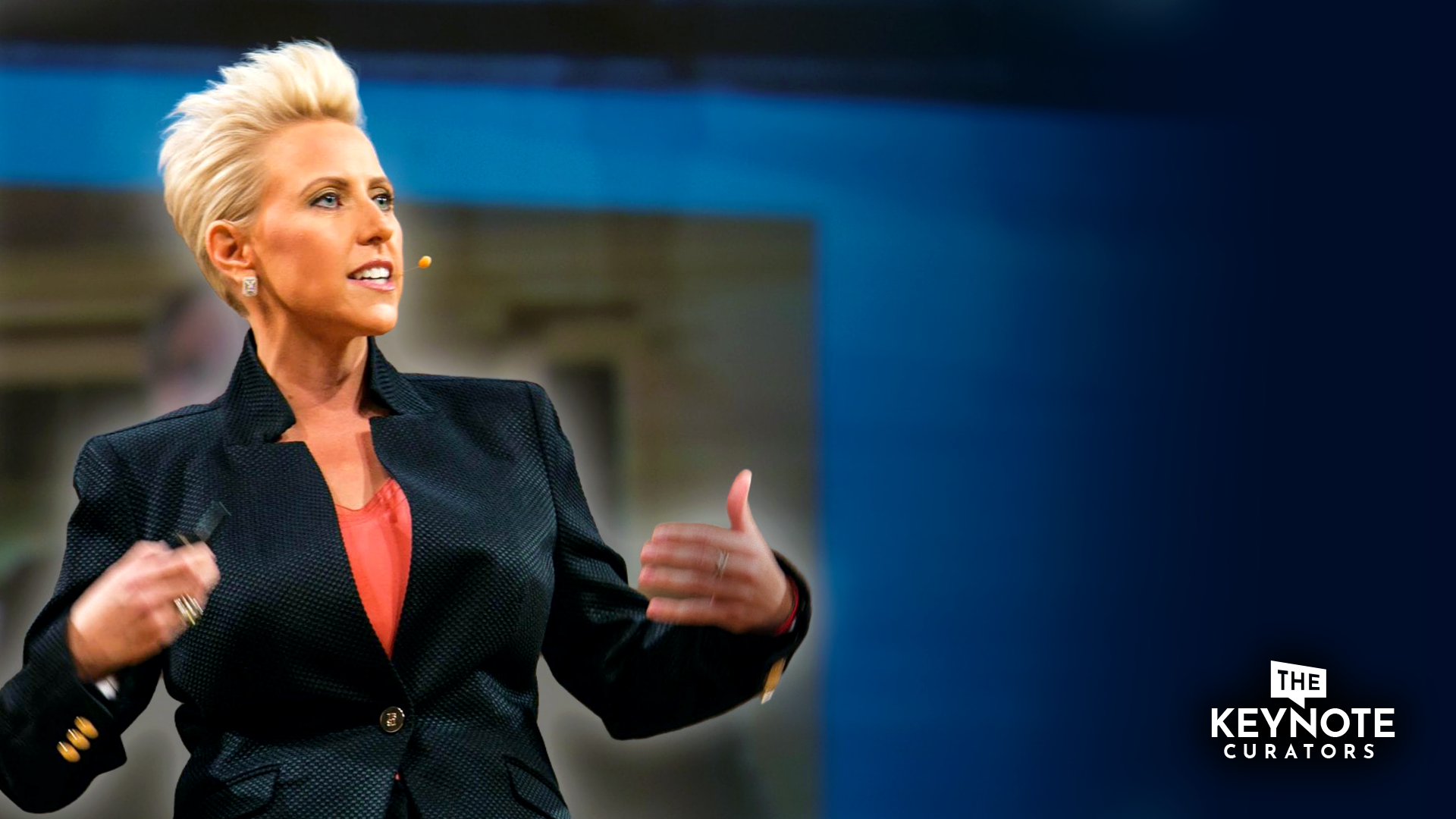
Her view carries weight because of where it comes from. Laura was the youngest female presidential appointee in history, and as White House Director of Events under President Clinton, she planned and ran more than 1,000 events. She has spent her career in rooms full of people who all wanted something. She has seen networking go wrong, and she has seen it build something real.
In this piece, I want to share what stayed with me from our talk. It’s not a summary. It’s the deeper pattern underneath it. Because I don’t think what Laura describes is really a tactic. It’s a way of treating people. Once you see it that way, it stops being something you dread and becomes something you can do well.
🎧 Watch and listen to the full interview about networking here
Why Networking Feels So Manipulative
Most of us have been on both sides of bad networking. We’ve been the person cornered at a reception by someone who kept glancing over our shoulder for a better contact. And if we’re honest, we’ve also been the person doing the glancing. The conversation was polite, but nothing real was said. We left with a card and a vague sense that we’d been used, or that we’d used someone else.
That’s why the word networking itself carries so much weight now. It sounds like a task on a checklist, something you do to a room instead of with it. People hear the word and picture a tie, a name tag, and a script. Laura knows this, and she explains why the word can feel wrong. I think she’s right to start there, because you can’t fix a problem until you name it honestly.
What struck me most is that the problem isn’t the activity. It’s the motive. Meeting people, sharing what you know, and staying in touch are all good things. Nobody objects to a friendship. The trouble starts when the whole point of the meeting is the payoff. If the motive is to get something, no tactic can hide that for long. People are good at sensing when they’re being treated as a stepping stone. They stay polite, but they stop being open. So the very act meant to build a relationship quietly blocks it.
The more I think about it, the more this looks like a trust issue, not a skill issue. Trust is what networking is supposed to produce. And trust can’t be pulled out of someone. It can only be offered and earned. A leader who treats every contact as a means will build a small, thin circle, no matter how many hands they shake. A leader who treats people as people will, over time, build a wide one. The difference isn’t charm. It’s intent.
Networking Begins with the Direction of the Question
Here is how Laura frames it, in her own words. She said,
“I believe networking is what we can do for you.” Then she added, “Ask not what someone else can do for you, but what you can do for them.”
The second line echoes a famous inaugural address, and it fits someone who worked for a president. But I don’t hear it as a slogan. I hear it as a working rule. The direction of the question decides everything that follows. If you ask what someone can do for you, you listen for usefulness. You nod along, waiting for the part that matters to you. If you ask what you can do for them, you listen for needs. You hear the problem they mentioned in passing, the project that’s stuck, the person they hope to meet. Networking built on that kind of listening feels completely different, for both sides.
Giving first also changes your own experience of the room. A lot of people dread events because they feel exposed. They worry about being judged, ignored, or seen as pushy. When your job in the room is to be useful, much of that fear drops away. You don’t have to impress anyone. You only have to pay attention and help where you can. That is a lighter load to carry through a crowded ballroom, and I think it’s one reason networking gets easier for people who adopt this mindset.
I want to be careful here, though. Giving first doesn’t mean giving everything away, and it doesn’t mean being a doormat. It means starting from generosity instead of calculation. Some people will take and never return the favor, and that’s fine. Most won’t. Over a long career, the people you helped without keeping score are the ones who think of you when something opens up. That’s networking at its most practical, and it happens to be its most human too.
A 19-Year-Old with No Connections
Laura’s own story makes this more than theory. At 19, she arrived at the White House without political connections. She started as a Staff Assistant. From there she became the Midwest Press Secretary, then the Director of Television, and finally the White House Director of Events. Washington is often described as a city that runs on who you know. She didn’t know anyone.
So how does someone with no connections climb that far? I can’t tell you the whole story, and Laura tells it better than I could. But what her path suggests to me is that she built her relationships from the inside out. When you have no connections, you have nothing to trade. You can’t offer an introduction or a favor. What you can offer is effort, attention, and usefulness to the people next to you. That’s giving first in its purest form. And it means networking doesn’t have to wait until you have status. In fact, it may work best before you do.
I find this encouraging, especially for people early in their careers. Many young professionals believe that connecting with others is something you do once you’re important enough to be worth meeting. It’s the reverse. The habits you build when you have nothing to offer but your attention are the same habits that make you valuable later. A staff assistant sees everything. They know who is stretched thin and who needs help. If you serve those people well, you become part of the fabric of the place. That is networking without the label.
There’s a second lesson inside her climb. Moving from a staff role to press, then to television, then to events meant learning how different parts of an organization think and communicate. Each step widened her view of the people she was serving. I’ve seen the same pattern in business. The people with the strongest relationships are often the ones who have worked in several roles and understand what each one needs. Professional development and networking grow together this way. Every new seat you sit in gives you a new group of people to understand and help.
Present to Win: Why Attention Is the Real Currency
One of the chapters in our conversation is called “Present to Win,” and the phrase has stayed with me. Laura put it plainly:
“We must be present to win. When we are present, we are of more value to ourselves.”
Most of us know what the opposite looks like. You’re at a conference, talking with someone, and your eyes keep drifting to the doorway. You’re scanning the room for the next person, the better person, the one with the bigger title. You tell yourself that’s efficient. In truth, it’s absence. And the person in front of you knows it. Networking done this way produces a lot of contacts and almost no relationships.
Presence is hard to fake and easy to undervalue. When someone gives you their full attention, you feel it. You say more, and you say it more honestly. That’s why one twenty-minute conversation where both people are fully there can be worth more than a hundred swapped business cards. For anyone who cares about real networking, this should change how success is measured. The goal isn’t to meet the most people. It’s to be fully available to the few you do meet.
I also like the second half of her line, the idea that presence makes us “of more value to ourselves.” It’s easy to skip past, but it matters. Being present isn’t only a gift to the other person. It sharpens your own judgment. You notice what you’d otherwise miss: the pause before an answer, the topic someone lights up about, the thing they chose not to say. You make better choices about who to help and how. And you leave the room with real knowledge instead of a pile of cards.
Presence is also rarer than it used to be, which makes it worth more. Phones buzz, calendars stack up, and attention gets split in five directions. Laura has spent years connecting with audiences through screens as well as on stage, and I think the principle holds in both places. Networking over a screen demands the same attention as it does in a ballroom. Camera on, other tabs closed, and a question that proves you heard the last answer. Small habits like these tell people they matter.
Who Am I? Why Am I Here?
Before Laura walks into a room, she asks herself two questions: Who am I? Why am I here? They look almost too simple. But I’ve been turning them over, and I think they do more work than most networking advice I’ve read.
The first question is about identity. It asks you to arrive as yourself instead of as a performance. Most of us put on a version of ourselves at events. It’s the polished one, the one with the rehearsed elevator pitch. The first question strips that away. You remember your values, your story, and what you stand for. People remember someone who is grounded far more than someone who is rehearsed. It also makes connecting easier, because you aren’t busy managing an image. This is where storytelling earns its place. The stories you tell about yourself should be true and unforced, because that’s what people can trust.
The second question is about purpose. Why did you accept this invitation? Maybe you came to learn. Maybe you came to support a colleague, meet a client, or celebrate someone. A clear answer keeps you from drifting, and it also tells you how to be useful. If you’re there to support the host, you’ll behave differently than if you’re there to find a new job. Naming your purpose before you enter turns a vague, anxious evening into a focused one. For networking, that clarity matters, because it keeps the whole activity honest.
Notice how these two questions fit with the giving-first idea. “Who am I?” grounds you. “Why am I here?” focuses you. “What can I do for them?” points you outward. Together they make a small routine that works for a shy engineer and a seasoned executive alike. I’d call it a pre-room practice, and I think it belongs in any serious approach to networking. Nothing about it requires charisma. It requires a few quiet minutes in the hallway before you open the door.
Build Bridges for Others, Because You May Need to Cross One
The idea that stayed with me longest is the bridge. Laura talks about building bridges for other people, because someday you may need to cross one yourself. I think this is the most strategic idea in the whole conversation, and it sounds like pure kindness. That’s the beauty of it.
A bridge can be an introduction, a recommendation, a word of encouragement, or a door held open. It costs the builder very little, and it can change someone’s path. And bridges have a quirk: once built, they carry traffic in both directions. The person you connected to a mentor remembers it. The colleague you recommended speaks well of you in rooms you’re not in. Years later, when you’re the one standing on the wrong side of a gap, there’s often a bridge waiting, built by someone you helped long ago. Networking is really the long practice of building these quietly, without a ledger.
Here’s why I think the metaphor is so right. We usually picture a network as a web of contacts, a static map. A bridge is an action. It means someone made a choice to connect two points. That shifts networking from something you have to something you do. And it reminds us that people with big networks got them by connecting others, not only themselves. I find that freeing, because anyone can start. You don’t need a title to introduce two people who should know each other.
It also protects against the worst habit in networking, which is keeping score. Scorekeeping poisons generosity. If you help someone and then wait for payment, you’ve made a loan, not a gift. Laura’s framing sidesteps that trap. You build the bridge because bridges are worth building. Whether you ever cross one yourself is almost beside the point. But the odds are good that you will, and when you do, you’ll be glad you spent your time building instead of counting.
What 1,000 Events Teach Us About Networking
It’s worth remembering how many rooms Laura has worked. She created and ran more than 1,000 White House events, including State arrival ceremonies and dinners, America’s Millennium Celebration, the UN Millennium Summit, and NATO’s 50th Anniversary. She worked one-on-one with the President, the First Lady, world heads of state, and international business leaders. After the administration, she traveled the world with former President Clinton for the Global Initiative.
An event producer sees a room differently than most guests do. A producer thinks about people before they arrive: who’s coming, what they need, how to make them comfortable, what would make the evening worthwhile for them. That’s giving first built into a job description. I suspect it’s part of why the idea feels so natural to her. For years, her work was to make a room work for other people. Networking, seen from that side of the room, is hospitality.
Her book, Eat, Drink & Succeed!, takes this further. It explores how social events can help us build effective partnerships in places we don’t expect, in our companies, in our communities, and beyond. I like that it treats a meal or a reception as a real working tool instead of a break from work. People open up over food. Barriers drop. A shared table can do what a conference room often can’t. Good networking uses that natural openness instead of fighting it.
It also fits that Laura donates 100 percent of the proceeds from books sold at her engagements to a nonprofit of the client’s choice. That’s the same instinct, giving first, built into a business model. Philanthropy and connection share a root, because both begin by asking what you can give. The same instinct shows up in her work as a moderator, host, and emcee. A good emcee puts the spotlight on others and makes it easy for strangers to meet. She has done that for companies like Microsoft, Hewlett Packard, Uber, and Hilton. Making other people shine is simply her version of building bridges.
How Networking Shapes Leadership, Teams, and Culture
This mindset pays off most in leadership. A leader who gives first sets a pattern that others copy. Teams watch what leaders do in rooms. If they see you using people, they learn to use people. If they see you listening and helping, that becomes normal. This is how corporate culture really gets built: not in mission statements, but in thousands of small exchanges. Networking inside a company works the same way. Departments that help each other without asking for a favor back move faster and trust each other more.
Teamwork depends on the same bridges. Silos are what you get when nobody builds them. A team member who introduces the finance lead to the product lead, because she can see they’d solve each other’s problems, may do more for the company than another status meeting. This kind of internal networking rarely appears in a job description, and it often decides who succeeds. It also depends on honest communication, which starts with listening before you speak.
The same idea applies to customer experience. The best service starts by asking what the customer needs, not what you can sell. A salesperson who practices networking the way Laura describes, with the question pointing outward, ends up treating customers as people. That’s good ethics, and it’s also good business. For entrepreneurs, who often begin with no brand and a short list of contacts, this matters even more. Laura’s start with no connections is a reminder that trust can be built from nothing, and the wider business world rewards people who do it well.
There’s one more place where giving first has real weight, and that’s inclusion. Traditional networking tends to favor people who already belong: those who know the unwritten rules and the right clubs. Someone who builds bridges for others can deliberately open doors for people who’ve been left outside. DE&I work is, in part, bridge-building. Networking that asks “who is not in this room, and how can I help them cross?” makes organizations stronger and fairer. Laura started with no connections herself, so I doubt she needs convincing.
Small Ways to Practice Networking This Week
None of this requires a new job or a bigger calendar. It starts with small choices. Before your next meeting or event, ask yourself the two questions: Who am I? Why am I here? Then pick one person in the room and try to learn one thing they need. Put your phone away while you listen. Afterward, send a short note that offers something, such as an article, an idea, or an introduction, instead of asking for something. That’s ordinary networking, done with the direction reversed.
Try making one introduction this week without being asked. Think of two people who would benefit from knowing each other, and tell them why. It takes five minutes, and it’s a bridge. There’s also room for creativity here. Generosity isn’t only about favors. It can be a book recommendation, a well-timed compliment, or a connection nobody else saw. The more specific and thoughtful the help, the more it’s remembered.
Laura’s wider career supports this. She is a regular contributor on Australia’s number one morning show, Today, and she has covered six presidential elections and two royal weddings. Work in media and entertainment depends on asking good questions and listening to the answers. It’s the same skill, used on a bigger stage. It’s also the kind of idea that suits the stages TED speakers know well, because it’s simple, human, and easy to try tomorrow.

The Next Room Is Waiting
When I think back on this conversation, what I remember isn’t a list of tips. It’s a shift in posture. Laura asks us to walk into a room curious about who we can help, grounded in who we are, and fully present for whoever is in front of us. That’s a small change in what you think about, and it changes almost everything else.
That’s why I keep returning to the idea that networking works better when you give first. It works better because people trust it, because it relieves the pressure, and because it builds the kind of bridges you may one day need. As a keynote speaker, Laura Schwartz shows what this looks like after years of real rooms, real pressure, and real stakes. And her lesson holds whether you’re at a state dinner or a Tuesday morning team meeting.
So here’s the question I’m carrying into my next room, and I hope you’ll carry it into yours. What would the room feel like if the first thing on your mind was who you could help? I think you’d find that networking is no longer something you endure. It becomes something you’re good at, because it was never about winning the room. It was about being worth knowing.
📺 Watch the full podcast here
🎤 Hire Laura Schwartz for your next event
📅 Want to talk strategy? Book a time
✉️ Got questions? Email us
Discover More Insights





Get in TouchContact US
Fill out the form so we can best understand your needs.
A representative from The Keynote Curators will reach out to you.