
November 20, 2026Recognition Alone Isn’t Enough
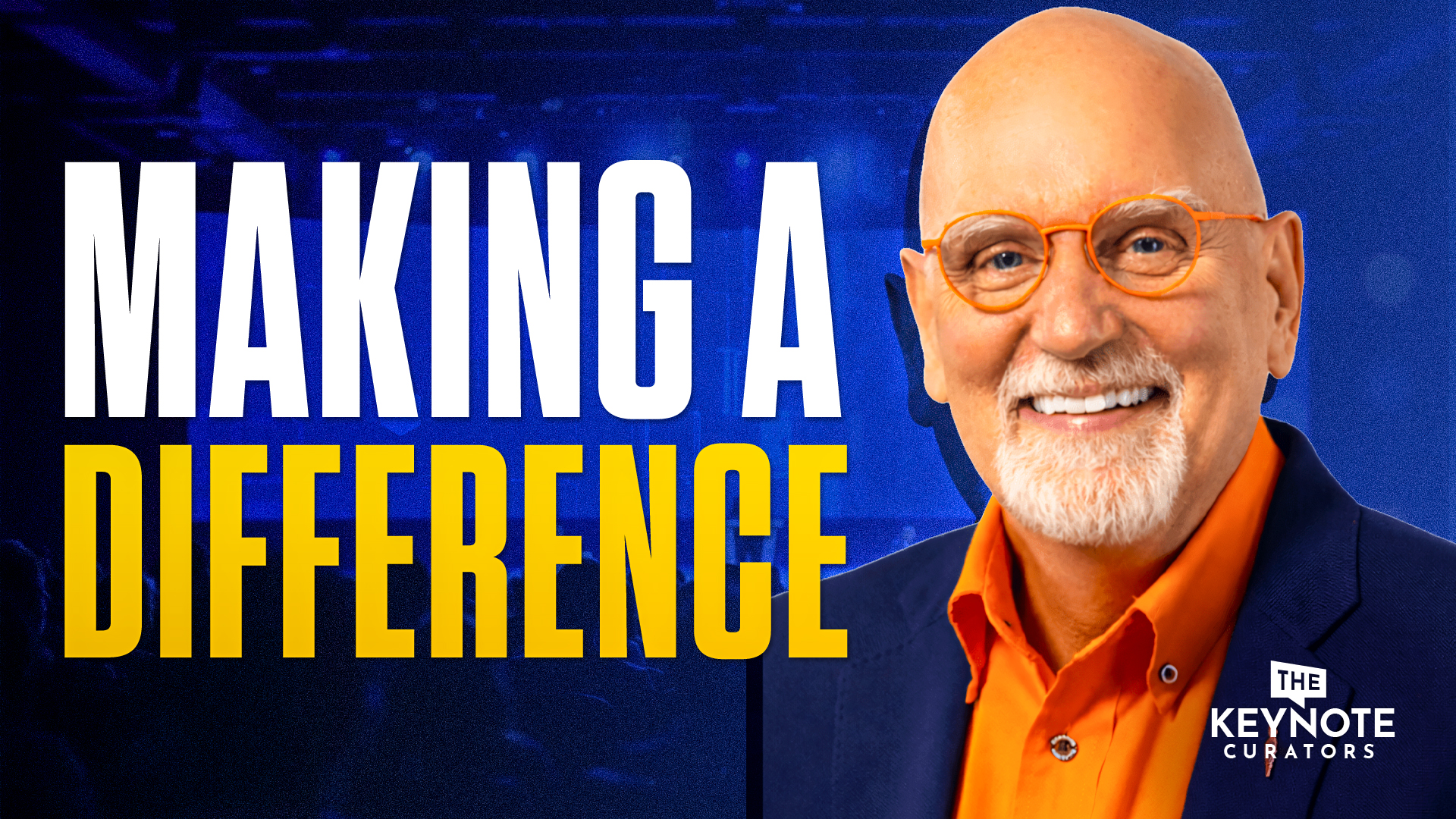
Recognition takes five seconds, yet many leaders skip it. Chester Elton explains how real recognition keeps employees motivated and engaged.
Recognition is the most underused tool in most leaders’ toolboxes, and it can take about five seconds. I keep coming back to that idea after my conversation with Chester Elton, because it sounds too small to matter. Most leaders I know would say they value recognition. Fewer can tell you the last time they gave it to someone on their team in a way that stuck.
Chester is an organizational culture and leadership expert and a best-selling author of All In, The Carrot Principle, Leading with Gratitude, and Anxiety at Work. His work is backed by research with more than a million working adults. So when he says this is where many companies miss, I listen. I asked him a plain question: why are so many employees still checked out when companies track employee engagement so closely?
His answer was simple. People want to know their work matters, and they want to know someone noticed. That is what recognition does. The more I thought about it, the more I saw that recognition is not a perk or a program. It is a basic way leaders show they are paying attention. This article is my reflection on what Chester shared, and on why recognition may be the missing piece in so many workplaces.
📺 Watch and listen to the full interview with Chester Elton
Why Recognition Gets Missed When Companies Track Engagement So Closely
Most companies today measure engagement with care. They run surveys, build dashboards, and review the scores in leadership meetings. Yet Chester told me engagement scores keep dropping, even as companies pay more attention to them. That gap has stayed with me. It suggests that tracking a problem and fixing a problem are two very different things. A number on a slide can make a leader feel busy, but it does not change how one person feels on a Tuesday afternoon at their desk.
When I asked Chester why so many employees are still checked out, he pointed to something that does not show up well in a chart. The missing piece is human connection. People need to feel valued, heard, and seen. I think that list is worth reading slowly, because each word asks for something different from a leader. Valued means my work counts. Heard means my voice counts. Seen means someone is paying attention. Recognition is how leaders show all three, and it is the one most often skipped.
I have seen this pattern in many workplaces. A team gets a new engagement program, a new set of values on the wall, and a new survey tool. But the person leading the team never says a word about the work that was done well last week. The program becomes a layer on top of a culture that has not changed. This is why I believe corporate culture is built in small daily moments rather than in yearly initiatives. Culture is what people experience when no one is watching the dashboard. And a leader’s words of thanks are one of the clearest signals of what they truly care about.
That is also why this topic belongs in any serious conversation about business leadership. We often treat recognition as a soft skill, something nice to have after the real work is done. Chester’s view, as I heard it, is the opposite: it is part of the real work. If people do not feel noticed, they slowly pull back their effort, their ideas, and their care. No survey is needed to see that. You can hear it in the quiet of a meeting room.
The Five-Second Recognition That Costs Nothing
The first idea I took from our conversation is also the simplest. Noticing good work fast takes about five seconds. A specific thank you tells someone that you saw their effort. That is all it takes. In our full interview, Chester kept returning to how small this act is and how often leaders still skip it.
Why do leaders skip something so easy? I think it is because we picture recognition as an event. We imagine a budget, a program, a stage, or a trophy. When recognition feels like a project, it moves to the bottom of the list. But the five-second version asks for none of that. Picture a manager who sees an analyst clean up a messy report before a client call. She could simply thank him for fixing the numbers on page four and tell him the client could follow the story right away. That takes a few seconds. It is also specific, and specific is what makes recognition work.
Here is what I find interesting about specific words. A general thank you tells a person nothing about what to repeat. A specific one hands them a map. It says, this is the behavior that helped, so keep doing it. In that way, recognition is a form of feedback, and it may be the most welcome form there is. Most feedback points at what went wrong. This kind points at what went right, and it makes people want to bring that same care to the next task.
There is also a point here about productivity. Leaders often say they do not have time for recognition because the work is too urgent. But I have come to see that the time cost is almost zero, while the effect on effort can last for days. A person who feels noticed tends to carry that into the next project. A person who feels invisible tends to do just enough. If a five-second habit can shift that, it may be one of the best returns on time a leader will ever find.
Recognition Shows People That Someone Is Paying Attention
Underneath the technique is something more human. Everyone wants to know that their work matters and that someone noticed. I do not think this is a weakness or a need for praise. It is just how people are built. We spend most of our waking hours at work. It would be strange if we did not want that time to count for something.
When I reflect on the best leaders I have worked with or watched, they shared one habit. They paid attention to people. They knew who stayed late to fix a problem and who quietly helped a new hire. And they said so. That kind of attention costs nothing, yet it is rare. Chester’s point about being seen and heard fits this well. Recognition is not about handing out compliments. It is about proving that a leader is looking.
This matters to leadership in a way that is easy to miss. A leader’s attention is the most limited resource in a team. Where it goes tells everyone what matters. If it only goes to problems, people learn that the way to get noticed is to cause one. If it also goes to good work, people learn that effort and care are visible. In this sense, noticing good work is a way of setting direction without giving an order.
I also think about the other side. When people go long stretches without hearing anything, they fill the silence themselves, and they often fill it with doubt. Did anyone see that? Did it matter? Was it good enough? Recognition answers those questions before they grow. A short word from a leader can end a week of wondering. That is a lot of value for something that takes so little.
Why Recognition Alone Is Not Enough
Here is where Chester surprised me, and where I think his thought leadership is most useful. After spending so much time on the power of a thank you, he said something that sounds almost like a warning.
“I love saying, look, general praise has no impact. You know, recognition by itself has no impact.”
I had to stop and think about that, because it seems to argue against the point of the whole conversation.
The more I thought about it, the clearer it became. He is not saying recognition does not matter. He is saying praise without substance is just noise. A leader who says great job to everyone, every week, trains people to tune out. Praise that could be said to anyone says nothing to the person who earned it. It can also feel a bit hollow, like a habit rather than a real moment of attention. People can tell the difference.
So recognition has to sit on top of something. It needs a clear link to real work, real results, and a real purpose. It needs a leader who understands what each person is trying to do. And it needs conditions where good work is possible in the first place. When those pieces are missing, recognition feels like decoration. When they are present, it turns into reinforcement, a way of telling people which behaviors to repeat and why they matter.
I find this idea helpful for any leader who has tried a recognition program and felt let down by the results. The program may not have been the problem. It may have been the missing foundation. This is the part of a strategy most companies skip. They launch the visible part, such as awards or shout-outs, without asking whether people can see how their work connects to anything larger. Which brings me to the next piece of Chester’s answer.
Connecting the Dots Between Daily Work and the Mission
Chester says leaders should connect the dots, and I like how plain that phrase is. Most people do their jobs one task at a time. They answer emails, build reports, take calls, and fix problems. From inside that stream, it is hard to see how any of it ties to the company’s mission. A leader’s job is to draw the line for them. Without that line, even the best thank you can miss its target.
He also added what he sees as the key piece that is often missed. “Now, I always add to that, to me, the key that is often missed is that; and when I make a difference, it’s noticed, and it’s celebrated.” I read that sentence several times. It has three parts. I make a difference. It is noticed. It is celebrated. Most programs only handle the last part. They celebrate, but they never help the person see the difference they made. So the party lands on empty ground.
That is why I think the order matters. First, a person has to know how their work helps someone, whether a customer, a teammate, or the mission itself. Second, a leader has to notice when that help happens. Only then does celebration mean something. Recognition becomes the proof that the link is real. It says, your work did this, and I saw it.
This is especially important for business growth. As companies grow, the distance between the daily task and the larger goal gets longer. People join after the early story is told. Teams split up. Priorities shift. In times of change, the line can disappear entirely. People wonder if their work still matters. A leader who keeps drawing that line, and who gives recognition to the people who walk it, gives the team something steady to hold. In that sense, giving thanks is not just kind. It is a tool for keeping people pointed in the same direction.
Cover the Basics First, or Recognition Will Not Land
One of Chester’s points was easy to understand and easy to forget: people have to be able to pay their bills before recognition can land. I appreciate how honest that is. It would be easy for a talk on recognition to sound as if kind words fix everything. They do not. If someone is worried about rent, or feels their pay is unfair, a thank you can feel like an insult.
I think about this when I hear leaders say they want to build a culture of appreciation on a small budget. Appreciation does matter, and it costs little. But it works as an addition to fair pay and fair treatment, not as a replacement. When recognition is used to cover for those gaps, people notice. They may smile, but they will remember. Trust is hard to rebuild once people feel that praise was used instead of a raise.
This is a useful point for any entrepreneur or founder who is stretching resources in the early years. Cash is tight, and kind words are free, so the temptation is strong to lean on them. But the better approach is honesty. Pay as fairly as the business can. Be clear about what is possible. Then use recognition to show people that their effort is seen, while you work on the rest. People will often extend patience to a leader who is honest and who pays attention.
In business terms, this is about sequence. Recognition is not the first thing a person needs. It is the thing that makes the other basics feel complete. Pay, safety, clear expectations, and fair treatment form the base. Appreciation sits on top of them. When the base is solid, a specific thank you can lift a person. When it is shaky, the same words can feel thin. I think leaders owe it to their teams to check the base before they plan the celebration.
Cakes and Balloons Cannot Replace Meaningful Work
Chester drew a clear line between cakes and balloons and real reinforcement. I smiled when I heard it, because most of us have been at the office party that felt a bit empty. The cake was fine. The balloons were cheerful. But nothing about it told us that our work had mattered. Chester’s point is that these gestures mean little if the work itself is not interesting.
That statement is worth sitting with. We often treat recognition as something added on top of a job, like a coat of paint. Chester reminds us that the job itself is part of the message. If people spend their days on tasks that feel pointless, no ceremony will fix that. But when the work is interesting, and people can see its value, even a small word of recognition can feel big. The work gives that word its weight.
I also like the word reinforcement. A celebration happens once and is gone. Reinforcement shapes what people do next. When a leader names the exact thing someone did well, and ties it to the result, that person is more likely to do it again. The behavior spreads, because others hear about it. Over time, a team learns what good looks like, not from a poster but from many small moments of recognition.
This has real value for innovation. Innovation requires people to try ideas that may not work. That takes courage. A leader who only celebrates finished wins teaches people to play it safe. A leader who notices effort, curiosity, and smart attempts, even when the result is mixed, makes it safer to try. Recognition of that kind tells people that thinking is valued, not only outcomes. It is a quiet way of creating room for new ideas, and it does not need a budget.
The Coaching Moments We All Remember
Near the end of the interview, Chester ties recognition to the coaching moments many of us remember. This part moved me, because it made the topic personal. Most of us can think of a teacher, a coach, or a manager who said something at the right moment. Maybe it was one sentence. Maybe it was about a skill we did not know we had. We still remember it years later.
What makes those moments last? I think it is that they combined attention and direction. The person saw us, and they also told us what was good and where we could go. That is recognition and coaching working together. It is why a good coach does not simply cheer. They point at a detail, name it, and ask for more of it. The athlete walks away knowing what to repeat and feeling that someone believes in them.
Leaders can borrow this. When you notice good work, say what you saw, say why it mattered, and say what you hope to see again. That takes a little more than five seconds, but not much more. And the effect is the one Chester describes: the person feels seen, understands the link to the larger purpose, and is more willing to give effort the next time. If you want to hear him talk through these ideas in person, keynote speaker Chester Elton‘s work on culture and engagement is shaped by years of research.
Take his own question and turn it toward yourself. When was the last time someone noticed your best work? I suspect many of us have to think hard about it. If that is true for you, it is probably true for the people on your team. That is not a failure of any one person. It is a habit that most workplaces never built. The good news is that habits can be built, starting with a single thank you today.

What Changes When Recognition Becomes a Daily Habit
When I look back over this conversation, the lesson I keep returning to is that recognition is simple but not shallow. It is simple because it can take five seconds. It is not shallow because it carries a message about worth, attention, and purpose. Chester’s work, built on research with more than a million working adults, points to the same truth. People do their best work when they feel valued, heard, and seen.
But the conversation also taught me to be careful. Recognition by itself has no impact. It needs fair pay, a clear link to the mission, and work worth doing. It needs to be specific, honest, and timely. Leaders who understand this stop treating recognition as an event and start treating it as a daily practice, one that grows out of paying real attention to people.
So here is the question I would leave with you. What would change on your team if every leader did this once a day? I do not think the answer is complicated. People would feel noticed. They would see how their work connects to something larger. And they would likely bring more of themselves to it. Recognition costs very little to give. Going without it costs a lot more, and most of that cost never shows up in a survey. It shows up in effort that people quietly decide not to give.
Notice the work. Say so. Do it again tomorrow.
📺 Watch the full interview on recognition here
🎤 Hire Chester Elton for your next event
📅 Want to discuss? Schedule a time
✉️ Have questions? Email me
Discover More Insights





Get in TouchContact US
Fill out the form so we can best understand your needs.
A representative from The Keynote Curators will reach out to you.