
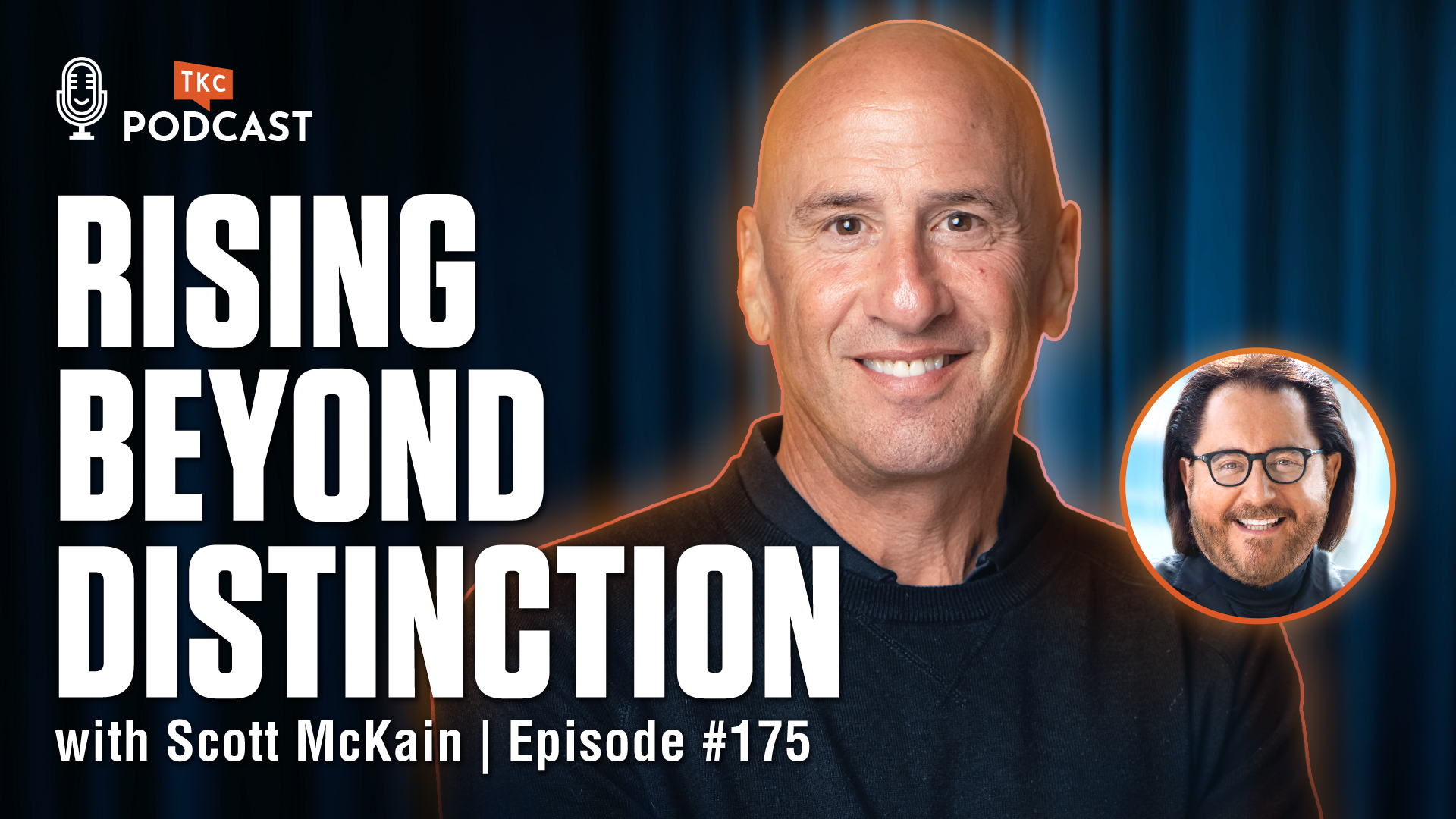
June 18, 2026Business Distinction Principles from Scott McKain That Will Make Your Company Stand Out
Learn how to truly distinctive business that stands for something meaningful with insights from Hall of Fame keynote speaker Scott McKain.
What makes a business truly memorable in our highly saturated, incredibly noisy modern landscape? It is certainly not louder branding, bigger claims, or yet another round of desperate, mathematically optimized, attention-seeking marketing campaigns. It is not just about having a highly profitable enterprise model, but a profoundly purposeful one.
As I recently sat down to deeply reflect on my genuinely transformative conversation with Hall of Fame keynote speaker Scott McKain, an internationally recognized distinction expert, it became abundantly clear that the foundational rules of business have fundamentally and permanently shifted beneath our feet. The organizations that truly last, the ones that comfortably weather generational storms and unpredictable economic upheavals, are the ones that unapologetically stand for something deeply meaningful.
The real, existential threat in today’s rapidly evolving marketplace is absolutely not the well-funded competition across the street; it is the silent, creeping rot of irrelevance. In an environment that keeps shifting at an unprecedented pace, maintaining a thriving business requires significantly more than just a slick sales strategy or a momentary viral hit. It requires an unshakeable, daily commitment to core values, a fierce dedication to genuine customer loyalty, and the kind of profound operational distinction that cannot be easily replicated by a jealous competitor. Our wide-ranging discussion on the underlying mechanics of building an enduring business challenged many of my long-held, comfortable assumptions about exactly how true corporate value is created, fiercely protected, and ultimately sustained.
What struck me most was McKain’s incredibly sharp assertion that real, bankable loyalty shows up exclusively in consumer behavior, not in the superficial vanity metrics we so often blindly celebrate in our boardrooms. This is a critical, uncompromising insight for any modern leader who is genuinely serious about driving sustainable business growth and making an impact that actually matters.
🎧 Watch and listen to the podcast episode: YouTube • Spotify • Apple Podcasts • Amazon Music
Standing For Something Rather Than Merely Standing Out
In the incredibly chaotic modern business ecosystem, the prevailing advisory narrative for a business often centers entirely around the desperate, frantic need to “stand out.” We are continuously taught by industry pundits to be louder, more colorful, and significantly more aggressive than our direct competitors in order to sustain a healthy business enterprise.
But my deep dive with Scott McKain revealed a subtle, yet profoundly important philosophical distinction: standing out is merely a short-term marketing tactic, whereas standing for something is a foundational, non-negotiable leadership strategy. It is incredibly easy to stand out for all the wrong reasons. A flashy viral video, an outrageous promotional stunt, or a highly controversial social media post might temporarily spike your visibility metrics, but it does absolutely nothing to foster the deep, enduring, systemic trust required to sustain a truly lasting enterprise.
The more I deeply contemplate this dynamic, the more I realize that a business built solely on the frantic pursuit of standing out is ultimately incredibly fragile. When you only aim for attention, you are immediately forced onto a never-ending, exhausting treadmill of constant escalation. You continuously need to be bigger, louder, and more extreme just to maintain the exact same fleeting level of consumer engagement.
However, when your business leadership is firmly anchored in a clear, uncompromising set of core beliefs, you entirely transcend the noisy, commoditized battle for mere attention. You effectively move from being a highly replaceable vendor of goods to becoming an indispensable, deeply trusted partner in your customers’ daily lives. This radical shift from standing out to standing for something requires immense, sustained courage from the executive team. It demands that you intentionally and publicly alienate the people who do not align with your core values so that you can fiercely, magnetically attract the specific people who do.
The Myth of Vanity Metrics and the Harsh Reality of Retention
It is a uniquely modern, highly destructive trap to continuously confuse a large audience with a fiercely loyal one. In the hyper-connected digital age, it is dangerously easy for any business to become entirely obsessed with tracking superficial vanity metrics—likes, shares, unengaged followers, and fleeting digital impressions. We build entire executive dashboards around these inflated numbers, falsely equating them with total business dominance.
But as Scott McKain so eloquently pointed out in our discussion, real, bankable loyalty manifests exclusively in actual human behavior, not in the artificial inflation of digital analytics. If thousands of people are routinely engaging with your content but absolutely no one is fundamentally changing their purchasing behavior to actually support you, you do not actually have a thriving business; you simply have an audience. And audiences, as history has proven time and again, are notoriously fickle and easily distracted.
This critical insight powerfully reminded me of how frequently, and how disastrously, we actively misdiagnose the true health of a modern business organization. We publicly celebrate a massive spike in quarterly customer acquisition while intentionally ignoring the devastating, silent churn happening quietly at the back door.
Retention is the single most accurate, unvarnished, and brutally honest measure of true market distinction. If your customers continually, repeatedly choose you over a significantly cheaper or vastly more convenient alternative, you have successfully achieved profound distinction. Retention forces a business to be rigorously honest with itself. It ruthlessly exposes the dangerous, widening gap between what you boldly promise in your marketing campaigns and what you actually deliver in your daily operational reality.
True distinction is absolutely not a shiny, manufactured facade; it is the quiet, relentless, consistent operational excellence that makes the very idea of leaving your business utterly unthinkable for the customer. It is a powerful, grounding reminder that our primary strategic focus should never be on acquiring a thousand new, highly transactional customers who might abandon us tomorrow, but on deeply, intimately serving the hundred core customers who will stubbornly stay for a decade.
The Expansive Scope of the Customer Experience Ecosystem
One of the most dangerously persistent silos in any traditional corporate structure is the entirely misguided belief that the customer experience is the sole, isolated responsibility of the customer service department. During our in-depth conversation, it became abundantly, unavoidably clear that in a truly distinctive business, the customer experience firmly belongs to every single department, without a single exception. The meticulous accountant carefully processing a complex invoice, the diligent warehouse worker methodically packing a shipping box, and the brilliant software engineer quietly debugging code in the background are all actively, directly participating in the creation of the ultimate business customer experience.
Exceptional service absolutely does not miraculously spring into existence the moment after the first transaction is successfully finalized. The actual experience starts the very first time a prospective customer passively encounters your brand, whether that is through a casual, unprompted website visit, an enthusiastic organic referral from a trusted friend, or a brief interaction with a front-desk receptionist. Every single touchpoint is a solemn promise.
Every minor interaction is a delicate, highly psychological negotiation of deep trust. When a business artificially compartmentalizes its service mindset into isolated operational silos, it creates dangerous, highly visible fractures in the overall customer journey. A brilliant, multi-million-dollar marketing campaign that is immediately followed by a clunky, frustrating, deeply impersonal onboarding process is not just a minor operational inconvenience; it is a profound, unforgivable betrayal of the core brand promise.
Scott McKain’s profound insights actively challenge us to aggressively dismantle these artificial corporate walls and foster a deeply unified culture where every single employee fundamentally views themselves as an active, vital architect of the business’s ultimate satisfaction. This level of holistic, unyielding alignment is exactly where true professional development must be relentlessly focused, ensuring that absolutely everyone genuinely understands their direct, tangible impact on the end user.
Navigating the Extreme Danger of Rapid Expansion
There is a profound, often deliberately unspoken danger inherent in rapid, unbridled business expansion. As we thoughtfully explored the underlying mechanics of organizational longevity, the sobering realization surfaced that rapid, unchecked growth can incredibly easily cover a massive multitude of operational sins. When record-breaking revenue is pouring in, and the broader market conditions are highly favorable, it is incredibly easy for a business leadership team to completely ignore the subtle, creeping rot of a degrading internal culture, highly inefficient legacy processes, and slowly deteriorating customer care standards. Exceptional growth creates a highly intoxicating, deeply blinding illusion of absolute operational competence.
The significantly deeper implication here is that the true mettle of corporate leadership is absolutely not tested during the euphoric boom times, but rather when the economic tide inevitably, violently recedes. A business that aggressively expands without first establishing a rock-solid bedrock of fundamental, non-negotiable principles is essentially building a massive, gleaming skyscraper directly on a highly unstable foundation of loose sand.
When the inevitable market turbulence finally hits, the deep structural flaws are violently and publicly exposed. We see this exact scenario play out constantly in the modern business world, where celebrated media darlings suddenly, spectacularly collapse because their fragile internal culture could absolutely not support the massive, crushing weight of their external scale.
This is precisely why driving sustainable business growth requires a highly disciplined, deeply intentional approach to scaling. It is not just about aggressively capturing new market share; it is fundamentally about ensuring that the actual soul and deep integrity of the business scales proportionally and identically with the incoming revenue. Leaders must remain fiercely, almost obsessively, vigilant during times of high prosperity, actively hunting for the quiet inefficiencies and subtle cultural drift that massive financial success so effectively masks.
Values Embedded in the Culture Versus Values Painted on the Wall
I have personally walked through countless opulent corporate lobbies beautifully adorned with heavily polished, expensively framed mission statements and meticulously crafted core values. Yet, all too often, the actual, daily operational reality of the organization bears absolutely zero resemblance to those lofty, carefully wordsmithed paragraphs. McKain’s deeply grounded perspective on the true nature of organizational values struck a profoundly resonant chord.
There is a massive, highly consequential, and incredibly dangerous chasm between merely putting values on a wall and genuinely, systemically embedding those exact values deep into the lived, breathing culture of a business. Words painted on a wall are simply a clever marketing exercise; values lived out in a corporate culture are a rigid behavioral standard that strictly dictates exactly how people treat one another when no one is watching.
This is not merely a theoretical or philosophical debate; it has profound, immediate implications for talent acquisition, retention, and ultimate corporate survival. We are currently witnessing a massive, unprecedented generational shift in the workforce, where Gen Z and younger millennial workers are aggressively, unapologetically demanding to work for organizations that actually embody the principles they publicly claim to stand for.
This fiercely intelligent emerging workforce is highly adept at instantly sniffing out corporate hypocrisy. If a business explicitly claims to value deep transparency but consistently operates in a state of deep executive secrecy, or if it loudly champions employee well-being while ruthlessly enforcing brutal, burnout-inducing working hours, the resulting cognitive dissonance will utterly destroy all internal trust. The high-profile cautionary tale of how historically beloved, seemingly invincible legacy brands can rapidly lose their legendary market distinction when extreme operational pressures slowly erode their foundational values is a stark, terrifying reminder.
A business absolutely does not lose its moral and operational compass overnight. It happens incredibly slowly, through a thousand tiny, seemingly justifiable compromises, when shortsighted leaders repeatedly prioritize short-term financial expediency over long-term, unshakeable cultural integrity.
Visionary Clarity Must Always Precede Generative Creativity
In our relentless, often highly chaotic corporate pursuit of innovation, we frequently and disastrously put the cart completely before the horse. We aggressively demand continuous creativity, highly energetic brainstorming sessions, and wildly disruptive new ideas from our exhausted teams, but we utterly fail to provide the fundamental, foundational clarity absolutely necessary for any of those new ideas to actually be genuinely useful. The conversation with McKain powerfully illuminated a vital, often entirely overlooked truth: absolute visionary clarity fundamentally has to come before generative creativity. Creativity deployed without a highly defined, rigid operational framework is merely corporate noise; it is massive amounts of human energy expended rapidly without any coherent strategic direction.
When a company lacks a crystalline, universally understood vision of exactly who it is, who it serves, and what it ultimately aims to achieve, innovation quickly becomes incredibly scattered and highly dangerous. Hardworking teams end up passionately pursuing trendy, entirely disjointed initiatives that deeply confuse the marketplace and dangerously dilute the brand’s core historical identity.
However, when strong leaders finally step up and provide absolute, uncompromising clarity regarding the overarching mission, the non-negotiable boundaries, and the specific ultimate destination, creativity instantly transforms into a powerful, highly focused laser beam capable of cutting through any market resistance. People desperately need to explicitly know the rigid parameters of the creative sandbox before they can effectively build a towering masterpiece within it.
This requires thought leadership to actually do the incredibly hard, highly unglamorous, often tedious work of defining exactly what the business firmly stands for—and equally, if not more importantly, exactly what it vehemently and entirely refuses to do. Only from that deep, well-maintained well of strategic clarity can truly distinctive, massive, market-altering innovation genuinely emerge. The absolute best leaders do not just generically ask their people for new ideas; they provide the incredibly strict thematic and operational context that makes those specific ideas profoundly, undeniably impactful.
The Irreplaceable Human Element in an AI-Driven Landscape
It is practically impossible to seriously discuss the long-term future of any modern industry without deeply grappling with the massive, looming, and entirely transformative presence of Artificial Intelligence. Yet, the prevailing corporate narrative surrounding this incredible technological leap is all too often steeped in profound anxiety, extreme defensive posturing, and a pervasive, paralyzing fear regarding inevitable massive job displacement.
The perspective shared by this best-selling author offers a remarkably refreshing, incredibly vital counter-narrative to this panic: Artificial Intelligence should be aggressively, intentionally utilized to free people, not simply to coldly replace them on a spreadsheet. The profound, generational opportunity here is absolutely not about building a significantly cheaper, entirely automated business; it is about enthusiastically utilizing the machine to build a vastly more deeply human one.
When we narrowly view advanced AI strictly as a convenient, ruthless cost-cutting mechanism designed solely to eliminate human headcount and artificially boost short-term margins, we fundamentally and tragically misunderstand the true nature of lasting market distinction. Advanced algorithms can rapidly process incredibly massive, complex data sets, perfectly automate highly rote administrative tasks, and endlessly optimize global supply chains with terrifying, unblinking efficiency, but they absolutely cannot look a deeply frustrated, anxious customer in the eye and offer genuine, highly nuanced, empathetic reassurance. They completely fail to read the incredibly subtle, highly charged emotional nuances of a tense executive boardroom.
The business that will genuinely thrive and utterly dominate in the coming decade will undoubtedly be the one that strategically uses advanced technology to ruthlessly eliminate the deeply mundane, thereby intentionally freeing their human workforce to aggressively double down on the uniquely human skills of radical empathy, highly complex, non-linear problem-solving, and deep, authentic relationship building. We must intentionally and bravely choose to elevate our people, systematically using the incredible, tireless efficiency of the machine to actively carve out significantly more space for the profound, entirely irreplaceable power of genuine human connection.
Weathering Unpredictable Turbulence Through Timeless Preparation
Change is an entirely predictable, mathematically inevitable, and constant force in any market, but genuine, violent turbulence is an altogether different, vastly more dangerous beast. Change is essentially a highly predictable, slow shift in the seasonal weather patterns; turbulence is a sudden, violent, entirely unpredicted storm that threatens to violently tear the wings completely off the corporate plane.
We spent a significant amount of time discussing the absolutely critical difference between the two and exactly how a truly resilient business must aggressively prepare for sudden, massive market shocks. The incredibly fascinating, highly illustrative analogy of Captain Phillips and the severe disruption of routine maritime training beautifully, starkly illustrates how deep, highly systemic, entirely uncompromising preparation is the absolute only reliable bulwark against sudden, terrifying operational chaos.
When a massive, unprecedented crisis inevitably hits, people absolutely do not miraculously rise to the occasion as Hollywood movies suggest; they predictably, inevitably default to the absolute highest level of their foundational preparation. If a business only lazily trains its people for smooth, predictable, easy sailing, those exact same people will be utterly, completely paralyzed when their specific industry is suddenly and violently disrupted by massive economic downturns, sweeping global pandemics, or highly aggressive, incredibly nimble new competitors.
True, reliable readiness requires that leaders intentionally, methodically introduce high levels of stress and complex disruption into their daily training environments. We absolutely must rigorously practice for the devastating storm while the sun is still brightly shining. These inspirational & motivational frameworks are precisely where timeless, unshakeable values become the ultimate, entirely indispensable navigational instruments.
When absolutely everything else is shifting rapidly, and the historical standard operating procedures simply no longer apply to the terrifying new reality, a strong, deeply ingrained set of non-negotiable core values provides the absolutely essential, rigid framework for rapid, highly decentralized decision-making. It is the incredibly heavy, unwavering anchor that firmly keeps the business from being entirely swept away by the extreme panic of the moment.
The Deeply Enduring Power of the Corporate Origin Story
Why do incredibly successful companies so often tragically lose the precise, undefinable magic that made them so deeply special and universally resonant in the very first place? As organizations massively scale and mature into sprawling global entities, there is a highly dangerous, deeply pervasive tendency to arrogantly view the gritty, unpolished past as entirely irrelevant ancient history.
Yet, one of the absolute most powerful, highly underutilized tools for actively maintaining deep market distinction and profound cultural cohesion in a rapidly growing business is the relentless, highly intentional, continuous repetition of the original founding story. We absolutely must keep passionately telling the story of the messy garage, the terrifying early financial struggles, the exhausting late nights, and the profound, highly personal foundational “why” that originally sparked the entire audacious endeavor.
A founding origin story is absolutely not just a nostalgic, feel-good marketing asset meant for a dusty corporate brochure; it is a profound, highly active, and entirely indispensable cultural touchstone. It actively, daily reminds the current, expanding generation of new employees—many of whom joined the ranks long after the initial, terrifying survival battles were finally won—of the raw grit, the uncompromising core beliefs, and the highly specific, painful sacrifices that actually built the massive platform they now comfortably stand upon.
Without this vital, ongoing narrative continuity, a business incredibly quickly devolves into a massive, highly efficient but utterly soulless bureaucracy, entirely disconnected from the very deep, human passions that fueled its initial, breakout success. The historical origin story serves as a vital, highly calibrated moral and strategic compass.
When an expanding company is suddenly faced with incredibly difficult, highly ambiguous strategic choices, actively looking back at exactly why it was founded in the first place almost always provides the absolute clearest, most reliable roadmap for safely navigating the murky future. The absolute most distinctive, highly successful leaders are ultimately Chief Storytellers, fiercely, unapologetically guarding and continuously breathing fresh, vital life into the core narrative that securely binds their incredibly diverse people together in a shared, profound mission.
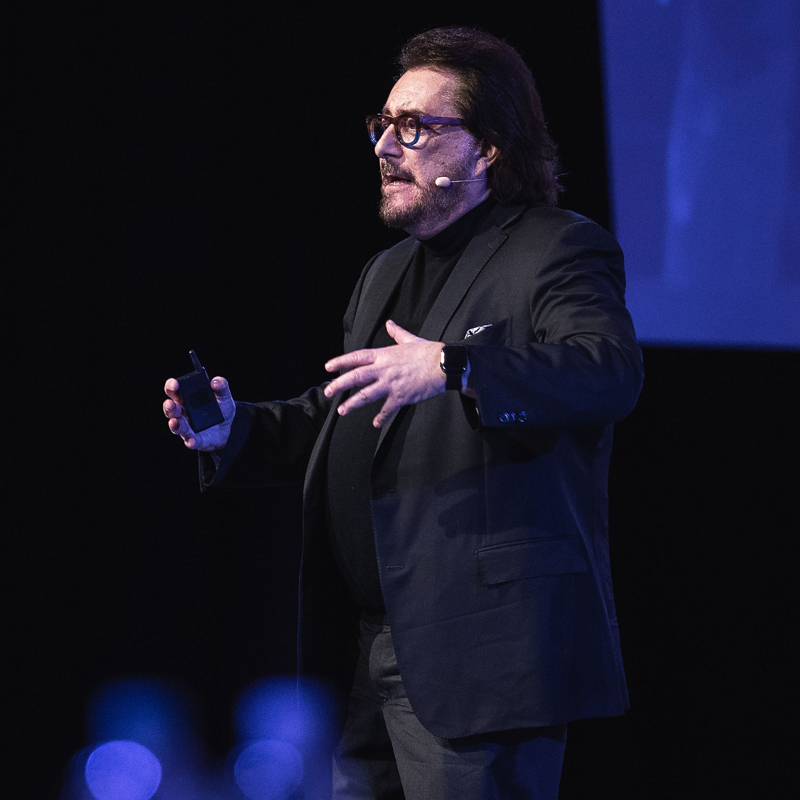
Delivering Profound Impact as a Continuous, Living Commitment
Ultimately, genuine market distinction is absolutely not a static destination you finally, comfortably arrive at after a few highly profitable quarters; it is a highly demanding, utterly relentless, and incredibly ongoing daily practice.
My deep, extensive reflection on these truly profound insights from our deeply engaging conversation has entirely solidified my core belief that successfully building an enduring, highly impactful business is fundamentally, inescapably about making the highly intentional, often incredibly difficult choices every single, exhausting day.
It explicitly requires the immense, unwavering courage to aggressively clarify exactly what you truly stand for, the absolute rigid discipline to systemically embed those specific values deeply into the daily, lived reality of your corporate culture rather than just beautifully painting them on your lobby walls, and the profound wisdom to accurately measure your ultimate success by the actual, sustained, highly observable behavior of your fiercely loyal customers rather than the fleeting, highly intoxicating applause of superficial vanity metrics.
As modern leaders navigating an incredibly complex world, we are absolutely not merely managing static balance sheets and sterile quarterly projections; we are actively, purposefully designing the complex, highly sensitive human ecosystems in which our dedicated people and our trusting customers intimately interact.
When we aggressively prioritize absolute visionary clarity, when we highly intentionally leverage advanced technology to free rather than coldly replace the incredible human spirit, and when we fiercely, unapologetically protect the timeless, non-negotiable values that reliably guide us through the inevitable, violent market turbulence, we do so much more than just barely survive the fiscal year. We actively create a deeply resonant, highly powerful business that fundamentally and permanently changes the entire landscape around it for the absolute better.
The true, lasting path to ultimate success is absolutely not found in frantically, blindly copying the aggressive competition or desperately chasing the loudest, most fleeting new trend. It is heavily, permanently forged in the quiet, unrelenting, daily commitment to being so remarkably, unapologetically, and deeply yourself that the specific customer you serve simply has absolutely no other rational choice but to stubbornly stay with you forever. That is the true, unvarnished essence of genuine corporate distinction, and it is a massive, life-changing commitment that is entirely worth making.
🎥 Watch the full Scott McKain interview to dive deeper into these core concepts
🎤 Explore the full Scott McKain keynote speaker profile to bring his message to your organization
📞 Discuss how to build a lasting culture with our expert curation team
📩 Send your audience and event theme directly to us at info@thekeynotecurators.com to secure your next speaker
Discover More Insights


Get in TouchContact US
Fill out the form so we can best understand your needs.
A representative from The Keynote Curators will reach out to you.
Our Services
Keynote Speakers Topics
© 2026 The Keynote Curators. All Rights Reserved | Terms and Conditions
The Keynote Curators, 8275 South Eastern Avenue, Suite 200, Las Vegas, NV 89123
Local (310) 299-4595 | Toll Free (888) 585-8715 | info@thekeynotecurators.com
The Keynote Curators - Top Keynote Agency, USA.