
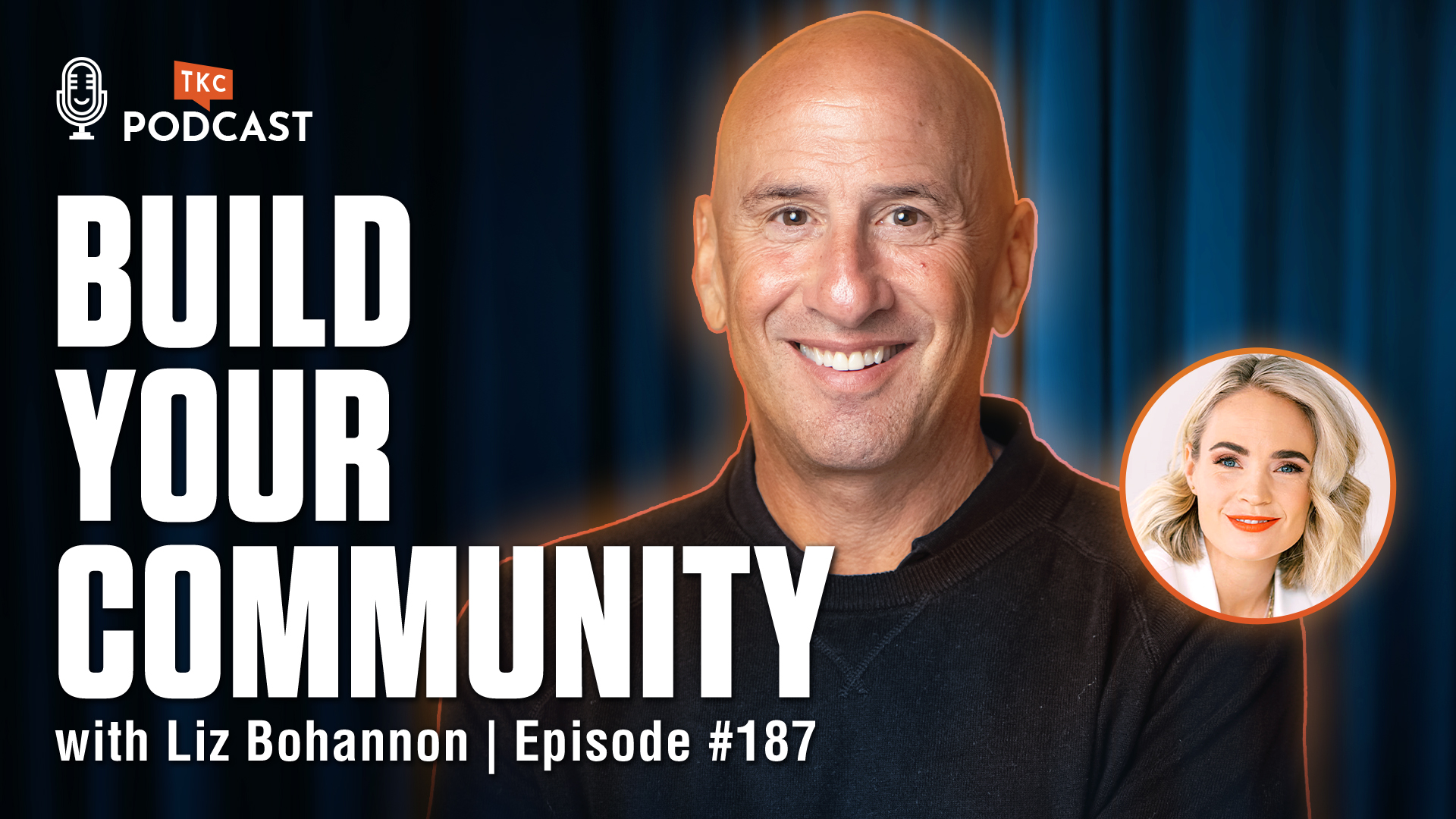
August 13, 2026Why Relationships Take Real Work, with Liz Bohannon
Keynote speaker Liz Bohannon explains why relationships take real effort, and how leaders can build genuine connection at work and in life.
Liz Bohannon has built a shoe company in Uganda, a national brand of artisan-made goods, a bestselling book, and a podcast. But when I sat down with her, the thing she wanted to talk about most wasn’t any of that. It was relationships.
Specifically, why so many people who look successful on paper still feel alone. Liz calls this the trap of thinking success will fix loneliness. It won’t. You can hit every goal on your list and still come home to an empty kind of quiet, because relationships were never something you could achieve your way into. They have to be built, on purpose, over time, with people who show up for you and people you show up for in return.
That idea sat with me for days after we talked. Not because it’s new. Because most of us know it and still don’t act on it. We treat relationships like something that will happen naturally if we’re busy enough being good at our jobs. Liz’s whole body of work says otherwise.
I’ve talked with a lot of leaders over the years who describe the same quiet gap. They built the career. They hit the numbers. And somewhere in the middle of all that winning, their relationships got smaller instead of bigger. That’s not a coincidence, and it’s not a personal failure either. It’s what happens when a whole culture teaches you to optimize for output and never teaches you to design for relationships on purpose.
🎧 Watch and listen to the podcast episode: YouTube • Spotify • Apple Podcasts • Amazon Music
Success Never Was the Cure for Loneliness
Liz opens with a problem a lot of high performers recognize but rarely say out loud. You climb, you build, you win, and somewhere near the top you notice the room is quieter than you expected. Not empty. Just quieter. Fewer people who know the real version of you. Fewer close ties that don’t come with an agenda attached.
What struck me about this part of our conversation is how often we assume the opposite. We assume relationships will scale with our success, that a bigger title or a bigger platform naturally brings more closeness. It usually brings the opposite. More people know your name. Fewer people actually know you. Liz’s point isn’t that ambition is bad. It’s that ambition without a plan for relationships will quietly hollow out the exact life you were trying to build.
This is worth sitting with if you’re in a leadership role right now. The higher you go, the more your calendar fills with meetings and the less it holds space for anything resembling friendship. Nobody schedules that on purpose. It just happens, one full week at a time, until you look up and realize you haven’t had an unstructured conversation in months.
And here’s the part that’s easy to miss. The people around a leader often assume the leader is fine, because a full calendar looks like a full life from the outside. It usually isn’t. A calendar full of meetings is not the same thing as a life full of relationships, and mistaking one for the other is exactly how so many capable people end up isolated in plain sight.
Social Health Is the Missing Third Pillar
We talk a lot about physical health. We’ve gotten better, slowly, at talking about mental health. Liz argues there’s a third pillar we mostly ignore: social health. It’s the measure of how connected you actually are, not how many people follow you or report to you, but how many people you could call at eleven at night and know they’d pick up.
I’ve been thinking about how strange it is that social health isn’t part of how we evaluate our own lives. We track steps. We track sleep. Almost nobody tracks whether their connections are actually strong or just present. Liz’s framing treats connection as a measurable, buildable thing, not a nice-to-have that shows up if everything else in life goes well.
This matters for leaders especially. If social health is a real dimension of wellbeing, then a culture that burns people out socially, even while paying them well, is failing them in a way that won’t show up on a satisfaction survey right away. It shows up later, in turnover, in disengagement, in people who technically have a team around them and still feel like they’re doing the job alone.
The more I think about it, the more social health looks like the pillar we’ve been told to manage privately instead of build deliberately. Nobody hands you a plan for your relationships the way a trainer hands you a workout plan. Liz’s framework treats that gap as the actual problem to solve, not a side effect of a busy life. If you can build a body of relationships with the same intention you’d bring to a fitness goal, the payoff compounds the same way too.
How Modern Life Quietly Cuts Us Off From Each Other
None of this happens because people stopped caring about relationships. It happens because modern life is built for convenience, and convenience and connection don’t always want the same things. We order instead of asking a neighbor. We message instead of meeting. We optimize every friction point out of daily life, and it turns out some of that friction is where relationships used to form.
Liz’s read on this lines up with something I’ve noticed in almost every organization I’ve worked with. Isolation rarely announces itself. It builds slowly, through a hundred small substitutions of ease for connection, until a person looks around and realizes their social circle has thinned out without a single dramatic event causing it. Nobody chose loneliness. It accumulated.
The deeper implication here is about design, not willpower. You can’t just try harder to have relationships in a life engineered against them. You have to actually build structures, habits, and physical proximity back into your days. That’s a design problem as much as a personal one, and it’s exactly where Liz’s work on business leadership and organizational culture becomes so relevant. If isolation is systemic, the fix has to be systemic too.
Real Relationships Take a Strategy, Not Luck
Here’s where Liz gets practical, and where a lot of people get uncomfortable. She’s clear that meaningful relationships don’t happen by accident once you’re an adult with a full schedule. They happen because someone decided to build them, the same way you’d build a business or a habit. That means initiating. That means following up. That means being willing to be the one who reaches out first, again and again, without knowing if it’ll be reciprocated.
The reason this lands so hard is that it removes the excuse most of us are quietly relying on. We tell ourselves we’re too busy, or that real friendship should just click without effort, or that we’ll get to it once things calm down. Liz’s argument is that things never calm down enough on their own. Relationships get built the way anything worth having gets built: with intention, consistency, and a willingness to go first.
What I appreciate about this framing is that it treats relationships as a skill, not a personality trait. You don’t have to be naturally outgoing to be good at building relationships. You have to be willing to show up on purpose, more than once, even when it’s inconvenient. That’s learnable. That’s something anyone in business or in life can actually practice.
This also explains why introverts often build deeper relationships than the extroverts everyone assumes are better at connecting. Depth doesn’t come from working a room. It comes from consistent, focused attention on a smaller number of people over a longer stretch of time. Quiet, steady follow-through will outbuild charisma in the relationships that actually last, every time.
What East Africa Taught Her About Connection Under Pressure
Liz’s career didn’t start in a boardroom. It started in Uganda, where she founded Sseko Designs to create jobs for young women who otherwise had no path to higher education. That work put her directly in the middle of communities facing real hardship, and it reshaped how she thinks about relationships entirely.
What stayed with me from this part of the conversation is how consistently she saw joy and strength show up in the hardest circumstances, not despite the difficulty but because of the relationships people had built to face it together. Hardship didn’t isolate the women she worked with. It bonded them. That’s a strange and important lesson for anyone building a company in a comfortable office with none of those same pressures: struggle shared is often what makes a relationship real, and comfort without shared struggle can leave a relationship shallow.
This is also where Liz’s identity as one of the leading women leaders in business comes through most clearly. She didn’t build Sseko as a side project to a leadership career. The relationships she formed in East Africa are the foundation the entire leadership career was built on. You can’t separate the two, and I don’t think she’d want you to try.
The Biology Behind Why We Need Each Other
There’s a part of this conversation that goes beyond advice and into hard science, and I think it’s the part that should make people stop and actually reconsider their priorities. Close relationships are one of the strongest predictors of a long, healthy life, stronger in some research than exercise or diet. And the brain doesn’t treat social rejection as a metaphor. It processes it in some of the same regions that process physical pain.
Read that again. Being left out isn’t just uncomfortable. Your brain registers it the way it registers an injury. That single fact reframes a lot of workplace behavior that gets written off as people being “too sensitive.” Being excluded from a meeting, a group chat, or a decision isn’t a small thing to the person experiencing it, even if it looks small from the outside.
For leaders, this is a call to take relationships far more seriously than most org charts allow for. If exclusion registers as pain and connection extends your life, then a culture that fails to build real relationships between people isn’t just missing a nice cultural feature. It’s costing people something closer to their actual health, and that’s a much higher stake than most performance reviews account for.
I don’t think most leadership teams have caught up to what this science actually implies. We still talk about culture as a nice-to-have, something you invest in once the real priorities are handled. But if relationships genuinely affect lifespan and the brain treats rejection like injury, then building relationships at work isn’t a soft initiative sitting next to the real strategy. It is a piece of the real strategy, with consequences as concrete as any other line on the plan.
Great Friendships Are Built the Same Way Great Work Is
One of the more grounding parts of our conversation was Liz pushing back on the idea that good friendships should feel effortless. She’s clear that lasting relationships take steady, unglamorous work: remembering details, checking in without a reason, showing up for the unremarkable Tuesday as much as the big life event.
I’ve seen this pattern play out the same way in professional relationships. The people I trust most aren’t the ones I met and instantly clicked with. They’re the ones I kept choosing to invest in, meeting after meeting, year after year, through disagreements and long stretches of not much happening at all. Relationships that survive that kind of ordinary time are the ones that hold up when something actually goes wrong.
This reframes friendship as closer to a discipline than a feeling. Feelings fade and come back. Discipline is what keeps a relationship alive during the parts where the feeling isn’t there yet. That’s not a romantic idea, but it’s a durable one, and durability is what most of us actually want from our relationships anyway.
The lesson that stayed with me here is small but hard to argue with. Every relationship you value right now started as a series of small, unremarkable choices to keep showing up. Nobody wakes up with a deep friendship already built. It gets built one ordinary check-in at a time, long before it ever feels important enough to notice.
Proximity, the Four T’s, and the Way People Actually Connect
Liz breaks connection down into something almost like a formula, and I found it genuinely useful. Proximity matters more than we admit. Trust builds faster when people are simply near each other often, which is part of why remote and hybrid life has made real connection harder to sustain for a lot of teams, not because people changed, but because the physical conditions for connection quietly disappeared.
She also lays out what she calls the four T’s of connection, a practical map for how relationships actually form and deepen between people. Underneath the framework is a simpler truth: people don’t bond primarily over shared opinions. They bond over shared time, shared trust, shared struggle, and shared meaning. Get those four ingredients right, in almost any context, and relationships tend to form on their own.
What makes this especially useful for anyone in teamwork-heavy environments is that it’s actionable. You can’t force chemistry between two people. But you can absolutely build proximity, protect time, create shared challenges, and give people a reason to trust each other. That’s a leadership decision, not a personality trait, and it’s one most organizations never make on purpose.
Why the Workplace Has Become Ground Zero for Loneliness
Adults spend more waking hours at work than almost anywhere else, which makes the workplace one of the most important, and most overlooked, places for connection to form. Liz points to a real crisis of engagement sitting underneath a lot of the productivity conversation. People aren’t just disengaged from their tasks. They’re disengaged from each other, and the two are more connected than most leadership teams realize.
The single most useful, almost embarrassingly simple insight from this part of the conversation is about having a close friend at work. Employees who have one report being more engaged, more resilient during hard stretches, and more likely to stay. Not a mentor. Not a manager who checks in. An actual friend. That one relationship changes how a person experiences their entire job.
This is where Liz’s work moves from personal advice into real entrepreneur and organizational strategy, built out through what she calls the Community Quotient and her Community Agreements. Leaders who design for relationships, deliberately, are building a retention strategy and a performance strategy at the same time, whether they call it that or not.

The Village You Have to Build Yourself
We say it takes a village, and then we wait for the village to show up. Liz’s whole message, across the businesses she’s built, the book she’s written, and this conversation, comes down to one honest correction: nobody is handing you a village. You build it, deliberately, the same way you’d build anything else worth having.
That’s the part I keep returning to. Relationships were never going to arrive because we got successful enough or busy enough or important enough to deserve them. They arrive because someone decided to reach out, stay in proximity, share the hard parts, and keep showing up long after the initial spark faded. Liz’s story, from Uganda to keynote stages across the country, is proof that the relationships you build on purpose are the ones that actually hold when everything else gets hard.
If there’s one thing worth taking from this conversation, it’s permission to stop waiting for relationships to happen to you. Start building them instead. That shift, small as it sounds, is where every version of a real village actually begins. You can hear the full story, and the ideas that shaped her book Beginner’s Pluck, in the full interview linked above.
📅 Book Liz Bohannon for your next event here.
📞 Schedule a quick call and let’s talk about your audience.
📩 Email us your event theme, and we’ll tell you if she’s the right fit.
Discover More Insights




Get in TouchContact US
Fill out the form so we can best understand your needs.
A representative from The Keynote Curators will reach out to you.