

July 24, 2026Business Distinction Is the New Growth Strategy, Says Scott McKain
Scott McKain explains why business growth now depends on distinction, not volume, and what separates brands people remember from ones they forget.
What do customers actually remember about a business? Not the logo. Not the tagline. Not how many new features got added last quarter. They remember whether the business stood for something real, something they could feel every time they walked through the door or opened the app.
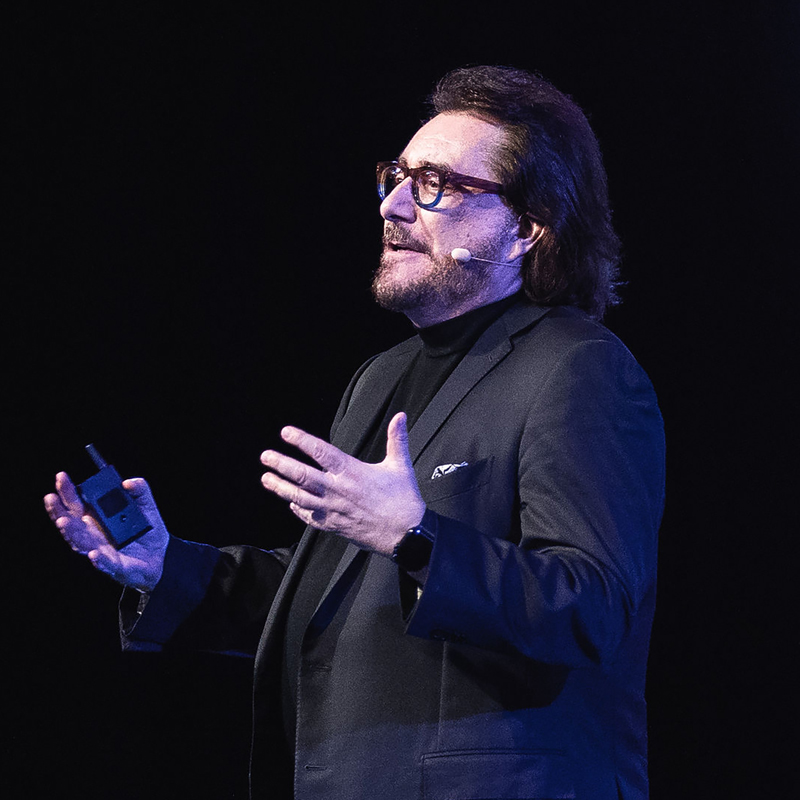
I sat down to talk with Scott McKain, and the conversation kept circling back to one idea. Scott is a Hall of Fame keynote speaker and a best-selling author, and he’s one of only 24 people inducted into both the Professional Speakers Hall of Fame and the Sales and Marketing Hall of Fame, alongside Dale Carnegie and Zig Ziglar.
He currently serves as Corporate Educator in Residence at High Point University, a school known for teaching students how organizations actually work, not just how they look on paper. For more than three decades, Scott has worked with companies like Cisco, BMW, and Bank of America, helping each one figure out why customers pick a business over a competitor that looks almost identical on paper.
His answer surprised me, mostly because it was so simple. Scott believes most companies are chasing the wrong goal. They want to stand out. But standing out fades fast in a market where a competitor can copy a good idea within a few months. What lasts is knowing what your business stands for and proving it every single day, in ways too small and too consistent to fake.
That is what this conversation is really about. Not marketing tricks. Not louder branding. A different way of thinking about what makes a business worth choosing, and worth staying loyal to.
🎧 Watch and listen to the full interview about business here.
Standing Out Is Not the Same As Standing For Something
For years, businesses have been told that differentiation is the goal. Get noticed. Be memorable. Stand out from the noise. Scott pushes back on that idea, and the more I sit with it, the more I think he’s right.
“It’s not about standing out anymore. It’s about what you stand for.”
That line stayed with me long after the conversation ended. Standing out is about attention. Standing for something is about identity. A business can stand out for a week with a clever ad or a viral moment. But identity is what a customer remembers a year later, when they need to decide whether to come back.
This is the real shift happening in business right now. Attention is cheap. Trust is not. Any company can buy attention with a big enough ad budget. Very few earn trust, because trust requires consistency, and consistency requires knowing exactly what you stand for before you ever open your doors.
What struck me most is how this idea reaches far beyond marketing. Every leader I have talked to eventually runs into the same wall. Their business has plenty of ideas and plenty of energy, but no clear answer to the question of what it actually stands for. Without that answer, every decision becomes a small negotiation. With it, decisions get faster, because the answer is already sitting there, waiting to be applied.
The same test works on individuals, not just organizations. Ask a talented professional what makes their work distinct, and a surprising number struggle to answer in one clear sentence. That hesitation is not a small thing. It is usually the reason a promotion goes to someone else, or a client picks a competitor with a less impressive resume but a clearer story about what they offer.
The Real Gap Between the C-Suite and the Front Line
One of the most direct things Scott said in our conversation was this:
“I think one of the biggest gaps in business is the gap between what the C-suite thinks we ought to be doing for customers and what’s executed on the front line. And when you can shorten that gap, when you can eliminate that gap, that’s part of how you create the ultimate customer experience that keeps people coming back.”
I have seen this pattern more times than I can count. Leadership designs a beautiful strategy in a conference room. It sounds great on a slide. Then it reaches the front line, where the people actually talking to customers were never consulted, never trained on the reasoning behind it, and often don’t have the tools to deliver it.
The gap is not really a people problem, even though it usually gets treated like one. It looks like a training issue or a communication issue. But at its root, it is a design problem inside the business. If leadership does not close the distance between strategy and execution, the company ends up making promises the front line cannot keep, and customers feel that broken promise long before anyone in the C-suite hears about it. I’ve watched executives spend months polishing a customer experience strategy while never once asking the people who answer the phones what actually happens on a Tuesday afternoon.
This is why I think business leadership has to mean more than setting direction from the top. It means walking the floor. It means listening to the people closest to the customer and being willing to change the plan when reality does not match the slide deck. The businesses that keep growing are usually the ones where that gap keeps shrinking, year after year, meeting after meeting.
Why “Would You Recommend Us” Is a Vanity Metric
Most businesses track a version of the same question: would you recommend us to a friend? Scott’s take on this metric is blunt, and it’s one of the parts of our conversation I have not stopped thinking about.
Saying you would recommend a business is not the same as actually doing it. A customer can answer a survey with a nine out of ten and never mention the company to another person again. Intent is not behavior. Opinions are cheap to give and cost nothing to change. What actually matters is whether a customer comes back, whether they bring someone with them, and whether they choose that business again when a cheaper option shows up next door. A glowing survey score has never once paid a single invoice.
This distinction matters more than most leaders admit. Survey scores make everyone in the room feel good. They get printed in the quarterly deck and shown to the board as proof that the business is healthy. But a survey score is a prediction, not a result. The real measurement is repeat behavior: return visits, renewed contracts, referrals that actually convert into new customers.
I’ve seen this pattern show up in companies far outside the customer experience world too. Teams celebrate engagement scores while turnover quietly climbs. Leaders celebrate brand awareness while sales stay flat. The lesson underneath all of it is the same, whether you are running a department or an entire company. If you want to know whether a business is actually working, stop asking people what they think and start watching what they do. Behavior does not flatter anyone, and that is exactly why it tells the truth.
What Employee Retention Actually Tells You About a Business
Scott’s work covers customer experience, but he keeps returning to a point that a lot of leaders miss: what happens inside a business shows up outside of it. Employees do not accidentally deliver a remarkable experience to a customer. They deliver what they have been shown, trained on, and treated with themselves.
Employee retention is one of the clearest signals a company has about its own health, and most leaders read it wrong. They treat turnover as a hiring problem, something to fix with a better job posting or a signing bonus. But turnover is usually a culture problem wearing a hiring costume. People rarely leave a company because the paycheck was too small. They leave because they stopped believing the organization stood for anything beyond the numbers on a spreadsheet, and once that belief goes, no amount of pay can buy it back.
This is where professional development stops being a nice-to-have and becomes a retention strategy. When a business invests in growing its people, it sends a message that goes far beyond the training itself. It tells employees that the organization sees a future for them, and people tend to stay where they believe they have a future.
The connection to customers is direct, even if it is rarely spoken out loud. A business with high turnover is constantly training brand-new people to deliver an experience that took years to design. That is an almost impossible task. The businesses that keep their best people are the same ones whose customers keep coming back, and that is not a coincidence.
Why AI Won’t Save a Business Without a Culture
I asked Scott about artificial intelligence, mostly because everyone is asking that question right now. His answer reframed how I think about it. AI is not a strategy for a business. It is a tool that makes an existing strategy faster or slower, depending on what the company already believes about itself.
Innovation gets treated like a finish line in a lot of companies, as if adopting new technology is the goal itself. Scott’s view is more useful than that. Technology should handle the repeatable, predictable parts of a business, the tasks that do not require judgment or warmth. That frees up people to do the parts of the job that actually create loyalty: the conversation that goes a little longer than it needed to, the problem solved with extra care, the moment an employee decides to make someone’s day slightly better than it had to be.
A business without a clear culture will use AI to do the wrong things faster. It will automate a broken process and call it progress, then wonder why customers still feel unheard. A business with a strong culture uses the same technology to remove friction, so its people have more time for the parts of the job a machine cannot do. The tool is identical in both cases. The outcome depends entirely on what the company decided to protect before the technology ever arrived.
This is the part of the conversation I keep coming back to. Every leader wants to know what to do about AI. The better question, the one Scott kept steering us toward, is what your business stands for in the first place. Get that right, and the technology decisions get much easier to make.
Selling Uniquely, Serving Remarkably
Scott has spent his career at the intersection of two ideas that most companies treat as separate departments: sales and customer experience. In most businesses, one team is chasing the deal and another team is protecting the relationship after the deal closes. Scott’s research suggests that split is part of the problem.
Selling uniquely is not about a clever pitch. It is about a business being honest with itself about what makes it genuinely different, and then having the discipline to sell that difference instead of competing on price. Serving remarkably is the promise that gets kept after the sale, the part that determines whether a customer becomes a repeat customer or a one-time transaction.
When these two ideas live in separate silos, a business ends up making promises during the sale that the service side can never deliver. The salesperson oversells because that is how they are measured. The service team inherits a customer who was promised something the company was never built to provide. That gap between promise and delivery is where trust quietly dies, one interaction at a time, until the account manager is left apologizing for a mistake they never made.
The businesses Scott has helped the most are the ones willing to connect those two functions with the same standard of honesty. What you promise during the sale should be exactly what the customer experiences afterward. That sounds obvious. It is rarely practiced, and that gap between obvious and practiced is where most of the missed business leadership opportunity in customer experience actually lives.
Distinction Is a Daily Discipline, Not a Slogan
Scott’s book, ICONIC, was named a Forbes top pick, and the idea running through it is simple to say and hard to live: distinction is not a marketing campaign. It is a daily discipline that a business either practices or abandons, one decision at a time.
This is where a lot of thought leadership content gets it wrong. Distinction gets treated like a workshop, something a company does once a year during a strategy offsite and then files away until next year’s planning cycle. Scott’s argument is closer to the opposite. Distinction has to be rebuilt daily, in ordinary decisions that never make it into a case study: how a complaint gets handled, how a new hire gets trained, how a business treats a customer who is not buying anything that day.
I’ve watched this play out inside organizations that had all the right values printed on the wall and none of them showing up in daily behavior. The gap between a values poster and a values decision is enormous, and customers can tell the difference within a single interaction. A business does not become distinctive because leadership wrote a mission statement. It becomes distinctive because hundreds of small decisions, made by people who were never in the room when the mission statement was written, all point in the same direction.
That is the harder, less glamorous version of distinction, and it is also the only version that actually works. A business that treats its identity as a daily discipline rather than a slogan is one that keeps its promise even on the days nobody important is watching.
What Your Business Is Really Selling
The more I reflect on this conversation, the more I think Scott’s real message is not about marketing or customer experience at all. It is about identity, and about the discipline required to protect that identity when it would be easier to chase whatever trend is loudest that quarter.
Every business is selling something underneath the product or the service. It is selling a version of what it stands for, whether leadership has ever said that out loud or not. Customers pick up on that identity whether or not it was intentional. The businesses that grow with purpose are the ones that decided, on purpose, what that identity should be, and then built every process, every hire, and every customer interaction around protecting it.
This is not inspirational and motivational language for its own sake. It is closer to an operating principle. A business that knows what it stands for makes faster decisions, keeps its best people longer, and earns the kind of loyalty that a discount can never buy. A company that does not know what it stands for will keep chasing attention, and attention, as Scott reminded me, is the cheapest and least loyal thing a customer can give.
The lesson I keep returning to is this: business growth built on standing out is fragile, because someone louder is always one product cycle away. Growth built on standing for something is durable, because identity is much harder to copy than a feature list. That is the shift worth making, and it is the one conversation with Scott McKain made impossible for me to unsee.
I keep thinking about the businesses I have watched fade over the years, and almost none of them lost because a competitor outspent them. They lost because they stopped being able to answer a simple question, the same one Scott kept returning to throughout our conversation. What do you stand for? Any business willing to sit with that question honestly, and act on the answer every single day, has already found the only real edge that lasts.
🎤 Book distinction and customer experience keynote speaker Scott McKain for your next event.
📺 Watch the full interview here.
📅 Want to talk about your next event? Schedule a time here.
✉️ Have a question? Email us at info@thekeynotecurators.com.
Discover More Insights




Get in TouchContact US
Fill out the form so we can best understand your needs.
A representative from The Keynote Curators will reach out to you.
Our Services
Keynote Speakers Topics
© 2026 The Keynote Curators. All Rights Reserved | Terms and Conditions
The Keynote Curators, 8275 South Eastern Avenue, Suite 200, Las Vegas, NV 89123
Local (310) 299-4595 | Toll Free (888) 585-8715 | info@thekeynotecurators.com
The Keynote Curators - Top Keynote Agency, USA.