
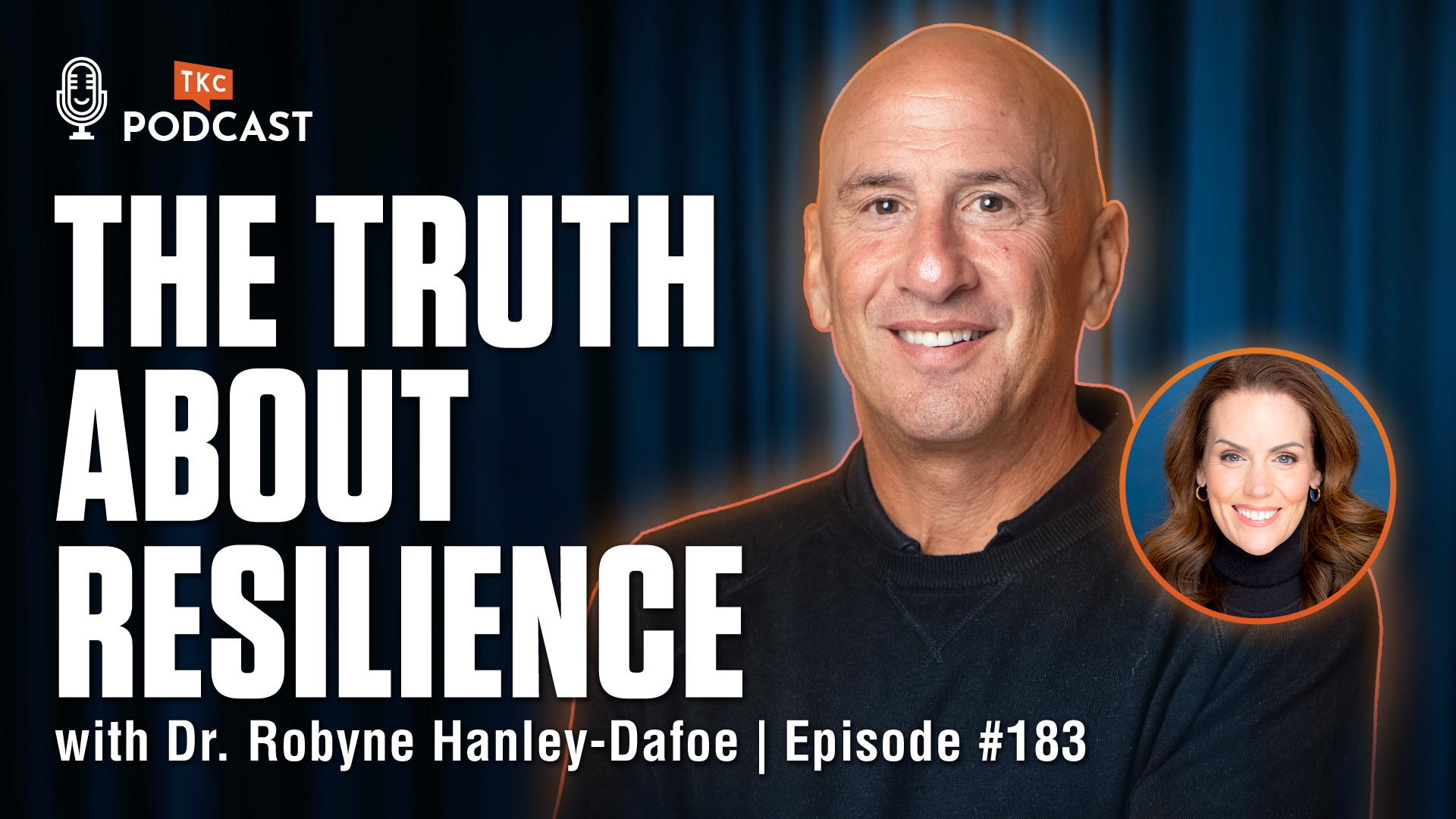
July 16, 2026Resilience Isn’t a Badge of Honor, with Dr. Robyne Hanley-Dafoe
In this podcast conversation, Dr. Robyne Hanley-Dafoe explains what resilience really means, and why it has to be built long before life gets hard.
You can usually spot the people who need this conversation the most. They’re the ones who say things like “I’ll rest after this week” or “I just need to get through this month.” Soon has a way of never showing up. And that’s exactly where a real conversation about resilience needs to start, not with the crisis, but with everything that happens before it.
I recently talked with Dr. Robyne Hanley-Dafoe on The Keynote Curators Podcast, and it changed how I think about resilience. Most of us treat resilience like a prize you earn for surviving something hard. Robyne sees it differently. She says resilience isn’t built during the storm. It’s built in the ordinary, unremarkable days when nothing is going wrong at all.
That idea is worth sitting with for a minute. If resilience is something you build in advance, then waiting for the “right time” to take care of yourself isn’t just unhelpful. It’s working against you. What struck me most about this conversation is how simple her framework is and how far most of us are from actually living it.
I’ve talked with a lot of leaders, founders, and event professionals over the years, and almost all of them describe resilience the same way, as something you find when you’re forced to. Robyne’s take flips that on its head, and once you hear it, it’s hard to unhear. Resilience isn’t a reaction. It’s a foundation you either laid earlier or didn’t.
🎧 Watch and listen to the podcast episode: YouTube • Spotify • Apple Podcasts • Amazon Music
Resilience Is Not a Badge of Honor
There’s a version of resilience that gets celebrated a lot in business culture. It’s the version where someone works through exhaustion, powers through a crisis, and comes out the other side with a story about how tough they are. We applaud that story. We call it grit. We sometimes even call it resilience.
Robyne pushes back on this hard. Real resilience isn’t about how much you can endure. It’s about how well you’re set up before you ever have to endure anything. The people who look “resilient” during a crisis are usually just people who built strong habits, boundaries, and support systems long before the crisis arrived. What we see in the hard moment is the result. What actually matters happened earlier, quietly, when nobody was watching.
This reframe matters for leadership especially. If you reward the person who never sleeps and always shows up wrecked but functioning, you’re not rewarding resilience. You’re rewarding a slow-motion collapse that hasn’t happened yet. I’ve seen this pattern in a lot of workplaces, where the person praised for handling everything is actually the person closest to breaking. Real resilience looks a lot less dramatic than that. It looks like someone who paced themselves so well that the hard week didn’t wreck them at all.
Building Resilience in Ordinary Time
The phrase that stuck with me from our conversation was “ordinary time.” Robyne uses it to describe the stretches of life that feel unremarkable, the weeks with no emergency, no deadline crisis, no health scare. Most people coast through ordinary time. She argues that ordinary time is exactly when resilience gets built, or doesn’t.
Think about it like training. Nobody runs a marathon by starting to train the morning of the race. The training happens in the months before, on ordinary days, when running feels optional and skippable. Resilience works the same way. The habits you build on a calm Tuesday are what carry you through the chaotic Thursday three months later.
This is a harder sell than it sounds. Ordinary time doesn’t feel urgent. There’s no obvious cost to skipping your walk, ignoring your sleep, or working through lunch again, at least not that day. The cost shows up later, compounded, at the worst possible moment. What makes this especially interesting is that resilience, in Robyne’s framing, is less about big dramatic acts of strength and more about a long series of small, unremarkable choices that nobody claps for.
I’ve been thinking about this a lot since the conversation. So many people I talk to treat resilience like a switch they’ll flip once things get serious. But you can’t build a habit you’ve never practiced just because you suddenly need it. The person who starts trying to build resilience in the middle of a crisis is starting from zero, at the worst possible time, under the worst possible conditions. That’s not a fair fight, and it’s one a lot of us keep setting ourselves up to lose.
The When-Then Trap in High Performers
One of the most useful ideas from our conversation was what Robyne calls the “when-then” trap. It sounds like this: “When things calm down, then I’ll start exercising again.” “When this project wraps up, then I’ll take a real weekend off.” “When I hit this goal, then I’ll finally slow down.”
The problem is that “when” almost never arrives on schedule. Something else fills the gap. A new project, a new goal, a new fire to put out. High performers are especially prone to this trap because they’re good at pushing through, which means the cost of waiting doesn’t show up as failure. It shows up as fatigue that quietly becomes normal.
I’ve seen this play out with entrepreneurs and founders constantly. The person building a company tells themselves they’ll rest once the business is stable, but a growing business rarely feels stable. There’s always a next milestone. If you’re an entrepreneur or leading a team through constant change, the when-then trap isn’t a personal failing. It’s a structural trap built into ambitious work. The way out isn’t waiting for a calmer season. It’s deciding that resilience gets built now, in this season, exactly as it is.
The lesson that stayed with me is that the when-then trap doesn’t just cost you rest. It costs you resilience itself, because every season you skip is a season you didn’t use to build the reserves you’ll eventually need. There will always be a good reason to wait. The people who avoid the trap are the ones who stop looking for one.
What Healthy People Actually Do Differently
During our conversation, Robyne shared something she’s noticed studying people who sustain high performance over long periods without burning out. It’s not that they have fewer demands on their time. It’s that they protect a small set of non-negotiable habits, regardless of how busy things get.
These habits are usually unglamorous. Sleep. Movement. Eating something that isn’t just coffee and adrenaline. A few minutes of quiet before the day starts. None of these sound like resilience strategies. They sound like basic maintenance. But that’s the point. Resilience isn’t a mindset trick you apply in a crisis. It’s the accumulated effect of maintenance you never stopped doing.
What I found most useful here is the permission this gives people to stop overcomplicating personal development. We tend to reach for elaborate systems, apps, and five-step frameworks when what actually protects our capacity is much simpler and much less exciting. The healthiest people Robyne studies aren’t doing more. They’re protecting a few basics fiercely, even when life gets loud.
There’s a business lesson buried in here too. Companies spend a lot of money on resilience programs, wellness perks, and elaborate initiatives, when the research keeps pointing back to the same short list of basics. You don’t need a bigger program. You need people who protect the fundamentals even when the calendar says they shouldn’t have time for them.
Organizing Your Day in Quarters
One practical tool Robyne shared is breaking the day into quarters instead of treating it as one long, undifferentiated block. Morning, midday, afternoon, evening, each one gets its own intention and its own kind of energy. Instead of asking “how do I get through today,” you ask “what does this quarter of the day need from me.”
This might sound like a small shift, but it changes how you spend your energy. A person running on one long, blurry block of time tends to spend energy reactively, responding to whatever shows up. A person working in quarters can protect certain hours for focused work, other hours for connection, and other hours for actual rest, because they’ve decided in advance what each block is for.
For leaders juggling meetings, decisions, and people problems all day, this is a useful strategy for protecting attention. It’s not about cramming more into the day. It’s about being intentional with the energy you already have, instead of spending all of it on autopilot and wondering at 4 p.m. why you feel wrung out. Resilience, again, shows up here as structure rather than willpower.
This same idea applies to business teams trying to build a culture around sustainable performance. When everyone treats the day as one long undifferentiated grind, burnout becomes the default outcome. When a team is taught to think in quarters, resilience stops being an individual project and starts becoming part of how the whole organization operates.
Intentional Social Media Use
We spent time in the conversation talking about phones, and I think this is where a lot of people will recognize themselves. Robyne isn’t arguing that social media is inherently bad. Her point is more precise than that. It’s the unintentional use of your phone that quietly drains focus, not the use itself.
Picking up your phone with a purpose, checking a message, responding to something specific, is very different from picking it up out of boredom or habit and scrolling for twenty minutes without deciding to. That second pattern is the one that erodes attention over time. It trains your brain to expect constant novelty, which makes deep focus on anything else feel harder than it used to.
This connects directly back to resilience, because attention is a finite resource, just like energy. If your attention is constantly being pulled in small, unintentional directions, you have less of it available for the things that actually matter, including the people in front of you. Robyne’s suggestion isn’t to quit your phone. It’s to notice the difference between reaching for it on purpose and reaching for it out of habit, and to choose the first one more often.
Presence, Connection, and the Cost of Loneliness
This might be the part of the conversation that stayed with me longest. Robyne talked about how real presence, actually being with someone rather than half-present with a phone nearby, is one of the strongest protective factors against loneliness. And loneliness, she noted, is one of the biggest threats to long-term wellbeing that we don’t talk about enough.
It’s a strange irony of modern life that we’re more connected than any generation before us and, at the same time, many people report feeling more isolated. Robyne’s explanation is straightforward. Being technically reachable isn’t the same as being present. You can be in a room full of people and still be functionally alone if nobody in that room is actually paying attention to anyone else.
Good communication starts with presence, not with the right words. Leaders especially need to hear this, because so much of leadership gets reduced to messaging, tone, and delivery, when the actual foundation is much simpler: are you actually here, with this person, right now? That single shift, choosing presence over distraction, does more for connection than almost any communication technique I’ve come across.
Burnout and the Curse of the Strong
Robyne used a phrase in our conversation that I haven’t been able to shake: the curse of the strong. It describes what happens to capable people, the ones who handle pressure well, get things done, and rarely complain. Because they’re so competent under stress, they’re often given more of it. And because they rarely show visible cracks, nobody checks in.
This is a quiet trap. The strong person keeps absorbing more responsibility precisely because they’re good at absorbing it, until the absorbing stops being sustainable and something breaks, often without much warning. From the outside, it can look sudden. From the inside, it’s usually been building for a long time.
Leaders need to take this seriously, both for themselves and for the people they manage. If someone on your team never seems to struggle, that’s not necessarily a sign they’re fine. It might be a sign they’ve learned that struggling isn’t safe to show. Protecting mental health on a team means actively checking in with your strongest people, not just your visibly struggling ones. That includes building a culture where competence doesn’t automatically mean more weight gets added without anyone asking if that weight is sustainable.
This is where business leadership and resilience intersect most directly. A leader who only checks in when something looks broken will always miss the people quietly heading toward a breaking point. Real resilience at an organizational level means noticing your steadiest people and asking them how they’re really doing, before the day they finally admit they’re not.
Why B-Plus Work Often Beats Perfectionism
Perfectionism gets treated like a virtue in a lot of professional settings, but Robyne makes a compelling case against it. Chasing an A-plus on everything, all the time, comes at a real cost to wellbeing, and often doesn’t even produce better outcomes than solid, consistent B-plus work delivered without the exhausting perfectionist loop behind it.
This isn’t an argument for mediocrity. It’s an argument for proportion. Some tasks genuinely deserve your full, polished best effort. Most don’t. Treating every task like it needs the same maximum output is a fast way to burn through energy you’ll need later for the things that actually deserve it. Knowing the difference is its own kind of skill, and it’s one that protects resilience over the long run.
There’s a quiet form of empowerment in giving yourself permission to submit the B-plus version of something and move on. It frees up capacity for the parts of your work and your life that need more from you. Perfectionism tells you everything is equally important. Resilience requires knowing that it isn’t, and acting accordingly.
The more I think about it, the more I see perfectionism as a resilience tax. It charges you extra energy on tasks that never needed it, and you don’t notice the bill until you’re running low on the days that actually matter. Letting go of that tax isn’t a shortcut. It’s a decision to spend your resilience where it counts.
It’s Okay to Explore and Not Have Everything Optimized
We ended our conversation on a note I didn’t expect but really appreciated. Robyne pushed back gently on the culture of constant optimization, the idea that every habit, every hour, every choice needs to be tracked, measured, and improved. Sometimes, she said, it’s okay to just explore. To try something without a metric attached. To rest without justifying the rest with a productivity outcome.
This lands differently after everything else in the conversation, because it’s easy to hear “build resilience in ordinary time” and turn it into one more thing to optimize, one more system to perfect. Robyne’s point undercuts that instinct. Resilience isn’t another performance category. It’s the foundation that lets you be a whole person, including the parts of you that don’t need to be efficient.
I think this is the piece people miss most often when they hear talks about resilience, habits, and performance. The goal was never to squeeze more out of yourself. The goal is to build a life sturdy enough that you don’t have to.

A Simpler Definition of Strength
If there’s one thing I keep coming back to from this conversation, it’s how much simpler resilience actually is than the way we usually talk about it. It isn’t a personality trait some people have, and others don’t. It isn’t forged only in crisis. It’s built quietly, in ordinary weeks, through habits most people consider too small to matter.
Robyne’s work, including her books Calm Within the Storm and I Hope So, keeps returning to this same idea: resilience is a practice, not a performance. It’s less about proving you can survive hard things and more about arranging your life so fewer things have to become hard in the first place. For leaders, teams, and anyone tired of waiting for the calm that never comes, that’s a far more useful definition of resilience to build a life around, starting now, in whatever ordinary week you happen to be in.
What I keep coming back to is how quietly hopeful this framing is. Resilience, built this way, isn’t a defense against a hard life. It’s a foundation for a fuller one. That’s part of why Robyne’s message resonates as inspirational and motivational content for audiences who are tired of hearing that they just need to push harder. The real message is gentler than that, and more useful. Build the resilience now. Let the ordinary days do the work. The hard week, when it comes, will meet a version of you that’s already ready.
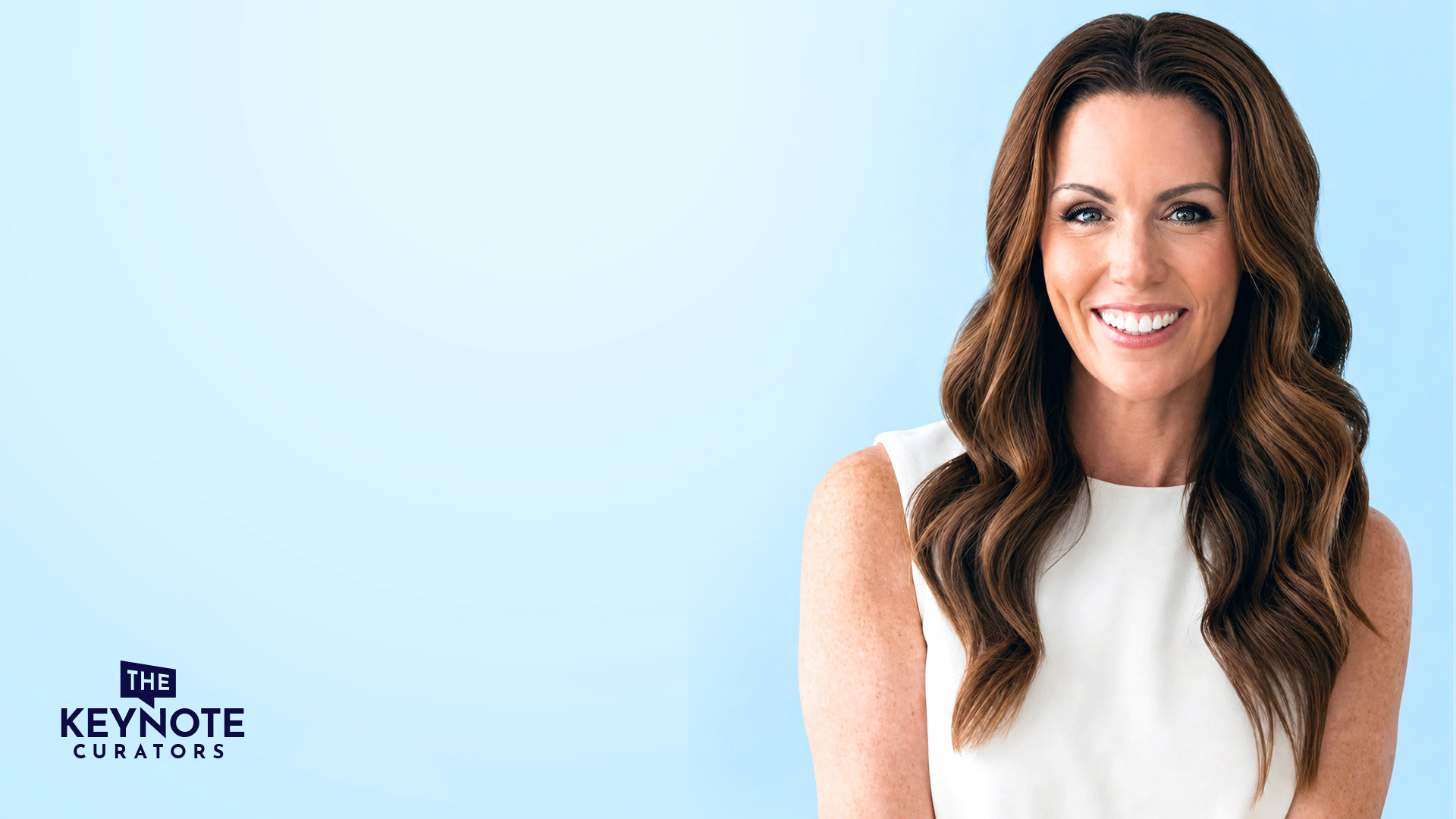
🎤 Explore Dr. Robyne Hanley-Dafoe’s keynote speaker profile here.
📞 Schedule a time to talk about booking Robyne for your event.
🏆 Browse more top resilience keynote speakers.
🌟 See leading business leadership speakers for your next event.
Discover More Insights


Get in TouchContact US
Fill out the form so we can best understand your needs.
A representative from The Keynote Curators will reach out to you.