

July 20, 2026Why AI Might Be Quietly Weakening Your Critical Thinking Skills
Shawn Kanungo explains how using AI every day can quietly weaken critical thinking, and why depth and judgment matter more than ever.
I use AI every day. So does Shawn Kanungo. Somewhere in the middle of our conversation, he said something that has stayed with me since. He believes AI is already changing the way he thinks, and not entirely for the better.
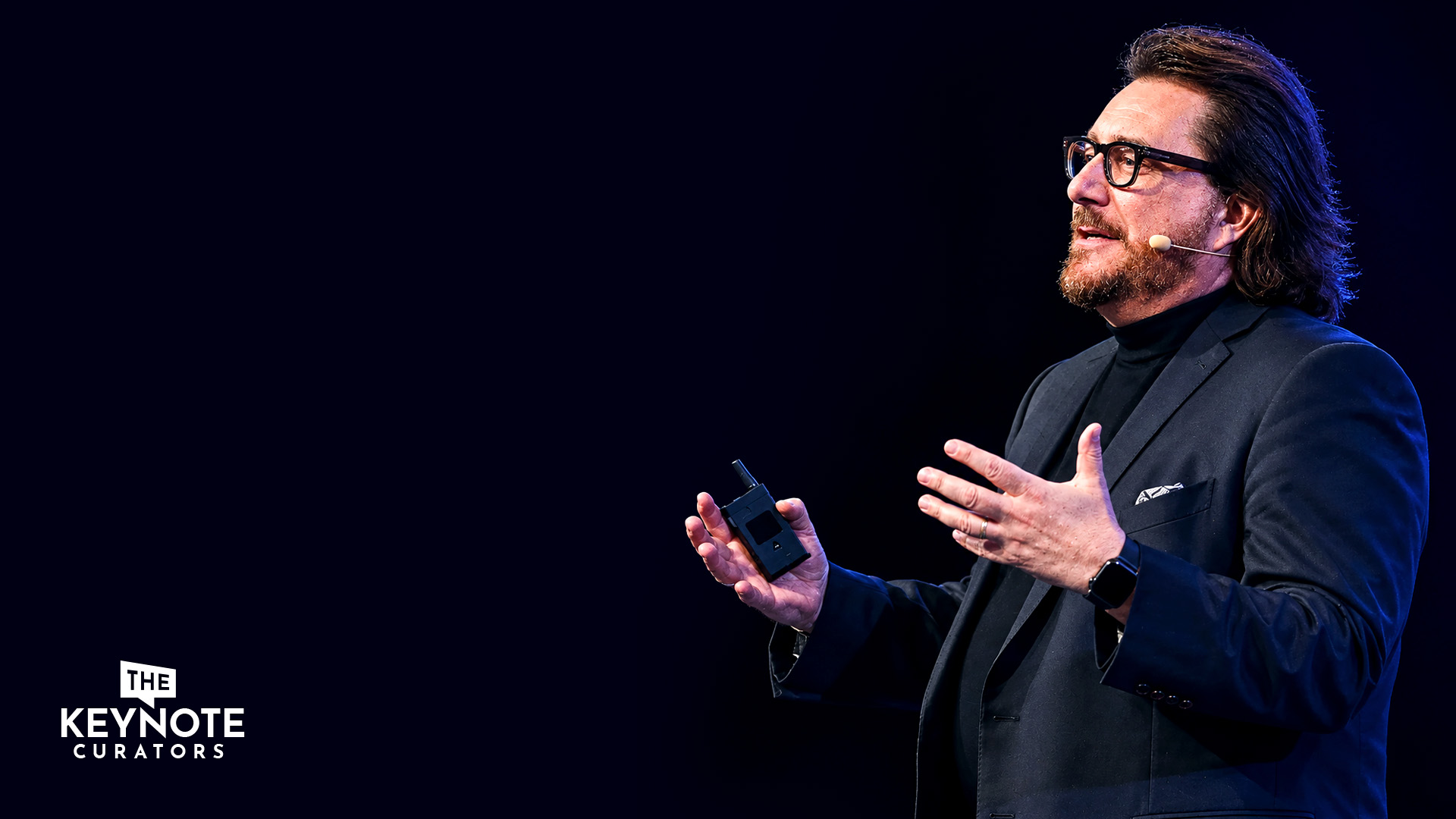
That is not the answer you expect from someone who has spent his career telling companies to embrace new technology. Kanungo is a globally recognized innovation strategist and bestselling author who spent 12 years at Deloitte advising Fortune 500 companies through disruption. He became the first innovation expert with a streaming special on Apple TV and Prime Video, and Forbes called him the “Best Virtual Keynote Speaker I’ve Ever Seen.” If anyone has reason to be an unqualified AI optimist, it’s him.
His expertise spans cloud technologies and behavioral economics as much as it spans AI itself, and he has built a following of millions across LinkedIn, TikTok, YouTube, and Instagram by explaining these shifts in plain language. None of that background makes him immune to what he’s describing. If anything, it makes his admission more useful because it comes from someone who has watched this shift happen up close, inside some of the largest companies in the world.
But the more he uses AI, the more he notices what it quietly removes. Not just tasks. Skills. And once you start looking for that pattern in your own life, you start noticing it everywhere too.
🎧 Watch and listen to the full interview about AI here
What AI Quietly Takes Away
Here’s the part of the conversation that stuck with me the most. Kanungo isn’t telling people to avoid AI. He uses it constantly, for research, for early drafts, for thinking through ideas before a keynote. His concern is more specific than a blanket warning. He believes AI removes friction from our daily work, and friction is often where real learning happens.
Think about the last time you struggled with something before you finally understood it. The struggle wasn’t a flaw in the process. It was the process. You remember the answer because you worked for it. AI, by design, removes that work. It hands you the answer before you’ve had a chance to earn it.
Kanungo put it plainly:
“Every single category of our life, an algorithm can make it easier. In some ways, that’s made it better and, in many ways, it’s lost the soul of what it means to get lost.”
That line is worth sitting with. Getting lost, in the old sense, meant wandering into something unfamiliar and figuring your own way out. That wandering built a kind of competence you couldn’t get any other way. When artificial intelligence hands you the shortest path every time, you stop building that competence. You get the destination without ever learning the route.
I don’t think this makes AI bad. I think it means you have to use it on purpose, not on autopilot.
Shawn Kanungo’s Own Experience Losing a Skill
What makes this conversation different from most AI discussions is that Kanungo doesn’t just theorize about the risk. He names it in himself. He talked about noticing his own patience for hard problems shrinking. The instinct to ask AI first, before trying to work through something on his own, has become automatic.
This is a man who spent over two decades working with Fortune 500 companies, who built his reputation on strategy and clear thinking under pressure. If someone with that background notices AI reshaping his own habits, it’s worth asking what it might be doing to the rest of us without our noticing at all.
What struck me here is the honesty. It would have been easy for someone in his position, as an AI keynote speaker like Shawn Kanungo, to only talk about the upside. Instead he talked about the trade. That trade is real, and most of us are making it every day without stopping to check the terms.
The bigger lesson isn’t really about Kanungo. It’s about what happens when expertise meets convenience. Even people who understand a technology best aren’t immune to its pull. Awareness doesn’t cancel out habit. You can know exactly what AI is doing to your thinking and still reach for it first, every time, because it’s faster and it’s right there.
I’ve noticed the same thing in my own work, and I’d guess you have too if you’re honest about it. Knowing the risk in theory and resisting it in the moment are two completely different skills. The first one takes an afternoon of reading. The second one takes ongoing, deliberate practice, the same way staying in shape takes more than knowing what a healthy diet looks like. This is probably why Kanungo brought it up at all. Naming the problem out loud is often the only thing that gives you a fighting chance against a habit that strong.
The GPS Problem: When Convenience Replaces Competence
Kanungo used two comparisons that made this idea click for me. The first was GPS. Before turn-by-turn navigation, you had to build a mental map of a city. You made wrong turns. You learned landmarks. Over time, you developed something like real spatial knowledge. GPS replaced that entirely. Now most of us couldn’t navigate our own neighborhoods without a phone, because we never had to build the skill in the first place.
The second comparison was Spotify. There used to be real work in finding music you loved: digging through record stores, trading recommendations, taking a chance on an album you knew nothing about. Spotify’s algorithm does that work for you now. It’s more efficient. It’s also less yours. The customer experience got smoother, and something about the discovery got quieter.
Neither of these examples is really about maps or music. They’re about what happens when a system removes the need for you to build judgment. AI is doing the same thing, just faster and across more parts of life at once. Convenience isn’t bad. But convenience has a cost we rarely account for, because the cost shows up slowly, in skills you no longer have, rather than in something you can point to and name.
I think this is the real change worth paying attention to. It isn’t that artificial intelligence exists. It’s that it’s rewriting what it means to be capable at something, one small convenience at a time.
Efficiency Is Not the Same Thing as Skill
This is where Kanungo said something I think more leaders need to hear. Being fast at getting answers is not the same as understanding the subject. The two can look identical for a while. Someone using it well can produce work that looks just as sharp as someone with real expertise, right up until a situation shows up that the tool hasn’t seen before, and there’s nobody in the room who actually knows what to do next.
I’ve seen this pattern play out in business settings more than once. A team ships fast, using AI to draft strategy documents, analyze data, and generate ideas. The output looks polished. But when someone asks a follow-up question the tool didn’t anticipate, the gaps show up fast. Nobody actually built the underlying understanding. They built familiarity with a tool that simulates it.
This matters for business growth in a very practical way. Companies that mistake AI-assisted output for real capability are building on a foundation that only holds up as long as the tool keeps working the way it always has. The moment conditions change, that foundation gets tested. It’s the people who actually understand the subject, not just the people who are fast at producing answers, who figure out what to do next.
Efficiency is a means. Skill is the thing that tells you what to do once efficiency stops being enough.
Why Going Deep Still Matters in an Age of AI
Here’s the idea from this conversation that I keep coming back to. Kanungo believes that being a true expert in one specific area is more valuable now than it has ever been, precisely because AI has made surface-level competence available to everyone. He said it directly:
“Going deep is gonna be incredibly important because AI is going to make it easy for everyone.”
Think about what that means. If anyone can produce a decent answer, a decent article, or a decent analysis using AI, then decent stops being valuable. What becomes valuable is the thing AI can’t easily replicate: years of lived experience in one specific domain, judgment built through actual failure, the kind of instinct you only get from doing something badly a hundred times before you got good at it.
This is a genuinely useful way to think about thought leadership in a world where anyone can generate content that sounds credible. The people who stand out won’t be the ones who use the tool most cleverly. They’ll be the ones whose depth of understanding shows up in the questions they ask, the nuance they catch, and the mistakes they know how to avoid because they’ve made them before.
I don’t think this means you should avoid AI to protect your expertise. I think it means the opposite. Use AI for everything it’s genuinely good at, and spend the time you save going deeper into the one or two things that actually make you valuable. That’s the trade Kanungo is describing, and it’s a much smarter one than simply avoiding the tool out of fear.
The Real Skill Is Knowing What to Hand Off
Kanungo made a point that reframed the whole conversation for me. You don’t need to understand how the internet works to build a successful business on top of it. Almost nobody who runs an online business understands the technical infrastructure underneath it, and that’s fine. Nobody expects them to.
The same logic applies here. You don’t need to understand how AI generates its output to use it well. What you need is judgment about where to apply it. That judgment, according to Kanungo, is becoming the actual skill that matters, more than any technical understanding of the tool itself.
This changes how I think about learning technology in general. For years, the advice was to understand the tools you use as deeply as possible. Kanungo’s version is more selective. Know which tools deserve your full attention, and know which ones you can simply use well without needing to understand how they work underneath. Getting that call wrong in either direction costs you. Spend too much time trying to understand every tool and you’ll never move fast enough. Understand none of them and you’ll never build real judgment about anything.
This is also, I think, the clearest definition of innovation that came out of this conversation. Innovation isn’t about knowing everything. It’s about knowing precisely where your attention creates the most value, and being disciplined enough to put it there instead of everywhere at once.
What This Means for Leaders and Teams
If you lead a team, this conversation has direct implications for how you think about the future of work. The instinct in most organizations right now is to push AI adoption as fast as possible and measure success by speed: how much faster can we ship, how much faster can we respond, how much faster can we produce. Speed is real and it matters. But speed without understanding is fragile, and fragile teams don’t hold up when something unexpected happens.
The leaders who get this right won’t be the ones who ban it outright or the ones who hand everything over to it without a second thought. They’ll be the ones who are deliberate about where AI does the heavy lifting and where people need to keep doing the hard, slow work of building real skill. That’s a harder call to make than a blanket policy in either direction, and it requires actually understanding your team and your work well enough to know the difference.
As a futurist, Kanungo spends a lot of his time helping organizations think through exactly this kind of decision. What he’s describing isn’t really a technology problem. It’s a judgment problem, and judgment is something you build over years, not something you install with a new tool.
I think the organizations that will struggle most in the next few years aren’t the ones that were slow to adopt AI. They’re the ones that adopted it everywhere, without ever asking which parts of their work still needed real human depth underneath it.
This is also a hiring and development question, not just a tooling one. If a team leans on AI for everything, junior employees never get the chance to struggle their way into real competence, and senior employees quietly lose the edge that got them promoted in the first place. A few years down the line, that team looks efficient on paper and has almost no one left who can handle a genuinely new problem. Building that kind of depth on purpose, inside a team, is probably one of the more overlooked jobs a leader has right now.
The Line Between Assistance and Dependence
There’s a question Kanungo kept circling back to, and it’s the most useful one in the entire conversation. Is AI helping you think, or is it thinking for you? Those two things feel identical in the moment. They produce different people over time.
Assistance looks like using AI to test an idea you already had, to challenge your own thinking, or to speed up a task you already understand how to do without it. Dependence looks like reaching for AI before you’ve formed an opinion at all, letting it set the starting point for a decision that should have started with your own judgment. The line between the two isn’t about how often you use it. It’s about whether you could still do the work without it if you had to.
I’d encourage you to actually test that question honestly in your own work. Pick the task you rely on AI for most. Now ask yourself if you could still do a decent version of it without the tool. If the answer is yes, you’re using it well. If the answer makes you uncomfortable, that’s worth paying attention to, because it means the skill underneath the convenience may already be starting to fade.
Protecting the Friction That Makes Us Better
By the end of our conversation, I didn’t walk away thinking Kanungo was warning people off AI. He’s not a pessimist about it, and neither am I. His best-selling author status comes from his book The Bold Ones, celebrated by McKinsey as essential reading for decision-makers. It argues for exactly the kind of bold, forward-looking thinking that AI can genuinely support when it’s used well.
What he’s asking for is more deliberate use. Notice where you’re skipping the struggle that actually builds skill, and protect that struggle on purpose, even when AI could easily remove it for you. Not everywhere. Not for every task. But somewhere, in the domain that actually matters to your career or your craft, keep doing the hard version of the work.
This is the part I keep coming back to. The friction we’re so eager to remove from our lives is often the exact thing responsible for making us good at what we do. AI can carry an enormous amount of that friction, and for most of what we do day to day, that’s a genuine gift. But if we let it carry all of it, in every part of our lives, we lose the one thing that made us worth listening to in the first place: real, hard-won understanding.
Kanungo’s message, and mine after sitting with this conversation for a while, comes down to something simple. Use AI to move faster on everything that doesn’t need your full depth. Then protect your depth fiercely on the one or two things that do.
None of this requires a dramatic gesture, like quitting the tool or swearing off convenience altogether. It’s closer to a small, ongoing habit: catching yourself before you reach for help, and asking whether this particular moment is one worth struggling through on your own. Most of the time, the honest answer will be no, and that’s fine. But every so often, the answer will be yes, and that’s the moment that actually shapes who you become.

The Skill Worth Protecting
I keep thinking about something Kanungo said almost in passing that felt like the real point of the entire conversation. AI is going to keep getting better at giving us answers. It is not going to get better at giving us judgment, because judgment isn’t something you can look up. It’s something you build, slowly, through the exact kind of friction most of us are working hard to eliminate from our lives.
That doesn’t mean turning away from AI. It means using it with your eyes open. Let AI carry the parts of your work that don’t need your full understanding. Protect the parts that do. Notice when you’re skipping the struggle that actually makes you better at your job, and choose, on purpose, to keep doing some of that work the hard way.
The people who come out ahead in the next decade won’t be the ones who used AI the most. They’ll be the ones who knew exactly where not to use it and kept building real depth in that one place while everyone else optimized for speed. That’s the lesson I took from this conversation, and it’s one I plan to keep testing against my own habits for a long time.
✍️ Watch the full interview here
🎤 Book Shawn Kanungo for your next event
📅 Ready to talk? Grab a time here
✉️ Questions? Reach out to us here
Discover More Insights




Get in TouchContact US
Fill out the form so we can best understand your needs.
A representative from The Keynote Curators will reach out to you.