
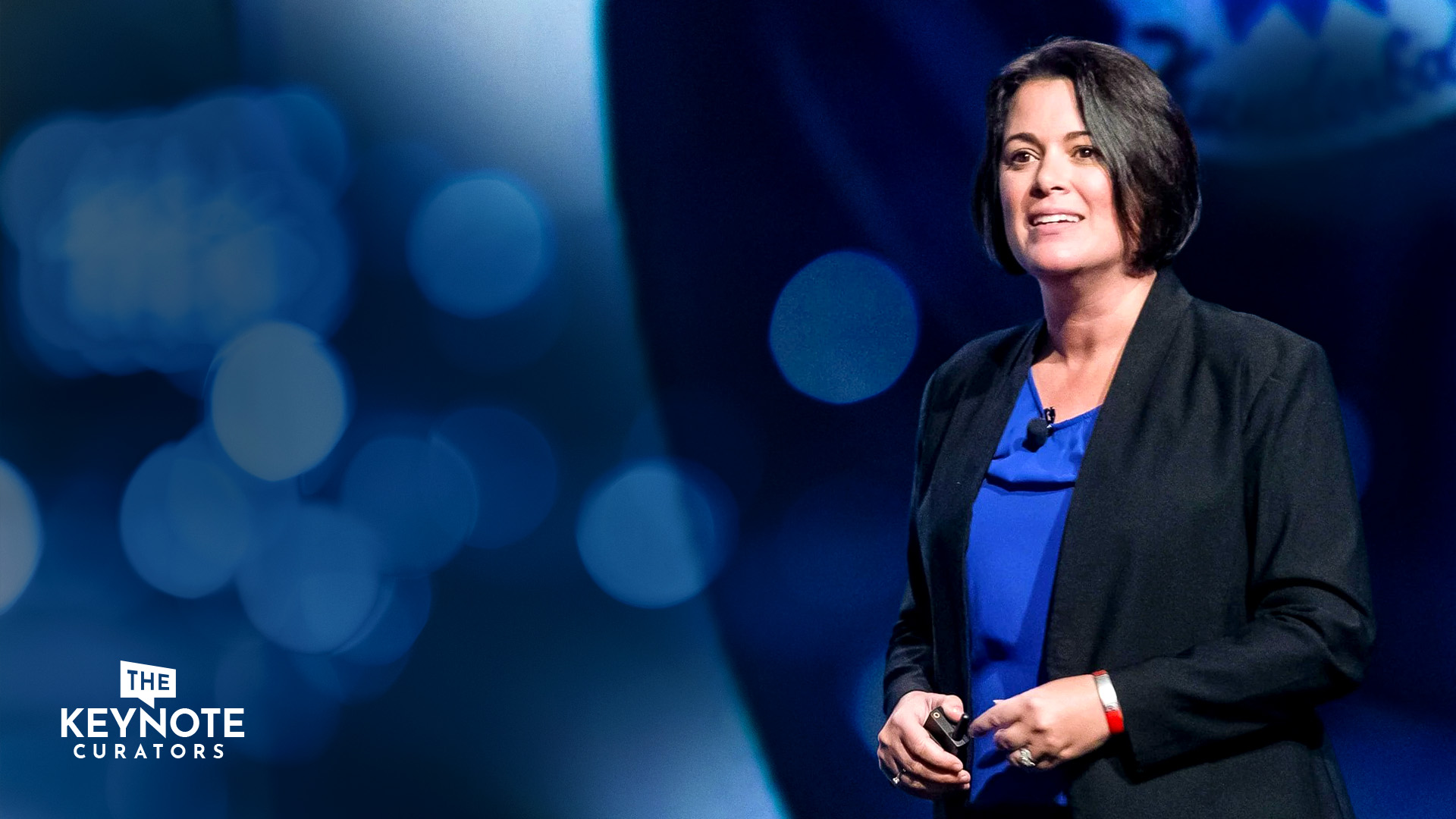
July 27, 2026Turbulence Teaches Us to Loosen Our Grip and Lead Better Together
A Thunderbird pilot's mid-air lesson on turbulence shows why loosening your grip beats fighting through pressure, change, and uncertainty.
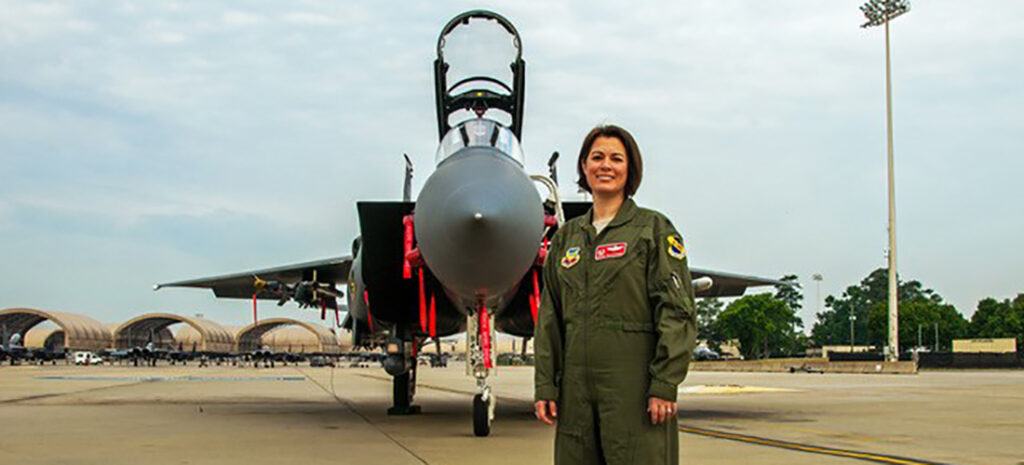
Nicole Malachowski was flying eighteen inches from five other jets when she learned the lesson that would change how she thinks about pressure for the rest of her life. As the first woman pilot on the Thunderbirds, the U.S. Air Force’s elite demonstration squadron, she spent years training her body to do something that fights every human instinct.
When turbulence hit the formation mid-air, at hundreds of miles an hour, with almost no room for error, the trained response was not to grip the stick tighter. It was to let go. That single idea, choosing to loosen your grip in the middle of turbulence instead of fighting it, is the kind of lesson that sounds simple until you try to live it.
I’ve been thinking about this story since I first heard Nicole Malachowski describe it, because most of us handle turbulence, whether it shows up in a cockpit, a boardroom, or a Tuesday afternoon, exactly the wrong way. We grip harder. We push. We try to control everything at once. And that instinct, the one that feels like strength, is often what makes things worse. What follows is not really a story about flying. It is a story about what happens the moment things get shaky, and why the counterintuitive move tends to be the right one.
What makes this especially interesting to me is that Nicole did not learn this lesson in a seminar or from a leadership book. She learned it at altitude, under G-force, with almost no margin for error. That kind of lesson tends to stick, because it was tested in a place where getting it wrong had real consequences. When she later carried the same idea into boardrooms, hospital rooms, and living rooms, it had already been proven at five hundred miles an hour.
🎥 Watch and listen to the full podcast with Nicole Malachowski here
When the Instinct to Grip Tighter Becomes the Problem
Most of us were never taught how to handle turbulence. We just learned, through trial and error, that pressure calls for more effort. Something wobbles, so we push harder. A deadline moves, so we work longer hours. A relationship gets rocky, so we try to control every detail of it. That instinct is not foolish. It is human. But Nicole’s story about flying in a six-jet formation reveals something that most leadership advice misses. The instinct to grip tighter during turbulence often creates more turbulence, not less. In a jet, an overcorrection from one pilot ripples through the whole formation. In a team, an overcorrection from one stressed leader does the same thing.
What struck me most about this idea is how counterintuitive it feels. We are wired to believe that control equals safety. Nicole’s experience says the opposite. Sometimes the safest thing you can do in turbulence is release your grip on what you cannot control and trust the process, and the people, around you. That is a hard thing to accept when every alarm in your body is telling you to fight back.
What Eighteen Inches Taught Me About Control
Picture six fighter jets flying eighteen inches apart, at hundreds of miles an hour, in a tight diamond formation. There is no room for hesitation and no room for panic. Nicole Malachowski flew in that formation as the first woman on the Thunderbirds, a milestone that mattered far beyond aviation. It sent a signal to every woman leader watching from the outside that the cockpit, like the boardroom, was no longer reserved for one type of person. Her presence there was part of a bigger story about DE&I in high-stakes, high-visibility fields where representation had been slow to arrive.
But the deeper lesson from her time in that formation is not really about who was flying. It is about what flying that close, under that kind of pressure, teaches you about control. When turbulence hits a jet flying eighteen inches from four other jets, the pilot’s first instinct is to correct hard and fast.
Her twenty-one years in the military had trained her to be precise, decisive, and fast under pressure. Yet Thunderbird pilots train themselves to do the opposite of what that instinct demands. They learn to loosen their grip on the stick the instant turbulence appears, because a hard correction in that tight of a formation does not just affect one jet. It endangers all six. That is the part of the story I keep coming back to. The safest response to turbulence was the one that felt the least natural.
The Difference Between Reacting to Turbulence and Responding to It
There is a difference between reacting to turbulence and responding to it, and that difference is the whole lesson. Reacting is automatic. It is the flinch, the overcorrection, the tightening grip. Responding is trained. It is the choice to do the opposite of what your nervous system is telling you to do in the moment.
Nicole described a pact the Thunderbird pilots make with each other before every flight. When turbulence hits any one of them, they have agreed in advance to loosen their grip immediately, no matter their position in the formation or the maneuver underway. That pact only works because it removes the decision from the moment of stress. Nobody has to think it through mid-air. The choice was already made on the ground, together, as a team.
“The secret is we promise each other as a team, regardless of the position we fly, regardless of the formation we happen to be in, regardless of the maneuver we are about to do, we promise each other as a team that when any one of us encounters turbulence in our own jet, we will immediately loosen our grip.”
This is where the lesson becomes less about flying and more about teamwork in general. Teams that wait until the crisis hits to decide how they will handle turbulence are already behind. The teams that hold together are the ones who agreed, ahead of time, on how they will respond when things get shaky. This reminded me how often organizations write policies for calm weather and then improvise everything the moment real turbulence arrives.
Loosening Your Grip Without Losing Your Direction
The word loosen scares people, because it sounds like giving up. It is not the same thing. Loosening your grip during turbulence does not mean abandoning the stick. It means releasing the parts of the situation that are outside your control while staying firmly connected to the parts that are yours to manage.
A Thunderbird pilot who loosens her grip is still flying the jet. She is still watching her instruments, still aware of her position, still ready to correct once the turbulence passes. What she is not doing is fighting the air itself, because the air cannot be controlled and the fight only burns energy she will need for the moments that matter most.
This distinction matters enormously in personal development work, because so much of what we call resilience is really just misapplied effort. We grip harder on things we cannot change, like other people’s opinions, the economy, or a diagnosis, and we grip more loosely on the things we can actually influence, like our own habits, our attention, and how we treat the people around us. Turbulence has a way of exposing that mismatch. It shows you, almost instantly, where your energy has been misdirected all along.
Why Teams Fall Apart in Turbulence and How They Stay Together
Anyone who has led a team through a hard season knows that turbulence does not affect one person at a time. It moves through a group the way it moves through a formation. One person’s panic becomes another person’s panic. One leader’s overcorrection creates the need for five more corrections down the line.
This is why Nicole’s Thunderbird pact is really a lesson in employee engagement and organizational trust. A team that has agreed, in advance, on how it will handle turbulence does not waste energy negotiating the response while the crisis is happening. Everyone already knows the plan. Everyone already knows what loosening your grip looks like in practice, whether that means pausing a decision, asking for help, or admitting that a strategy built for calm conditions does not survive contact with real turbulence.
This matters even more as organizations think about the future of work, where change arrives faster and the formations, so to speak, get more crowded. Teams that fight turbulence individually usually make it worse for everyone in the formation. Teams that loosen up together tend to exit turbulence together, a little shaken but still intact, still in formation, still moving in the same direction.
I have seen this same pattern play out in ordinary workplaces that have nothing to do with aviation. A sales team hits a rough quarter and, instead of agreeing on a shared response, everyone starts protecting their own numbers, their own accounts, their own reputation. A hospital unit gets short staffed and, instead of leaning on each other, people quietly start covering for themselves first. In both cases, the individual response to shared pressure ends up costing the group more than the original problem ever did. The Thunderbird pact works precisely because it replaces a dozen individual reactions with one shared agreement, decided ahead of time, about what everyone will do the moment things get hard.
Turbulence at Work: Change, Uncertainty, and the Cost of Fighting It
Most of the turbulence people deal with at work has nothing to do with jets. It looks like a reorganization, a budget cut, a merger, or a shift in strategy that makes last quarter’s plan obsolete. The instinct in those moments is almost always to grip harder, with more meetings, more oversight, more attempts to control outcomes that were never fully controllable to begin with.
I have watched leaders respond to organizational turbulence by trying to manage every variable at once, and it rarely works. It usually just adds more turbulence on top of what was already there. The leaders who handle change well tend to do the opposite. They identify the small number of things that are genuinely theirs to control, and they release their grip on the rest. This is not passivity. It is precision.
Nicole’s own view of this, shaped by two decades in roles adjacent to business leadership at the Pentagon and inside the White House, is that efficiency is a choice you make about where you spend your limited time, talent, and energy, not a reaction you have to whatever is happening around you.
“You have to choose to control the things you can control. And by doing that, you have to proactively choose to be efficient with your limited time, talent, and treasure.”
That distinction is worth sitting with, especially in business environments where turbulence has become less of an exception and more of a constant condition. The organizations that hold up best are rarely the ones with the most control. They are the ones that have been honest with themselves about what control actually looks like.
I think about this every time I hear a leader say they want to eliminate uncertainty from their organization. That goal is understandable, but it is the wrong goal. Uncertainty is not going away. The economy will keep shifting, technology will keep disrupting last year’s plan, and people will keep changing jobs, roles, and priorities faster than any strategy document can predict. The more useful goal is not eliminating turbulence but building a team that already knows how it will respond when the plan stops matching reality. That is a very different kind of preparation, and it is the one Nicole’s Thunderbird pact was actually built for.
The Personal Turbulence We Don’t Talk About
Nicole’s story about turbulence in the cockpit becomes even more powerful once you know what came after her flying career. A tick-borne illness left her unable to speak or walk normally for nearly nine months. That kind of turbulence does not show up on a formation display. It shows up in a body that will not cooperate, in a career that has to be rebuilt from the ground up, and in a sense of identity that gets shaken loose from everything familiar.
Nicole has spoken publicly about this chapter, becoming an advocate within healthcare and healthcare policy circles for better recognition of tick-borne illness, and she has used her own recovery to talk about health and well-being in a way that goes beyond the usual wellness talking points.
What strikes me is that the same principle she learned at five hundred miles an hour applied just as much in a hospital bed. She could not control the illness. She could control her mindset, her effort in physical therapy, and her willingness to ask for help. The turbulence in her body was not something she could grip her way through. It was something she had to loosen into, trusting that the worst of it would eventually pass, even without a guarantee of when.
Resilience Isn’t Enough: Moving Toward the Resurgent Mindset
There is a word Nicole uses that I think about often: resurgent. Resilience implies that you bend under pressure and spring back to your original shape. Resurgence suggests something different, that you come back changed, and often stronger, because of what the turbulence forced you to confront.
This distinction shows up throughout her work as an inspirational and motivational speaker, and it reframes how I think about resilience in general. Turbulence, whether it is a rough formation flight, a health crisis, or a difficult year at work, is not something to merely survive. It can be the thing that teaches you what you are actually capable of, once the fighting stops and the loosening begins.
Nobody chooses turbulence. Nobody asks for it. But everybody gets to choose how they respond to it, and that choice is where the real growth happens. The pilots who make it through rough air are not the ones who never feel it. They are the ones who trained themselves, long before it hit, to respond a certain way when it did.
I have interviewed a lot of people who have been through some form of professional or personal upheaval, and the ones who come out the other side changed for the better almost always describe the same thing. They stopped trying to control the shape of the crisis itself and started paying attention to what they were doing with their own hands, their own time, and their own attitude while it was happening.
That shift in attention, from the uncontrollable event to the controllable response, is small on paper and enormous in practice. It is the same shift Nicole made in the cockpit, and it is the same shift she had to make again, years later, in a body that would not cooperate.
What Control Really Means When You Can’t Control the Outcome
The hardest part of this lesson is accepting how little we actually control in the first place. We do not control the market, the weather, other people’s decisions, or most of what happens to our own bodies. What we control is our attention, our effort, and our willingness to loosen our grip when the moment calls for it instead of forcing an outcome that was never fully ours to force.
This is the heart of Nicole’s philosophy, and it applies just as much to professional development as it does to flying in formation. The people who handle turbulence well are not the ones with the most control. They are the ones who have made peace with how little control they actually have, and who decided in advance, like Nicole and her fellow Thunderbird pilots, how they would respond when that became obvious mid-flight.
I think that is the real takeaway here. Rough conditions will always show up uninvited, in the air, at work, in a body, in a life. The question worth answering ahead of time is not how to avoid them. It is what you will do with your grip the moment they arrive.
The more I think about it, the more this feels like a question of preparation rather than personality. Some people are not naturally calmer than others in a crisis. They have simply decided, ahead of time, what they will do with their attention when a crisis shows up, the same way Nicole and her fellow pilots decided, on the ground, long before any turbulence hit, exactly how they would respond to it in the air.
The Only Grip Worth Holding Onto
The lesson Nicole Malachowski carried out of the cockpit is not really about flying at all. It is about the moment turbulence hits, the moment things stop going according to plan, and what you choose to do with your hands, your attention, and your energy in that instant. Grip too hard, and you risk making things worse for yourself and for everyone flying next to you. Loosen your grip on what was never yours to control, and you give yourself, and your team, the best possible chance of coming through the turbulence intact.
I keep returning to the image of six jets, eighteen inches apart, each pilot choosing to let go instead of fight. It is a strange kind of trust, the belief that release can be safer than force. But it holds up, whether you are leading a squadron or a small team through a hard quarter, whether you are recovering from an illness or just trying to get through a difficult week. Turbulence is not the exception in a life well lived. It is a constant companion. The only real choice is whether you meet it with a white-knuckled grip or with the trained instinct to loosen up, control what is yours, and trust the rest to pass.
🎤 Book Nicole Malachowski for your next event
Discover More Insights



Get in TouchContact US
Fill out the form so we can best understand your needs.
A representative from The Keynote Curators will reach out to you.
Our Services
Keynote Speakers Topics
© 2026 The Keynote Curators. All Rights Reserved | Terms and Conditions
The Keynote Curators, 8275 South Eastern Avenue, Suite 200, Las Vegas, NV 89123
Local (310) 299-4595 | Toll Free (888) 585-8715 | info@thekeynotecurators.com
The Keynote Curators - Top Keynote Agency, USA.