

August 20, 2026The Case for Creating Better Problems with Jason Feifer
Jason Feifer explains why chasing perfect solutions is the wrong goal: real progress means learning to choose better problems.
Every business owner I talk to is chasing the same thing. They want to solve their problems. Fix the bottleneck. Close the gap. Get to a place where things finally run smoothly. But after sitting down with Jason Feifer, editor-in-chief of Entrepreneur magazine, I walked away with a different idea stuck in my head. You never actually get rid of problems. You just trade them for new ones. The real skill isn’t avoiding problems. It’s learning how to pick better ones.
That idea sounds simple, but it changes how you look at almost everything, from running a company to designing an event to standing on a stage. Jason has spent his career inside media and business, watching what happens when people treat problems as something to eliminate instead of something to upgrade. This conversation is about that shift, and why it matters so much more than most of us realize.
🎧 Watch and listen to the podcast episode: YouTube • Spotify • Apple Podcasts • Amazon Music
The Problem With Chasing Perfect
Most people think progress means fewer problems. Jason argues the opposite. Progress means better problems. A company with no customers has a small, quiet, comfortable set of problems. A company with a million customers has loud, complicated, expensive problems. Both are problems. But one of them is a lot better to have.
I think a lot of leaders get stuck here without realizing it. They measure success against some imaginary finish line where the problems stop. That line doesn’t exist. What struck me most about this part of the conversation is how freeing it is once you accept that. You stop waiting for the moment when everything finally works. You start asking a different question. Not “how do I get rid of my problems,” but “am I trading up?”
This reframes what growth actually looks like. It’s not the absence of friction. It’s friction that comes from a bigger, more interesting version of the same challenge. That’s a mindset shift worth sitting with, especially for anyone trying to lead through business growth.
Why Every Solution Just Buys You a New Problem
Jason’s point goes deeper than “stay positive.” He’s making an argument about how change actually works. Every solution you build solves the problem in front of you and creates a new one behind it. Faster shipping solves a delivery problem and creates a customer expectation problem. Better software solves a manual work problem and creates a training problem. There is no version of progress that doesn’t come with a new set of problems attached.
I’ve seen this pattern play out constantly in the event world. You solve the registration bottleneck and suddenly you have a data privacy question you didn’t have before. You fix the speaker lineup and now you have a scheduling conflict you didn’t expect. The problems don’t disappear. They just change shape.
Once you accept that, you stop treating problems as proof that something is broken. You start treating them as proof that something moved forward. That’s a very different emotional experience for a leader. Instead of dreading the next problem, you start expecting it, and even welcoming it, because it usually means you outgrew the last one.
Media Built Direct Relationships, Not Bigger Platforms
Jason has lived through one of the most disrupted industries in modern history. Traditional media companies spent decades solving the wrong problem. They kept trying to protect the old distribution model instead of asking what their audience actually wanted from them. The brands that survived weren’t the ones that fought hardest to keep things the same. They were the ones that solved a better problem: how do we build a direct relationship with the people who trust us, no matter what platform they’re on.
That’s not just a media lesson. It’s a lesson about what happens when an entire industry defines its problem too narrowly. If you think your problem is “how do we protect our current model,” you’ll spend your energy defending something that’s already fading. If you think your problem is “how do we stay useful to the people who rely on us,” you’ll keep finding new ways to matter.
The more I think about this, the more I see it outside of media too. Every industry has a version of this trap. Leaders get so focused on protecting what worked before that they miss the bigger, better problem sitting right in front of them.
Walking Toward the Audience Instead of Away From Them
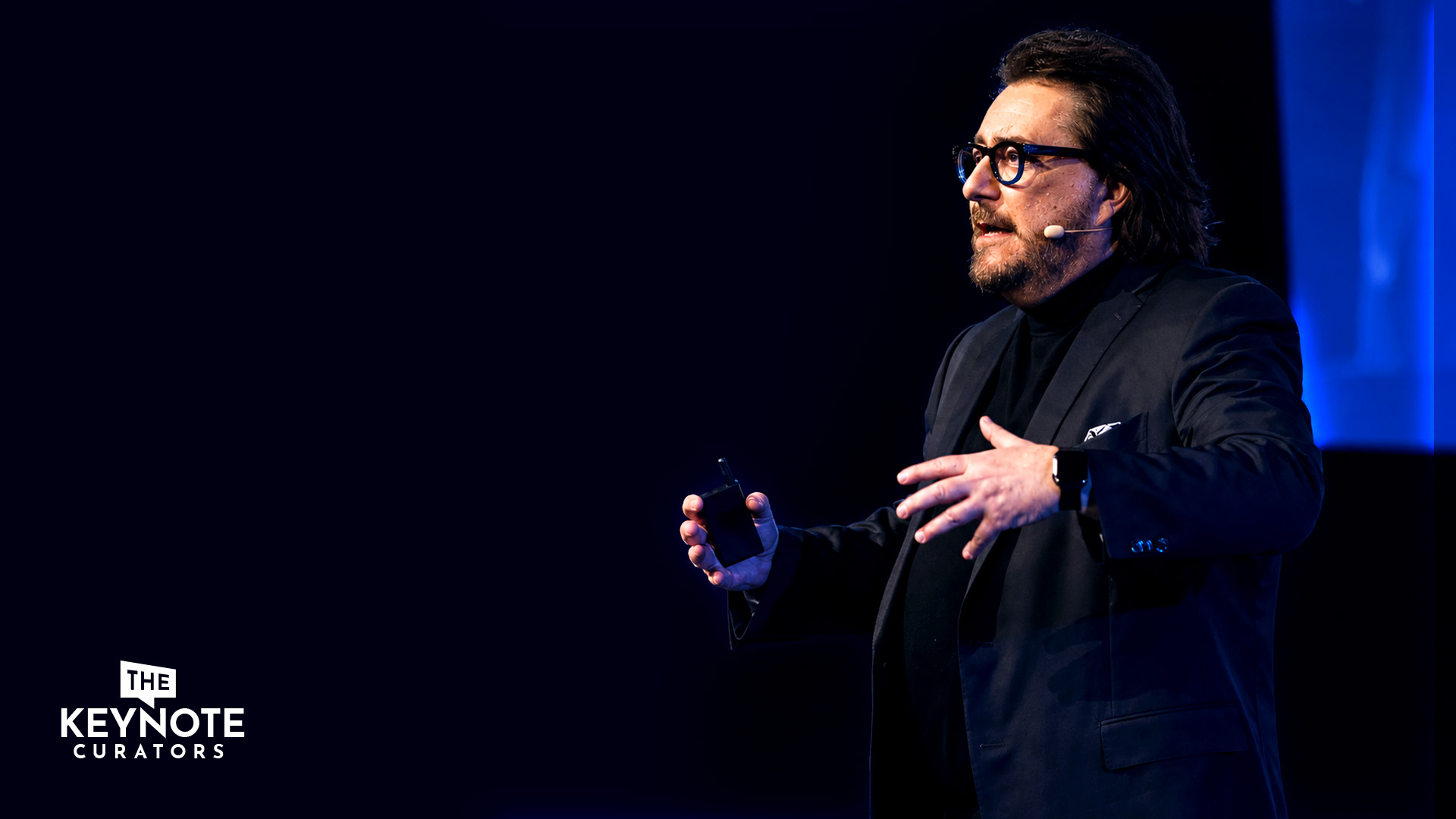
One detail from this conversation has stuck with me since we recorded it. Jason talked about physically walking into the audience during talks, instead of staying behind a podium or pacing a stage at a safe distance. It sounds like a small staging choice. It isn’t. It’s a decision about what problem you’re actually trying to solve when you speak.
If your problem is “how do I deliver information clearly,” you stay at the podium. If your problem is “how do I create a real human connection with these people,” you walk toward them. Those are two different problems, and they lead to two very different experiences for an audience.
This is where communication stops being about content and starts being about presence. A speaker who walks into the room is signaling something. I’m not performing at you. I’m talking with you. That shift changes how people listen, how much they trust what they’re hearing, and how long they remember it afterward.
What People Actually Came For
Here’s the line from this conversation that I keep coming back to. Your customers don’t want your product. Your attendees don’t want your event. They want what those things make possible. That single idea reframes almost every decision a business or an event team makes.
Once you sit with that, you realize most teams are solving the wrong problem. They’re optimizing the product instead of the outcome the product enables. They’re polishing the event instead of designing the experience the event was supposed to create in the first place. Jason’s argument is that people don’t show up for perfect execution. They show up for connection, for learning, and for a sense that they’re growing into something.
That means the real problem for anyone running an event isn’t “how do we make this flawless.” It’s “how do we make people feel like they didn’t waste their time here.” Those are very different problems to solve, and they lead to very different rooms.
Question the Assumptions Behind Your Bad Problems
A big part of this conversation is about how we decide something is bad in the first place. Jason pushes back on the instinct to label a problem “bad” without examining the assumption underneath it. Most of the time, when something feels like a bad problem, it’s because we’re measuring it against an old standard that no longer applies.
This connects directly back to his broader philosophy around innovation. A lot of companies avoid solving certain problems because they’ve decided, often without ever saying it out loud, that the problem is unsolvable or not worth the effort. That assumption usually comes from fear, not from evidence. Question it, and you often find the problem was never as fixed as it seemed.
I think this is one of the more uncomfortable parts of the conversation, in a good way. It asks leaders to go back and check their own beliefs about what’s possible. Sometimes the biggest obstacle isn’t the problem itself. It’s the story you’ve been telling yourself about why the problem can’t be solved.
When You Don’t Have the Perfect Answer, Say Something Interesting
This part of the conversation hit differently for me, because it applies directly to how I think about business leadership communication. Jason makes the case that speakers, and honestly anyone in a leadership position, get stuck trying to have the perfect answer before they’ll say anything at all. That instinct kills momentum. It also kills trust.
His advice is almost the opposite of what most people expect. When you don’t have the perfect answer, don’t stay quiet waiting for one. Say something interesting instead. Share the tension. Share the uncertainty. Share the actual thinking behind the problem, even if you haven’t fully solved it yet.
This reframes what audiences actually want from a speaker or a leader. They’re not looking for certainty. They’re looking for honesty about a real problem, delivered with enough insight that they trust the person is actually thinking, not just performing confidence. That’s a much more human standard, and it’s a much more achievable one.
Speakers Control the Emotional Experience of the Room, Not Just the Information
There’s a difference between a speaker who delivers information and a speaker who controls the emotional experience of the room. Jason’s argument is that the second one is what actually moves people. Content matters, but content alone doesn’t change how someone feels walking out of a session.
This is where the “make the delivery invisible” idea comes in. When a speaker is focused on the mechanics of their own delivery, the audience can feel it. The energy gets pulled toward the performance instead of the message. When the delivery disappears and the experience takes over, that’s when a room actually shifts.
I think this is one of the hardest problems in communication to solve, because it’s invisible by design. Nobody claps because the transitions were smooth. They remember how they felt. Getting good at that means solving a completely different problem than getting good at writing slides.
Fear as a Compass, Not a Cage
The conversation eventually lands on fear, and this might be the most useful reframe in the whole discussion. Jason separates fear into two categories. There’s fear that protects what already exists, and there’s fear that points toward what comes next. Most people only recognize the first kind. The second kind is harder to notice, but it’s often more useful.
Forward-looking fear shows up when you’re about to try something that could actually work. It’s uncomfortable, but it’s productive discomfort. It’s the fear that tells you you’re solving a real problem instead of hiding from one. Business owners who learn to tell these two fears apart make very different decisions than the ones who treat every fear signal the same way.
This reminded me of how often leaders confuse caution with wisdom. Sometimes caution is wisdom. But sometimes it’s just fear wearing a disguise, protecting a version of the business that already stopped being relevant.

Two Kinds of Fear, Two Kinds of Problems
Jason’s closing thought on adaptability ties the whole conversation together. The problems worth solving are usually attached to the fears worth moving through. If you only ever solve the problems that feel safe, you end up protecting a smaller and smaller version of your business over time. If you’re willing to sit with the discomfort of forward-looking fear, you end up solving problems that actually expand what’s possible.
This is the thread that runs through everything in this conversation, from media companies to event design to speaking on stage. The goal was never to eliminate problems. The goal was to keep earning better ones, and to build the kind of business, event, or career where that trade keeps working in your favor.
That’s a more honest way to think about growth than “get rid of your problems.” It’s also a more useful one, because it gives you something to actually do the next time a hard problem shows up. Ask what bigger problem it’s protecting you from, and whether it’s time to trade up.
The lesson I keep circling back to from this whole conversation with Jason is simple to say and hard to practice. Stop trying to solve your way out of having problems. Start trying to solve your way into better ones. That’s what real progress in business, in entrepreneurship, and in leadership actually looks like.
🎤 Explore Jason Feifer’s keynote speaker profile on our website.
📞 If your audience needs a message on adaptability, change, fear, and solving the right problems at the right time, Jason delivers. Schedule a time here and let’s talk.
📩 Or send your audience and event theme, and I’ll tell you if he’s the right fit: info@thekeynotecurators.com
Discover More Insights





Get in TouchContact US
Fill out the form so we can best understand your needs.
A representative from The Keynote Curators will reach out to you.
Our Services
Keynote Speakers Topics
© 2026 The Keynote Curators. All Rights Reserved | Terms and Conditions
The Keynote Curators, 8275 South Eastern Avenue, Suite 200, Las Vegas, NV 89123
Local (310) 299-4595 | Toll Free (888) 585-8715 | info@thekeynotecurators.com
The Keynote Curators - Top Keynote Agency, USA.