
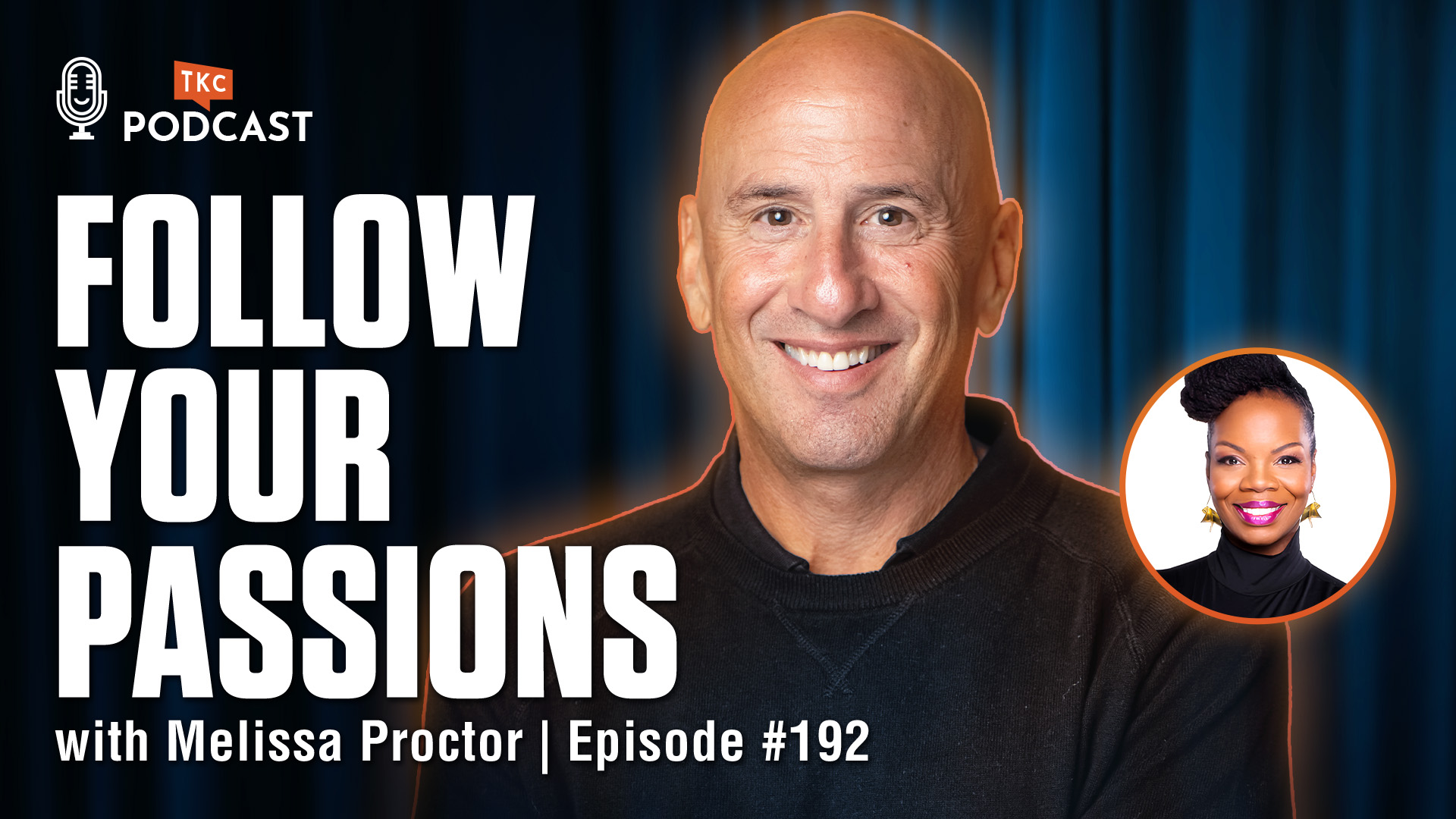
September 17, 2026Your Career Could Show Up Where You Least Expect It with Melissa Proctor
Melissa Proctor's career took her from NBA ball girl to CMO. Here's what her path teaches us about growth, leadership, and career choices.
Most people think of a career as a ladder. You climb one rung, then the next, and if you play it right, you land at the top. Melissa Proctor never bought into that picture, and her career is proof of why. She started as the first ball girl for the Miami Heat, folding towels and sweeping floors, and ended up as Executive Vice President and Chief Marketing Officer for the Atlanta Hawks and State Farm Arena. Her career didn’t move up in a straight line. It moved sideways, backward, and sometimes straight into a role nobody expected her to take, least of all her.
What struck me most in our conversation wasn’t the title she eventually earned. It was how little she cared about chasing titles at all. Melissa built her career around a simple question: what do I need to learn next? That question, asked over and over across two decades, took her further than any ladder could have.
🎧 Watch and listen to the podcast episode: YouTube • Spotify • Apple Podcasts • Amazon Music
The Jungle Gym, Not the Ladder
There’s a metaphor Melissa uses that I haven’t stopped thinking about since we talked. Forget the ladder. Think of a jungle gym instead. A ladder only goes one direction. A jungle gym lets you move sideways, drop down a level to grab a better handhold, or take a path that looks like a detour but actually gets you somewhere the ladder never could.
That reframe matters more than it sounds. Most career advice still treats lateral moves as failures and slow periods as wasted time. Melissa’s career says otherwise. She didn’t take the ball girl job because it looked good on paper. She took it because she loved basketball and wanted to be near it, even if that meant sweeping floors at courtside. She had no idea it would become the first rung of anything.
I’ve seen this same pattern in a lot of the leaders I’ve interviewed. The ones with the most interesting careers rarely followed a plan. They followed curiosity, and they trusted that the experience would matter even when they couldn’t yet explain how. That’s a hard thing to trust when you’re 22 and everyone around you seems to be racing up a ladder you can’t even see the top of. But it’s often the sideways moves, the ones that don’t show up neatly on a resume, that end up shaping a career the most.
What Starting At The Bottom Teaches You About The Top
Melissa didn’t start her career close to power. She started at the bottom, in a role most people wouldn’t think twice about. And that’s exactly what gave her an advantage most executives never get.
When you start at the bottom of an organization, you see how the whole thing actually runs. You talk to security guards, cleaning crews, ticket takers, and vendors, not because it’s strategic, but because they’re the people around you. Melissa has said that those early relationships taught her more about how a business actually functions than any leadership seminar could. She learned that the person mopping the floor after a game often understands the fan experience better than the executive watching from a suite.
This is a lesson that keeps showing up in career after career, and it’s one leadership development programs consistently miss. Empathy isn’t something you install into a leader once they reach the top. It’s something you build early, usually by being close to people whose work goes unnoticed. Melissa’s career carried that early empathy all the way to the C-suite, and it shows in how she talks about her team today. She still remembers what it felt like to be invisible in a building full of important people, and that memory shapes decisions she makes now that affect thousands of employees and millions of fans.
The deeper implication here is uncomfortable for a lot of ambitious people to sit with. If you skip the bottom, you skip the education that comes with it. A career that moves too fast, too early, can leave a leader without the grounded understanding that makes teams actually trust them.
Ideas Don’t Care About Your Title
One of the most striking things Melissa shared was about where good ideas actually come from in an organization. Spoiler: they rarely come only from the top.
She talked about building a culture at the Hawks where junior staff feel safe pitching ideas directly, without worrying about whether they outrank the person they’re pitching to. That sounds simple, but very few organizations actually practice it. Most workplaces claim to want fresh thinking from every level, yet quietly reward the people who stay in their lane and wait their turn.
Melissa’s approach flips that. She’s said that some of the best campaigns and community programs at the Hawks came from people early in their career, sometimes just a year or two into their first job. They didn’t have the experience to know what “couldn’t” be done, so they suggested things that more seasoned staff had stopped imagining. There’s something powerful in that. Experience is valuable, but it can also calcify into assumptions about what’s possible. A fresh perspective, even an inexperienced one, can cut through that.
This connects to something bigger about how leaders should think about talent. If you only listen to the most senior voices in the room, you’re not getting the best ideas. You’re getting the most confident ones, or the ones from people who’ve learned how to survive in that particular culture. Building a career doesn’t just mean rising through ranks. For a leader, it means building systems where other people’s careers can rise too, regardless of how long they’ve been in the building.
Learning To Let Go: Leadership As Trust
Somewhere in every career that moves toward leadership, there’s a transition that catches people off guard. It’s the moment when your job stops being about doing the work yourself and starts being about trusting other people to do it.
Melissa described this shift honestly, without pretending it was easy. Early in her career, her value came from her own output: the campaign she wrote, the brand she rebuilt, the strategy she executed. As she moved up, her value had to come from something harder to measure, which is how well she could equip other people to do that work without her.
That’s a genuinely difficult adjustment, and I think it’s underdiscussed in most conversations about leadership. We talk endlessly about vision and decision-making, but rarely about the discomfort of stepping back from work you’re good at so someone else can grow into it. Melissa’s career reached a point where her biggest contribution wasn’t a campaign anymore. It was the room she built for other people’s campaigns to exist.
There’s a leadership principle hiding inside that transition. The strength of a leader isn’t measured by how much they can still do themselves. It’s measured by how much capacity they’ve built in the people around them. A career built entirely on personal output has a ceiling. A career built on developing other people doesn’t.
Why Brands Have to Earn Their Place in a Community
Melissa’s work sits at the intersection of branding and marketing and something less tangible: trust. She’s spent a career thinking about what makes a brand actually mean something to the people it claims to serve, and her answer isn’t about clever slogans or flashy campaigns.
She’s talked about how a sports franchise like the Atlanta Hawks isn’t just selling tickets. It’s asking a city to see itself in a team. That kind of trust doesn’t come from advertising. It comes from consistent, visible presence in the community, especially in the parts of the community that don’t usually get attention from big organizations. Melissa’s career has involved building that presence deliberately, not as a marketing tactic, but as a genuine commitment.
This is where strategy and values stop being separate conversations. A lot of organizations treat brand strategy as something you can bolt onto a business after the real decisions have already been made. Melissa’s career suggests the opposite. The brand strategy has to be baked into the actual choices an organization makes, or the audience will feel the disconnect eventually, no matter how good the marketing looks on the surface.
When Community Impact Becomes Strategy, Not Charity
There’s a distinction Melissa draws that I think a lot of businesses get backward. Community impact isn’t a side project you fund with leftover budget once the “real” business goals are met. Done right, it is the business strategy.
She’s described how the Hawks approach community work as core to their identity, not an afterthought stapled onto a press release once a year. That shift in thinking changes everything about how resources get allocated. It changes who gets a seat at the table when decisions are made. And it changes how a brand is perceived by the very community it depends on for its long-term survival.
This ties directly into the work Melissa has done around DE&I, which she treats the same way: not as a checkbox, but as a strategic commitment that shapes hiring, culture, and community programming. A career spent building brand trust taught her that people can tell the difference between performance and genuine commitment. They can tell when diversity efforts are cosmetic and when they’re structural. Melissa’s approach has been to make sure the structural version wins, even when it’s harder and slower than the cosmetic one.
The bigger lesson for any leader reading this: if your community impact work could be cut without changing your actual business outcomes, it was probably never strategy to begin with. It was decoration.
The Question That Changes Everything: Career Growth Over Title
If there’s one idea from this conversation worth carrying into your own career, it’s this. Stop asking “what’s the next step up?” and start asking “what do I need to learn next?”
Those two questions sound similar, but they lead to very different careers. The first question keeps you focused on titles, salary bumps, and org chart position. It’s not a bad question, but it’s a narrow one, and it can trap you into chasing promotions that don’t actually build the skills you’ll need later. The second question is about capability. It asks you to think about what you don’t yet know, what would make you more valuable, more capable, more ready for whatever comes next, even if you can’t name exactly what that “next” will be.
Melissa’s career is a case study in this second question. She didn’t take the ball girl job because it was a step toward a CMO title. There was no such path visible at the time. She took it because it put her close to a sport she loved and gave her a chance to learn how a franchise actually worked from the inside. Every move after that followed the same logic. What can I learn here that I can’t learn anywhere else?
This is a genuinely useful career framework for anyone, not just people early in their career. Even at senior levels, the question “what do I need to learn next” keeps you from stagnating in a role that no longer challenges you, even if it still pays well and looks impressive from the outside.
Building a Career on Guiding Principles
One of the through-lines in Melissa’s book, From Ball Girl to CMO, is the idea of “Guiding Principles,” a framework she developed to help people navigate high-stakes decisions without a script to follow. I think this matters because most career advice assumes you’ll have time to think things through carefully. In reality, the biggest career decisions often arrive without warning, and you have to decide quickly, under pressure, without a clean answer available.
Guiding Principles work because they’re decided in advance, before the pressure hits. Melissa describes them as the values and non-negotiables you commit to ahead of time, so that when a hard decision arrives, you’re not improvising your ethics in the moment. You already know what you stand for, and the decision becomes a matter of applying that standard rather than inventing one on the spot.
This is a genuinely practical tool, not just an inspirational one. A career full of hard calls, career-defining negotiations, ethical gray areas, decisions about who to promote and who to let go, becomes much less paralyzing when you’ve already done the values work beforehand. Melissa’s career as a bestselling author has let her put language around something a lot of successful people do instinctively but rarely explain clearly: they know what they stand for before the moment demands it.
What Melissa’s Career Teaches The Rest Of Us
Stepping back from all of it, what stays with me most about Melissa’s career isn’t any single achievement. It’s the consistency of her curiosity across two decades in very different roles: ball girl, brand strategist, corporate social responsibility leader, CMO. Each role looked different on paper. Underneath, the same instinct was running the whole time: get close to the work, learn everything you can from the people around you, and don’t worry too much about whether the current step looks impressive.
There’s something freeing in that for anyone feeling stuck comparing their own career to a straight-line version that doesn’t actually exist for most people. Business leadership rarely comes from a perfectly plotted path. It comes from paying attention, taking the sideways move when it teaches you something, and trusting that experience compounds even when you can’t yet see how.
Melissa also represents something important as one of relatively few women leaders at the top of front office operations in professional sports, an industry that has historically been slow to open those doors. Her career is proof that the path doesn’t have to look familiar to be legitimate, and that showing up consistently, learning deliberately, and building trust over time can outlast any shortcut.

Conclusion: The Career You Didn’t Plan Might Be the One That Works
What I keep coming back to from this conversation is how little Melissa’s career resembled a plan, and how much it resembled a series of honest answers to the question of what she wanted to learn next. That’s not a strategy you can put in a five-year plan, but it might be a more honest way to build a career than most of the advice we’re handed.
If you’re early in your career and worried that a sideways move looks bad, or if you’re years in and wondering whether it’s too late to change direction, Melissa’s story is a useful reminder. A career doesn’t have to look impressive at every stage to end up somewhere meaningful. Sometimes the job that looks the smallest, like folding towels courtside, ends up teaching you the most about how to lead.
🎤 Explore Melissa’s keynote speaker profile on our website.
📞 If your audience needs a message on career growth, leadership, brand building, and creating opportunity through an unconventional path, Melissa delivers. Schedule a time here and let’s talk.
📩 Or send your audience and event theme, and I’ll tell you if she’s the right fit: info@thekeynotecurators.com
Discover More Insights




Get in TouchContact US
Fill out the form so we can best understand your needs.
A representative from The Keynote Curators will reach out to you.