
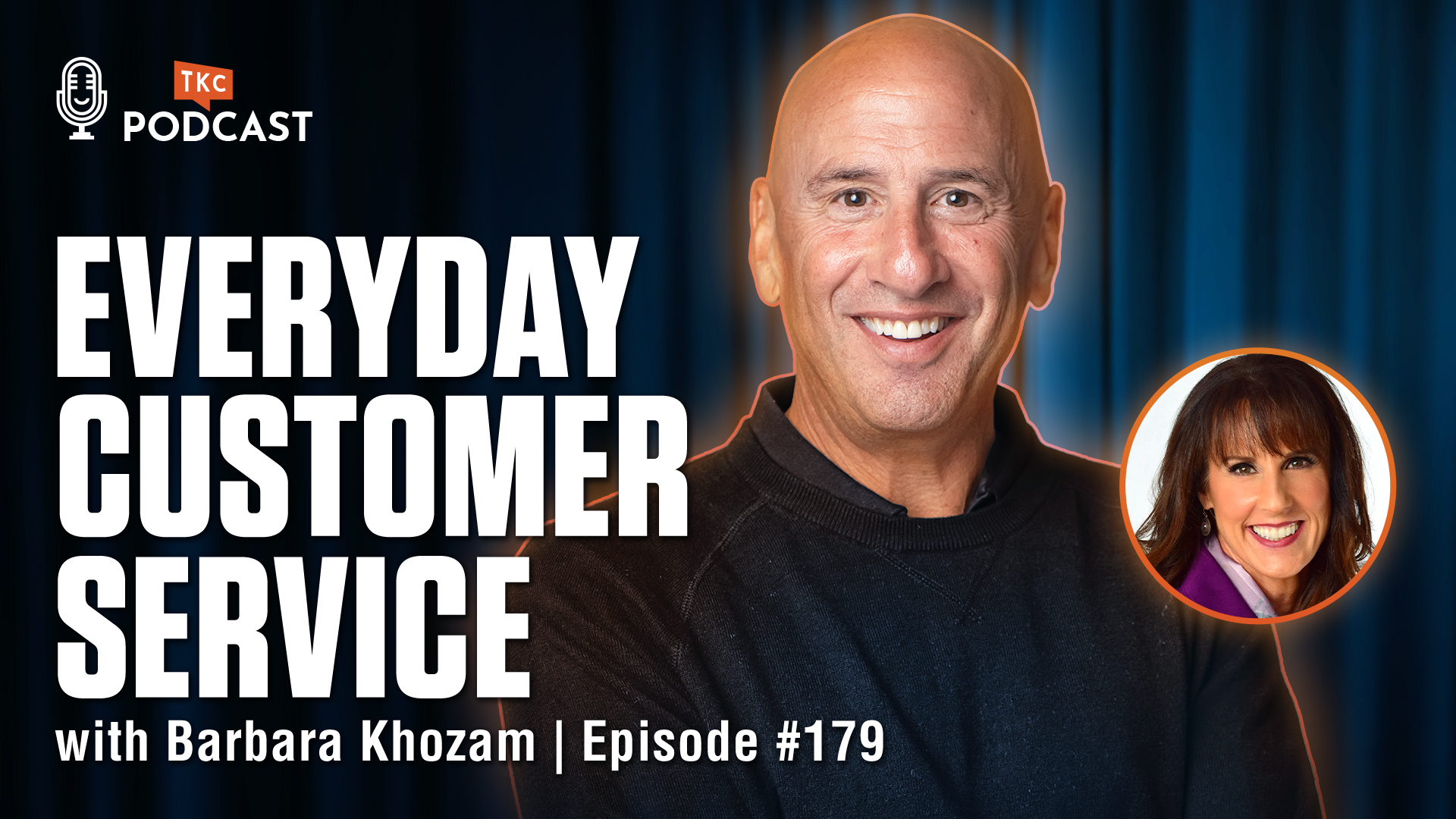
July 2, 2026Customer Service Starts by Truly Listening, Says Barbara Khozam
Barbara Khozam explains why customer service depends on real listening, respect, and consistency, not scripts or slogans.
Most bad customer service moments don’t start with a mistake. They start with someone feeling ignored. That’s the idea I kept coming back to after talking with Barbara Khozam, a customer service expert who has spent decades studying what actually makes people feel valued and what quietly pushes them away.
Barbara has given more than 1,900 presentations to over 75,000 people across 12 countries. She’s been named Top Customer Service Consultant of the Year, and she holds two rare speaking certifications most professionals never earn. But none of that is why the conversation stuck with me. What stuck with me is how simple she makes customer service sound, and how rarely most businesses actually do it.
Customer service isn’t a department. It isn’t a script. It’s a pattern of small, human choices that either make someone feel respected or make them feel like a number. Barbara made that distinction clear again and again, and it changed how I think about every interaction I have with a business, a client, or a coworker.
🎧 Watch and listen to the podcast episode: YouTube • Spotify • Apple Podcasts • Amazon Music
Bad Service Is a Culture Problem, Not a Training Issue
One of the first things Barbara pushed back on is the assumption that bad customer service is a skills gap. Most companies respond to service complaints by scheduling more training. Barbara’s experience suggests that’s often the wrong fix entirely. If an employee is rude, distracted, or checked out, the problem usually isn’t that they don’t know the right words to say. It’s that they work inside a culture that never made customer service feel like it mattered.
This is the part of the conversation that stayed with me the longest. We tend to treat customer service as a set of behaviors we can install through a workshop. Barbara’s view is closer to the truth: customer service is downstream of culture. If leadership treats service as a checkbox, employees will treat it the same way. If leadership genuinely models respect and attentiveness, that tends to show up in how the front line treats customers too.
I’ve seen this pattern outside of Barbara’s world as well. Teams with a strong corporate culture rarely need to remind people to be kind to customers. It’s already baked into how they treat each other. Teams with weak culture can run service training every quarter and still struggle because the training is trying to fix something that was never a training problem in the first place.
Mission Statements vs Actual Behavior
Barbara talked about how many organizations have a mission statement about customer service hanging on a wall somewhere, full of words like “excellence” and “commitment,” while the actual daily experience for customers feels nothing like that. This gap between stated values and lived behavior is one of the clearest signs of a company that talks about customer service more than it practices it.
What struck me here is how often this happens without anyone noticing. Leaders write these statements with good intentions. But a mission statement only means something if it shows up in how a manager responds to a complaint, or how a frustrated employee is coached, or how a company handles a mistake. Otherwise, it’s decoration.
Barbara’s point connects directly to business leadership. Leaders set the tone for what customer service actually looks like inside a company, not through slogans but through what they tolerate and what they reward. If a leader lets rude behavior slide because someone is a top performer, that tells the whole team more about the real values than any wall plaque ever could.
The Attitude of Service: What Successful Leaders Share
When Barbara talked about the leaders who consistently deliver strong customer service, she kept returning to one word: attitude. Not talent. Not resources. Attitude. The leaders who build service-minded teams tend to see every interaction, internal or external, as a chance to make someone’s day slightly better instead of slightly worse.
This is a small shift in thinking that has a big effect. Most people separate “how I treat customers” from “how I treat coworkers.” Barbara’s experience suggests the best leaders don’t draw that line. The same attentiveness, patience, and respect they show a customer, they also show the person who reports to them. That consistency is what makes customer service feel authentic instead of performative.
I think this is where attitude and leadership genuinely intersect. Attitude isn’t about forcing positivity. It’s about choosing, again and again, to treat people like they matter, even when you’re tired, busy, or dealing with something difficult behind the scenes. Leaders who model that consistently create teams that do the same for customers.
Customer Love Starts From the Inside Out
Barbara made a point that I think gets missed constantly: you can’t expect employees to treat customers well if they don’t feel treated well themselves. Customer service starts inside the building, not at the front counter. If employees feel undervalued, overworked, or ignored by their own leadership, that frustration eventually leaks out into how they treat the people they’re serving.
This idea reframes customer service as an internal issue before it’s ever an external one. A company can spend money on customer service software, scripts, and satisfaction surveys, but if the people delivering the service are burned out or disengaged, none of that matters. The service will still feel hollow.
This is why employee engagement and teamwork show up so often in conversations about customer service. They’re not separate topics. They’re the foundation. When people feel like they belong to something and are treated fairly, they tend to extend that same energy outward. Customer service, in that sense, is really a mirror of internal culture.
What Great Customer Service Stories Have in Common
Barbara shared several stories from her career about standout customer service moments, and what interested me most wasn’t the specific details. It was the pattern underneath them. In almost every story, the moment that made someone feel cared for wasn’t expensive or complicated. It was someone paying attention and choosing to act on what they noticed.
This matters because it removes the excuse that great customer service requires a big budget. It doesn’t. It requires someone noticing a small detail, a name, a preference, a frustration, and responding to it like it mattered. That’s a mindset, not a cost.
The more I think about it, the more I believe this is the real definition of customer experience. It’s not one big gesture. It’s a series of small, consistent choices that add up to a feeling. People rarely remember the exact words someone used. They remember whether they felt seen.
A Bad Service Experience
Barbara also talked about a bad service experience, and I found this part just as valuable as the positive stories. Bad customer service often isn’t dramatic. It’s usually quiet neglect. Someone doesn’t get eye contact. Someone gets rushed off the phone. Someone’s problem gets treated as an inconvenience instead of a legitimate concern.
What I found interesting is how much these small moments shape long-term trust. A single bad interaction can undo months of good customer service, because people tend to weigh negative experiences more heavily than positive ones. That’s simply how human attention works. It’s one more reason customer service can’t afford to be inconsistent.
This is where resilience comes into the picture, too. Handling a bad customer service moment well, staying calm, staying respectful, and not getting defensive is its own skill. Barbara’s stories made clear that how a company recovers from a mistake often matters more than the mistake itself.
First and Last Impressions Matter Most
Barbara pointed out something simple but often overlooked: people remember the beginning and the end of an interaction more than anything in the middle. The first few seconds set the tone. The last few seconds seal the impression. Everything else tends to blur together in memory.
This has real implications for how businesses train their teams. If a company focuses only on the middle of the customer service process, the technical steps, the policies, the paperwork, it can miss the two moments that shape how the whole experience is remembered. A warm greeting and a genuine goodbye can outweigh a mediocre middle. A cold greeting or a rushed goodbye can undo a great middle.
I think this is a useful lesson beyond customer service too. In communication generally, how you open and close a conversation shapes how the whole exchange is remembered. Barbara’s point about first and last impressions is really a point about attention: where you put your energy is where people will feel it most.
When Healthcare Service Sustains Excellence End to End
Barbara has worked extensively in healthcare settings, and she talked about what it looks like when service excellence holds up from the first moment of contact to the very last. Healthcare is a demanding environment for customer service because people are often scared, in pain, or overwhelmed. There’s no room for the usual scripts.
What stood out to me is how much this setting strips customer service down to its essentials. Nobody expects a hospital to be flashy. What people want is to feel like someone is paying attention, explaining things clearly, and treating them like a person instead of a case number. Barbara’s certification as a Certified Patient Experience Professional reflects how seriously she takes this distinction.
This connects directly to health & well-being as a broader theme. Service in high-stress environments reveals what an organization’s values actually are, because there’s no time to fake it. If customer service holds up under pressure, that’s a strong signal the culture behind it is real.
Polite vs Genuinely Helpful: What Is the Difference?
One of the sharpest distinctions Barbara made is between being polite and being genuinely helpful. Polite is saying “please” and “thank you.” Helpful is actually solving the problem in front of you. A company can train employees to be polite fairly easily. Training them to be genuinely helpful requires something deeper: attentiveness, patience, and a willingness to slow down.
This distinction matters because a lot of customer service training stops at politeness. Employees learn the right phrases without learning how to actually listen to what a customer needs. The result is service that sounds nice but doesn’t solve anything, which often frustrates customers more than blunt honesty would.
I think this is where mindfulness quietly shows up in customer service. Being genuinely helpful requires being present enough to actually hear what someone is asking for, instead of running through a mental script while they’re talking. Barbara’s framing reminded me that listening is a skill, not a formality.
Going Above and Beyond Without Spending More
The last theme Barbara covered is one that I think gets misunderstood constantly: going above and beyond in customer service doesn’t require a bigger budget. It requires a bigger mindset. Remembering a small detail, following up after a problem is solved, or simply acknowledging someone’s frustration before jumping into a solution, these cost nothing but attention.
This reframes customer service as a strategy issue, not a spending issue. Companies that treat exceptional service as something only larger competitors can afford are missing the point. The businesses that stand out usually aren’t spending more. They’re paying closer attention.
This is where strategy and innovation intersect with customer service in a way that’s easy to miss. Innovation in service doesn’t always mean new technology. Sometimes it means noticing an old, overlooked human moment and finally doing something about it.

The Real Work Behind Every Great Customer Service Moment
By the end of our conversation, I kept thinking about how much of customer service comes down to attention and consistency rather than talent or budget. Barbara’s career has been built on a simple observation: people remember how they were treated far longer than they remember what was said or sold to them. That’s true in retail, in healthcare, in leadership, and honestly in most relationships.
What makes this especially interesting to me is how much this applies beyond customer-facing roles. Every one of us is on the receiving end of service constantly, and every one of us delivers it too, whether we call it that or not. The lessons Barbara shares about professional development, mental health, and attitude aren’t separate from customer service. They’re the ingredients that make good customer service possible in the first place.
If there’s one lesson I’m keeping from this conversation, it’s that customer service isn’t something you perform. It’s something you practice quietly in the small choices nobody is watching closely. Barbara’s approach to thought leadership on this subject is a reminder that the smallest interactions often carry the most weight, and that customer service, done well, is really just respect in action.
🎤 Explore Barbara’s keynote speaker profile
📩 Send your audience and event theme, and I’ll tell you if Barbara is the right fit
Discover More Insights





Get in TouchContact US
Fill out the form so we can best understand your needs.
A representative from The Keynote Curators will reach out to you.