
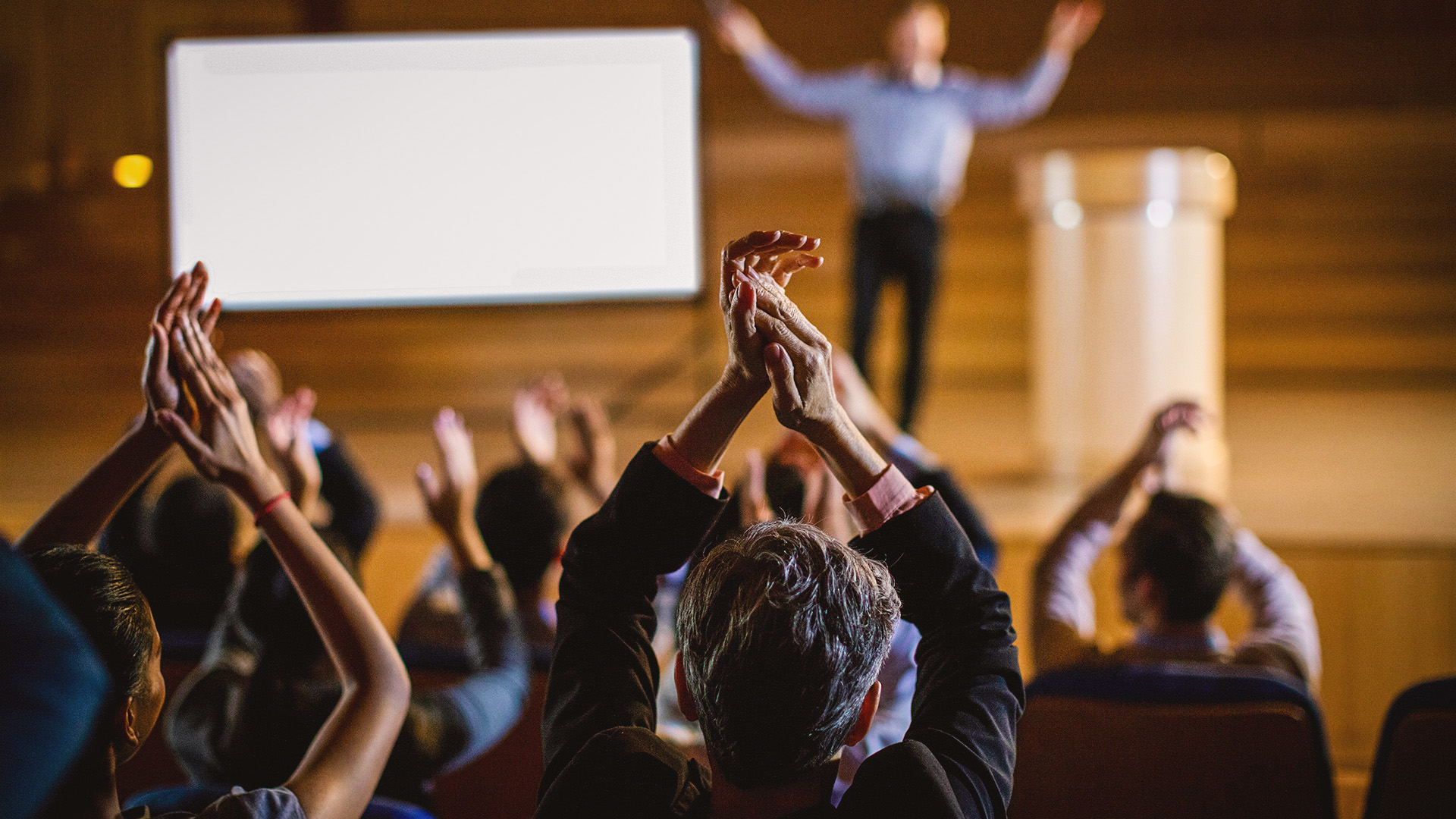
June 30, 2026Event Experience Design Is What Separates Memorable from Forgettable in 2026
A premium event isn't built on the biggest name. Here's what event professionals say actually drives unforgettable experiences in the second half of 2026.
There’s a particular kind of pressure that settles over event planning around this time of year. Agendas are forming. Budgets need defending. Speaker decisions that felt comfortable to delay are suddenly urgent. And in that pressure, a familiar mistake begins to look like a strategy: spend more, book bigger, pack more content into every available minute, and trust that volume will carry the event.
This is when “premium” gets confused with “expensive.”
What struck me most after reading The Experience Design Report: What’s Shaping Live Experiences in 2026, produced by Julius Solaris and Boldpush in partnership with Encore, is how clearly the data names the gap. The report surveyed 447 event professionals and found that nearly half ranked attendee-to-attendee connection as the single biggest driver of event success. Only 8 percent are dedicating meaningful programming time to actually creating it.
That is not a networking problem. It is an event design problem. And understanding why it matters more than the statistic itself, because it points to something worth sitting with as the second half of 2026 takes shape: the difference between an event that looks premium and an event that genuinely feels like one.
📊 Read the full Experience Design Report on what’s shaping live experiences in 2026 here
What the Data Is Actually Telling Us
The findings from Julius Solaris and Boldpush aren’t shocking once you name the underlying pattern, but they are clarifying. For years, event planning has operated around an implicit hierarchy: secure credible speakers, build the agenda around them, and trust that content quality will carry the event. It’s a reasonable approach if the goal is to fill seats and produce a defensible program. But it doesn’t hold up when you look at what event attendees actually walk away valuing.
Sixty-five percent of planners said confirmed keynote speakers contribute meaningfully to registration. So yes, the right speaker still creates anticipation and legitimacy before the event opens its doors. That matters. But only 7 percent ranked keynotes as the most satisfying element of the overall event program. Roundtables and hands-on workshops performed significantly higher.
What catches my attention in that finding isn’t that keynotes are losing relevance. It’s that isolated keynotes are. The traditional event model asks the speaker to do everything: create attention, deliver insight, inspire the room, and leave people energized enough to carry the idea back into their work. That’s an enormous amount of weight for a single 60-minute slot. And most event programs give ideas nowhere to go after the applause fades. The speaker exits, the coffee break begins, and whatever energy was alive in the room either dissipates or gets absorbed into the next block of scheduled content.
The real event opportunity isn’t to book better speakers. It’s to design better conditions around the speakers you book. That distinction sounds subtle, but it changes nearly every decision that follows.
The Keynote’s Role Has Changed
I’ve watched this shift happen gradually, and the 2026 data makes it easier to name. The keynote is no longer simply an event anchor. Increasingly, it’s expected to function as a catalyst: the beginning of something rather than the centerpiece of everything.
What this means practically is that the most effective keynote speakers right now aren’t simply the most polished presenters. They’re the ones who create productive tension in the room, who leave attendees with a question they genuinely want to discuss, who give an event audience something to work with rather than something to admire from a distance. The experience that generates lasting value isn’t the one where the speaker said something brilliant. It’s the one where the audience went somewhere meaningful because of it.
This reframes how event planners should approach speaker selection. The question isn’t only “Is this person credible and compelling?” The better question is: “What role does this person play inside the larger event architecture?” Do you need someone to challenge comfortable assumptions? Someone to translate complexity into operational clarity? Someone to raise the emotional temperature of the room before a difficult conversation? Someone to create permission for honesty? Each of those roles requires a different kind of speaker, and none of them are well served by a format that places someone in front of a crowd, lets them talk for an hour, and moves directly to the next session.

What “Premium” Should Actually Mean in the Second Half of 2026
The second half of 2026 is a useful moment to reconsider what premium actually means in event programming. Not because budgets are dramatically different, but because what audiences expect from the experience has shifted. Most people have attended enough events to recognize the ones where everything looked impressive but nothing felt particularly useful. A bigger stage. A more recognizable name. A more elaborate production setup. And still, by Monday morning, the event has left almost no trace on how anyone thinks or works.
What makes an event feel genuinely premium has less to do with visible spending and more to do with felt intention. When an event has been built with real care, attendees notice. The transitions feel purposeful. The pacing makes sense. The breaks have somewhere to go. The conversations that happen feel made possible by design, not left to chance. The speaker’s ideas don’t disappear after the standing ovation. That quality is available at almost any budget level. And its absence is equally visible at any budget level.
Julius Solaris frames this around the concept of experience design, which I think is exactly the right lens. It shifts the event planning conversation from content delivery to experience architecture. And it raises a more useful question than “Who should we book?” The more productive event question is: “What do we want attendees to carry out of this experience, and how do we design backward from that outcome?”
Those are not expensive questions to ask. They’re just harder to answer than “Who’s available on that date?”
The Speakers Worth Building an Event Around
With that frame in mind, there are several voices worth designing a second-half event around in 2026. What follows isn’t a speaker list to slot into a schedule. It’s a set of perspectives worth building toward, each with a distinct kind of value and a specific set of event conditions that lets that value come through fully.
Anthony Scaramucci brings finance, entrepreneurship, politics, and global perspective together with a candor that is rare in formal event settings. His strongest moments don’t come from polished answers, but from the tension between the expert framing he could offer and the more honest, uncertain assessment he chooses instead. For a Q3 or Q4 event where leaders are navigating genuine ambiguity about markets and the macro environment, that kind of public honesty creates a specific kind of trust that a well-rehearsed keynote cannot replicate.
A moderated conversation followed by an open audience Q&A might serve his particular value far better than a traditional lecture format. Pairing that with a smaller executive roundtable allows the harder questions to surface in a setting where people feel safe enough to ask them honestly.
Seth Godin understands attention better than almost anyone designing an event program right now. His work challenges audiences to question the assumptions they’ve stopped examining, around strategy, marketing, creativity, and what meaningful work actually demands of people. The mistake is treating a Seth Godin event appearance as a content delivery vehicle. The more effective use of his presence is to choose one specific tension your audience is living with, build the session around that, and follow it immediately with facilitated table discussions rather than a break. That’s when his ideas move from intellectually interesting to personally relevant, which is a very different event outcome.
Michelle Poler gives people a new relationship with fear, which is a more valuable gift than it might sound at first. At a time when many professionals are navigating genuine uncertainty, her storytelling and energy create permission for audiences to acknowledge what’s actually holding them back. The experience becomes more powerful when the format invites participation directly. Invite attendees to name a specific hesitation before the keynote begins. Revisit it during the session. A visible post-event commitment wall or a digital challenge can turn inspiration into accountability. That’s the difference between a talk people enjoyed and an event moment they still reference six months later.
Greg Verdino helps leaders separate meaningful change from noise, a skill that’s becoming more critical as AI makes information abundant and organizations feel pressure to respond to every development simultaneously. A future-focused event session shouldn’t leave people with 40 predictions and no idea what to do on Monday. It should help them decide what actually matters. Beginning with a live audience pulse check and letting Greg respond to the room’s assumptions in real time creates an event session that feels alive and current rather than scripted. Following it with a working conversation around one forward-facing decision gives the event practical traction that outlasts the day itself.
Christophe Fox demonstrates what happens when entertainment is treated as event strategy rather than decoration. His mentalism, storytelling, and live audience interaction can reset attention, create shared emotional moments, and make an idea more memorable because the audience experienced it together rather than simply heard it described. The event design opportunity is to use him not as a stand-alone entertainment slot but as connective tissue across the program, a presence that returns the room to genuine engagement between major sessions and gives the audience something to hold in common.
Jill Schlesinger does something genuinely rare with financial and economic realities: she makes them accessible without making them simplistic. For a Q3 or Q4 event, when many attendees arrive carrying real questions about markets, business conditions, and what the next 18 months might require of them, that combination of clarity and candor is useful in a way that most event content isn’t. Pairing a concise economic briefing with a generous moderated Q&A built around questions attendees actually submitted in advance is far more valuable than an event session built around what leadership assumes the audience wants to hear.
The Elements Most Event Programs Underestimate
The speakers are only part of what makes an event work. What happens around them determines whether the event creates lasting value or leaves people with a folder of slides they’ll never open. There are three elements that deserve more strategic attention than most event programs currently give them.
The first is the emcee. A strong emcee doesn’t simply announce what comes next. They help the audience understand why it matters, and they protect the emotional coherence of the event across a full day or multiple days. Laura Schwartz, as a former White House Director of Events and accomplished keynote speaker in her own right, understands how to connect a speaker’s message to the event’s larger purpose, how to hold a room when the energy is drifting, and how to make the whole event feel like one continuous experience rather than a collection of scheduled slots. That kind of connective work is consistently undervalued in event budgets and consistently noticed by attendees.
The second is energy architecture. The emotional arc of a multi-day event rarely manages itself. DJ Will Gill brings music, humor, and event-hosting instincts that can turn the transitions between sessions into moments of genuine participation rather than awkward dead air. People remember how the room felt at a well-run event. Designing the energy is as important as designing the content, and it requires the same level of intentional thought.
The third is emotional punctuation. Rashad Rayford blends spoken word, storytelling, and business insight in a way that gives an event an emotional center. He can open a gathering with intention, give a theme something the audience can feel rather than simply understand, or close the event by reflecting the audience’s own experience back to them in a way that lands. That kind of moment is hard to replicate with another presentation deck, and it tends to be what people describe when someone asks them what the event was really like.
The Questions That Change How You Plan
Before finalizing the speaker portion of any second-half event agenda, there are five questions worth sitting with. They don’t require a bigger budget. They require more intention, which is a different kind of investment.
What should the audience feel before this speaker begins? What should happen immediately while the idea is still fresh? Who should attendees be talking to right after the session ends? How will the speaker’s message reappear somewhere else in the event? And what will still be genuinely useful to an attendee 30 days later?
Those five questions change what the right speaker looks like for any given event, because you’re no longer looking for someone to fill a slot. You’re looking for someone whose particular value fits the specific experience you’re building around them. And that shift in how you ask the question tends to lead to very different event outcomes.
What Makes an Event Worth Remembering
The events people talk about afterward are rarely the ones with the highest-profile names or the most content packed into an agenda. They’re the ones where something happened that couldn’t have happened anywhere else. Where the right conversation occurred at exactly the right moment. Where an idea didn’t just land on an audience but actually moved through it. Where people were left with something they genuinely couldn’t have arrived with.
That quality is available to any event built with enough intention. It happens when the speaker is chosen for the role they play rather than the recognition they carry, when the spaces between sessions are treated as opportunities rather than transitions to survive, when the emcee, the energy, and the emotional moments are understood as strategy rather than logistics. It happens when every element of the event has been designed to help a good idea travel from the stage into the conversation and eventually back into someone’s work.
A big name can help fill the room. A well-placed keynote can shift the emotional temperature of an event. But what turns a good event into an unforgettable one is what happens because that speaker was there. The conversations it made possible. The decisions moved it forward. The shift in how people see their own work when they return to it.
Premium isn’t the amount of money visible from the back row. It’s the amount of intention the audience can feel from the first moment to the last. In the second half of 2026, that distinction is worth every minute you spend on it before the event agenda is locked.
🗓️ Building a Q3 or Q4 event and want help thinking through not just who belongs on stage, but what should happen because they were there? Let’s talk before your lineup is set.
📩 Tell us the tone you want to set at info@thekeynotecurators.com
📬 Get event strategy delivered to you every week when you receive our newsletter
Discover More Insights


Get in TouchContact US
Fill out the form so we can best understand your needs.
A representative from The Keynote Curators will reach out to you.