
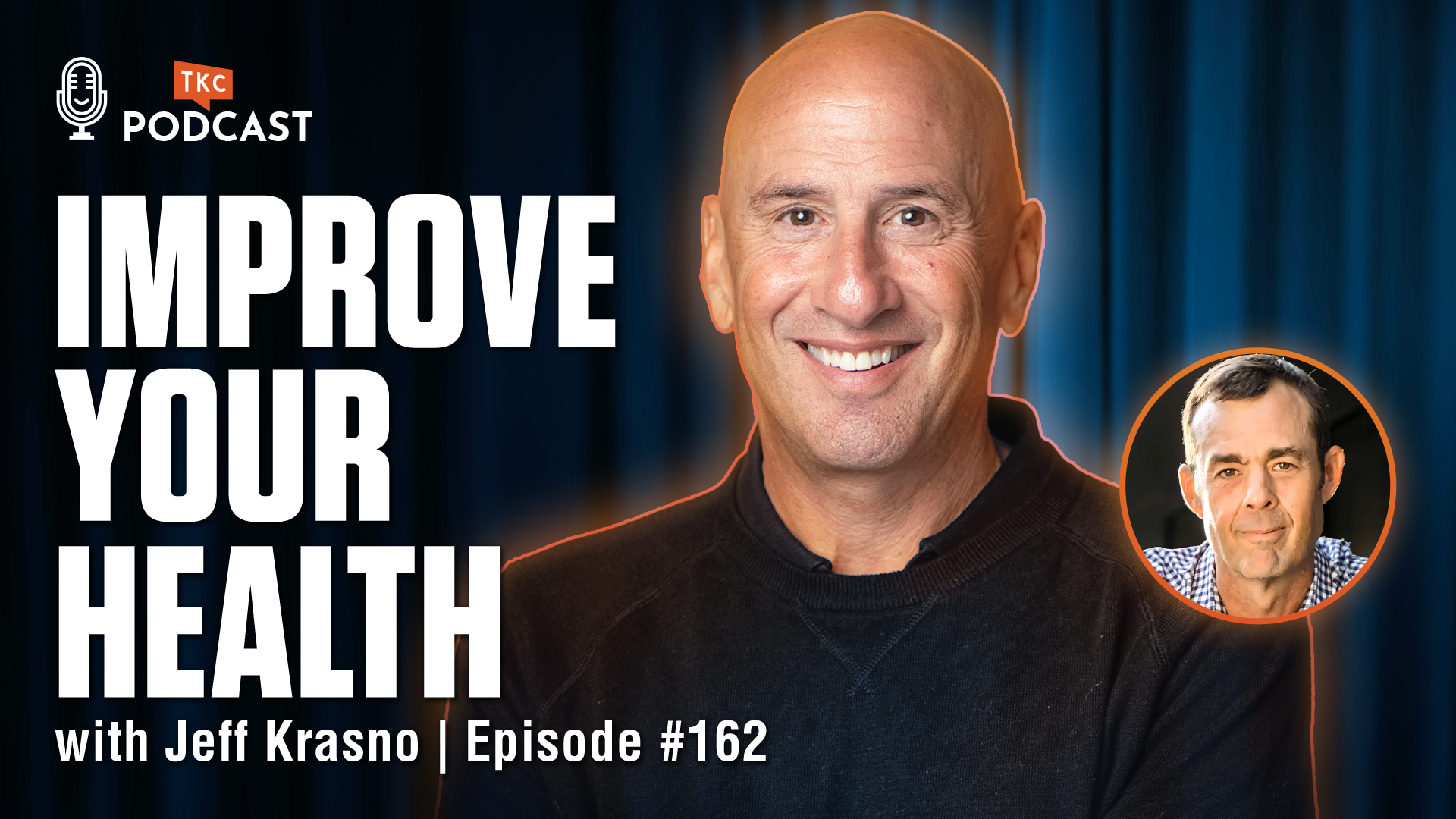
April 2, 2026Good Stress Strategies That Genuinely Improve Your Health with Jeff Krasno
Discover how good stress, from cold exposure to fasting, can build resilience and improve your health, with insights from keynote speaker Jeff Krasno.
What if the very thing you have been taught to avoid is exactly what your body needs to thrive?
Most of us have spent years trying to minimize stress. We optimize for ease, convenience, and comfort because we have been told that stress is the enemy of good health. But there is a growing body of evidence, and one compelling personal story, that challenges that assumption entirely. Stress, when chosen on purpose and applied with intention, can be one of the most powerful tools you have for rebuilding your health, sharpening your resilience, and reclaiming your energy.
That is the core of what I explored in my conversation with Jeff Krasno, co-founder and CEO of Commune and author of Good Stress. Jeff did not discover these ideas in a lab. He lived them. At 50 years old, he used a set of deliberate wellness protocols to reverse his diabetes, lose 60 pounds, and rebuild himself from the inside out. What he found along the way is that most of us are not suffering from too much stress. We are suffering from the wrong kind, and we are completely avoiding the right kind.
This conversation is for event professionals, frequent travelers, high-performers, and anyone who wants to understand how their daily choices either erode or build their capacity to handle what life throws at them. The line between breakdown and breakthrough, it turns out, is often a matter of whether you chose the stressor or it chose you.
🎧 Watch and listen to the podcast episode: YouTube • Spotify • Apple Podcasts • Amazon Music
Good Stress and the Science of Choosing Discomfort
The first thing Jeff reframes in our conversation is the word itself. When most people hear stress, they picture cortisol spikes, burnout, sleepless nights, and racing thoughts. That is a very real category of stress, and it is genuinely harmful when it becomes chronic and unrelenting. But it is not the only category.
Jeff draws a clear distinction between distress, the kind that depletes you, and what he calls good stress, the kind that signals adaptation, growth, and resilience. The formal term is hormesis: the biological principle that small, controlled doses of a stressor can trigger a protective response in the body that makes you stronger, not weaker. Cold water, for example, is a stressor. So is fasting. So is hard physical effort. None of them feel comfortable in the moment. But when applied with intention and appropriate recovery, they produce measurable gains in metabolic health, immune function, and mental clarity.
This is not a fringe wellness theory. It is the same logic behind exercise itself. Every time you lift something heavy, you are creating microscopic tears in muscle tissue. The body responds by rebuilding that tissue thicker and stronger. The stress was the point. Remove it entirely, and you do not get health. You get atrophy.
Jeff’s work as an innovation keynote speaker often centers on this exact reframe: the organizations and individuals most capable of adapting to change are those who have practiced adapting to discomfort. Comfort is not a competitive advantage. It is a liability disguised as ease.

Why the Nervous System Is the Real Target
One of the most practically useful ideas Jeff shares is that the goal of good stress practices is not just physical conditioning. It is nervous system training. And for anyone who operates under sustained pressure, whether on stage, in the boardroom, or navigating a red-eye before a big client meeting, that distinction matters enormously.
When you expose yourself to something uncomfortable, like cold water or intense breathwork, and then deliberately return to a calm, regulated state, you are practicing a skill. You are teaching your nervous system that it can move through activation and come back to baseline. That is not just a mindfulness concept. It is a physiological capacity that transfers directly to high-stakes situations.
Jeff talks about this in the context of breath and focus, two tools that require zero equipment and can be used anywhere. When your nervous system is dysregulated, your decision-making narrows, your communication becomes reactive, and your ability to listen deteriorates. When you have trained yourself to return to baseline under pressure, all of those capacities expand. You show up differently. Not because you are suppressing the stress, but because you have practiced moving through it.
For leadership keynote speaker topics, this connection between physiological practice and professional performance is becoming increasingly relevant. Organizations want leaders who are regulated, not just smart. They want people who can stay grounded when everything around them accelerates. Jeff’s framework gives those leaders a concrete set of practices to develop that capacity deliberately, rather than hoping it emerges from experience alone.
Hard Conversations Are a Form of Stress Too
Jeff made a point in our conversation that I found genuinely striking. He includes emotional courage as part of a complete wellness plan. Not as a metaphor, but as a literal health practice.
Most people treat the avoidance of difficult conversations as a form of self-protection. You sidestep the conflict, manage the discomfort, and tell yourself you are keeping the peace. But Jeff argues, and the research increasingly supports, that chronic emotional avoidance is a significant stressor on the body. The suppression itself is costly. It requires ongoing energy, creates residual tension, and over time contributes to the same inflammatory patterns that other forms of chronic stress produce.
Choosing to have the hard conversation, to say the uncomfortable thing with care and clarity, is choosing a form of good stress. It is acute, you feel it in the moment, but it resolves. The body moves through it and returns to baseline. Avoidance, by contrast, keeps the system in a low-grade state of sustained activation that never fully discharges.
This is directly relevant for audiences thinking about mental health keynote speakers and programming. The conversation around mental health in the workplace has grown significantly, but it sometimes stops at symptom management. What Jeff is pointing to is something more foundational: building the emotional capacity to move through difficulty, not just cope with it.
Living How We Evolved: Food, Movement, and Daily Rhythms
A thread that runs through everything Jeff shares is a return to evolutionary logic. Not as nostalgia, but as a practical filter for modern decisions. The body you are living in was shaped over hundreds of thousands of years by a set of conditions that looked nothing like an office, an airport, or a scroll feed. When you understand what it was designed for, you make better choices about how to use it.
Take food. For most of human history, we did not have access to calories at every hour of every day. Periods of scarcity were normal. The metabolic processes that govern fat burning, cellular repair, and insulin sensitivity were shaped by a rhythm of eating and not eating. Fasting, then, is not a trendy intervention. It is a return to a pattern the body already knows how to handle. As Jeff puts it, “we are not asking the body to do something new; we are asking it to do what it was always built to do.”
The same logic applies to movement. Human bodies evolved to move consistently throughout the day, not to sit for nine hours and then sprint on a treadmill for forty-five minutes. The accumulation of small, frequent movements, walking, standing, carrying, climbing, turns out to be more metabolically significant than most people realize. For those interested in future of work keynote speakers and how workplace design intersects with human performance, this insight has real structural implications.
And then there is light. One of the simplest and most underappreciated inputs to your circadian rhythm is natural light exposure, particularly in the morning. Early light signals to your biology that the day has started, which sets off a cascade of hormonal and neurological processes that govern energy, focus, and eventually sleep. When you consistently miss that signal, because you are indoors, because you wake before sunrise, because screens have replaced sunlight, the downstream effects are measurable.
Travel, Performance, and the Art of Managing Controlled Chaos
For event professionals and frequent travelers specifically, the section of our conversation about practical performance strategies is where things get immediately actionable.
Jeff is not a stranger to life on the road. He has built a platform, a podcast, and a wellness center while navigating the same logistical chaos that most high-performers face: disrupted sleep, inconsistent eating, time zone crossings, and the accumulated low-grade depletion that comes from always being somewhere other than home. His approach is not to try to recreate perfect conditions everywhere he goes. It is to identify the highest-leverage inputs and protect those, no matter what.
Hydration is one of them. Not as a wellness cliche, but as a genuine performance variable. Mild dehydration, the kind you do not even consciously notice, measurably affects cognitive function, mood regulation, and physical stamina. On a long flight or in a back-to-back meeting day, staying ahead of hydration is one of the simplest ways to maintain your baseline.
Sleep banking is another. The science of sleep debt is nuanced, but the core idea Jeff references is that you can, to a limited degree, front-load sleep before a demanding stretch and extend your buffer. It is not a substitute for consistent rest, but it is a legitimate tactical tool. Pair that with light management, avoiding bright screens in the hours before sleep, and seeking natural light in the morning even when traveling, and you have a meaningful toolkit that requires no equipment and costs nothing.
He also talks about airport movement, the deliberate choice to walk during layovers rather than sit, to use stairs when they exist, to treat transit time as an opportunity to keep the body engaged rather than further sedentary. For those whose work involves business keynote speakers and event planning, understanding how to help your speakers and clients arrive in top condition is increasingly part of the value you provide.
The Anxiety Pile-On and Why You Should Stop Adding Weight
One of the most quietly profound things Jeff says in our conversation is about what he calls the anxiety pile-on. It works like this: something genuinely stressful happens. A flight gets canceled. A client pushes back. A presentation goes sideways. The event itself carries a certain weight, and that weight is real. But then something else happens. You add to it.
You start catastrophizing the downstream consequences. You revisit the original stressor, replaying it on loop. You add guilt for how you handled it, anxiety about what it means for the future, and a layer of self-criticism about the fact that you are stressed at all. By the time you are done, what started as a manageable acute stressor has become something much heavier, and most of that extra weight was optional.
Jeff’s reframe is simple but requires practice: keep the real stressor the size it actually is. Honor it, address it, and then bring grace to the rest. That word, grace, is doing a lot of work here. It is not about suppression or toxic positivity. It is about not volunteering for suffering that is not yours to carry. For those thinking about health and well-being keynote speakers for their events, this kind of practical, emotionally intelligent reframe is exactly the type of content that resonates with high-functioning audiences who are tired of being told to meditate more.
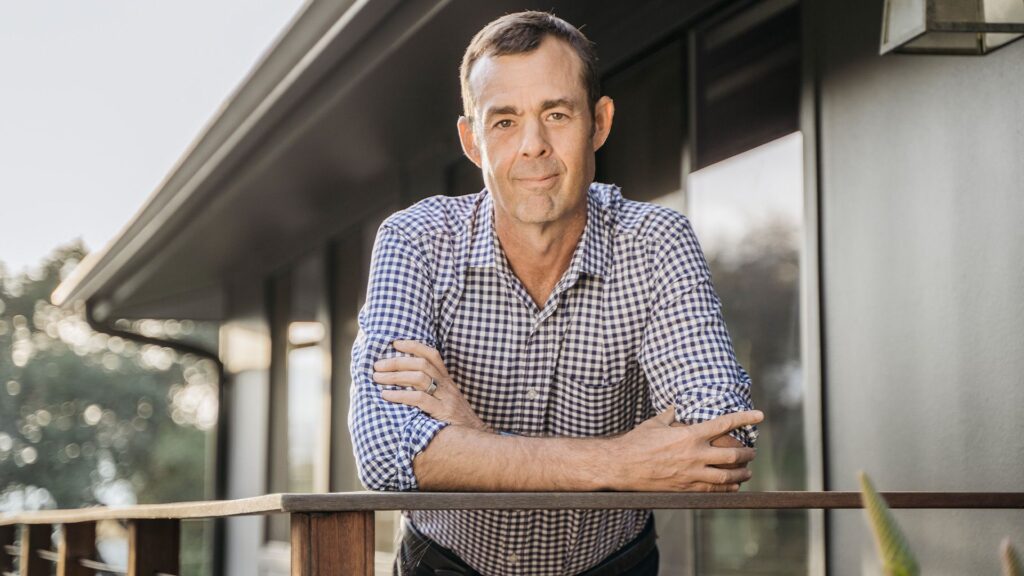
The Juicy Tomato Metaphor and What It Actually Costs to Live Well
Jeff ends our conversation with an image that I keep coming back to. He talks about a juicy tomato, the kind grown slowly in actual soil, with real sunlight and time. It costs more than the pale, uniform tomato produced under fluorescent lights in a controlled facility. It requires more effort to find, more attention to source, and possibly more patience to grow. But the difference in flavor is not subtle. It is the difference between something that tastes like life and something that merely resembles it.
The metaphor extends to everything. A richer, more meaningful life, one with genuine connection, real health, honest relationships, and work that matters, does not emerge from the path of least resistance. It asks for more. It asks you to choose the cold plunge when the warm shower is right there. It asks you to have the conversation you have been avoiding. It asks you to eat the food that requires thought, to move your body even when you are tired, to stay present when distraction is a tap away. That asking is not a burden. It is the mechanism by which good things grow.
This is ultimately the argument behind everything Jeff Krasno has built, from Commune to his book, to the keynote work that brings these ideas to stages around the world. Stress is not the problem. Unconscious, unintentional, chronic stress is the problem. The antidote is not less stress. It is better stress, chosen with purpose, applied with care, and followed by real recovery.
If you are looking for a speaker who can bring this conversation to your audience in a way that is scientifically grounded, deeply personal, and practically useful, Jeff Krasno is exactly that voice.
Explore his full speaker profile and reach out to bring him to your next event.
📬 Send your audience profile and event theme to info@thekeynotecurators.com and I’ll let you know if Jeff is the right fit
🗓 Or schedule a quick call here and let’s talk about what good stress could do for your stage
Discover More Insights




Get in TouchContact US
Fill out the form so we can best understand your needs.
A representative from The Keynote Curators will reach out to you.
Our Services
Keynote Speakers Topics
© 2026 The Keynote Curators. All Rights Reserved | Terms and Conditions
The Keynote Curators, 8275 South Eastern Avenue, Suite 200, Las Vegas, NV 89123
Local (310) 299-4595 | Toll Free (888) 585-8715 | info@thekeynotecurators.com
The Keynote Curators - Top Keynote Agency, USA.