
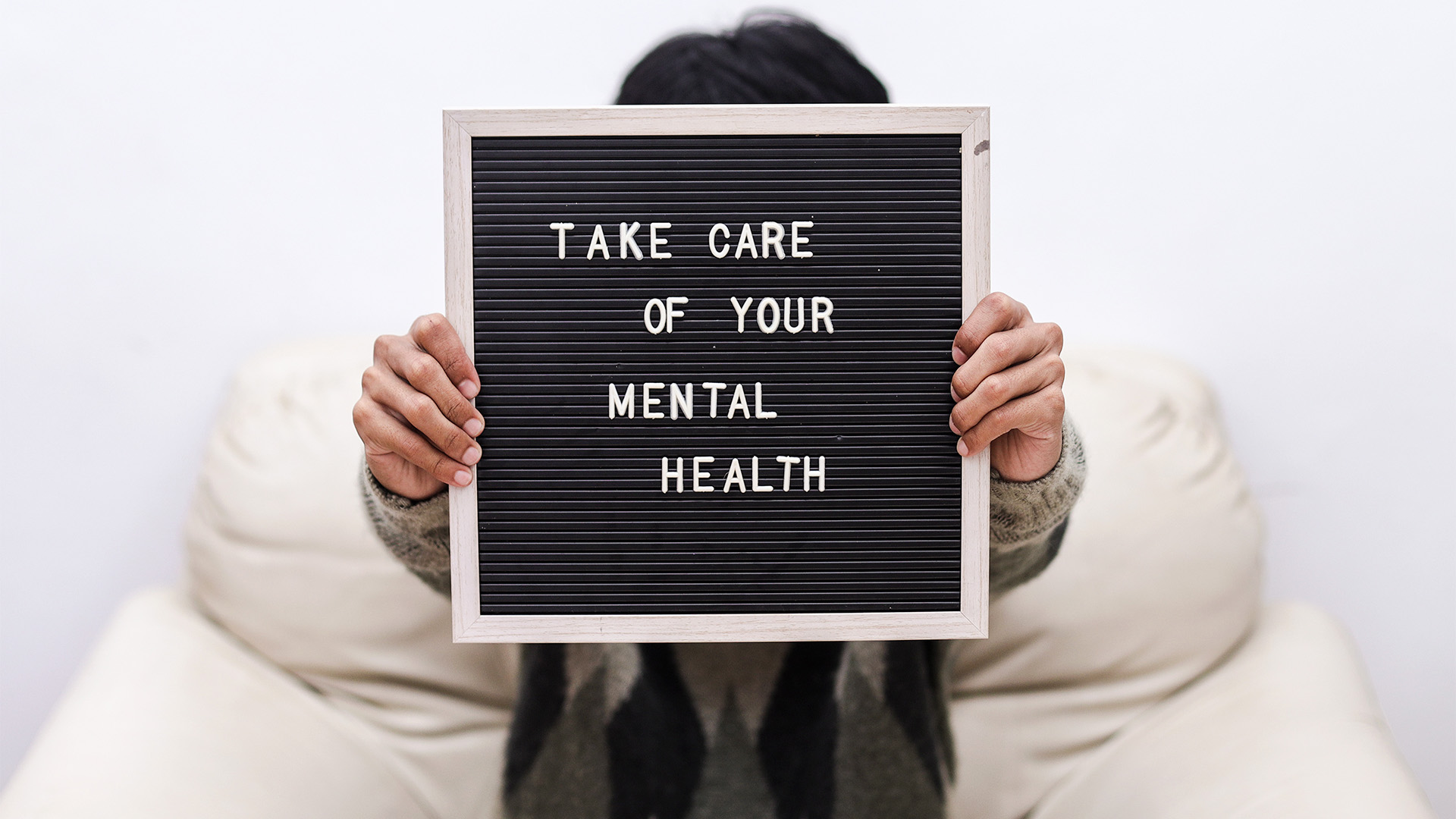
March 31, 2026Anxiety Keynote Speakers That Can Help Your Audience
Anxiety is the quiet hum most of us carry right now. Meet the mental health keynote speakers who can help your audience.
May is Mental Health Awareness Month, and this year it doesn’t feel like a topic on a calendar. Anxiety has become the background noise of modern life, and if you’ve noticed a low-grade hum that won’t quite turn off, you’re not imagining it. In this issue, I want to name what’s actually happening, share a few practical ways to feel steadier, and introduce six voices who can bring this conversation to your stage with the care it deserves.
Why Anxiety Feels So Loud Right Now
The headlines have been relentless: war, political division, economic pressure, energy shocks. For families with service members or loved ones overseas, none of this is abstract. It’s personal. And layered on top of all of it is a 24/7 newsfeed that lives in your pocket, making sure you’re never more than one scroll away from the next breaking update.
We’re not just informed anymore. We’re continuously exposed.
That’s the context I want to hold as we talk about mental health that shows up everywhere right now, because what most people are experiencing isn’t a clinical crisis. It’s something quieter and harder to name. Researchers and clinicians have started calling it ambient anxiety, and once you understand what it is, you start seeing it everywhere, including in yourself.
Ambient Anxiety Is Not What You Think
Ambient anxiety isn’t panic. It isn’t a breakdown. It’s just always being a little on edge, a tension that sits just below the surface and doesn’t fully resolve.
The reason it’s so hard to catch is that it hides inside productivity. It disguises itself as “I’m just busy” or “I’m fine, I’m just tired.” It looks like rereading a message five times before hitting send, feeling exhausted even after a full night of sleep, snapping at small things that normally wouldn’t register, doomscrolling while telling yourself you’re catching up, or a mind that won’t quite power down at the end of the day.
The sneaky part is this: you can be high-functioning and still be carrying too much. You can be meeting every deadline, showing up for every meeting, and still feel like something underneath is bracing for impact. Most of us can identify with that description right now.
A Reframe Worth Keeping
One of the most useful shifts I’ve encountered around anxiety is this: it isn’t a character flaw. It’s information.
Often it’s your nervous system saying, “I’ve been on alert for a long time, and I haven’t had a real chance to rest.” That’s not weakness. That’s biology doing its job in an environment it wasn’t quite designed for.
So the goal isn’t “be calm” as a command you issue to yourself. The goal is to create conditions where calm becomes easier to access: clarity, connection, recovery, and genuine permission to be human. That reframe matters because it shifts anxiety from something to be ashamed of into something to be responded to.

Three Small Moves That Actually Help
These aren’t clinical prescriptions. They’re practical levers you can reach for on an ordinary Tuesday when the noise feels like too much.
The first is to shrink the time horizon. Anxiety loves the infinite. It expands into every possible future and runs through every worst-case scenario it can construct. A useful counter-move is to bring your attention back to the immediate: “What’s one step I can take, or one small task I can accomplish in the next 15 minutes?” That question doesn’t solve the big things, but it interrupts the spiral and gives your nervous system something actionable to do.
The second is to name the signal without obeying it. When that tightness in your chest or that racing behind your eyes shows up, try saying to yourself: “This is my system trying to protect me.” That one sentence does two things at once: it identifies the feeling and creates just enough space between you and the reaction that you’re not swept away by it. You don’t have to argue with your nervous system. You just have to remind it that you’re aware.
The third is to borrow steadiness from someone safe. Text a friend. Take a walk with a person who doesn’t catastrophize. Sit near someone who doesn’t turn every minor inconvenience into an emergency. Connection is often the fastest path back to the body, because regulation is contagious in both directions. Anxiety spreads, but so does calm.
Making Mental Health Visible as a Leader
If you’re planning an event this May, this is a particularly meaningful month to give mental health the stage. Not as a checkbox or a compliance moment, but as a genuine act of leadership.
Because when an organization makes this the topic, when it brings in a trusted voice and creates space for honest conversation, it sends a quiet message to every person in the room: “You don’t have to carry this alone.” That message lands differently than any wellness email or resource page. It lands because it’s live, it’s human, and it costs something to say out loud.
The question then becomes: who do you trust to hold this conversation with the weight it deserves?
Six Anxiety Keynote Speakers Worth Knowing
These are voices I trust for this moment. Each one brings something distinct, and I’ve matched them to the audiences most likely to feel the difference.
Frank King uses humor to make hard conversations easier to start. He doesn’t make light of mental health; he makes it talkable. In a room that’s been holding a lot, he creates a release valve and leaves people with memorable, practical ways to check in on each other. He’s especially well-suited for audiences that need warmth, humanity, and real permission to speak up.
Suze Yalof Schwartz is the opposite of complicated wellness. She’s known for teaching people to meditate quickly, including the “I can’t sit still” crowd. Her sessions feel like a reset button: simple tools your audience can actually use on the way back to the airport. She’s a natural fit for high-performing teams who want calm that’s practical, not mystical.
Johnny Crowder brings real talk, real story, and real energy, and he’s especially powerful for younger audiences and modern workplaces. He’s also the founder of Cope Notes, which meets people where they already are: their phones. His work makes mental health feel approachable, actionable, and worth discussing without shame. If your organization wants this topic to feel relatable and human, Johnny is the person I’d call.
Dr. Taryn Marie connects the dots between resilience, nervous system capacity, and modern leadership. She helps people recognize the early signals before they become a bigger issue, and she gives leaders language for building cultures that protect performance and people at the same time. She’s particularly strong for leadership audiences, high-stress industries, and teams navigating constant change.
Carrie Severson is a burnout recovery voice with both credibility and compassion. She’s been through it, and she teaches what actually helps people come back to themselves: boundaries, self-worth, and sustainable ways to work. Her message lands because it feels like relief, not judgment. She’s an especially strong match for healthcare, education, and anyone who’s been powering through for too long.
Erin Stafford speaks directly to the capable, driven, high-achieving crowd that quietly wonders why success still feels heavy. She blends humor with honesty and gives people practical ways to reclaim energy without losing ambition. Her work helps audiences stop equating exhaustion with excellence, making her an ideal voice for leaders, sales teams, and high-performers who want sustainable momentum.
What Accurate Evidence Does for Anxiety
Our social media feeds are very good at showing us what’s breaking. There’s a steady stream of “Here’s what’s wrong,” with very little “Here’s what’s holding.”
Researchers have run what are called lost wallet experiments around the world: they drop wallets in public spaces and track what happens next. The surprising part isn’t the economics. It’s the psychology. People return them far more often than we predict. Across countries, cultures, and income levels, human behavior trends toward honesty more than our anxious brains expect.
That matters because ambient anxiety is often our threat system trying to protect us by assuming the worst. That protective instinct makes complete sense, but it comes with a cost: it keeps the body on alert, scanning for danger that may not be present in the way we’re imagining it. The wallet data isn’t a denial of hard headlines. It’s a reminder that our threat system isn’t the full story.
For me, that’s the bridge between anxiety and modern life. Anxiety shrinks our world. Accurate evidence can expand it again.
What’s one thing you do that helps you feel steady when the world feels loud? One sentence is perfect. I read every reply.
With care,
Seth
Subscribe to our newsletter so the next issue is waiting for you when it lands.
📅 Planning a mental health session for your team or event? Booking windows are closing. Secure your time now before the best dates are gone.
✉ Want to talk through details first? Reach me directly at info@thekeynotecurators.com.
Discover More Insights





Get in TouchContact US
Fill out the form so we can best understand your needs.
A representative from The Keynote Curators will reach out to you.