
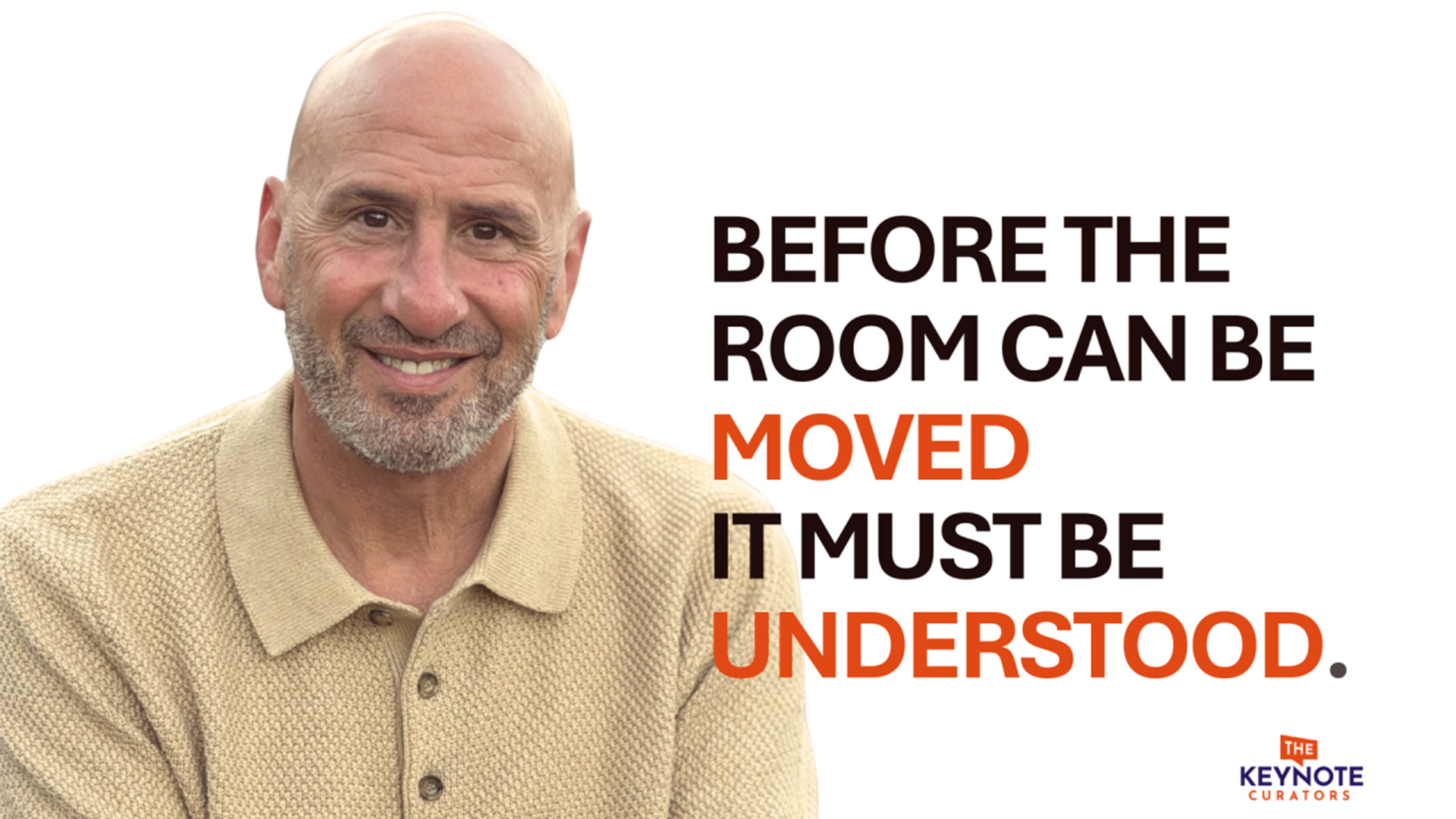
May 19, 2026Keynote Speaker Selection Starts Long Before the Shortlist
Keynote speaker selection isn't about trending names. It starts with reading the room, understanding culture, and finding the right fit.
What if the most important decision in your event planning process has nothing to do with who’s trending on LinkedIn right now?
That’s the question I keep coming back to, because the way most people approach keynote speaker selection is backwards. They open a browser. They scroll a talent roster. They search for whoever’s generating buzz this quarter. And then they wonder why the room felt off, why the energy didn’t land, or why the message didn’t stick past the appetizer hour at the networking reception.
I’ve been in this work long enough to know that a great keynote isn’t found in a list. It’s uncovered through a process, a deeply human one, that starts well before any name gets written down. That’s the spirit behind the Keynote Compass, a better starting point for keynote speaker selection that I built because the industry needed one. This newsletter is about the thinking behind it, and why the real work of curation is always the discernment, not the shortlist.
🧭 Read and explore the full Keynote Compass process here: compass.thekeynotecurators.com
Keynote Speaker Selection Begins With Reading the Room
A room speaks before a speaker ever does. I mean that literally. When I start working with a client, the first thing I’m trying to understand isn’t budget or dates or even theme. I’m trying to understand what the audience is walking in carrying.
Sometimes the room is burned out. Sometimes it’s energized but directionless. Sometimes there’s a quiet pressure beneath the surface, a tension between where leadership wants the organization to go and where the people actually are. Sometimes the room needs hope. Sometimes it needs a challenge. Sometimes it needs someone to say out loud what everyone has been thinking privately but hasn’t had the language to express.
That emotional temperature is everything in keynote speaker selection, and it’s almost never captured in an intake form. You can’t ask “what’s the mood of your audience?” and get an honest, nuanced answer in a checkbox. You have to ask better questions. You have to listen differently. You have to be willing to sit with the ambiguity of a client who says, “We want something inspiring, but not fluffy. We want someone credible, but not academic. We want energy, but we don’t want hype.”
Those aren’t contradictions. Those are instructions. And learning to read them is the first real skill of keynote speaker curation.
The Keynote Compass was built to create space for exactly this kind of listening. It’s not a filter. It’s not a database search. It’s a structured way of getting beneath the surface of what a client says they want so we can find what the room actually needs.
Why Fit Matters More Than Fame in Keynote Speaker Curation
The keynote speaker industry has a fame problem. Not because fame is inherently bad, but because fame has become a proxy for fit, and those are not the same thing. A household name who delivers a brilliant talk to the wrong room is still the wrong choice. A lesser-known speaker who has spent years living inside the exact challenge your audience is facing can change the trajectory of an entire organization.
I’ve seen both play out. I’ve watched audiences politely applaud a well-known speaker who was technically excellent but emotionally irrelevant to what they were going through. And I’ve watched a room go completely still, the kind of still where people stop looking at their phones and start leaning forward, because a speaker said exactly the right thing in exactly the right way at exactly the right moment.
The difference was never fame. It was fit.
Fit in keynote speaker selection means something specific. It means the speaker’s story resonates with the culture of the audience. It means the message the speaker carries aligns with the message the organization is trying to land. It means the energy the speaker brings, their natural register, their rhythm, their sense of humor or gravitas, matches what the room can emotionally hold in that moment. It means optics, yes, but also authenticity. It means the speaker isn’t performing a keynote. They’re delivering something they genuinely believe.
That level of fit doesn’t come from scanning a roster. It comes from knowing both sides of the equation deeply, and that’s what the Keynote Compass is designed to help establish before a single name is ever mentioned.
The Questions That Actually Drive Great Keynote Speaker Selection
I’ve always been more interested in questions than answers. Travel taught me that context changes everything. Books taught me that the right words can stay with a person for years. Human relationships taught me that trust is rarely built in the answer. It’s built in the question.
That shows up directly in how I approach keynote speaker selection. Before I recommend anyone, I want to know what your room is carrying. I want to understand what needs to shift by the time the lights come up and the applause fades. I want to know what a win actually looks like for you, not in terms of applause or social media clips, but in terms of how your people feel walking out the door. What conversation do you want them having over dinner that night? What belief do you want them to hold that they didn’t hold when they walked in?
These aren’t soft questions. They’re the most strategic questions in the process. Because the answers tell me which speaker has the right story, the right perspective, the right energy to create that specific outcome in that specific room.
I also want to understand the culture. Not the brand values on the website, but the actual culture. How much challenge can this audience handle right now? How much reassurance do they need? Is there a trust gap between leadership and employees that a speaker needs to navigate carefully? Is there a transformation underway that needs to be validated from a credible outside voice? Is the organization in growth mode or recovery mode, because those call for completely different keynote experiences?
These are the variables that the Keynote Compass helps surface systematically, and they’re the variables that make the difference between a speaker who fills a slot on the agenda and a speaker who shifts something real.
How the Keynote Compass Makes Speaker Selection More Human, Not Less
There’s a temptation in any industry to automate the parts of the work that feel time-consuming. I understand that impulse. Keynote speaker selection involves a lot of variables, a lot of stakeholders, and a lot of back-and-forth. If a piece of software could handle it, that would be convenient.
But the problem with automating keynote speaker selection is that the most important variables aren’t fields in a database. They’re conversations. They’re the moment a client pauses and says, “Actually, I think what we’re really trying to do is rebuild trust after a rough year.” They’re the subtext in how someone describes their audience. They’re the things people tell you when you ask the third follow-up question, not the first.
Every name I recommend from The Keynote Curators is handpicked and deeply considered by me, not auto-generated by software. That means every recommendation factors in culture, optics, risk tolerance, and the specific emotional arc an event needs to follow. Software can match keywords. It can’t read a room.
The Keynote Compass is the starting point for that human process. It’s a structured conversation that gets us to the real variables faster, so that by the time we’re discussing names, we’re already working from a shared understanding of what this moment actually requires. It replaces the generic intake form with something more intentional: a framework that treats keynote speaker selection as the strategic, relationship-driven discipline it actually is.
If you’ve ever filled out a speaker request form and felt like you were filling in a shipping label rather than describing a meaningful event, that experience is exactly what the Keynote Compass was built to replace.
The Emotional Architecture of a Keynote Experience
Most event professionals think about a keynote in terms of content. What topics will be covered? What’s the speaker’s expertise area? What’s their core message? These are legitimate questions, but they’re only part of what makes a keynote work.
The other part is emotional architecture. How does the speaker open? Do they pull the audience in immediately, or do they take time to establish context? Do they create tension before they provide resolution, and is that the right sequence for this particular room? Do they use humor, and if so, what kind? Is it self-deprecating or observational? Does it create inclusion or could it inadvertently create distance with parts of the audience?
These questions matter enormously in keynote speaker selection, and they’re almost never discussed in the early stages of a search. Most conversations start with topic and fee. The emotional experience the speaker creates, the actual feeling in the room during and after the keynote, tends to be an afterthought.
I think about it as the primary consideration. Because a keynote that lands emotionally is a keynote that gets remembered. It’s the one people reference in all-hands meetings six months later. It’s the one that shifts the story an organization tells about itself. It’s the one that earns the budget it required, and then some.
Getting the emotional architecture right requires understanding both the speaker’s natural strengths and the room’s specific needs, and then finding the place where those two things overlap. That’s not a process you can shortcut. It’s the work. It’s the part I love most.
Keynote Speaker Selection as a Strategic Business Decision
Here’s a reframe that I find useful when I’m working with clients who are approaching keynote speaker selection with a purely logistical mindset: this isn’t a vendor decision. It’s a strategic communication decision.
The keynote is often the most visible, most concentrated expression of what an organization is trying to say to its people at a specific moment in time. It’s the message that carries the weight of everything leadership wants to communicate, all the context and aspiration and direction, delivered in a format where the entire company is paying attention at once. That doesn’t happen often. It matters enormously when it does.
Treating that decision like a procurement exercise, where the goal is to find an acceptable option within budget, almost always produces mediocre results. Treating it like a strategic communication investment, where the goal is to find the exact right voice for this exact right moment, produces something different entirely.
The Keynote Compass is built on this premise. It approaches the selection process with the seriousness a strategic communication decision deserves. It asks the questions that help clarify what you’re actually trying to accomplish, not just who you want to put on stage. And it creates the shared understanding between client and curator that makes it possible to find the keynote speaker who doesn’t just speak well, but speaks to what this particular room needs to hear.
That’s the standard I hold every recommendation to. Not: is this speaker good? But: is this speaker right for this room, this moment, this message?
Why the Shortlist Is Always the Result, Never the Beginning
I want to be direct about something, because I think it matters for anyone who is selecting keynote speakers for a significant event. The shortlist is not the work. It’s the result of the work.
This distinction sounds obvious when you say it out loud, but it’s routinely collapsed in practice. Clients come to me with a shortlist already in hand, assembled from a quick Google search or a recommendation from someone who saw a keynote speaker at a different conference for a different audience in a different moment. They want me to validate it or pick from it.
I understand why. It feels efficient. But what it actually does is skip the entire process that makes great keynote speaker selection possible. It starts in the middle, with names, rather than at the beginning, with the room.
The beginning is diving deep into what kind of moment you’re trying to create. The beginning is listening closely to what the audience is carrying. The beginning is understanding the culture, the pressure, the appetite for challenge, the need for reassurance, the optics that matter, the trust that needs to be built or protected. The beginning is asking better questions than anyone else is asking.
When you do that work, the shortlist that emerges isn’t a list of good options. It’s a list of right ones. And often it contains names the client would never have found on their own, not because those keynote speakers are obscure, but because the process of finding them started from a fundamentally different place.
That’s what I mean when I say the discernment behind the shortlist is the real work. And it’s what the Keynote Compass makes possible at the very start of the relationship.

What Happens When You Get Keynote Speaker Selection Right
When the keynote speaker selection process works the way it should, something specific happens in the room. You can feel it. The energy shifts. People stop performing engagement and start actually being engaged. The keynote speaker says something and you watch heads nod, not politely, but involuntarily, the way they do when someone articulates something you’ve felt but never quite had the language for.
That’s the outcome a careful, human-centered selection process makes possible. It’s not guaranteed, nothing is. But it becomes dramatically more likely when the work that precedes the recommendation is done with real depth and real attention.
People are never transactions. Every client brings a history. A pressure point. A hope for the room. A message they’re trying to land. A feeling they want their people to leave with when the lights come up and the applause fades. That deserves more than a quick scan of topics and fees. It deserves attention. It deserves someone willing to dig deeper, not just to ask questions, but to ask better ones.
That’s the commitment behind everything I do at The Keynote Curators, and it’s the commitment built into the Keynote Compass. If you’re shaping a room that matters, I’d love to show you how that process works from the very first conversation.
If this way of thinking about keynote speaker selection resonates, I’d love to connect. Let’s schedule a conversation and I’ll tell you the first question I ask before I recommend a single name.
Prefer to start by email? Reach me at info@thekeynotecurators.com
📩 If you want more thinking like this delivered to your feed, subscribe to our newsletter and the next issue will find you.
Discover More Insights





Get in TouchContact US
Fill out the form so we can best understand your needs.
A representative from The Keynote Curators will reach out to you.