

May 8, 2026Brand Trust Strategies Every Event Pro Needs to Know
Learn how event professionals build brand trust through integrity, consistency, and small details, with insights from brand expert Denise Lee Yohn.
What if the single most valuable thing you could offer your event attendees had nothing to do with your keynote lineup, your venue, or your production budget? What if it came down to something far simpler, and far harder to fake?
Trust is the currency of every event you produce. I keep coming back to that idea every time I think about what actually separates the conferences people talk about for years from the ones they forget on the drive home. It is not the stage design. It is not the swag bag. It is not even the headline speaker, as much as I love a great keynote. It is whether the people who showed up feel like you did exactly what you said you were going to do, and whether that experience felt the same at every single touchpoint they encountered throughout the day.
I recently sat down with Denise Lee Yohn, a brand leadership expert and bestselling author whose work helps organizations build great brands and exceptional cultures. Denise has spoken at TEDx, the Consumer Electronics Show, and major corporate events for Facebook, Lexus, and the NFL. Her books, including What Great Brands Do and FUSION: How Integrating Brand and Culture Powers the World’s Greatest Companies, are essential reading for anyone serious about building something people believe in. And when she started breaking down the mechanics of event brand trust, everything clicked into place for me.
In this post, I am going to walk through what Denise shared about how event professionals can build real, lasting trust with their audiences. We will get into the two foundational pillars that make trust possible, why details matter more than declarations, and how to get every person on your team, from vendors to volunteers, aligned around the same brand identity. If you plan events, manage conferences, or build live experiences for a living, this one is for you.
🎬 Watch and listen to the full interview about event brand trust here
Event Brand Trust Starts with Two Non-Negotiable Pillars
Before you can talk about signage, speaker selection, or session flow, you have to get clear on what trust actually requires. Denise is direct about this. “Your trust really is the currency of business. That’s what enables businesses to grow and what causes businesses to fail. And I would really say that consistency comes down to trust; it comes down to two things, integrity and consistency.”
Integrity means doing what you say. If your event promises an intimate, high-value networking experience, the registration page, the email sequence, the room layout, the session format, and the closing reception all have to deliver on that promise. Every single one. The moment one of those elements contradicts the promise, you have an integrity problem, and attendees feel it even if they cannot name it.
Consistency means doing it reliably, every time, for every person. Not just for the VIP ticket holders or the returning attendees who already know your brand. For the first-timer who showed up skeptical. For the person who only caught the afternoon sessions. For the sponsor who spent the morning at a side table wondering if anyone would stop by.
This combination, integrity and consistency working together, is what creates the kind of event brand that people recommend to their colleagues, return to year after year, and defend when someone online says it is overpriced. Neither pillar works without the other. High integrity with inconsistent execution leaves attendees feeling like you meant well but did not quite deliver. High consistency without integrity just means you are reliably disappointing people.
For event professionals, this framework reframes how you should approach every planning decision. Every choice you make about your event is either reinforcing trust or eroding it. There is no neutral ground. That is not a stressful idea; it is actually clarifying. It gives you a lens for evaluating decisions that goes beyond cost, logistics, or aesthetics alone.
When I think about the events I have personally experienced that felt transformative, they all had this quality. The promise made in the marketing matched the promise kept in the room. The staff understood the tone. The transitions between sessions felt intentional. The whole experience felt like it came from one mind, even though dozens or hundreds of people had a hand in building it. That is what integrity and consistency feel like when they are working.
Why Your Event Brand Needs a Unique Identity, Not Just a Logo
One of the more challenging things Denise pushes event professionals to confront is the difference between visual branding and genuine brand identity. A lot of events have logos, color palettes, and hashtags. Far fewer have a distinct identity that would be recognizable even if you stripped away every branded asset.
The question she poses is a useful exercise: if someone attended your event and forgot the name, could they still describe what your event is about, who it is for, and what makes it different from everything else in your industry? If the answer is no, you do not yet have a brand. You have a branded event. Those are not the same thing.
A real event brand identity is built on a clear positioning. It answers questions like: What specific transformation do we offer attendees that no other event does? What kind of person is this event designed to serve at the deepest level? What feeling should someone carry home with them that they could not have gotten anywhere else?
Denise talks about the importance of making your event stand out so people understand what your brand means, even without seeing your logo. That is a high bar. It means that the programming choices, the speaker curation, the room flow, the food and beverage decisions, the language in your signage, and even the music playing during breaks should all be expressing the same underlying idea about who you are and what you stand for.
For event professionals who focus heavily on branding and marketing, this is where the real work begins. Building that identity requires clarity before execution. You cannot make consistent decisions about details if you are not clear on the core idea your event is meant to express. The identity has to come first. Everything else is an expression of it.
Think about the events that have become cultural touchstones in their respective industries. They have identities so strong that attendees feel a kind of ownership over them. They describe themselves as part of a community, not just a conference audience. That level of loyalty is not purchased through a bigger production budget. It is earned through the disciplined, repeated expression of a clear brand identity over time.
Small Event Details Carry More Weight Than Big Promises
Here is the part of Denise’s thinking that I find most practically useful, and also the most counterintuitive for a lot of event organizers. We tend to focus our energy on the big moments: the keynote, the launch announcement, the gala dinner, the headline performer. Those moments matter, but they are not actually where trust is built or broken.
“All the little things that you do make far more impact than the big things that you promise,” Denise explains. “Making sure that every detail of the experience delivers on that unique identity, that unique positioning.”
This lands differently once you have been in the business long enough to see what actually drives attendee satisfaction scores and, more importantly, renewal rates. It is almost never the big stuff. It is the registration email that felt warm and human instead of automated and transactional. It is the signage that told people where to go before they had to ask. It is the session room that was set at the right temperature. It is the moderator who started on time. It is the coffee that was actually good.
None of these things are expensive to get right. They require attention more than budget. And they require someone on the planning team who understands that each of these micro-moments is a brand impression, not just a logistical detail. When the small things are right, attendees feel taken care of. When they are wrong, the big moments cannot compensate for the friction.
This is where event professionals who think seriously about customer experience have a genuine competitive advantage. The planners who sweat the small stuff are not perfectionists making everyone around them miserable. They are the ones who understand that trust is assembled from dozens of tiny moments, not delivered in a single grand gesture.
Consider the attendee journey from the moment someone clicks your registration page to the moment they share a post about your event three days after it ends. Every touchpoint in that arc is an opportunity to either reinforce your brand promise or quietly contradict it. Mapping that journey and auditing each moment against your brand identity is one of the highest-leverage things you can do in the planning process.
How the Starbucks Story Reveals What Event Brands Risk Losing
Denise uses Starbucks as a case study that every event professional should study closely, not because Starbucks runs events, but because the arc of their brand story illustrates exactly what happens when consistency breaks down at scale.
For years, Starbucks was a masterclass in brand trust. You walked into any location in any city and you knew what to expect. The smell, the sound, the cup in your hand, the ritual of ordering. That consistency was the product just as much as the coffee was. People were not just buying espresso. They were buying the experience, the reliability, the sense that this place knew them and would not let them down.
Then, over time, the decisions that once built that consistency started working against it. The menu expanded well beyond what baristas could execute with speed and care. The physical spaces changed to prioritize throughput over the lingering, third-place atmosphere that had defined the brand. The experience became less predictable. And with that, the trust eroded. Not dramatically, not all at once, but steadily, in the accumulated weight of small disappointments.
For events, the parallel is clear. The planners who start strong and build loyal audiences often face the same temptation as Starbucks did: grow, expand, add more features, serve more people, chase bigger numbers. And sometimes that growth comes at the cost of the very consistency that made people love the event in the first place. The intimate feel disappears. The curation gets diluted. The small details that once felt personal start feeling generic.
The lesson is not that you should never grow your event. It is that growth has to be managed against your brand identity and your trust architecture with the same intentionality that built it in the first place. Every decision to scale should be run through the filter: does this protect or compromise our consistency? Does it reinforce or dilute the identity we have built?
Aligning Vendors and Partners Around Your Event Brand
One of the most practical and underappreciated aspects of Denise’s framework is the emphasis on brand alignment across every person and organization that touches your event. As an event professional, you are not just managing a team. You are managing a brand ecosystem, and every node in that ecosystem is either strengthening or weakening your brand promise.
Your AV vendor. Your catering company. Your registration platform. Your security staff. Your session moderators. Your social media partner. Every single one of them is delivering a brand experience to your attendees. If they do not understand your brand identity and your standards, they will fill in the gaps with their own defaults. And their defaults are not your brand.
This is where the investment in brand onboarding for vendors and partners pays extraordinary dividends. Not a one-page style guide with your logo and hex codes, though that has its place. I mean a real conversation about what your event stands for, what your attendees expect, how interactions should feel, and what standards are non-negotiable regardless of circumstance.
Denise’s thinking on business leadership applies directly here. Great brand leaders understand that culture and brand are inseparable. The same is true for event brands. The way your team and partners behave is the brand, not just the way your marketing materials look. If your brand says “professional, warm, and detail-oriented” but your check-in staff is disorganized and cold, you have a brand alignment problem that no amount of great design will solve.
Practical alignment starts with briefing. Every vendor and partner should receive a brand brief before they ever step foot at your event. That brief should articulate the identity, the promise, the attendee experience you are trying to create, and specific examples of what that looks and feels like in practice. It should also include what is not acceptable, because clarity on the negative is just as important as clarity on the positive.
Then it requires follow-through. Check ins, rehearsals, walkthroughs. The event professionals I most admire treat brand alignment with vendors the same way they treat production logistics: with checklists, accountability, and real-time problem solving. Because a vendor who breaks from your brand in the wrong moment is a logistics problem, but it is also a trust problem. And trust problems are harder to fix than logistics problems.
Building an Event Strategy That Delivers on Brand Every Time
Strategy is a word that gets used loosely in the events industry. People say they have a strategy when they mean they have a plan. But Denise draws a meaningful distinction between the two. A plan tells you what you are going to do and when. A strategy tells you why those choices make sense given who you are, who you serve, and what you are trying to build over time.
For event professionals thinking about strategy at this level, the brand has to function as the strategic anchor. Every decision, from the programming calendar to the sponsorship packages to the pricing structure, should be evaluated against what the brand stands for and what it promises. Without that anchor, you end up making a series of individually reasonable decisions that collectively drift away from the identity you are trying to build.
One of the most valuable strategic exercises Denise recommends is essentially a brand audit of your event experience. Walk through your entire attendee journey with fresh eyes, or better yet, have someone who does not know your event do it. Ask them to note every moment where the experience contradicted the brand promise. Not the big contradictions, those are usually obvious. The small ones. The places where the experience was merely fine rather than distinctly yours.
Those gap moments are your strategic priorities. They are where your investment of time, attention, and sometimes money will generate the most return in terms of brand trust and attendee loyalty. Closing those gaps is more important than adding new features, because closing gaps means delivering on what you already promised, and that is the foundation of integrity.
For event professionals who also think about business growth, this strategic lens has a direct commercial implication. Events that consistently deliver on their brand promise grow through referral and reputation. They do not need to spend as much on acquisition because retention is high and word-of-mouth is strong. The brand does the selling. That is the compounding return on the investment in consistency.
What Event Professionals Can Learn from Bestselling Brand Authors
There is something specific about learning brand strategy from authors and business thinkers who have spent years researching and testing their frameworks that you simply cannot get from a blog post or a podcast episode. The depth of analysis, the range of examples, the precision of the language all reflects a body of work built over time, not assembled quickly for content purposes.
Denise’s book What Great Brands Do is exactly that kind of resource. It presents seven brand-building principles drawn from the world’s most successful companies, and what is striking is how directly those principles translate to the event context. Great brands, she argues, start from the inside out. They use their brand to drive business strategy rather than treating the brand as a marketing veneer applied after the strategy is set. They make their brand a transformative experience rather than a transactional one.
Every one of those principles has a direct analogue in how great events are built. The events that feel transformative are the ones where the brand is not a coat of paint on top of a logistics operation. It is the organizing principle of everything: why this event exists, what it stands for, who it is for, and what it asks of everyone who touches it, including the attendees.
For event professionals who are also best-selling author enthusiasts or who draw inspiration from thought leadership across disciplines, Denise’s body of work offers a genuinely useful framework. FUSION goes even further, exploring how the integration of brand and culture powers the world’s greatest companies. The insight at the heart of that book, that brand and culture are not separate functions but a single unified system, maps cleanly onto the event world, where the internal culture of your planning team is inseparable from the external experience your attendees have.
Reading work like this does not just give you new ideas. It gives you a vocabulary for making arguments internally about why brand consistency matters, why the small details deserve real budget and attention, and why brand alignment across vendors is a strategic priority rather than a nice-to-have. That vocabulary is often the thing event professionals need most when making the case to leadership or clients.
Creativity and the Event Brand Experience
There is a tension that comes up often in conversations about brand consistency: does the emphasis on consistency leave any room for creativity? If every decision has to align with the established brand identity, does that not constrain the imagination and produce events that are polished but predictable?
Denise’s answer, which I find compelling, is that creativity and consistency are not opposites. They operate in different domains. Consistency is about the promise you make and keep, the feeling your attendees can rely on, the identity that accumulates trust over time. Creativity is about how you express and deliver on that promise in ways that are fresh, surprising, and worth experiencing again.
The best event brands use creativity in service of their identity, not as a replacement for it. They find new ways to deliver the same core feeling. They experiment with formats, technologies, and experiences without losing the thread of what makes them distinctly themselves. The innovation is always in the expression, not in the identity itself. And because the identity is clear, the creativity has real direction rather than spinning in every direction at once.
This is actually liberating once you internalize it. A clear brand identity is not a cage. It is a brief. And creatives do their best work with a clear brief. When your team knows exactly what feeling you are trying to create and exactly who you are trying to serve, the creative decisions become easier and more focused. You are not asking “what would be interesting?” You are asking “what would be interesting for this specific audience, delivered in a way that feels exactly like us?”
That shift in the creative question produces better events. It produces events that feel intentional rather than assembled, that feel authored rather than just organized. And those are the events that build the kind of brand trust Denise is talking about, the kind that compounds over years and turns attendees into advocates.
The Women Leaders Driving Brand Innovation in Events
It would be incomplete to discuss Denise’s work without acknowledging the perspective she brings as one of the leading women leaders in brand strategy and sales thinking. The events and conferences industry has benefited enormously from women in senior leadership roles, and the emphasis on relationship, consistency, emotional resonance, and long-term trust building that characterizes the best event brands reflects values that women leaders have championed in business for decades.
Denise’s own trajectory, from leading brand strategy at advertising agencies for Burger King, Land Rover, and Unilever, to heading Sony Electronics’ first-ever brand office, to writing books that reframe how executives think about brand leadership, reflects a consistent commitment to depth over surface, substance over spectacle. That is exactly the orientation that event professionals need more of in an industry that often chases novelty at the expense of meaning.
The leaders I most admire in the events world share this orientation. They are not just producing shows. They are building brands that people trust, return to, and talk about. They are doing the patient, disciplined work of consistency while also finding the creative energy to keep each edition feeling fresh. That combination is harder than it looks and more valuable than it is often given credit for.
When Denise speaks at events about brand trust and identity, she is not delivering abstract theory. She is speaking from decades of work with some of the world’s most demanding brand environments. That credibility comes through in the specificity of her frameworks and in the directness of her advice. You always leave with something actionable, not just something interesting.
Putting the Event Brand Trust Framework into Practice
After everything Denise shared, the question I keep returning to is: where do you actually start? If you are an event professional looking to apply this framework to your next conference or live experience, the answer is not to audit every detail simultaneously. That path leads to paralysis.
Start with the identity. Get absolutely clear on what your event promises and what makes it distinct from everything else in your category. Write it down in plain language, not in marketing copy. Something simple enough that every vendor you brief will immediately understand what kind of experience they are being asked to contribute to.
Then map the attendee journey. From the first email they receive to the last moment they spend in the space. Note every touchpoint. For each one, ask whether the experience at that moment is consistent with the identity you just defined. Not whether it is adequate. Whether it is distinctly, recognizably yours.
The gaps you find are your priorities. Address them before you invest in new features, new experiences, or new technologies. Get the foundation right first. The consistency of the foundation is what makes every enhancement you add later actually land with full impact.
Finally, brief your team and your partners on the identity with the same rigor you bring to production logistics. Make brand alignment a standing agenda item in your planning meetings. Treat inconsistencies as you would a production problem: with urgency and accountability.
That is the work. It is not glamorous. It is not a single breakthrough. It is the sustained, disciplined practice of doing what you say, every time, for everyone. That is what Denise means by trust as the currency of business. And in the events world, it is the most valuable asset you can build.
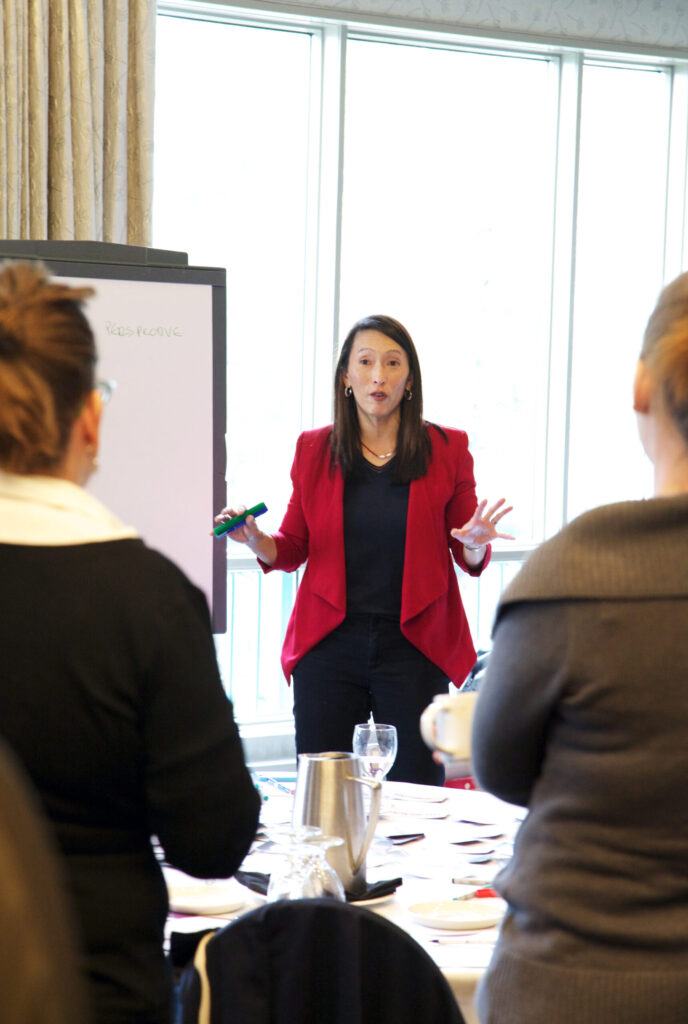
If you want to bring this kind of brand thinking to your next event, I can not recommend Denise Lee Yohn enough. Her ability to translate high-level brand strategy into actionable guidance for event professionals is genuinely rare. Whether you are running a corporate conference, an industry summit, or a large-scale live experience, the framework she brings will sharpen how you think about every decision you make.
The events that people remember are not the ones with the biggest budgets. They are the ones who earned trust, kept their promises, and made every single person who showed up feel like they were in exactly the right place. That is the standard worth building toward.
🎬 Watch the full interview with brand leadership keynote speaker Denise Lee Yohn on YouTube
🎤 Book Denise Lee Yohn for your next event
📅 Schedule a 15-minute call with The Keynote Curators
✉️ Email us at info@thekeynotecurators.com
Discover More Insights


Get in TouchContact US
Fill out the form so we can best understand your needs.
A representative from The Keynote Curators will reach out to you.
Our Services
Keynote Speakers Topics
© 2026 The Keynote Curators. All Rights Reserved | Terms and Conditions
The Keynote Curators, 8275 South Eastern Avenue, Suite 200, Las Vegas, NV 89123
Local (310) 299-4595 | Toll Free (888) 585-8715 | info@thekeynotecurators.com
The Keynote Curators - Top Keynote Agency, USA.