

May 26, 2026War Heroes Who Redefine What Leadership Really Means
On the verge of the 25th anniversary of 9/11, learn from top military heroes keynote speakers what leadership, grit and honor really mean.
Memorial Day is behind us. But I don’t think the work it asks of us is.
I’ve been sitting with a question since the weekend ended: what does it actually mean to honor people who gave everything, beyond the holiday, beyond the social caption, beyond the long weekend? Because “honor” isn’t a word I want to treat as a hashtag. It’s a posture. It’s something you carry forward into how you lead, how you serve, and how you show up for people when no one is keeping score.
And this year, there’s a date quietly approaching that’s going to bring a lot back to the surface for a lot of people. 2026 marks 25 years since 9/11. A quarter century. Long enough for the story to start feeling historical in textbooks. Close enough that most of us can still remember exactly where we were standing.
That tension is what drove this newsletter. Military heroes keynote speakers aren’t just a category on a booking form. They carry a specific kind of gravity into a room, the gravity that comes from having been tested in ways most of us will never face. And when that gravity is channeled well, it doesn’t just inspire an audience. It recalibrates one.
This issue is about who those voices are, what they actually do when they hit a stage, and why the period we’re entering right now makes their messages more relevant than ever. Whether you’re building an event for Q3 or Q4, or just thinking harder about the kind of leadership your organization needs to model, I think there’s something here for you.
Why Military Heroes Keynote Speakers Hit Differently Right Now
There is a version of the “veteran speaker” that gets booked because it feels right for a patriotic occasion. It checks a cultural box, the audience applauds, and everyone moves on. That’s not what I’m talking about.
The military heroes keynote speakers I want you to know about do something harder. They walk into a room full of professionals who are navigating pressure, ambiguity, and eroding trust, and they offer something that no corporate framework can manufacture: the lived experience of what it actually costs to lead when the stakes are real.
As someone who works with event professionals every day, I notice a pattern. The most powerful keynotes aren’t the loudest ones. They’re the ones that hold a room in silence for a moment, that make people lean slightly forward in their seats, that prompt someone in the back row to write something down on a napkin because they don’t want to forget it.
Military heroes do that consistently, and not because their stories are extreme. It’s because their stories are honest.
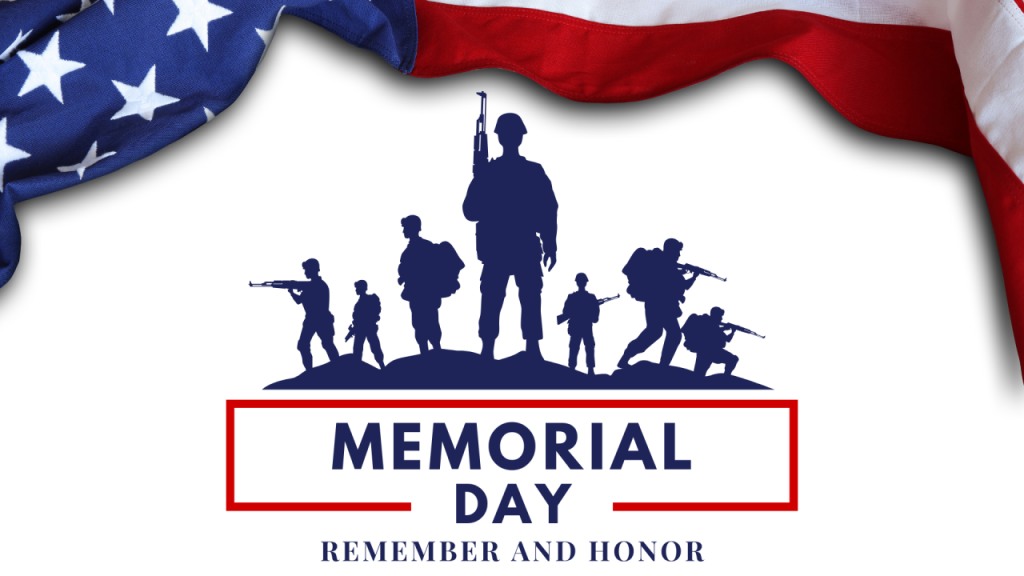
The approaching 25th anniversary of 9/11 adds a layer of context to this that’s hard to ignore. For event planners building fall programming, there is a window here to do something genuinely meaningful: not to exploit a moment of collective remembrance, but to use it as an entry point into conversations about leadership, resilience, and service that your audience will carry far beyond the event itself.
The question I keep coming back to is not “should I book a military speaker?” It’s “What do I want my audience to believe about courage when they walk out of this room?” Because that’s the question these speakers are built to answer.
Lt. Col. Robert Darling and the Weight of Calm Under Pressure
If you want a voice that holds a room with gravity without relying on theatrics, keynote speaker Robert Darling is someone you need to know about.
Robert lived through a day that most of us only understand through headlines and documentaries. He served inside one of the highest-stakes environments imaginable, inside the command structure during 9/11 itself, and what he brings to audiences is not a dramatic retelling. What he brings is clarity about what leadership actually requires when information is incomplete, when time is collapsing, when fear is present but cannot be in charge, and when decisions still have to be made regardless.
There’s a version of courage that gets celebrated in popular culture that looks loud and decisive and almost effortless. Robert dismantles that version carefully, and what he replaces it with is far more useful to the people sitting in your audience. Bravery is often calm. Leadership is often lonely. And trust becomes the only currency that matters. Those aren’t just quotable lines. They’re operational truths that anyone managing a team, a department, or an organization can use immediately.
What I find particularly compelling about his message right now is that it doesn’t need the 25th anniversary to land. But as that date approaches, the context it provides amplifies everything he’s built his speaking work around. Audiences don’t just hear a story. They feel the weight of what it costs to make good decisions in bad moments, and they leave asking themselves whether they’re building that capacity in their own leadership.
For events focused on crisis management, decision-making under pressure, or cultural trust, Robert Darling is a choice that will be remembered long after the event itself fades from the calendar.
Mary Kelly and the Business Case for Military Discipline
Leadership keynote speaker Mary Kelly occupies a space that is genuinely hard to find: the intersection of military leadership and practical business translation, delivered with warmth and specificity rather than rigidity.
What makes Mary exceptional is her ability to take the principles that shape elite military performance, discipline, accountability, clarity of standards, and consequential decision-making, and translate them into language that business audiences can absorb without feeling like they’re being lectured at by someone who has never run a quarterly review. She’s excellent for audiences who need to see those values not as relics of a different world, but as skills that are transferable, learnable, and urgently needed right now.
The shift she tends to produce in a room is a recalibration of standards. Not in the punishing sense, but in the empowering one. When people leave her session, standards don’t feel like something being imposed on them. They feel like something they want to carry. That’s a rare outcome for a keynote on accountability, and it speaks to how she delivers: direct, human, grounded, and deeply practical.
If your audience is navigating professional development challenges or struggling with ownership culture, Mary Kelly brings the exact combination of authority and accessibility that makes those conversations productive rather than defensive.
Waldo Waldman and the Wingman Culture Every Team Needs
There’s a concept that Waldo Waldman has built his speaking work around that I think is more relevant to the corporate culture conversation than almost anything I’ve heard in the leadership space: wingman culture.
The premise is not complicated, but the implications run deep. In combat aviation, your wingman is the person whose life depends on trusting yours, and whose trust your life depends on. There is no option for ambiguity. There is no room for ego that overrides the mission. There is no performance of teamwork that substitutes for the real thing. Either you commit to each other with total clarity, or the whole system fails.
Waldo takes that dynamic and holds it up against how most teams actually function: the unspoken tensions, the siloed accountability, the meeting-room agreeableness that dissolves the moment someone needs to be covered. His message is not a motivational speech about liking your coworkers. It’s a precision examination of what trust actually requires, and what happens to performance when it’s missing.
What shifts in rooms where Waldo speaks are notable. People stop performing teamwork and start thinking seriously about whether they’re actually practicing it. That’s a different quality of reflection, and it tends to produce a different quality of follow-through. For events centered on elite performance or team cohesion, he’s consistently one of the most impactful voices available.
Mike Abrashoff and Leadership That Scales Beyond the Leader
Business strategy keynote speaker Mike Abrashoff is, in my experience, one of the most practically useful leadership speakers working today, and his story is the kind that makes you rethink the relationship between authority and performance from the ground up.
Mike took command of a ship with some of the worst performance metrics in the United States Navy and turned it into one of the best, not by enforcing harder or demanding more, but by asking a fundamentally different question: What can I do to make my crew’s lives better so they can do their jobs better? The results were not incremental. They were transformational, and they came directly from a decision to treat leadership as a service rather than a status.
What lands for business audiences is the specificity of it. This isn’t inspiration through abstraction. Mike gives people a framework they can act on: empower the people closest to the work, remove the friction that’s making them less effective, build ownership at every level, then watch what happens to performance. It sounds simple because it is. The difficulty is in the leader’s willingness to let go of control long enough to let it work.
The shift he produces in a room is one of the most valuable in the keynote industry: leaders stop seeing culture as something that happens to them and start seeing it as something they are designing, consciously or not, every single day. For events built around innovation or business transformation, Mike Abrashoff is a booking that earns its fee many times over.
Travis Mills and the Resilience That Doesn’t Ask for Your Pity
There are speakers who tell stories about overcoming adversity. And then there’s Travis Mills, whose unique story and view on optimism and resilience will make your audience reflect on what’s possible in life and how to be grateful for the little things.
Travis is a quadruple amputee and retired Army Staff Sergeant who survived injuries that should not have been survivable, and he stands on a stage and talks about it with a combination of clarity and good humor that is genuinely disarming. His story is, by any measure, extraordinary. But what makes him unforgettable is not what happened to him. It’s what he decided to do with it.
The particular gift Travis brings to an audience is a specific reframing of resilience. Most resilience messaging in the corporate space leans on the idea that adversity is temporary, that if you just push through it you’ll reach the other side intact. Travis offers something more honest: sometimes the other side looks completely different from where you started, and the question is not whether you can get back to what you had, but whether you can build something meaningful from where you actually are.
Hope that doesn’t feel naïve. Strength that doesn’t feel hard.
That’s what people describe when they try to put his session into words. And for audiences navigating genuine change, not incremental discomfort but actual disruption, that quality of message is rare and needed. Resilience becomes personal because it stops being generic. It stops being a concept you’re supposed to adopt and starts being a choice you recognize as one you can make.
For any event where your audience is carrying real weight into the room, Travis Mills is worth every conversation it takes to get him on your stage.
Marc Koehler and the Return to Leadership as Service
In a landscape where leadership often gets confused with visibility, keynote speaker Marc Koehler is a specific antidote.
Marc is grounded, direct, and deeply team-first in a way that is not performance-oriented. It comes from a military background that asked him to put the mission and the people executing it ahead of personal recognition, not as a nice sentiment but as a non-negotiable operating principle. He carries that into his speaking work with a kind of quiet authority that audiences tend to trust immediately, not because he’s selling them anything, but because he clearly doesn’t need to.
His work is especially strong for audiences navigating change, pressure, and the kind of trust erosion that happens when organizations have been through sustained difficulty. What he offers is not a prescription for morale improvement. He offers a reorientation: when leadership is about service rather than status, the whole quality of followership changes. People stop protecting themselves and start investing in the outcome.
The shift Marc produces is one of the most lasting: people leave his sessions reconnecting leadership with personal development and a sense of purpose that had maybe gotten buried under the daily noise of metrics and management. For organizations that need their people to remember why the work matters, Marc Koehler is worth serious consideration.
More Heroes Voices for the Right Stage
Beyond the five speakers I’ve profiled in depth, there are additional military voices worth knowing as you build your event programming, each with a distinct perspective and a specific kind of room they’ll resonate in most.
Nicole Malachowski was the first woman to fly with the Thunderbirds, and her message is less about that distinction than about what it required: preparation so deep that composure becomes possible, and the repeated daily decision to choose courage over comfort. She’s a powerful voice for audiences where breaking barriers isn’t metaphorical, it’s the actual work they’re doing.
Cedric Leighton brings a calm, deeply credible perspective on risk, intelligence, and decision-making in conditions of uncertainty. For world affairs-adjacent events, or for leadership audiences navigating geopolitical complexity in their industries, Cedric delivers clarity without panic, which is exactly what rooms need when the external environment feels unstable.
Rorke Denver is a straight-shooting Navy SEAL whose message lands with intensity and respect in equal measure. He’s not subtle, and he’s not trying to be. He’s built for rooms that need a jolt of ownership culture: standards, discipline, team trust, and the personal accountability that makes all of it real rather than aspirational.
Each of these voices brings something specific. What they share is a common baseline: they have been tested in conditions where platitudes don’t survive, and what they bring to a stage has been earned rather than assembled from frameworks. That quality is immediately legible to an audience, and it’s what makes military heroes keynote speakers one of the most consistently high-impact categories in the industry.
The Bravery You Can Actually Use Tomorrow
Most of the people sitting in your audience won’t be asked to do what these men and women have done. That gap in experience is real, and the best military speakers don’t pretend it isn’t. What they do instead is something more useful: they take the principles that operated under extreme conditions and show how they translate to the pressures your audience is actually living with.
Tell the truth early, before it costs more to tell it. Take responsibility without distributing the blame. Stay steady when the room gets reactive, and everyone is waiting for someone to panic first. Serve the team when ego wants the spotlight. These are not small things in a business context. They are the specific behaviors that separate organizations that function from organizations that thrive, and they are exactly the behaviors that get deprioritized when pressure increases, and self-protection instinct takes over.
That’s the quiet gift that keynote speakers give a room: perspective. Not in the trivializing sense of “at least you’re not getting shot at.” In the clarifying sense of: here is what it actually looks like when someone chooses courage over comfort, and here is what it actually costs, and here is what it actually produces. That perspective is a recalibration that money can’t manufacture and slide decks can’t deliver.
If you’re building an event for Q3 or Q4 and you want to honor what Memorial Day asks of us beyond the holiday itself, a military speaker is one of the most meaningful choices you can make. Not as a seasonal gesture, but as a decision to raise the standard of the room in a way that lands and stays. The inspirational and motivational energy these speakers generate isn’t manufactured. It comes from somewhere real. And your audience will feel the difference.
Delivering impact (with honor),
Seth
🏅 If you have an event in Q3 and still need a keynote, let’s talk before the best speakers are booked
📩 Want to start with a quick email? I’m here: info@thekeynotecurators.com
Want to stay ahead of the curve all season? Subscribe to our newsletter and never miss an issue.
Discover More Insights


Get in TouchContact US
Fill out the form so we can best understand your needs.
A representative from The Keynote Curators will reach out to you.
Our Services
Keynote Speakers Topics
© 2026 The Keynote Curators. All Rights Reserved | Terms and Conditions
The Keynote Curators, 8275 South Eastern Avenue, Suite 200, Las Vegas, NV 89123
Local (310) 299-4595 | Toll Free (888) 585-8715 | info@thekeynotecurators.com
The Keynote Curators - Top Keynote Agency, USA.