
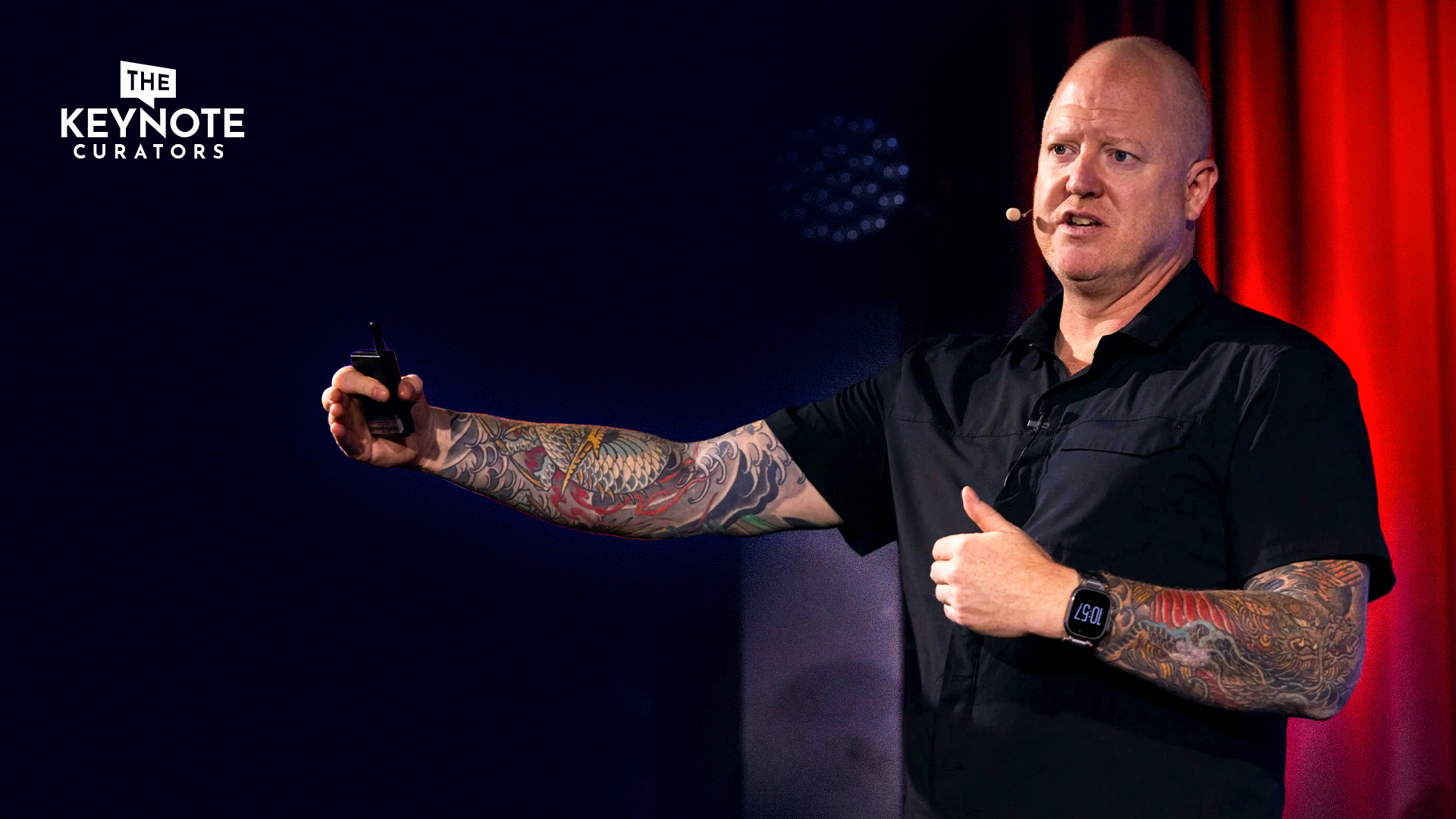
October 12, 2026Leadership Lessons From a Futurist on Hope and Resilient Teams
Leadership feels heavier right now. Almost every leader I talk with says some version of the same thing. The pace is faster, the news is louder, and the people they lead are tired. Many of...
Leadership feels heavier right now. Almost every leader I talk with says some version of the same thing. The pace is faster, the news is louder, and the people they lead are tired. Many of them are not sure where to put their energy, so they put it into reacting. That works for a while. Then it stops working.
When I sat down with futurist Nikolas Badminton, I wanted to understand what leadership looks like when the future feels unclear. I expected a big framework. What I got was a small habit. Ask “what if” at least once a day, and teams start to build the stamina they need for hard times.
The more I thought about that idea, the more I saw how much it carries. It touches how we make decisions, how we treat people, and how we protect the ideas that might save us. This is my reflection on what stayed with me, and why I think this kind of leadership matters more every year.
🎥 Watch and listen to the full interview with Nikolas Badminton here
Why Leadership Feels Heavier Than Ever
Nikolas is a global futurist and the Chief Futurist at Futurist.com. He has helped leaders at places like NASA, the United Nations, and JP Morgan think through uncertainty. People in those rooms do not get to avoid hard questions. So when he says that leadership feels heavier than ever, I take it seriously.
What caught my attention was how he described the weight of those leadership actions. It is not only that there are more problems. It is that the only question many teams ask is “what is.” What is broken? What is late? What is going wrong? Those are fair questions. Leaders have to answer them. But when they are the only questions in the room, the room gets smaller. People stop looking up. They keep their heads down and wait for the next problem to arrive.
I have seen this pattern in many organizations. A team gets into survival mode, and survival mode feels productive because everyone is busy. But busy is not the same as moving forward. A leader who only manages what is will always be one step behind what is coming. That is a tiring place to lead from, and it is a tiring place to follow from.
This is why I think the first job of modern leadership is to give people somewhere to put their energy. Not false cheer. Not a pep talk. A real direction for the mind to go when the present feels crowded. Nikolas offers one of the simplest versions of that I have heard, and it starts with changing one question.
Shifting From “What Is” to “What If” in Leadership
The core idea is easy to say and harder to practice. Move from “what is” to “what if,” at least once a day. That is it. No retreat, no consultant, no budget.
I keep coming back to why this works. “What is” looks backward and sideways. It deals with facts that already exist. “What if” looks forward. It asks the mind to build something that does not exist yet. And the act of building is different from the act of reacting. It uses a different muscle. It gives people a sense that they have some say in what happens next.
That sense of agency may be the most underrated part of leadership. When people feel they can shape the future, even a little, they carry stress differently. The same hard week feels lighter when it is part of a story with a next chapter. A leader who asks “what if” is not ignoring the hard week. They are placing it inside something bigger.
There is also a cultural effect. Questions set the tone for a team. If the first question in every meeting is “what’s wrong,” people learn to hunt for what’s wrong. If the first question is “what if,” people learn to look for what could be possible. Over time, that shapes how the whole group thinks. Leadership is not only about the decisions you make. It is about the questions you make normal.
I would add one caution. A “what if” question is not a fantasy. It does not replace honest analysis. Nikolas works with some of the largest organizations in the world, and they do not hire him to daydream. They hire him because looking ahead with discipline is a skill, and most teams never practice it. The daily “what if” is a way to practice it in small, safe doses.
Hope as a Working Tool for Better Decisions
Nikolas is also the author of The Hope Engineer’s Playbook, and the title tells you where his thinking has gone. He now treats hope as a working tool for decisions. Not a feeling to wait for. A tool to pick up.
That leadership framing surprised me, because hope often gets treated as soft. Many business leaders hear the word and think of posters on a wall. But Nikolas does not use it that way. For him, hope is practical. It changes what a leader can see, and what a team is willing to try.
He told me that five years ago he leaned on a framework he called “positive dystopia.” The idea was to look at the worst possible outcome and the best possible outcome side by side. That approach still has a place. It keeps a leader honest. It stops optimism from turning into denial. But he has moved further toward hope, and his reason stayed with me. Teams need stamina right now.
Fear can get a group through a week. It does not get them through a year. I think that is one of the truest sentences I have heard about leadership in a long time. Fear is a strong short-term fuel. It makes people move fast. But it burns hot and runs out. If a leader relies on fear to drive a team, they will eventually have a team with nothing left. As Nikolas said:
“A high hope mindset creates a huge amount of resiliency.”
When I think about that line, I see it as a statement about the energy leadership conveys, not just a mood or a motivational quote on the wall. Hope is how a team refills. And a leader who knows how to build hope into daily work is giving the team a way to last.
Five Minutes to Future: A Habit Any Leader Can Use
Every good idea needs a practice, or it stays an idea. Nikolas offers one, and he calls it Five Minutes to Future. The steps are simple. Pick one signal of change. It could be a new piece of technology, or a shift in how customers behave. Then ask what it means for your job, your team, and your community.
I like how small this is. Five minutes. Once a day. Most leadership development asks for large blocks of time that never appear on a real calendar. This one fits between meetings. And because it is so small, it is easy to repeat, and repetition is where habits form.
What makes the exercise work, I think, is the three levels of the question. Your job, your team, your community. A signal of change can seem distant until you ask what it means for your own work. Then it becomes personal. Then you ask what it means for the people around you. Then you look outward to the community you serve. In five minutes, a headline turns into a real question about your life and your responsibilities.
I have been thinking about how this changes the way a leader reads the news. Most of us scroll past change. We note it, feel a little anxious, and move on. A leader who practices Five Minutes to Future stops and asks, “So what does this mean for us?” That one pause turns passive worry into active thinking. And active thinking is the start of preparation.
This is also where artificial intelligence comes in, as one example among many. Few signals of change are louder right now. A leader can spend a year feeling anxious about it, or spend five minutes a day asking what it means for their team. I know which kind of leadership I would rather work under.
Seeing People Is the Quiet Engine of Resilience
One of the habits Nikolas pairs with the daily “what if” has nothing to do with technology. It is about noticing people. He encourages leadership strategies where higher-ups recognize what each team member contributes every day.
At first, that sounds almost too simple. But the more I considered it, the more I saw why it belongs in a conversation about resilience. People do not build resilience in the abstract. They build it when they feel that their work counts. When someone’s effort goes unseen, hard weeks feel pointless. When someone’s effort is seen, the same hard weeks feel like a shared load.
I have watched this play out on teams I have worked with. The ones that held together under pressure were not always the ones with the best strategy. They were the ones where people felt known. A leader there could say, in detail, what each person had done that week. That detail mattered. General praise is easy to ignore. Specific recognition tells a person that someone is paying attention.
There is a deeper point in this, too. Recognition is a form of information. When a leader names what someone contributed, they are also telling the whole team what matters. They are showing what good work looks like. That shapes behavior far more than any policy document.
So I see this habit as the human side of the “what if” practice. One looks ahead. The other looks around. A leader needs both. Without the first, a team has no direction. Without the second, a team has no heart. Strong leadership holds those two things at once.
A Clear Picture of the Bigger Leadership Goals
The second habit Nikolas shares is just as practical. Give people a clear picture of the bigger goal you are all working toward.
I think this is where many leaders quietly fail. They know the goal so well that they forget others do not. It lives in their head, in their slides, in their planning documents. But the person doing the daily work may only see tasks. A list of tasks does not carry any meaning. It is just a list.
When the goal is clear, the same tasks change. A hard week has a point. A boring project becomes a step toward something. People can tolerate a lot of difficulty when they understand what the difficulty is for. They cannot tolerate much when they do not.
This is why I connect the bigger goal back to hope. Hope needs a destination. Without one, it turns into vague optimism, and vague optimism does not last. A leader who paints a clear picture is giving hope something to attach to. They are saying, here is where we are headed, and here is why it is worth the effort.
It also changes how a team handles setbacks. If the goal is clear, a setback is a detour. If the goal is not clear, a setback feels like the end. I have seen both reactions on the same project, depending only on how well the leader had explained the purpose. That is a small piece of business wisdom that costs nothing to apply.
The lesson that stayed with me is that clarity is a gift. A leader who offers it generously is doing something kind and something strategic at the same time. Those two things are not opposites. In good leadership, they are the same act.
The Small Mind Problem in Leadership
Nikolas made one point that I wrote down as soon as he said it. The biggest risk is not trying a bold idea. It is introducing that idea to a small mind. In his words.
“The best way to kill a dream and a big idea is to introduce it to a small mind.”
After a quick thought, I couldn’t agree more. Most of us have watched a promising idea die in a meeting. Nobody attacked it. Nobody even argued. Someone just asked a narrow question, or pointed to a reason it would not work, and the energy left the room. The idea never got a fair look.
What I find useful about this point is that it moves the risk. We usually think the danger of a bold idea is failure. We worry about cost, about being wrong, about looking foolish. But Nikolas suggests the greater danger comes earlier. It comes at the moment an idea is first spoken, and meets a mind that is not ready for it.
This is where the daily “what if” practice pays off in a way I had not expected. A team that has practiced asking “what if” is less likely to shoot an idea down on contact. Their minds are used to stretching. They have built the habit of exploring before judging. So when a new idea arrives, it gets room to breathe.
That makes this a real innovation lesson as much as a leadership one. We talk a lot about creating ideas. We talk much less about protecting them. Yet protection may be the more important job. A leader who wants a creative team has to create a team that can hear a big idea without flinching.
I also think this applies to the leader’s own mind. It is easy to blame the team for being small-minded. It is harder to ask whether I am the small mind in the room. Good leadership starts with that question.
What This Means for Business, Technology, and the Economy
When I step back from the conversation, I see how far these small habits reach. Nikolas has spent more than thirty years working with over four hundred organizations. He has seen how teams behave when change arrives. What he offers is not a trick. It is a pattern.
Think about the economy for a moment. It moves in cycles, and every cycle brings fear. Companies that only react to each cycle spend their lives being surprised. Companies that practice looking ahead are surprised less often, and when they are surprised, they recover faster. That is not magic. It is the result of a team that has trained its mind to ask “what if” long before the crisis.
The same is true of fast change in technology. No leader can predict every shift. But a leader can build a team that is comfortable with not knowing. That is a different skill from prediction. It is the skill of staying curious and steady while the ground moves. Hope, as Nikolas describes it, is what makes that possible.
I would also say this is a quiet form of responsibility. Impactful leadership shapes the emotional weather of the people in any room. If a leader treats the future as a threat, the team will too. If a leader treats the future as a set of questions worth exploring, the team has a chance to do the same. That does not mean ignoring risk. It means choosing where to place attention.
Leadership in this sense is less about having answers and more about shaping how people look at the unknown. The leader sets the frame. The team lives inside it. And the frame can be small and fearful, or wide and hopeful. Most of the time, it is a choice.

The Leadership Question That Changes the Room
I started this conversation thinking about the weight of leadership. I ended it thinking about the power of a single question. That is the shift Nikolas offered me, and I have not been able to put it down.
The ideas he shared fit together better than I first saw. Ask “what if” once a day. Spend five minutes looking at one signal of change. Notice what each person contributes. Give everyone a clear picture of the goal. Protect big ideas from small minds. None of these steps is dramatic. All of them are doable this week. And together, they describe a kind of leadership that builds stamina instead of burning it.
What I find most hopeful is how little it asks. A leader does not need permission, a new title, or a larger budget. They need a willingness to change the first question in the room. If you are a leader, try it. Think about what would change on your team if the first question in your next meeting were “what if” instead of “what’s wrong.” I suspect you would feel the room open up.
Nikolas is a bestselling author and TED speaker who brings this thinking to stages around the world. As a bestselling author, he has turned decades of foresight work into practical habits any team can use. If your organization wants a leadership keynote speaker, Nikolas Badminton can bring these ideas to your people and help them look at the future with more hope and more stamina. And if you want to keep exploring this subject, you can find more voices on leadership from our speaker community.
The future will arrive whether we are ready or not. Leadership is the choice to get ready, together, with hope.
▶️ Watch the full episode here
🙌 Book futurist Nikolas Badminton for your next event
📆 Let’s set up a time to talk
💬 Reach out anytime
Discover More Insights




Get in TouchContact US
Fill out the form so we can best understand your needs.
A representative from The Keynote Curators will reach out to you.