
Book Chris Trimble through The Keynote Curators
Biography
Chris Trimble has dedicated more than ten years to studying a single challenge that vexes even the best-managed organizations: how to execute an innovation initiative.
In September 2010, a decade of research came to fruition with the publication of Chris’s landmark book, The Other Side of Innovation: Solving the Execution Challenge, with Vijay Govindarajan. More recently, in April 2012, Chris and Vijay published Reverse Innovation: Create Far From Home, Win Everywhere, which applied their research to the specific challenge of innovating to propel growth in emerging markets.
Notable articles include “Stop the Innovation Wars,” with Vijay Govindarajan, in the July-August 2010 Harvard Business Review, which won a McKinsey Award, second place, for the magazine’s best articles of the year, and “How GE is Disrupting Itself” in the October 2009 Harvard Business Review, with Jeff Immelt and Vijay Govindarajan.
Chris first broke into the forefront of executive consciousness with his December 2005 book Ten Rules for Strategic Innovators – from Idea to Execution. In June 2006, the Wall Street Journal published a Top Ten Recommended Reading list that included Ten Rules alongside Freakonomics, The Tipping Point, and Blink. Strategy & Business magazine recognized Ten Rules as the best strategy book of the year.
Chris’s career mixes rigorous academic research with hard-nosed practical experience. His interest in innovation within large organizations developed early in his career, when he was a submarine officer in the United States Navy.
Chris is currently on the faculty at the Tuck School of Business at Dartmouth and at The Dartmouth Center for Health Care Delivery Science. He is currently immersed in a multi-year effort to apply his work to the specific challenge of innovation in health care delivery.
Chris is a frequent keynote speaker and has spoken all over the world. He has also published in the MIT Sloan Management Review, California Management Review, BusinessWeek, Forbes, Fast Company and The Financial Times. He holds an MBA degree with distinction from the Tuck School, and a bachelor of science degree with highest distinction from the University of Virginia.
Contact us for Chris Trimble fees and availability
Videos
Speech TopicsExpand each topic to learn more
Today's high-growth hot spots are all in the developing economies, which will account for a jaw-dropping twothirds of global economic growth over the next generation. Such facts and figures are now a preoccupation in many boardrooms. What is less well understood is what it will take to win.
For decades, most global corporations have followed a simple strategy: Create great products and services for home markets, and then export them. It has worked well enough in the past, but it is good enough no longer. The needs and opportunities in the developing world are just too distinct.
As a result, corporations must learn a new trick: Reverse Innovation. They must learn to innovate in the emerging economies, and then bring the innovations home.
“Genius is one percent inspiration, ninety-nine percent perspiration.”
Thomas Edison said it over a century ago. Nobody listened.
When companies launch innovation initiatives, they focus almost all of their time and energy on that initial one percent — the thrilling hunt for the breakthrough idea. They draw guidance from countless books and articles that treat innovation as though it is synonymous with creativity.
It is not. The reality is that an idea is only a beginning. Innovation is not just the much-anticipated light-bulb moment. It is also a long, hard journey — from imagination to impact.
We can’t wait for policy makers on Capitol Hill to save our troubled health care system. Instead, we need a new generation of health care leaders -- physicians and executives alike -- that are ready to remake the system from the grass roots, through innovation and entrepreneurship. While health care may seem impossibly complex, the reality is that it is hard to walk more than ten yards without tripping over an idea or an innovative pilot project with tremendous potential. This presentation will show why these pilots so rarely achieve full potential, and what to do about it.
Testimonials
Booksby Chris Trimble
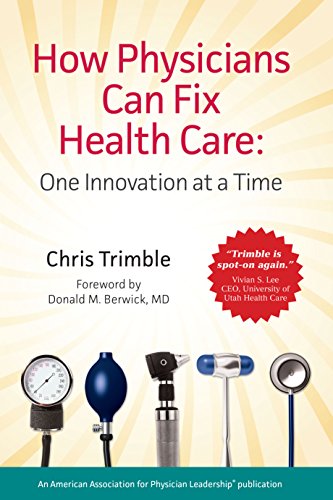
How Physicians Can Fix Health Care: One Innovation at a Time
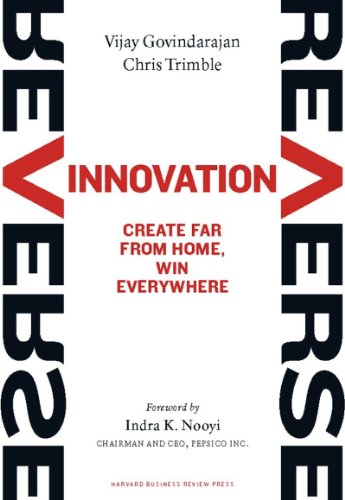
Reverse Innovation: Create Far From Home, Win Everywhere
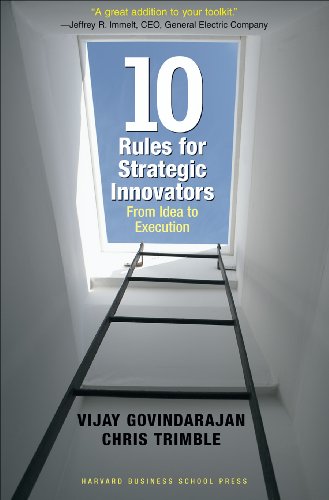
Ten Rules for Strategic Innovators – from Idea to Execution
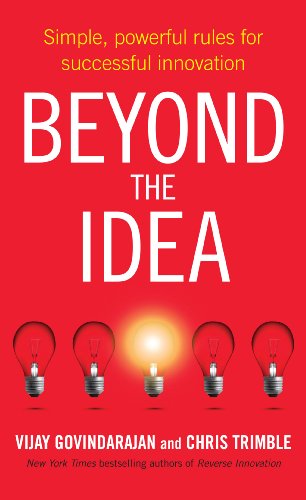
Beyond the Idea
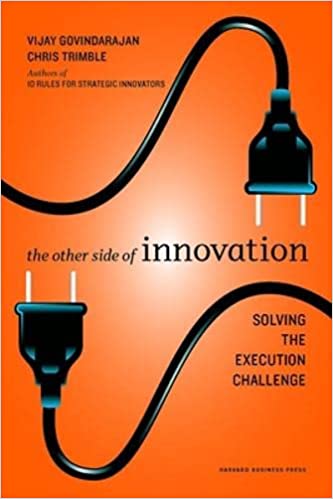
The Other Side of Innovation: Solving the Execution Challenge
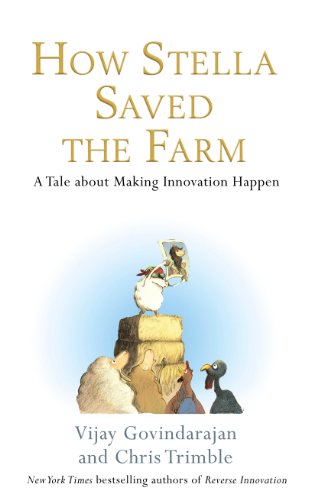
How Stella Saved the Farm
For Meeting Planners


Get in TouchContact US
Fill out the form so we can best understand your needs.
A representative from The Keynote Curators will reach out to you.
Blog Posts

Self-Talk Only Works Under Pressure If It’s Rooted in Reality
Self-talk only works if you have lived it. Dr. Jannell MacAulay explains why credible self-talk beats generic positivity under pressure.
Read More
Team Culture Beats Raw Talent Every Time, with David Burkus
Team culture always beat raw talent. David Burkus explains the trust loop, real listening, and why a toxic high performer hurts every team.
Read More
Disability at Work Is Easy When Access Is Built In From the Start
Disability inclusion works best when access is built in, not requested. Explore how design, not exceptions, makes work ordinary for everyone.
Read More
Culture vs. Leadership: Which One Is Actually Driving Your Team?
Is company culture really the problem, or is it leadership? Chris Dyer says most culture issues start at the top.
Read More
Your Career Path Doesn’t Have to Be a Straight Line
Melissa Proctor's career went up, sideways, and back again. See how her jungle gym path shaped the way she leads.
Read More
How to Master AI to Deliver High-Value Results with Sam Richter
Learn how to master AI and deliver high-value results. Sam Richter explains where AI ends and human judgment begins.
Read More
Leading Through Uncertainty Starts With One Forward Step at a Time
Leading through uncertainty does not require the whole path. A story of loss, a marker, and the next step that keeps leaders moving.
Read More
Leadership Lessons From a Futurist on Hope and Resilient Teams
Leadership feels heavier right now. Almost every leader I talk with says some version of the same thing. The pace is faster, the news is louder, and the people they lead are tired. Many of...
Read More