
Book Annie Duke through The Keynote Curators
Biography
Annie is an author, corporate speaker, and consultant in the decision-making space. Annie’s latest book, How to Decide: Simple Tools for Making Better Choices, was released in the fall of 2020 from Portfolio, a Penguin Random House imprint. Her previous book, Thinking in Bets, is a national bestseller. As a former professional poker player, she has won more than $4 million in tournament poker. During her career, Annie won a World Series of Poker bracelet and is the only woman to have won the World Series of Poker Tournament of Champions and the NBC National Poker Heads-Up Championship. She retired from the game in 2012. Prior to becoming a professional poker player, Annie was awarded a National Science Foundation Fellowship to study Cognitive Psychology at the University of Pennsylvania.
Annie is the co-founder of The Alliance for Decision Education, a non-profit whose mission is to improve lives by empowering students through decision skills education. She is also a member of the National Board of After-School All-Stars and the Board of Directors of the Franklin Institute. In 2020, she joined the board of the Renew Democracy Initiative.
Contact us for Annie Duke fees and availability
Videos
Speech TopicsExpand each topic to learn more
Once we form a belief, we have a robust tendency to reason around that belief, applying information that confirms our beliefs and ignoring evidence that disconfirms our beliefs. We will also actively work to discredit evidence that disagrees with us. This is a biased process, with different standards for evaluating evidence that agrees with our beliefs and evidence that disagrees with us. The process forms a vicious circle where we reason to support beliefs we already hold instead of updating and changing our beliefs as we gather new information. Annie Duke explains this robust cognitive error and how it impairs our decision-making in business and throughout our personal lives. She traces the origins of this bias in memory and thinking and offers strategies to becoming better and more flexible thinkers.
In Annie Duke’s 20 years playing poker, she noticed that most players quickly plateau in their learning despite an abundance of evidence about how they can improve. Players win or lose hands many times an hour and get feedback about the quality of their play almost immediately. Outcomes are closely tied in time to decisions. Poker provides a closed, tight feedback loop so it should provide an ideal environment for years of learning and improvement. Players also have the opportunity to watch others win or lose hands even more often than they play hands themselves. Yet most poker players repeat the same mistakes. Players have trouble incorporating both positive and negative feedback. When things go well, they give maximum credit to their skill. When things don’t go well, they blame luck. Wins, therefore, teach them to do exactly what they are already doing. They ignore losses, attributing them to factors outside their control. Of course, this occurs in every facet of our lives. Annie examines this process with examples from poker, familiar personal and business decisions, and behavioral science research. She shares comprehensive strategies to mitigate these biases, embracing the feedback that our outcomes provide to become better long-term learners. These strategies can be adopted by individuals or at an organizational level.
In poker and throughout our lives, we should try to maximize the time we spend in favorable situations and minimize our time in unfavorable ones. Poker players are too quick to quit when they are winning. They look for any excuse to put the session in the (nonexistent) win column. The same players will refuse to quit a losing game. The same thing happens outside poker: sales professionals not giving up on a dead lead and investors unwilling to sell their losing investments. Even something as pedestrian as picking the slowest line at a grocery store and being unwilling to change lines stems from the same bias. Annie Duke examines how the interaction of many cognitive biases (including loss aversion and sunk-cost bias) drives this behavior. These tendencies cause us to miss good opportunities and continue playing when the odds are against us. Annie provides insight into avoiding this costly decision-making error with strategies that prevent us initially making these poor decisions and how to take a longer-term view so we are not as caught up in the emotion of the moment. These strategies apply in the workplace, to parenting and to other personal decisions.
Has anyone ever told you, “Why don’t you sleep on it?” or “Take ten deep breaths before you decide” or even “Calm down”? If so, you (like everyone else) have been on tilt. Tilt is a state of distress that causes us to make emotionally charged and irrational decisions. In poker, many talented players go broke because they play poker on tilt. Making decisions in this unproductive emotional state is not confined to the poker table. Tilt is common in corporate environments, in finance and sales, and, of course, in our personal lives as anyone with a teenager can attest. The best poker players in the world devote tremendous time and energy on how to reduce the effect of their emotions on their decision-making process. Annie Duke shares the secrets and strategies the top players employ to avoid emotionally charged decision-making.
One of the biggest challenges poker players face is how to maintain a long-term view that maximizes their results over their career when they are making moment-to-moment decisions in highly emotionally charged situations. One of the biggest obstacles to success as a player is not talent as most might suspect. It is the ability to balance the future against the present moment, to avoid making decisions that might feel good in the moment but will be costly to your future self. This is the same problem we all face in making decisions on just about anything—retirement savings, dieting, portfolio management and procrastination, to name a few. Annie Duke shows how temporal discounting, discounting the future in favor of feeling good in the present, hurts our overall productivity both in a corporate environment and as individuals. She discusses how this irrational weighting of the present interacts with other cognitive biases to prevent learning, to create emotionally charged decision-making, to cost us wealth and to prevent us from realizing our long-term goals. She offers concrete solutions in the form of both cultural and individual supports for making the kinds of decisions in the moment that more rationally take into account our future selves.
Testimonials
Booksby Annie Duke
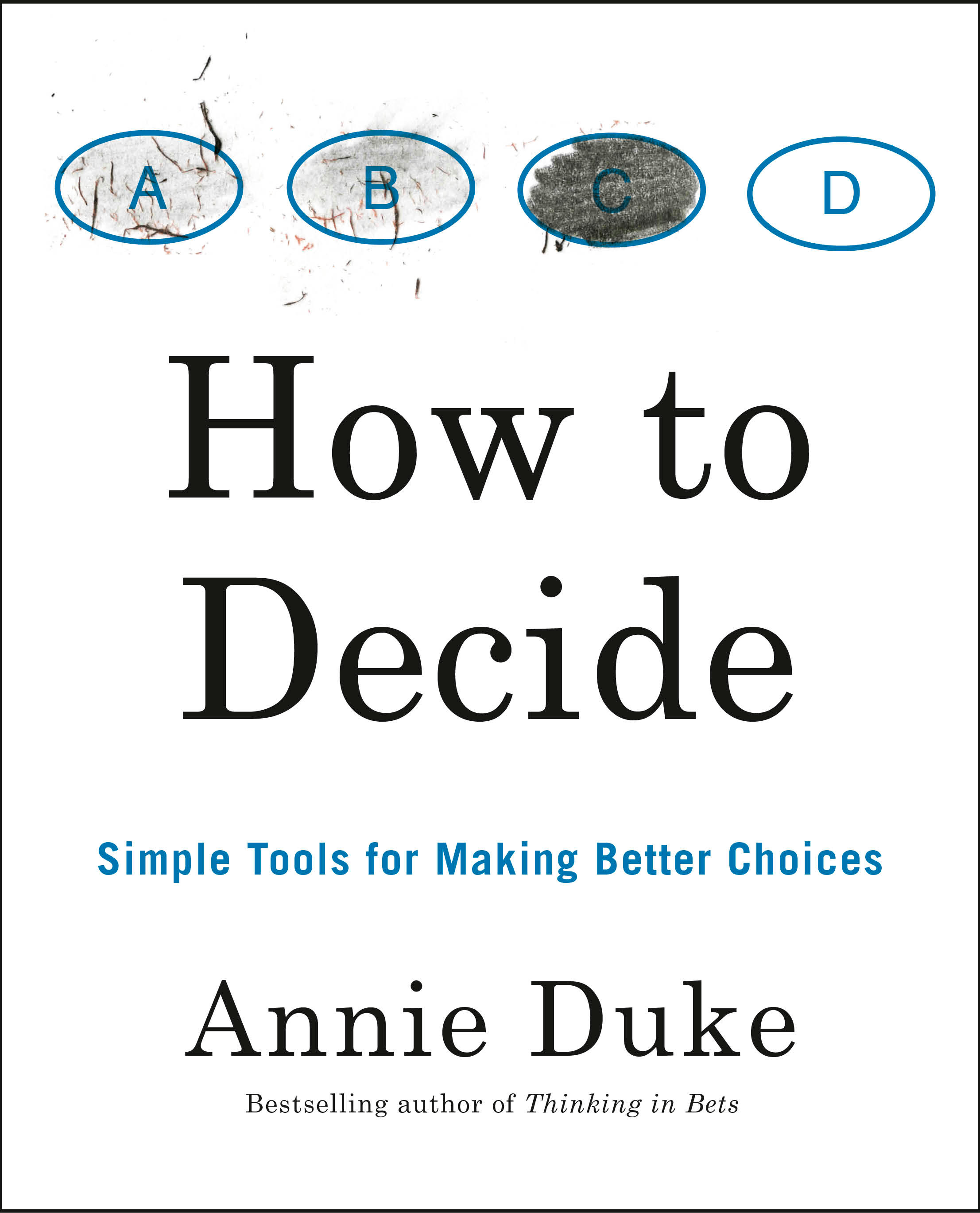
How to Decide: Simple Tools for Making Better Choices
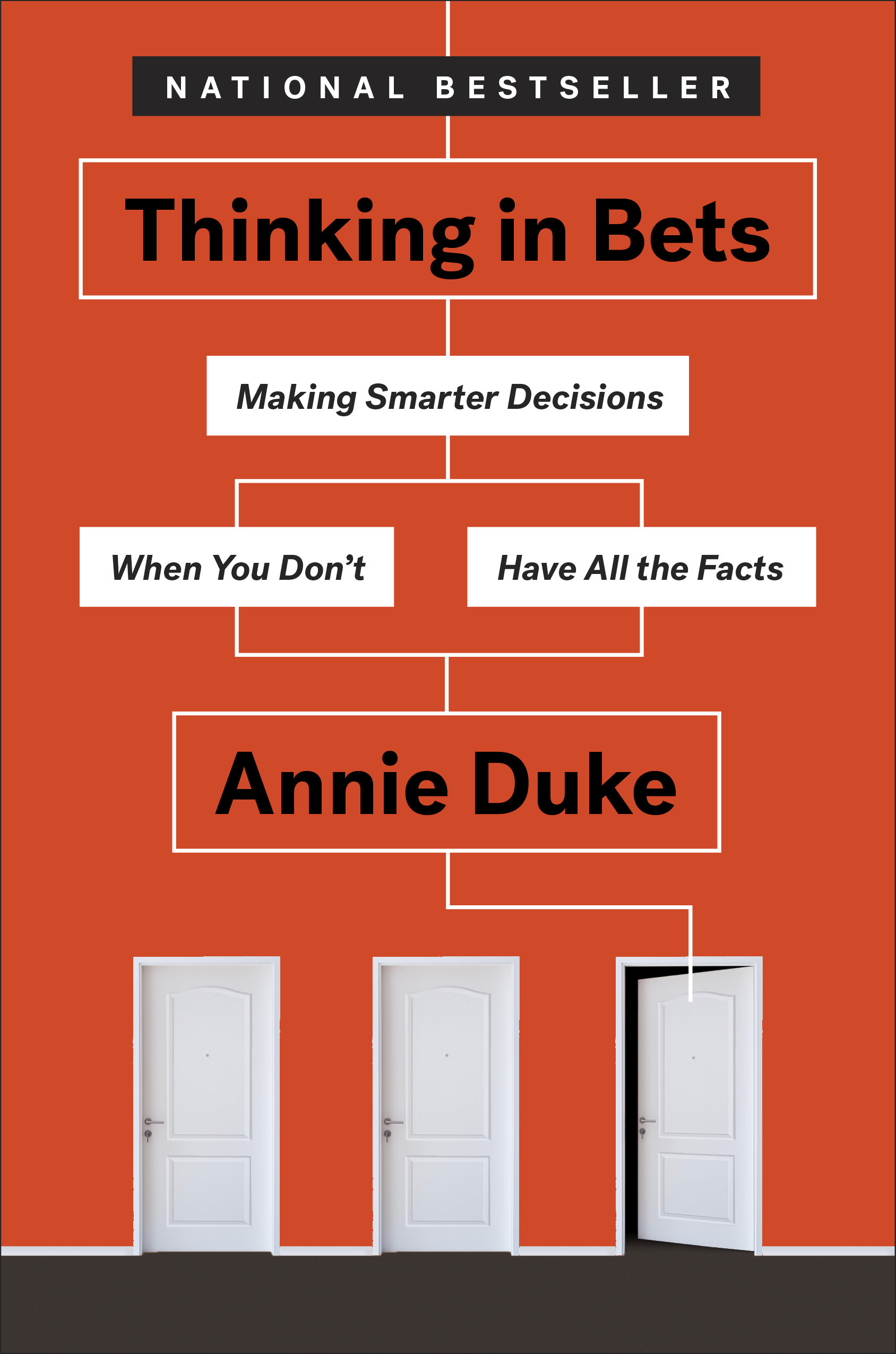
Thinking in Bets
Decide to Play Great Poker
Heads-Up Tournament Poker
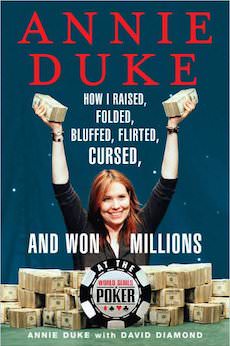
How I Raised, Folded, Bluffed, Flirted, Cursed and Won Millions
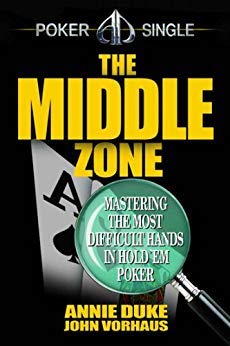
The Middle Zone
For Meeting Planners


Get in TouchContact US
Fill out the form so we can best understand your needs.
A representative from The Keynote Curators will reach out to you.
Blog Posts

Leading Through Uncertainty Starts With One Forward Step at a Time
Leading through uncertainty does not require the whole path. A story of loss, a marker, and the next step that keeps leaders moving.
Read More
Leadership Lessons From a Futurist on Hope and Resilient Teams
Leadership feels heavier right now. Almost every leader I talk with says some version of the same thing. The pace is faster, the news is louder, and the people they lead are tired. Many of...
Read More
Why ‘Better Problems’ Are Better Than Perfect Plans
Learn why better problems beat perfect plans. Jason Feifer shares how to judge ideas by the problems you trade, not the ones you avoid.
Read More
Change Starts When You Embrace Your Emotions, with Cassandra Worthy
Change starts when you embrace your emotions. Cassandra Worthy shows how to read your feelings as signals and turn discomfort into forward movement.
Read More
Breast Cancer Awareness Needs More Than Pink Ribbons and Good Intentions
Breast cancer awareness doesn't end in October. Here is what real workplace support and easier access can look like all year.
Read More
How to Create Event Experiences People Will Always Remember
What makes an event memorable? Dr. Robyne Hanley-Dafoe explains why full presence beats polls, phones, and gadgets in any live room.
Read More
Leadership Succession Planning Is the Advantage No One Is Building
Leadership succession planning is the biggest competitive advantage most companies ignore. Here's why the gap matters and how to close it.
Read More
Workplace Culture Lessons on Trust and Safety with Danny Goldberg
Danny Goldberg explains how leaders can close the gap between the workplace culture they intend and the one employees actually feel.
Read More