
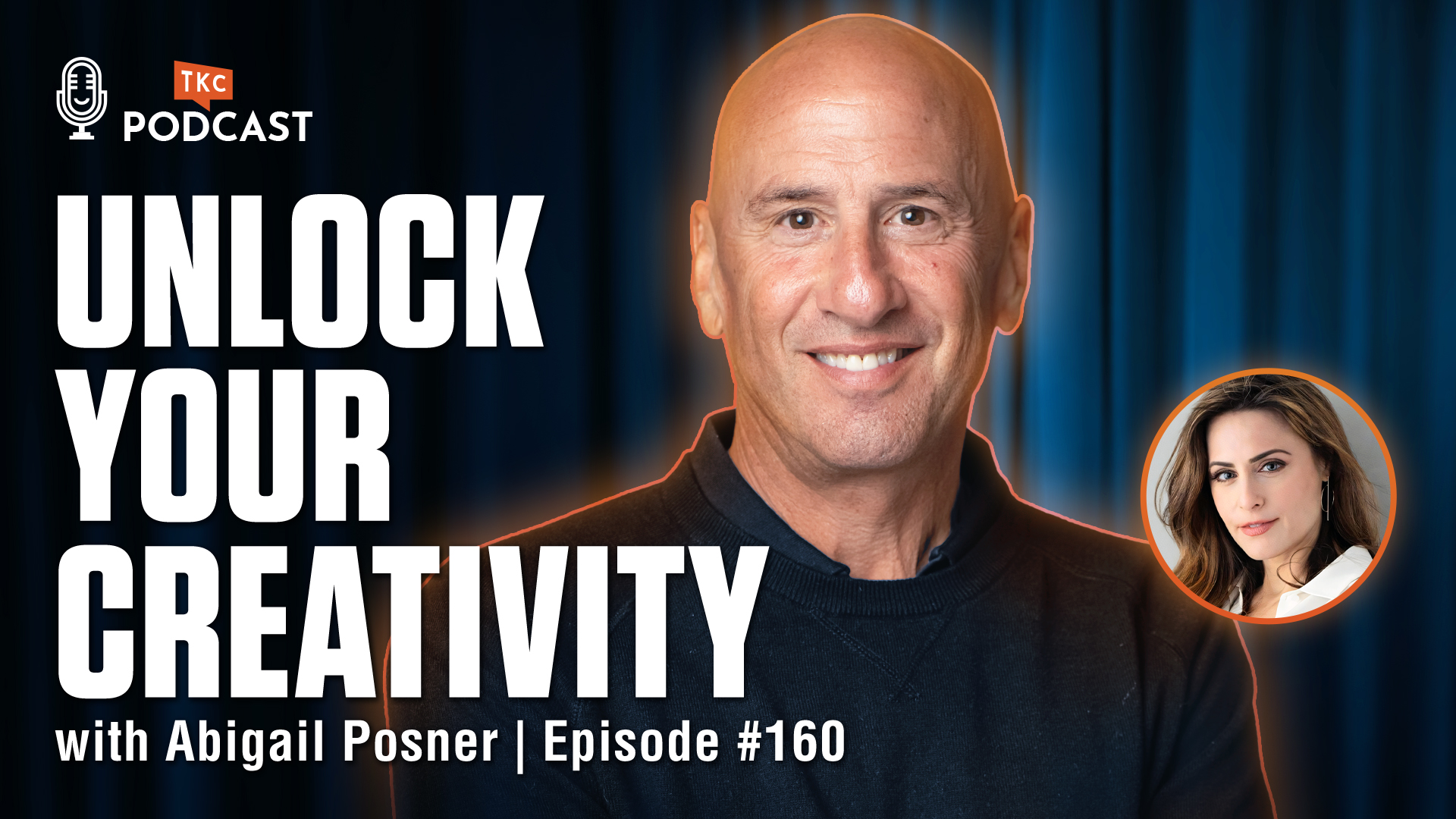
March 19, 2026Creativity Keynote Speaker Abigail Posner on Humanity First
Creativity keynote speaker Abigail Posner reveals how curiosity, data, and humanity unlock real innovation.
What if the real reason your creativity stalls has nothing to do with your tools, your budget, or your team’s talent?
I’ve been having conversations with people who think deeply about what drives human behavior, and one idea keeps surfacing: we’ve become so obsessed with the mechanics of creativity that we’ve forgotten the engine underneath it all. That engine isn’t a platform, a framework, or a productivity system. It’s curiosity. It’s connection. It’s the messy, unquantifiable part of being human that no algorithm can replicate on its own.
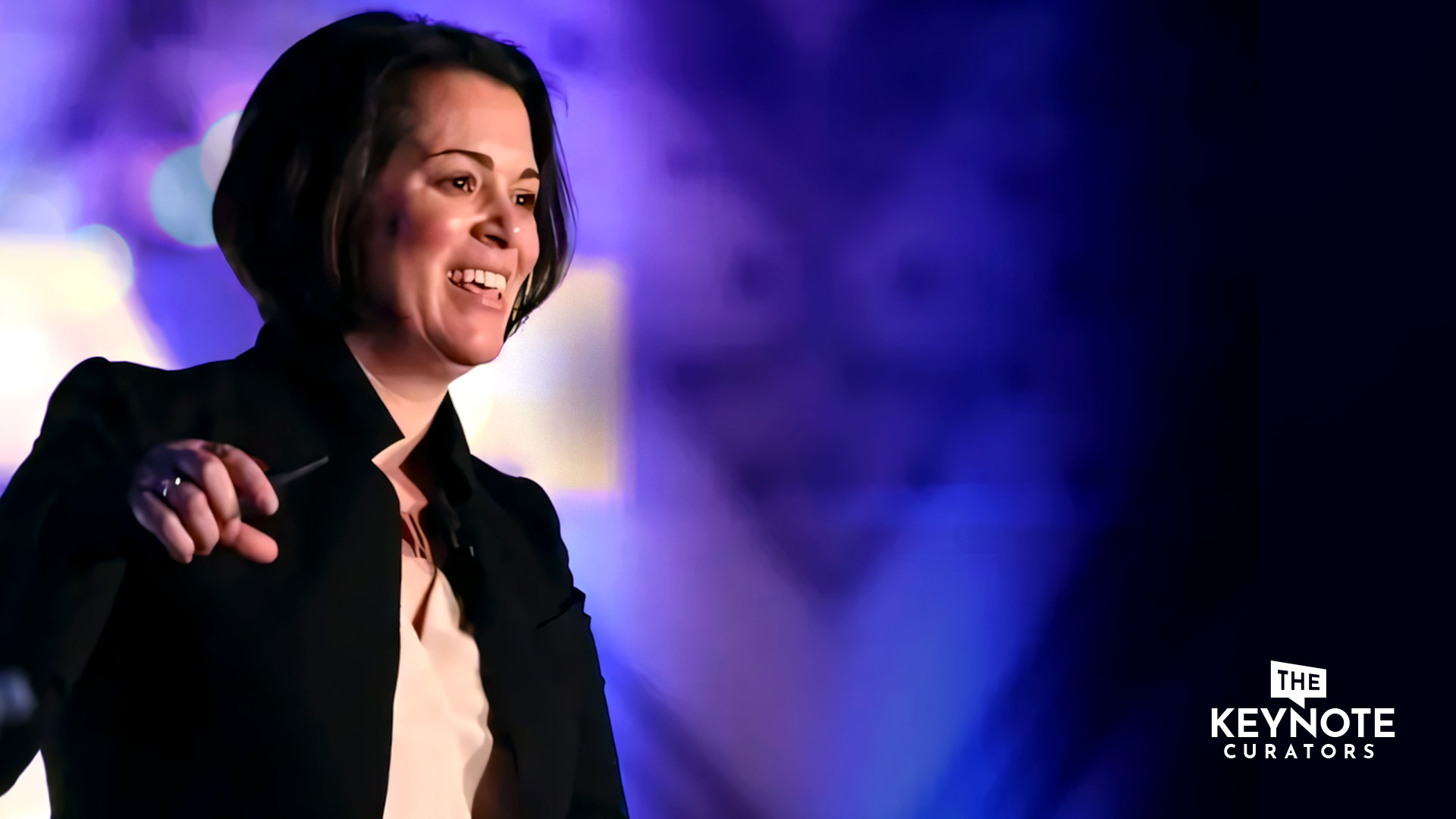
My conversation with creativity keynote speaker Abigail Posner hit differently because she doesn’t just talk about innovation in the abstract. She brings a genuinely rare set of lenses to this work: anthropology, neuroscience, digital strategy, and years on the front lines of some of the biggest brand and technology conversations in the world. She was the Director of U.S. Creative Works at Google, where she also led the Humanizing Digital initiative, an award-winning research series built around one core question: can technology deepen our humanity rather than dull it?
Her answer is yes, and she’s spent decades building the evidence and the frameworks to prove it.
What you’ll take from this piece is a clearer understanding of why creativity starts well before the brainstorm, why data and storytelling aren’t opposites, and why the events and experiences people remember most share a specific quality that has nothing to do with production value.
🎧 Watch and listen to the podcast episode: YouTube • Spotify • Apple Podcasts • Amazon Music
Creativity Keynote Speaker Abigail Posner and the Question Beneath the Question
The first thing that strikes you when you talk to Abigail is that she doesn’t start where most people start. She doesn’t open with frameworks or methodologies. She starts with a question.
Not the big “why.” The little why.
Why did someone click on that? Why did they share it? Why did something make them laugh when everything around it landed flat? Why did they trust one message and scroll past a nearly identical one?
This is where creativity lives, she argues, not in the execution layer but in the interpretive layer. Before you can build something that resonates, you have to understand what resonance actually is. And that requires getting genuinely curious about people: not their demographics, not their behavioral data in isolation, but the emotional and psychological forces that make them human.
Abigail describes this as getting comfortable with the little why, the granular, almost anthropological act of sitting with human behavior long enough to understand its roots. It’s the kind of curiosity that’s difficult to systematize, which is exactly why organizations tend to skip over it. We’re trained to move fast, to ship, to iterate. Slowing down to ask a deeper question feels like a luxury. Abigail makes the case that it’s actually a competitive advantage.
This is central to what she calls The Expansiveness Edge: the idea that embracing every facet of our humanity, including the uncomfortable, the irrational, and the intuitive, is what separates organizations that consistently generate great ideas from those that churn out competent ones.

How Creativity and Data Work Together Without One Erasing the Other
One of the most persistent tensions in modern branding and marketing is the relationship between data and creativity. The argument usually gets framed as a binary: you either trust the numbers or you trust your gut. Abigail rejects that framing entirely.
Data, she explains, can show you behavior. It can tell you what people did. It can map patterns, flag anomalies, and reveal things that intuition alone would never surface. But data can’t tell you why someone felt compelled to act. It can’t explain the emotional texture of a decision. It can’t read the undercurrent of meaning that runs beneath a trend.
That’s where creativity comes in, and more specifically, where the human interpreter of that data becomes essential. The skill isn’t in the numbers themselves. It’s in the questions you bring to them. A curious person sitting with behavioral data sees an invitation to go deeper. A person trained only to report findings sees confirmation or contradiction.
This distinction matters enormously for business growth, because the organizations that figure out how to use data as a prompt for human questions, rather than as a replacement for them, are the ones that consistently generate ideas that actually land. They’re not choosing between evidence and instinct. They’re using one to sharpen the other.
Abigail’s work at Google gave her a front-row seat to this dynamic at scale. Working with Fortune 500 brands and agencies, she watched companies get seduced by the idea that more data would solve their creative problems. Sometimes it did. More often, it surfaced a different problem than creativity: a fundamental lack of curiosity about the people behind the numbers.
Why Authenticity in Creativity Outperforms Polish Every Time
There’s a quality that separates the events, campaigns, and experiences people remember from the ones they forget before they’ve left the room. It’s not production value. It’s not how well-rehearsed the presenter was. It’s not even how relevant the content was on paper.
It’s authenticity. And authenticity, Abigail is clear about this, is not a style choice. It’s a signal.
Audiences are extraordinarily good at detecting when something has been over-scripted. When every edge has been sanded off. When a message has been optimized to the point where the human being behind it has been edited out. We may not always be able to articulate what feels off, but we feel it. That slight disconnect between what someone is saying and what their body, tone, and energy are communicating registers even when we’re not consciously looking for it.
The conferences and events that people walk away from talking about, the ones that generate real word of mouth and genuine community, are the ones that created space for something unscripted to happen. For honest exchange. For curiosity. For the kind of interaction that makes someone feel seen rather than sold to.
This connects directly to corporate culture as well. Organizations that perform culture, that post the values on the wall without embedding them in how people actually work and talk and make decisions, generate the same kind of hollowness. People can feel the gap between the stated message and the lived reality. And once they feel it, trust erodes in ways that are very difficult to rebuild.
Abigail’s point isn’t that polish is bad or that preparation undermines authenticity. It’s that preparation should serve presence, not replace it. The goal of rehearsing an idea is to know it so well that you can be fully in the room with the people you’re talking to, not delivering a product at them.
What Anthropology Teaches Us About Innovation Strategy
Abigail’s background in anthropology isn’t incidental to her work on innovation. It’s foundational. And it’s one of the things that makes her approach genuinely different from most strategy consultants or keynote speakers working in this space.
Anthropology is the study of humans in context. Not humans as rational actors making optimized decisions, but humans as meaning-making creatures embedded in culture, history, community, and emotion. It’s a discipline that requires patience, observation, and a willingness to suspend your assumptions long enough to see what’s actually there.
Applied to business, creativity and innovation, this means doing something most organizations actively resist: slowing down to understand the cultural and emotional context around a problem before rushing to solve it. It means asking not just what our customers want but what this want tells us about who they are and what they’re trying to make sense of in their lives?
This kind of inquiry doesn’t fit neatly into a quarterly roadmap. It doesn’t produce a dashboard. But it consistently produces something more durable: ideas that have genuine resonance because they’re rooted in something real about human experience, not just market positioning.
Abigail has seen this dynamic play out across industries, and her work at Google gave her access to a particularly rich set of case studies. The brands and teams that invested in genuinely understanding the people they were trying to reach, beyond the usual segmentation and persona work, were the ones that used their creativity by generating work with staying power. Not because they were more talented, but because they were more curious.
Play, Belonging, and the Overlooked Drivers of Creative Teams
One of the most interesting threads in my conversation with Abigail was around what actually makes a team creatively generative over time. Not just in a workshop or a sprint, but sustainably, year after year.
The answer she kept returning to was play. Not play as a team-building exercise or a culture perk, but play as a cognitive mode: the willingness to explore without knowing where you’re going, to be wrong in front of other people, to follow an idea somewhere unexpected without immediately asking whether it has commercial application.
Play is, neurologically, one of the most powerful states for creative thinking. It reduces the threat response that shuts down associative thinking. It creates the psychological safety that allows people to surface half-formed ideas that might, with the right conversation, become breakthrough ones. And it generates the kind of genuine connection between team members that makes collaboration actually feel like something worth doing.
Belonging is the other piece. Abigail is direct about this: people cannot exercise their creativity in environments where they don’t feel psychologically safe. The research on this is unambiguous, and her experience across business and technology sectors confirms it. When people feel like they have to protect themselves, they self-edit. They offer the expected idea rather than the honest one. They optimize for survival rather than exploration.
Building creative teams, then, isn’t primarily a talent acquisition or process design challenge. It’s a culture challenge. And it starts with leaders who are willing to model the curiosity, vulnerability, and openness they say they want from their people.
The Technology Relationship and What We Risk Getting Wrong
Abigail’s Humanizing Digital initiative at Google was built around a thesis that felt counterintuitive when she first started making it: that technology and humanity are not in competition. The creativity question isn’t whether tech is making us more or less human, but whether we’re being intentional about how we let it shape our experience.
The risk she identifies isn’t that AI or digital tools will replace human creativity. It’s subtler than that. The risk is that we’ll use them in ways that gradually atrophy the very capacities that make us creatively valuable: our curiosity, our comfort with ambiguity, our ability to sit with a problem long enough to understand it before we reach for a solution.
The organizations that figure out how to use technology as an amplifier of human intelligence, rather than a substitute for it, will have an enormous advantage. Not because they’ll be more efficient, though they probably will be, but because they’ll be able to do something no tool can do on its own: make meaning. Connect with people in ways that feel genuinely human. Generate ideas that surprise even the people who created them.
This is the heart of what creativity keynote speaker Abigail Posner brings to a stage or a consulting engagement. It’s not a warning about technology. It’s an invitation to be more intentional about the relationship we’re building with it, and to invest as seriously in the human side of that equation as we do in the technological one.
How Creativity Keynote Speaker Abigail Posner Works with Organizations
What separates a great keynote from one that gets forgotten on the Uber ride home is whether the audience leaves with something they can actually use. Abigail is explicit about this: inspiration without a mechanism for implementation is just a good feeling that fades.
Her engagements are structured to deliver both. She combines the conceptual clarity needed to shift perspective with the practical creativity frameworks that allow individuals and teams to translate that shift into changed behavior. Whether she’s working with C-suite leaders navigating transformation or emerging creative teams trying to find their footing, she adapts the delivery to meet people where they are.
Her podcast, HUMAN CODE, extends that work beyond the stage, creating an ongoing space for the conversations that organizations often don’t make time for in the normal course of business. Her written work and global stage presence have made her a recognized voice on the intersection of creativity, technology, and human behavior, recognized formally with the Media Impact Award from the United Nations.
For event and meeting planners looking for a speaker who can shift how a room thinks about creativity, not just inspire them but genuinely reframe their operating assumptions, Abigail Posner is one of the most distinctive voices working in this space right now.
Ready to bring creativity to your next event? Here’s how to take the next step:
📅 Schedule a 15-minute call here, and let’s talk about your stage.
📩 Send me your audience and event theme at info@thekeynotecurators.com, and I’ll tell you whether Abigail Posner is the right fit.
Discover More Insights



Get in TouchContact US
Fill out the form so we can best understand your needs.
A representative from The Keynote Curators will reach out to you.
Our Services
Keynote Speakers Topics
© 2026 The Keynote Curators. All Rights Reserved | Terms and Conditions
The Keynote Curators, 8275 South Eastern Avenue, Suite 200, Las Vegas, NV 89123
Local (310) 299-4595 | Toll Free (888) 585-8715 | info@thekeynotecurators.com
The Keynote Curators - Top Keynote Agency, USA.