

May 18, 2026Event Creativity Strategies That Actually Make You Stand Out
Discover how event professionals can break free from sameness and design truly memorable experiences by unleashing creativity and bold thinking.
Every event starts to blur together. You walk into a conference hall, you scan the agenda, you find your seat, and somewhere between the welcome remarks and the fourth panel of the day, you realize you’ve been here before. Not this exact event, but this exact feeling. The same flow, the same structure, the same forgettable moments that vanish from memory the second you step back outside. If you’re an event professional, that realization should stop you cold, because it means your event is doing the same thing to your attendees.
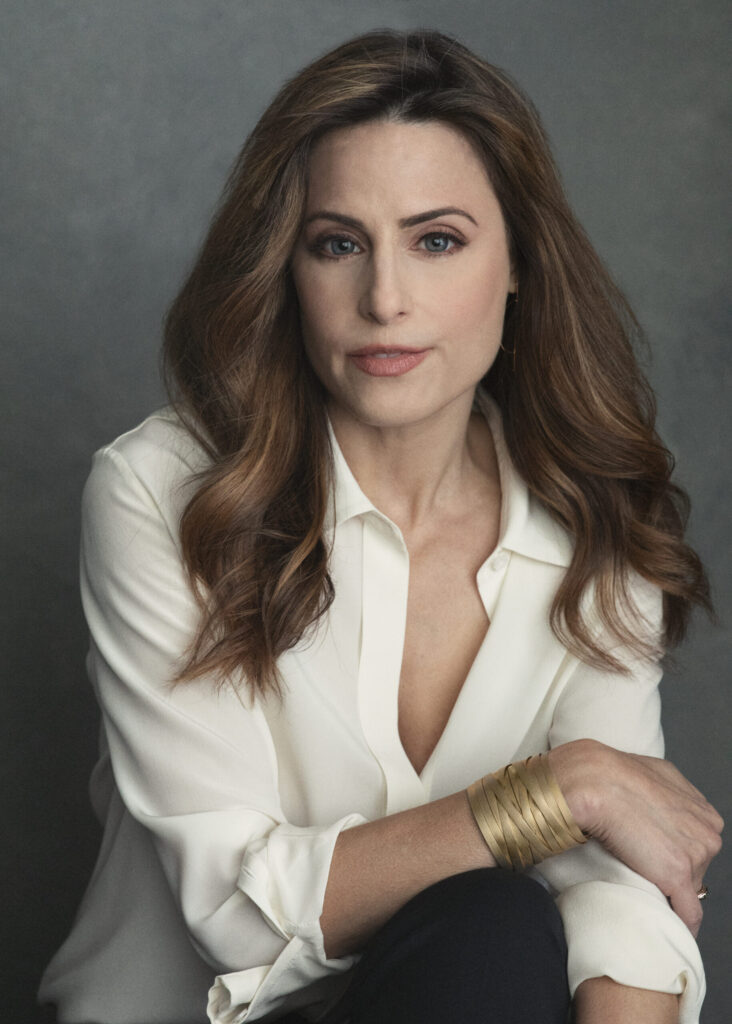
This is the problem that event creativity expert Abigail Posner has spent years helping organizations confront and solve. As the former Director of U.S. Creative Works at Google and one of the most original thinkers working at the crossroads of technology, human behavior, and innovation, Abigail brings a perspective to event design that few people can match. She has spoken at events across the globe, advised Fortune 500 companies and startups alike, and helped audiences at every level move past safe, predictable experiences toward something genuinely worth remembering. Her message is direct and urgent: in a world being reshaped by AI, the event professionals who dare to think differently are the ones who will matter.
In this conversation, Abigail shares exactly how she approaches the challenge of event creativity, what it takes to escape the sea of sameness, and why the best ideas almost never come from inside your own industry.
🎬 Watch and listen to the full interview about event creativity here
Why Every Event Is Starting to Feel the Same
The sea of sameness is not an accident. It’s the predictable result of an industry optimizing for safety. Event professionals are under real pressure to deliver experiences that work, and “working” often gets defined as “not failing.” So they look at what other successful events have done, borrow the structure, replicate the format, book the expected type of speaker, and produce something competent but completely interchangeable.
Abigail Posner names this pattern directly. “You are just gonna do the same thing that everyone else is gonna do, and you’re not gonna stand out.” That’s not a judgment, it’s a diagnosis. When the default is to follow what’s already working, the whole field converges toward the same middle ground. Every event starts to look like a slightly adjusted version of the last one.
The problem has gotten more acute with the rise of AI. Generative tools can produce event concepts, agenda structures, speaker briefs, and audience engagement ideas in minutes. That sounds like a creative advantage, but Abigail sees the other side of it clearly. When everyone has access to the same AI tools and those tools are trained on the same existing content, the output tends to cluster around the already familiar. AI, left to its own defaults, accelerates convergence. It doesn’t generate what has never been done before; it generates plausible combinations of what already exists. And plausible, for an event, is just another word for forgettable.
The professionals who understand this have a real opening. If the majority of the market is letting AI pull everything toward the middle, then the ones willing to think beyond that middle have an extraordinary opportunity to differentiate. But it requires something that can’t be outsourced: genuine creative courage, and a method for finding ideas that don’t yet exist in your immediate field.
The Real Risk Is Playing It Safe
There’s a widespread assumption in event planning that bold choices are risky. Try something unfamiliar, and it might not land. Design something unexpected, and attendees might be confused. Push against the standard format, and stakeholders might get nervous. So the calculation, consciously or not, becomes: stay close to what has worked before and minimize the chance of failure.
Abigail Posner flips that logic entirely. Safety, she argues, is actually the biggest creative risk you can take. When you play it safe, you don’t avoid risk, you just trade one kind of risk for another. The risk of a bold idea falling flat gets replaced by the near-certainty of blending in. And blending in, in a crowded event landscape, means your attendees remember nothing, return to nothing, and tell no one about nothing.
This reframe matters because it changes the stakes of the creative conversation. It’s no longer about whether you can afford to be bold. It’s about whether you can afford not to be. “Right now, especially in this world of AI, that is our mission. We need to stand out with unique ideas.” Abigail isn’t suggesting that event professionals chase novelty for its own sake, or try to be provocative just to get attention. The goal isn’t to be obtrusive or to push an agenda loudly. The goal is to solve a problem that almost no one else has solved yet: how to create an event experience that is genuinely worth having.
When you look at it that way, creativity becomes less about personal expression and more about professional responsibility. It’s about delivering something real to your audience. And that kind of creativity, Abigail argues, is available to anyone willing to look for it in the right places.
Where the Best Event Ideas Actually Come From
Here’s where Abigail’s framework gets practical. Most event professionals look for inspiration inside their own industry. They attend other events, read industry publications, follow what the leading conferences are doing, and adapt from that pool of existing ideas. The problem is that everyone in the industry is drawing from the same pool. The result is iterative improvement at best, and, more often, just replication with slightly different branding.
Abigail’s instruction is to break that habit deliberately. “Look at the space you’re in and then step out of your industry and look at all these other worlds and then see what happens if you kind of apply what they do with what you do.” The key move is looking outward, far enough that you’re encountering genuinely different problems being solved in genuinely different ways.
This isn’t about finding a gimmick. It’s about finding a principle. Sports have figured out something about communal energy and live stakes that event designers could learn from. Fashion has cracked the code on anticipation, exclusivity, and sensory experience in ways that most conferences have never tried. Science operates on a culture of rigorous questioning and collaborative challenge that could transform how panels and workshops are structured. None of these fields are doing what events do, which is exactly the point. The gap between what they do and what you do is where original ideas live.
Abigail describes this as a core method for unlocking creativity, not just for events but across all creative work. The practice of stepping outside your domain and asking what connection might exist between your challenge and how a completely different field has solved its version of the same challenge is one of the most reliable ways to generate ideas that no one in your space has thought of yet. It’s uncomfortable at first, because the connections aren’t obvious. But that discomfort is a signal that you’re on the right track. If the idea were obvious, someone else would already be doing it.
For event professionals working in business contexts, this kind of cross-industry thinking also demonstrates something to your audience: that the people who designed this experience are paying attention to more than just event trends. That signal alone creates a different quality of trust and engagement before the first session even begins.
The Ozone Layer as a Creativity Model
One of the most striking examples Abigail brings to this conversation is the story of the ozone layer, and it’s not the obvious parallel you might expect. She doesn’t use it as a cautionary tale about environmental crisis. She uses it as one of the greatest case studies in human creativity that she knows.
The ozone layer is now closing. That is an extraordinary fact when you stop to think about it. A global environmental problem, discovered in the 1980s, was addressed through international cooperation so effective that the damage is actually reversing. How did that happen? Abigail points to the answer: “A group of people with unlike worlds, scientists, business people, politicians, totally unlike worlds, got together, armed with their insights, to come up with an idea to fix it, and it’s working.”
The key phrase is “unlike worlds.” The solution to the ozone crisis didn’t come from scientists alone. It didn’t come from policy experts alone. It came from the collision of genuinely different kinds of knowledge, held by people with genuinely different training, incentives, and ways of seeing the problem. Business concepts were applied to scientific challenges. Political frameworks were applied to technological ones. The creativity emerged from the friction and synthesis between perspectives that had no natural reason to be in the same room.
This is exactly the model Abigail points event professionals toward. What would it look like to design your event the way the Ozone Coalition designed its solution? To deliberately bring together people from unlike worlds, armed with their distinct insights, around a shared challenge? What if the design of your programming itself embodied that principle, rather than just talking about it in a keynote?
The application could be structural. Curating an audience that crosses industry lines. Building sessions that force unexpected collaborators to work together in real time. Creating moments where the person sitting next to you has a completely different frame of reference for the problem you’re both trying to solve. These are not complicated additions to an event. They’re choices that cost nothing extra but deliver the kind of experience that people carry with you for years.
Applying Cross-World Thinking to Your Event Design
The principle Abigail describes is portable, and it’s worth thinking through what it looks like in practice across different dimensions of an event. The structure of a session, the physical environment of the space, the social dynamics of networking, the arc of the overall agenda, all of these are design decisions that most events make conservatively, by looking at what other events have done.
Take session design as an example. The standard panel format, four or five people sitting in chairs answering questions from a moderator, is so ubiquitous in the events world that it’s effectively invisible. No one chose it because it was the best possible format for generating insight or conversation. It became the default because it was manageable and replicable. But if you step out of the events world and look at how science communicates new ideas through peer challenge, or how improvisational theater generates unexpected dialogue, or how design sprints produce creative breakthroughs, you start to see that the panel format is just one answer to a problem that has dozens of better solutions.
The same applies to networking. Most events treat networking as something that happens between sessions, in hallways, over coffee, in whatever format people fall into naturally. But architects have spent decades studying how space shapes human connection. Anthropologists have mapped the conditions under which strangers form meaningful bonds. Hospitality designers have engineered environments that reduce social friction and increase interaction. None of that knowledge typically makes it into event design, because event planners are usually only talking to other event planners.
Abigail’s point is that you don’t have to invent these solutions from scratch. The hard work of figuring out how human beings connect, collaborate, learn, and engage has already been done by people in fields you haven’t thought to look at yet. The creative act is the looking, and then the synthesis. Bringing that knowledge back to your event context and asking: what would this mean for the experience I’m trying to build?
This is what separates events that people remember from events that blend together. It’s not always a bigger budget or a more famous speaker roster. It’s a quality of deliberate, cross-disciplinary thinking applied to every design decision. And that quality of thinking is exactly what Abigail Posner trains organizations and teams to develop.
How AI Changes the Stakes for Event Creativity
Abigail’s framing of AI is worth dwelling on, because it’s more nuanced than the usual conversation. She isn’t anti-AI. She isn’t arguing that technology is the enemy of creativity. Her work at Google, including the Humanizing Digital initiative she led there, was built on the premise that technology and humanity can deepen each other rather than compete. But she is clear-eyed about what AI does to creative fields when it becomes the primary driver of decisions.
The core dynamic is this: AI is extraordinarily good at producing outputs that are plausible, polished, and median. It synthesizes existing patterns and generates results that fit well within those patterns. In most domains, that’s enormously useful. But in branding and marketing, and especially in event design, being plausibly good is not the goal. The goal is being memorable, distinctive, and worth choosing over every alternative.
When event professionals lean on AI tools without bringing their own bold thinking to the table, they produce events that are competently assembled from existing templates. The copy sounds polished. The agenda looks logical. The format is familiar. And the result is an event that disappears from memory before the flight home lands.
The opportunity here is real, and Abigail frames it as a mission, not just a competitive advantage. In a world where AI is accelerating the drift toward sameness, the professionals who commit to genuine creative thinking become genuinely rare. The event that someone designed with cross-disciplinary curiosity, intentional strangeness, and a willingness to borrow from unlike worlds stands out not just against other events but against an entire cultural backdrop of AI-mediated sameness.
This is the strategy that Abigail brings to organizations across industries: not resistance to AI, but a commitment to the kind of human creative thinking that AI cannot replicate. The curiosity to look outside your domain. The courage to apply what you find. The judgment to synthesize across worlds in a way that produces something no template could generate.
What Event Professionals Can Start Doing Right Now
The shift Abigail describes doesn’t require a complete overhaul of how you work. It starts with a habit, specifically the habit of deliberately looking outside your industry when you’re in the design phase of anything.
When you’re building the next event, before you look at what other conferences are doing, spend time with an industry that has nothing to do with yours. Not for a specific answer, but for a principle. What has sports done to make live attendance feel irreplaceable in a world where you can watch everything from home? What has the culinary world figured out about sequencing experiences so that each moment sets up the next? What has the music festival world learned about how physical environment shapes collective emotional states?
These are not hypothetical questions. They have real answers, developed by smart people solving hard creative problems in contexts that have nothing to do with your event. The answers don’t transfer directly. You don’t take a music festival layout and apply it to a B2B summit unchanged. But the principle behind the layout, the thinking about how space shapes movement shapes mood shapes memory, that principle translates. That’s what Abigail means by applying what another world has done to what you do.
This also changes how you evaluate your own ideas. When you’re assessing a proposed design decision for your event, one useful question is: has anyone else in the events industry already done something like this? If the answer is yes, that’s a signal worth taking seriously. Not a disqualifier, but a prompt. What would it take to push this further? What would someone from outside the industry do with this same challenge? The goal is to keep raising the level of distinctiveness until you’re building something that couldn’t have come from a template.
Corporate culture and business growth are both downstream of the kinds of experiences an organization creates for its people and its clients. Events are one of the highest-leverage moments a company has to shape culture, build relationships, and demonstrate what it values. Treating that moment as a checkbox, something to be handled competently and forgotten, is a significant missed opportunity. Treating it as a creative act worth genuine investment is what separates organizations that people want to be part of from ones they simply work for.
The Bigger Principle Behind the Method
Everything Abigail Posner describes about event creativity connects back to something deeper in her overall framework for creativity and human potential. Her concept of The Expansiveness Edge is built on the idea that the most powerful creative resource any organization has is the full range of human curiosity, perspective, and connection across its people. The ozone example isn’t just a story about climate policy. It’s a story about what happens when you stop limiting the pool of contributors and start designing for the collision of unlike worlds.
This applies to events, but it applies just as directly to how organizations approach innovation more broadly. The teams that solve problems no one else has solved are almost never the ones who stayed inside their discipline. They’re the ones who went looking in the places that felt irrelevant, found a principle that transferred, and had the courage to apply it. That’s not a talent you either have or don’t. It’s a practice. And like every practice, it starts with a choice to try.
For event professionals, the choice is right in front of you. The next event you design is an opportunity to break the pattern that most of your peers will keep following. It doesn’t require a massive budget or an entirely new approach from the ground up. It requires curiosity, a willingness to look outside the room, and the confidence to bring back what you find and build with it.
That’s the insight Abigail leaves you with. You don’t have to invent something from nothing. You just have to look in the right places.
Ready to bring this kind of creative thinking to your next event? Book event creativity keynote speaker Abigail Posner for your conference and give your audience an experience worth remembering.
📆 Let’s design something different together
✉️ Questions? Reach out to us at info@thekeynotecurators.com
Discover More Insights


Get in TouchContact US
Fill out the form so we can best understand your needs.
A representative from The Keynote Curators will reach out to you.
Our Services
Keynote Speakers Topics
© 2026 The Keynote Curators. All Rights Reserved | Terms and Conditions
The Keynote Curators, 8275 South Eastern Avenue, Suite 200, Las Vegas, NV 89123
Local (310) 299-4595 | Toll Free (888) 585-8715 | info@thekeynotecurators.com
The Keynote Curators - Top Keynote Agency, USA.