
July 31, 2026Real Leadership Is About Getting Everyone to The Top
Ed Viesturs shows why real leadership means patience, trust, and bringing the whole team to the top, not rushing the climb alone.
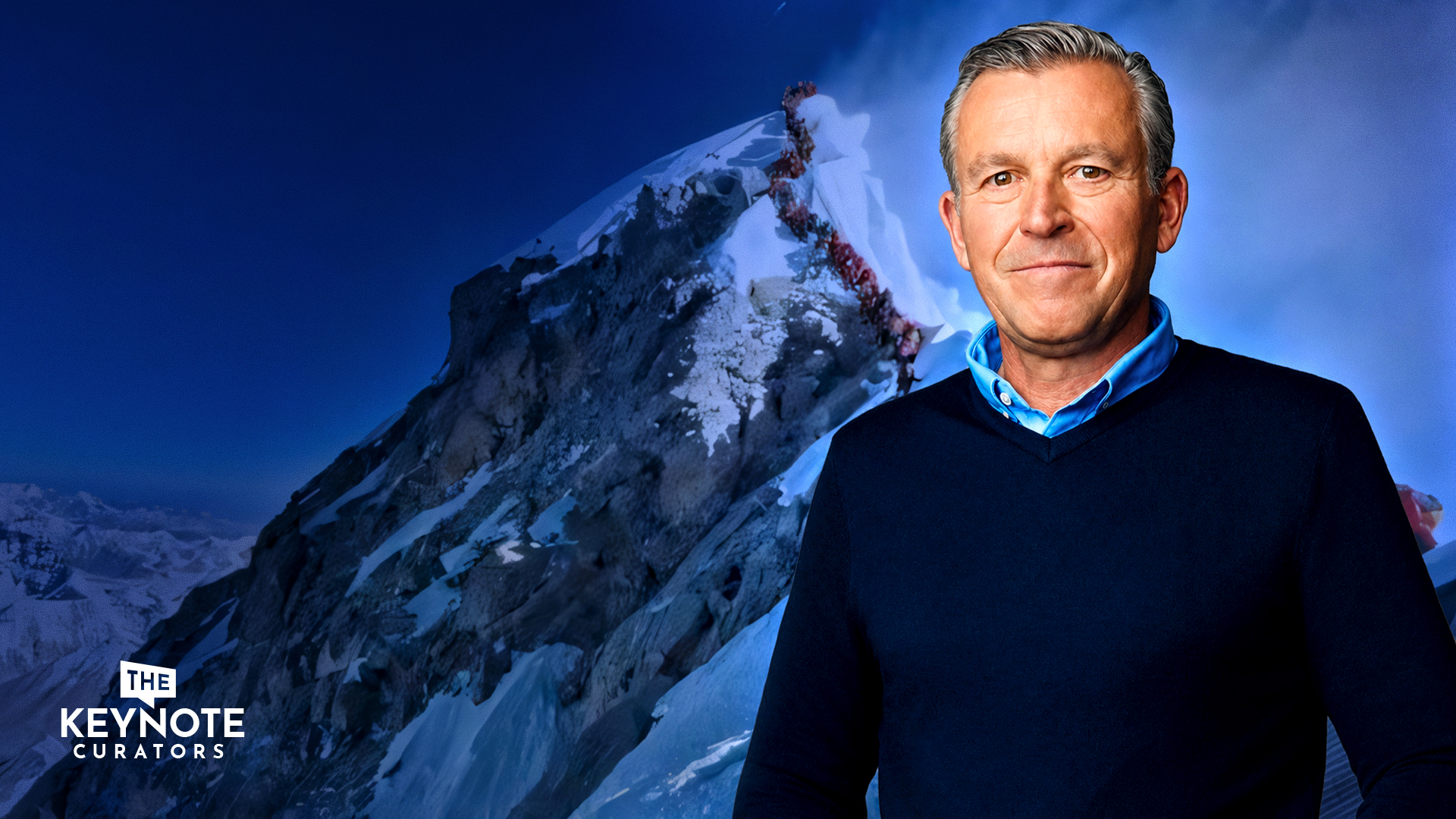
What if the biggest mistake in leadership is trying to speed up a process that was never meant to be rushed? I have spent a lot of time thinking about that question since sitting down with Ed Viesturs, America’s foremost high-altitude mountaineer and one of only a handful of climbers in history, and the only American, to summit all fourteen of the world’s 8,000-meter peaks without supplemental oxygen. Ed did not learn leadership in a boardroom.
He learned it above 25,000 feet, in conditions where a single miscalculation is not a missed quarterly target but a matter of life and death. And what struck me most in our conversation is how directly those lessons translate. Real leadership, according to Ed, has almost nothing to do with speed and almost everything to do with patience, trust, and the discipline to bring everyone home together.
📺 Watch and listen to the full interview about leadership here
The Myth of the Shortcut
Ed titled his bestselling book No Shortcuts to the Top, and the more I sit with that phrase, the more I think it should be printed on the wall of every executive office in the country. We live in a culture that treats speed as a virtue in itself. We set deadlines first and figure out the plan second. We reward the leader who ships early over the leader who ships right. Ed’s entire career is a quiet argument against that instinct, and it is one of the clearest lessons in leadership I have encountered in years of doing this work.
What caught my attention was how bluntly he described the business world’s relationship with time. He told me:
“The calendar has to be flexible, and I know in the business world you write a date and say we have to accomplish by this date, and then in the end you’re frustrated when it doesn’t happen the right way, or you cut corners and you push people out of the way to get to the top.”
That single sentence contains an entire philosophy of leadership. It says that the date on the calendar is not the goal. The goal is the outcome, achieved the right way, with everyone still standing at the end of it.
This is where a lot of leadership breaks down in practice. Leaders inherit a deadline, often set by someone who has never done the actual work, and then they spend their energy defending that date instead of questioning whether it ever made sense. Ed’s approach flips that entirely. On a mountain, the schedule serves the climb. In good leadership, the schedule should serve the mission, not the other way around. When a leader treats a deadline as sacred and the people executing it as expendable, that is not leadership. That is just pressure wearing a leadership costume.
Climbing Has to Be a Round Trip
One of Ed’s defining principles is deceptively simple: “summitting is optional, but descending is mandatory.” I have thought about that line more than almost anything else from our conversation, because it reframes what success actually means. In most organizations, we define success as reaching the goal. Ed defines success as reaching the goal and getting everyone back safely. That distinction sounds small until you realize how much of modern leadership fails precisely because it stops at the summit and forgets the descent.
Think about how often a business celebrates hitting a target while quietly ignoring the burnout, the turnover, or the damaged trust it took to get there. That is a team that reached the peak and never came down. Ed’s version of leadership refuses to separate the achievement from its cost. If the team is depleted, if relationships are fractured, if the win required cutting corners nobody wants to talk about afterward, then in his framework, it was not actually a successful climb. It was a summit without a return trip, and on a real mountain, that is not a victory. It is a tragedy waiting to be written about later.
This is a hard truth for a lot of leaders to sit with, because it asks them to measure success differently. It is not enough to ask, did we hit the number? The better question, the one rooted in genuine leadership, is did we hit the number in a way that leaves the team capable of doing it again next quarter, next year, next decade? Ed’s whole career, all fourteen 8,000-meter peaks, was built on that question.
He turned down summits. He walked away from climbs that other people would have pushed through. That restraint is not weakness. It is one of the purest expressions of leadership I have ever encountered, because it requires valuing the people over the prize.
The Mountain Decides
There is a phrase Ed uses that I keep coming back to:
“The mountain decides whether you climb or not. The art of mountaineering is knowing when to go, when to stay, and when to retreat.”
I think this might be the single most underrated lesson in leadership that exists outside of business school curriculum, because it acknowledges something most leadership training refuses to admit. You are not always in control. Conditions change.
Circumstances shift. The market moves in ways nobody predicted. And the leader who insists on forcing their original plan through regardless of what is actually happening around them is not showing strength. They are showing an inability to read the room, or in Ed’s world, the mountain.
What makes this especially interesting is how it reframes retreat. In most corporate cultures, pulling back from a plan is treated as failure. Someone has to explain why the initiative did not launch on time, why the product got delayed, why the team is regrouping instead of pushing forward. Ed’s version of leadership treats retreat as a skill, not a defeat. Knowing when to stay, when to go, and when to pull back is not the opposite of decisiveness. It is decisiveness applied to information instead of ego, which is a quieter but far more durable form of leadership than the kind that simply refuses to bend.
I have seen this same pattern play out in businesses that survive downturns versus the ones that do not. The companies that make it through hard seasons are rarely the ones that refused to adjust. They are the ones led by people willing to say, not now, without treating that decision as a personal failure. That is the essence of mature leadership: separating your identity from your timeline, so that changing the timeline does not feel like changing who you are.
Trust Is the Rope Between Us
If there is one word that came up again and again in our conversation, it was trust. Ed described leadership on a mountain in terms that have nothing to do with hierarchy and everything to do with mutual reliance. “It is an implicit trust in, and recognition that the person next to you is No. 1,” he explained. “If we’re climbing a mountain together and you slip and fall, I’m there to save your life.” I do not think you can find a cleaner definition of what teamwork actually requires than that.
What strikes me about this framing is how it inverts the usual corporate hierarchy of importance. In a lot of organizations, leadership is treated as something that flows downward, from the person with the title to everyone beneath them. Ed’s version, forged literally on a rope team above the clouds, treats the person next to you as the priority, full stop. Not the summit. Not the schedule. The person next to you. That is a radically different starting point for leadership, and I think it is the one most companies quietly need and rarely articulate.
This is also where Ed’s story with the Seattle Seahawks becomes so instructive. When the team brought him in to speak about teamwork before their 2005 season, he was not delivering a motivational speech about winning. He was describing the same trust he relies on above 8,000 meters, the recognition that the person beside you matters as much as the outcome you are chasing together. The team incorporated that message into their culture that season and made it to the Super Bowl. I am not suggesting one conversation about leadership single-handedly transformed a franchise.
But it is worth noticing that a philosophy built on a mountain, with nothing to do with football, translated seamlessly into one of the most competitive team environments in professional sports. That tells you something about how universal the underlying principle actually is.
The Peloton Principle
One of the most vivid images Ed offered was borrowed from cycling. He said:
“You collaborate, you join forces, and you elevate each other by this synergistic power, right? And I learned that in the mountains, you know, it’s like the Peloton in a bike race.”
I love this comparison because it captures something leadership books often miss: sustainable achievement is rarely the product of one person pushing hardest the whole way through. It is the product of a group taking turns carrying the load.
In a peloton, no single rider stays at the front the entire race. The lead rotates. Someone breaks the wind resistance for a while, drops back, and lets someone else take the strain. The whole group moves faster and farther than any individual could alone, and crucially, everyone arrives with something left in the tank. That is what real leadership looks like inside a healthy organization. It is not one exhausted executive absorbing all the pressure while everyone else drafts behind them. It is a rotation of responsibility, built on the understanding that today’s leader might be tomorrow’s support, and that is not a demotion. It is the system working exactly as intended.
I have watched plenty of teams try to operate without this rotation, and it never ends well. Somebody, usually the most conscientious person in the room, ends up at the front of the peloton indefinitely, absorbing pressure that was never meant to be carried alone. That is not leadership. That is martyrdom disguised as leadership, and it burns people out at exactly the moment an organization needs them most. Ed’s insight about the peloton is really an insight about distributed leadership, the idea that strength comes from sharing the exposure, not hoarding it.
Step by Step: The Discipline of Small Progress
Ed’s approach to punishing terrain, thin air, and multi-week expeditions comes down to something almost anticlimactic in its simplicity: go step by step. On a mountain, you cannot think about the summit twelve thousand feet above you. You think about the next step, and then the one after that. I have come to believe this is one of the most practical pieces of leadership advice buried inside our conversation, precisely because it is so unglamorous.
Big goals paralyze people. A leader who stands in front of a team and describes an enormous, distant outcome without breaking it into steps is not inspiring anyone. They are overwhelming them. What Ed’s method offers instead is an approach built on rhythm rather than adrenaline. Show up. Take the next step. Do not get discouraged by a setback today, because the setback is not the whole climb, it is one difficult stretch inside a much longer effort.
This reminded me of how often the leaders I admire most talk about consistency over intensity. They are rarely the ones performing heroics under a spotlight. They are the ones quietly putting one foot in front of the other on the days nobody is watching.
There is also something important here about resilience, a word that gets used so often in professional development conversations that it has nearly lost its meaning. Ed’s version of resilience is not about gritting your teeth through pain for its own sake. It is about pacing yourself so that you have something left for the parts of the climb that actually require everything you have got. That is a much more sustainable definition of resilience than the one most workplaces implicitly reward, and it is one worth building leadership development around.
Three Hundred Feet From the Top
Perhaps the story that says the most about Ed’s character is the one where he turned back just 300 feet from the summit of Mount Everest. I keep returning to this image because it is such a stark illustration of what disciplined leadership actually requires in the moment it is hardest to deliver. Almost anyone in that position, that close, after that much investment of time and suffering, would have been tempted to push through. Ed turned around instead.
What this reveals about leadership is something that no amount of theory can fully teach. It is the difference between decisions made from ego and decisions made from judgment. Three hundred feet from a lifetime achievement, with the summit in view, Ed read the conditions and made the harder choice. That is not caution for its own sake. That is judgment under pressure, distilled into a single moment, and it is precisely the kind of decision that separates leaders who last from leaders who flame out spectacularly after one bad call.
I think about how many business failures, in hindsight, trace back to a moment that looked exactly like this. A leader who was close enough to a goal that walking away felt unbearable, so they pushed forward anyway, against their own better judgment, and the consequences arrived later, sometimes far more costly than the original goal was worth. Ed’s willingness to walk away 300 feet from the top of the world is, in my mind, one of the strongest arguments for what real leadership looks like when the stakes are highest and the temptation to ignore them is strongest.
What the Mountains Taught a Football Team
I mentioned Ed’s work with the Seattle Seahawks earlier, but it deserves a closer look, because it is such a concrete example of how leadership principles travel far beyond their original context. A professional football organization, built on entirely different metrics than an expedition team, brought in a mountaineer to talk about trust, and the coaching staff found enough value in it to fold his ideas into their actual practices. That is not a novelty booking. That is an organization recognizing that leadership is leadership, whether you are navigating a crevasse field or a playoff schedule.
What makes this especially compelling to me is that Ed never tried to translate his experience into football language. He simply described what trust and teamwork mean when your life depends on the person next to you, and let the team draw their own connections. I think that is a lesson in itself. The best leadership insights are rarely delivered as neat business metaphors. They are delivered as honest, specific truths from a completely different world, and the people listening do the translation themselves because the underlying principle is universal enough to apply.
This is part of why Ed has built a second career as a keynote speaker on subjects like risk management, decision making under pressure, and elite performance. Organizations do not bring him in because they want to hear about mountaineering as a hobby. They bring him in because the conditions he has survived, extreme, unpredictable, unforgiving, are a magnified version of the conditions their own leaders navigate every day, just without the avalanche risk. If you are looking to bring that same perspective into your organization, you can learn more about booking Ed Viesturs as a speaker on leadership, trust, and performance under pressure.
Leadership Beyond the Mountain
What has stayed with me longest since our conversation is not actually about the summits at all. It is about Ed’s ongoing work with Big City Mountaineers, an organization that uses wilderness mentoring to help under-resourced youth build the kind of life skills that keep them in school and away from violence and substance abuse. Ed serves as an advocate and spokesperson for their Summit For Someone climbs, and I think this is where his philosophy of leadership reveals its deepest layer.
The lessons Ed teaches on an 8,000-meter peak; patience, trust, step-by-step progress, knowing when to push and when to hold back, are exactly the lessons a mentor needs to instill in a young person navigating a difficult environment. Leadership, in this context, is not about titles or teams at all. It is about showing someone, often for the first time, that they are capable of more than their circumstances have suggested. That is arguably the purest form of leadership there is, because there is no bonus attached to it, no quarterly review, no summit photo. There is only the quiet, sustained work of helping someone else believe they can take the next step.
I find that this context changes how I read everything else Ed said in our interview. His insistence on patience, his refusal to rush the calendar, his belief that the person next to you matters more than the outcome; these are not just strategies for elite athletes chasing rare peaks. They are the exact same instincts required to walk alongside a teenager who has never been told they are capable of climbing anything at all. That, to me, is the through line of real leadership. It shows up the same way whether you are guiding a Fortune 500 team, a professional football roster, or a sixteen-year-old on their first wilderness trip.

Real Leadership Means Bringing Everyone Home
If there is one idea I want you to carry away from Ed Viesturs’s story, it is this: leadership is not measured by how fast you reach the top. It is measured by whether everyone who started the climb with you makes it back down. That single reframe changes almost everything about how we set deadlines, how we define success, and how we treat the people beside us when conditions get difficult.
The more I think about it, the more I believe most leadership failures are not failures of vision. They are failures of patience, disguised as urgency. We convince ourselves that the calendar cannot move, that the team must push through exhaustion, that cutting a corner here or there will not matter in the long run. Ed’s entire career argues the opposite. The calendar has to be flexible. The team has to trust each other completely. And the climb has to be treated as a round trip, not a one-way sprint to the summit.
Real leadership, the kind Ed Viesturs has spent decades practicing above 8,000 meters and now teaches in boardrooms and locker rooms alike, is not about standing alone at the top. It is about creating the conditions where everyone rises together, takes their turn at the front, and comes home with something left to give tomorrow. That is the lesson worth carrying down the mountain and into whatever you are leading next.
🎤 Hire mountaineer and leadership keynote speaker Ed Viesturs for your next event
📅 Schedule a time to talk about your next event
✉️ Have questions? Send us an email
Discover More Insights





Get in TouchContact US
Fill out the form so we can best understand your needs.
A representative from The Keynote Curators will reach out to you.