

September 7, 2026Why Remote Work Is Quietly Breaking Your Team’s Ability to Innovate
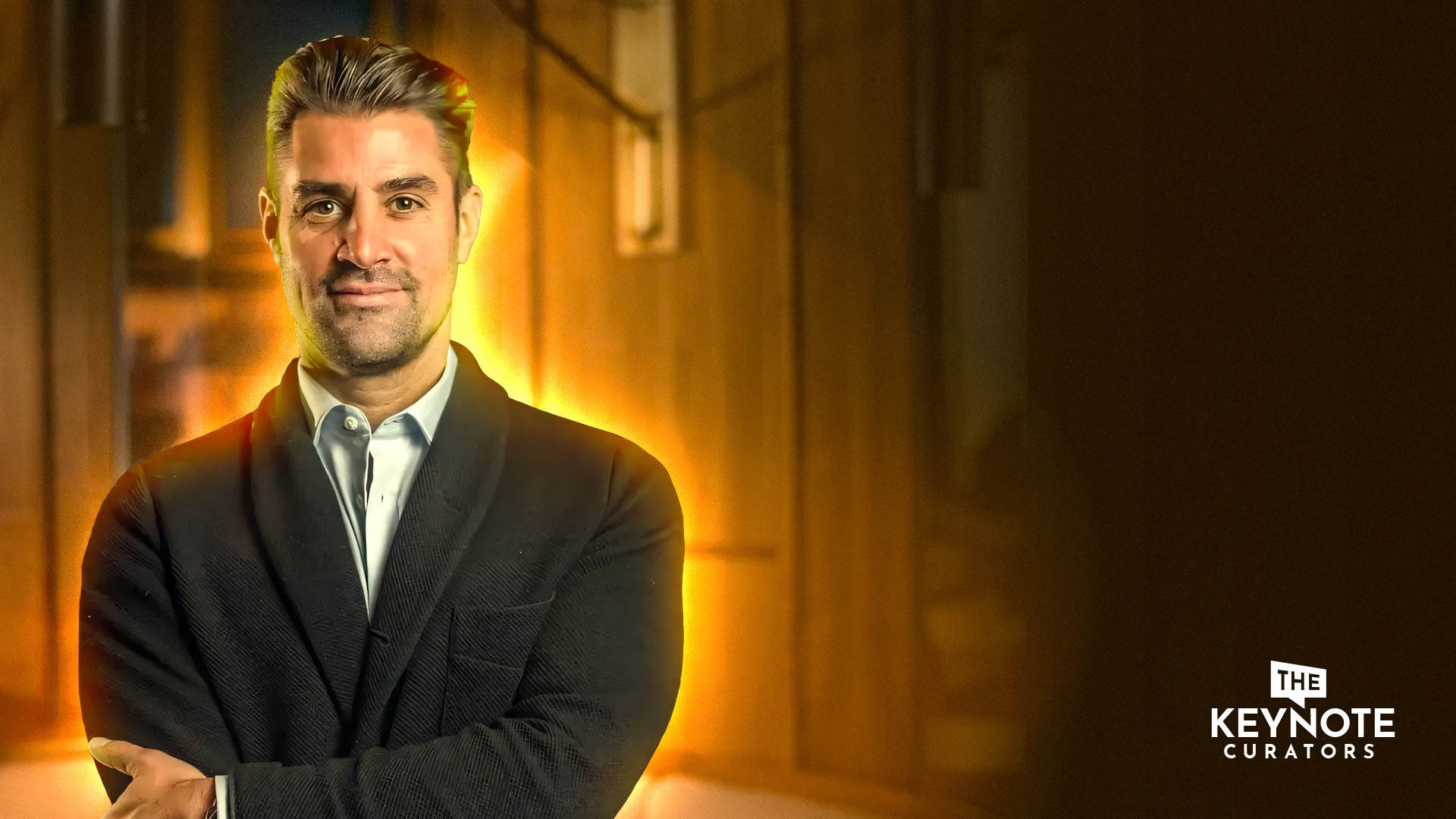
Shawn Kanungo explains why remote work quietly damages innovation, even when it boosts individual productivity. Here's the real cost.
You can be productive working from home and still be doing real damage to your team. That’s the uncomfortable idea at the center of a conversation I had with Shawn Kanungo, and it’s the reason I’ve been rethinking how I talk about remote work with the leaders I work with. Shawn argues that remote work quietly removes the two things that make innovation cultures work in the first place, and once you hear his reasoning, it’s hard to unhear it.
🎥 Watch and listen to the full interview about AI and the future of work here
The Real Problem With How We Measure Remote Work
Most conversations about remote work get stuck on one question: are people getting their work done? And the honest answer, for a lot of teams, is yes. People are hitting deadlines. Calendars are full. Slack channels are busy. By that measure, remote work looks like a win.
But Shawn Kanungo, an innovation strategist who spent 12 years at Deloitte helping organizations build cultures capable of adapting to change, says that’s the wrong number to be watching. Productivity tells you how efficient a person is. It doesn’t tell you whether a team is actually moving forward together. Those are two different things, and remote work has a way of quietly making one look fine while the other falls apart underneath it.
What struck me most about this framing is how easy it is to miss. If you’re only checking whether tasks are getting done, you’ll never notice the slower, quieter cost. You won’t see it in a spreadsheet. You’ll see it, eventually, in how few new ideas your team is generating and how rarely anyone takes a real risk.
The Two Ingredients Shawn Kanungo Says Innovation Cultures Need
When I asked Shawn what actually makes an innovation culture work, he didn’t give a long list. He gave two things: real trust between people, and a genuine, felt sense that it’s safe to fail. That’s it. Not a foosball table. Not an open floor plan. Not a slide deck full of “innovation values.” Just those two conditions, built consistently, over time.
This is where remote work becomes the problem. It’s not that remote work is inherently bad for people. It’s that both of these ingredients depend on something remote work makes harder: sustained, unstructured time spent in the same physical space. You can schedule a video call to talk about trust. You can’t schedule the years of small moments that actually build it.
I’ve seen this pattern play out at companies that moved to remote work with the best intentions and strong values statements about innovation. The values didn’t disappear. But the daily conditions that made those values real slowly eroded, and nobody noticed until the ideas stopped coming.
Why Trust Can’t Be Fully Built Over Remote Work
Shawn’s argument about trust is the one that stayed with me longest. He’s not talking about trust in the sense of “I believe you’ll finish the report on time.” He’s talking about something deeper: knowing someone’s face well enough to read when something’s off, knowing their family, understanding their strengths and their bad days. That kind of knowing takes repetition. It takes being in the room enough times that the walls come down without anyone deciding to lower them.
Remote work doesn’t eliminate the possibility of that kind of trust. But it makes it far harder to build at scale, across a whole team, without deliberate and consistent effort that most organizations never actually put in. A video call is a fine tool for exchanging information. It’s a poor substitute for the accumulated, low-stakes time that turns coworkers into people who trust each other enough to say something risky out loud.
And psychological safety, the kind that actually produces new ideas, is built almost entirely on that trust. If people don’t feel safe with the people around them, they keep their best ideas to themselves. Remote work, without meaning to, can quietly starve a team of the very safety it needs to innovate.
Permission to Fail Has to Be Felt, Not Just Said
The second ingredient Shawn talks about is permission to fail, and this is where his argument gets sharper. A lot of companies say they encourage risk-taking. It’s often written into a values page somewhere. But saying it and people actually feeling it are two very different things.
According to Shawn, people learn what’s actually safe by watching what happens to others. If someone tries something new and gets quietly penalized for it, whether through a cold reaction from a manager or a project getting shelved without explanation, everyone else on the team notices. They don’t need to be told to stop taking risks. They just stop. On the other hand, if someone fails and visibly gets encouraged to try again, that permission spreads through the team without a single memo being sent.
This is exactly the kind of dynamic that’s hard to build over remote work. The moments where permission to fail gets reinforced are usually small and unplanned: a manager’s reaction in a hallway, a comment overheard in a shared space, a visible shrug-it-off after something doesn’t work. Remote work strips out most of these unplanned moments, replacing them with scheduled meetings where people are more guarded and less likely to show the kind of honest reaction that actually teaches a team what’s safe.
“You could be uber efficient but not, you know, remarkable.”
That line from Shawn has stuck with me since the conversation. It captures exactly what’s at stake. Remote work can absolutely make people efficient. It’s far less reliable at making teams remarkable, and remarkable is what innovation actually requires.
Individual Efficiency Isn’t the Same as Organizational Innovation
I want to sit with this distinction for a moment, because I think it’s the core of Shawn’s entire argument. Remote work is genuinely good for individual output in a lot of jobs. Fewer interruptions, no commute, more control over your day. If you measure a single person’s productivity, remote work often wins.
But organizations don’t innovate because individuals are efficient. They innovate because groups of people, working closely and trusting each other, combine ideas in ways no single person would reach alone. That process is social. It requires friction, disagreement, and the kind of spontaneous back-and-forth that doesn’t happen on a scheduled call with an agenda.
This is the trap a lot of leaders fall into. They see productivity numbers holding steady or even improving under remote work, and they assume everything is fine. Meanwhile, the organization’s capacity to generate new ideas is quietly declining, because that capacity was never really about individual output in the first place. It was about the interactions between people, and remote work has thinned those interactions out without anyone tracking the loss.
The Hidden Cost of Losing Micro-Moments
One of the things Shawn kept coming back to is what he calls micro-moments: the hallway conversation, the person who stops by your desk with a half-formed idea, the discussion that starts over lunch and ends up shaping a project. None of these show up on a calendar. None of them get logged as “work.” But Shawn’s point is that they’re often where the best thinking actually starts.
“Those micro moments with other people are so much of what is important at work, and that’s how you create energy and serendipity and spontaneity.”
That’s how Shawn put it, and I think it’s worth sitting with. Serendipity isn’t something you can schedule. It happens when people are physically near each other often enough that unplanned collisions of ideas become normal.
Remote work removes almost all of these moments by design. Everything becomes intentional, scheduled, and purposeful. That sounds efficient, and in a narrow sense it is. But it also means the accidental spark, the idea that comes from a conversation nobody planned to have, becomes far rarer. Organizations built entirely around remote work often don’t even realize what they’re missing, because you can’t measure the absence of an idea that was never sparked in the first place.
Why This Argument Is Harder to Dismiss Coming From Shawn Kanungo
What makes this conversation worth taking seriously is who’s making the argument. Shawn Kanungo isn’t a traditionalist skeptical of technology. He’s one of the most recognized voices working today on artificial intelligence, innovation, and the future of work. Forbes called him the “Best Virtual Keynote Speaker I’ve Ever Seen.” His book, The Bold Ones, was celebrated by McKinsey as essential reading for decision-makers navigating change. He’s built a following of millions across digital platforms by talking about disruption and technology.
In other words, he’s exactly the person you’d expect to defend remote work. He’s built a career in digital spaces. He understands technology’s potential better than almost anyone. And yet his position on remote work is that it comes with a real cost that most companies aren’t accounting for.
That contradiction is part of why I found this conversation so compelling. Shawn isn’t anti-technology or anti-flexibility. He’s simply pointing out that remote work, for all its benefits, changes the physical conditions that innovation depends on, and no amount of digital tooling has fully replaced what gets lost when people stop sharing the same room regularly.
You can learn more about Shawn Kanungo and the work he’s done helping organizations navigate change and build stronger innovation cultures over the course of his career.
What This Means If Your Team Is Hybrid or Fully Remote
I don’t think Shawn’s argument means every company needs to force everyone back into an office five days a week. That’s too simple a takeaway, and it misses the nuance in what he’s actually saying. The real question isn’t remote work versus office work. It’s whether your organization is deliberately protecting the conditions that innovation needs, regardless of where people are physically working.
If your team has moved to remote work, or exists in some hybrid arrangement, the honest question to ask is whether trust and permission to fail are still being built somewhere. Are there enough in-person moments for people to actually know each other beyond their job titles? Are failures visibly followed by encouragement, or do they quietly disappear without comment? These aren’t questions with easy answers, and remote work makes them harder to answer well, not impossible.
I’ve watched leaders treat this as a scheduling problem, adding more video calls or more “culture” meetings to compensate for lost in-person time. That rarely works. The moments that build trust and safety are almost never the scheduled ones. Shawn’s point is that remote work removes exactly the kind of unscheduled time that innovation quietly depends on, and no amount of structured substitute fully makes up for that loss.
This connects directly to how organizations think about business growth and long-term strategy. A company can look efficient under remote work for years while slowly losing its ability to adapt, and that erosion often doesn’t show up until a competitor moves faster or a market shifts unexpectedly.

The Deeper Pattern Behind the Remote Work Debate
The more I’ve thought about this conversation, the more I think the remote work debate has been asking the wrong question from the start. We’ve treated it as a binary: office or home, in-person or remote work, one model that’s right and one that’s wrong. Shawn’s argument suggests something more useful. The real question is what conditions your organization actually needs to thrive, and whether your current setup, remote work included, is protecting or eroding those conditions.
This matters well beyond innovation. It touches customer experience, because teams that aren’t generating fresh ideas eventually stop improving how they serve customers. It touches technology adoption, because organizations without a culture of risk-taking are slower to experiment with new tools, including artificial intelligence, which is ironically the exact space Shawn built his reputation in. And it touches on how leaders think about the future of work more broadly, because remote work isn’t going away, but the organizations that succeed with it will be the ones that consciously rebuild trust and permission to fail rather than assuming those things will happen on their own.
Shawn’s willingness to make this argument, knowing it’s controversial and knowing it cuts against his own reputation as a digital-first thinker, is part of what makes it worth taking seriously. He’s not defending an old way of working out of nostalgia. He’s pointing at a gap most leaders haven’t noticed yet.
Remote work isn’t the enemy here. Ignoring what it quietly costs is. The lesson I keep coming back to from this conversation is that innovation was never really about where people sit. It’s about whether they trust each other enough to say something risky out loud, and whether the organization around them makes that feel safe. Remote work makes both of those harder to build by accident. It doesn’t make them impossible. But it does mean leaders need to be far more intentional than they’ve been if they want remote work to coexist with a genuinely innovative culture, rather than quietly replacing it.
🎥 Watch the full interview with Shawn Kanungo here
🎤 Book Shawn Kanungo for your next event
📅 Schedule a conversation with our team
Discover More Insights




Get in TouchContact US
Fill out the form so we can best understand your needs.
A representative from The Keynote Curators will reach out to you.
Our Services
Keynote Speakers Topics
© 2026 The Keynote Curators. All Rights Reserved | Terms and Conditions
The Keynote Curators, 8275 South Eastern Avenue, Suite 200, Las Vegas, NV 89123
Local (310) 299-4595 | Toll Free (888) 585-8715 | info@thekeynotecurators.com
The Keynote Curators - Top Keynote Agency, USA.