
August 24, 2026What Great Service Looks Like
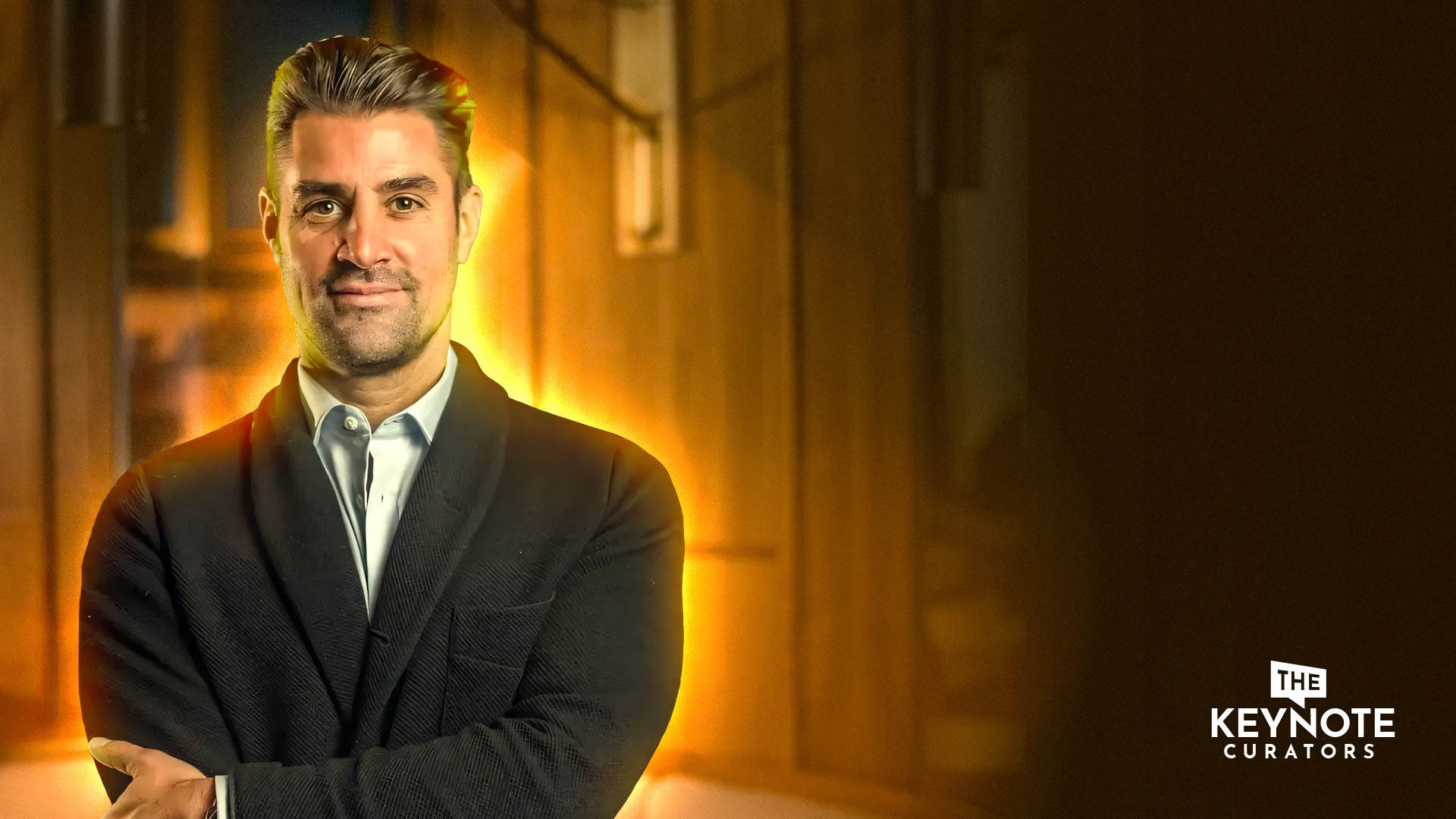
Kevin Boehm explains what real service looks like when plans break, from a rough restaurant table to a blackout mid-speech.
Service is easy to talk about and hard to prove. Anyone can say they care about service until the night gets busy, the mic cuts out, or the lights go dark. That’s the moment service stops being a value on a wall and becomes something you either have or you don’t.
Kevin Boehm has spent 30 years finding out which one it is, first as a restaurateur who has opened more than 40 restaurants, and now as a speaker who tells that story on stages across the country.
I’ve spent a lot of time thinking about what separates people who talk about service from people who actually deliver it. Kevin’s answer isn’t complicated, but it’s not comfortable either. He says the test of service isn’t whether something goes wrong. Something always goes wrong. The test is what you do in the seconds after.
You can watch the full conversation to hear him walk through it himself, including the night the power went out in the middle of his own speech.
🎥 Watch the full podcast with Kevin Boehm here
Reading the Table Before the Table Tells You Anything
Kevin Boehm has been in restaurants long enough to know that most problems announce themselves quietly before they become loud. A table goes still. A guest’s tone flattens by half a degree. The energy in the room shifts before anyone says a word about it. Great service, in his world, starts with catching that shift before it becomes a complaint.
What struck me about the way he described this is how much it has nothing to do with menus or plating. It’s a form of attention. Restaurateurs who last decades, the way Kevin and his business partner Rob Katz have, train themselves to notice the table before the table has to tell them anything is wrong. That’s not a hospitality trick. It’s a discipline of watching people closely enough to respond before you’re asked to.
This is where service and leadership start to look like the same skill wearing different clothes. A manager who waits for an employee to say “I’m struggling” has already missed the earlier signals. A leader who reads the room, the way a good server reads a table, catches the problem while it’s still small and fixable. Service, at its core, is a form of paying attention that most people are too busy to practice.
Service as a Problem Machine
Kevin has a phrase for what a restaurant actually is, and it stuck with me the moment I heard it. He calls it “a giant problem machine.” Not a place that occasionally has problems. A machine built to produce them, night after night, without pause. Reservations get double-booked. Ovens break during dinner rush. A guest has an allergy nobody flagged. None of it is exceptional. It’s the baseline.
I’ve seen this same pattern outside restaurants too. Any business that deals directly with people, in retail, healthcare, hospitality, or client services, runs on the same machine. The businesses that treat problems as rare interruptions burn out fast, because they’re constantly surprised by something that was never going to stop happening. The businesses that treat problems as the actual job, the way Kevin does, build a different kind of resilience. Their service doesn’t crack under pressure because they never expected pressure to be optional.
This reframing matters more than it sounds like it should. If you believe service means a smooth, uninterrupted experience, every hiccup feels like a failure. If you believe service means showing up well inside a system that’s always slightly on fire, you stop being rattled by the fire. You just learn to work inside it. That shift in mindset, more than any technique, is what separates operators who last 30 years from the ones who burn out in three.
The Night the Power Went Out in Miami
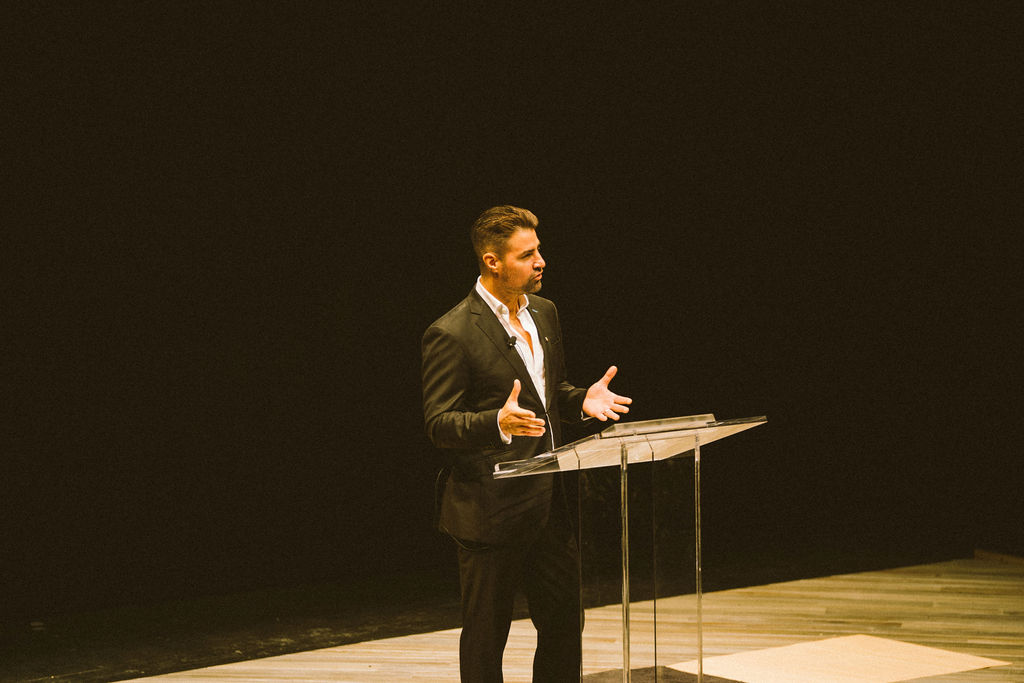
The story Kevin tells about a blackout mid-speech in Miami is the clearest example of what he means by service under pressure. He was mid-sentence, in front of a live room, when the lights cut out completely. No warning. No backup plan sitting in his back pocket. Just a dark ballroom and an audience waiting to see what he’d do next.
“I said, guys, I got a pretty damn good theater voice. And I’m gonna project to the back of the room. And you know what? They’re bringing some candles around, and we’re still gonna rock this thing. And it was one of the better speeches I’ve done.”
What makes this story worth sitting with isn’t the blackout itself. Blackouts happen. What makes it worth sitting with is what Kevin chose to do with it. He didn’t apologize his way through the dark or wait quietly for the lights to come back. He named the problem out loud, gave the room something to hold onto, and kept going. That’s service in its purest form: not the absence of a problem, but the presence of someone who refuses to let the problem run the room.
I think about this story anytime I watch someone freeze the moment a plan falls apart. The freeze is understandable. It’s also the most expensive thing you can do in a moment like that, because it hands control of the room to the problem instead of keeping it for yourself. Kevin’s version of service says the room is still yours even when the lights aren’t.
Turning Crisis Into Connection
The candles are the detail people remember, and for good reason. Kevin didn’t just push through the blackout. He turned it into something the room experienced together. Handing out candles wasn’t a technical fix for the lack of power. It was a decision to make the crisis shared instead of hidden.
That distinction matters enormously in any conversation about service. A lot of people, when something breaks, instinctively try to minimize it, smooth it over, or pretend it isn’t happening. That instinct comes from a good place, but it usually backfires. People can tell when something’s wrong even if you don’t say it, and the silence around it reads as distance rather than composure. Naming the problem and inviting the room into it does the opposite. It builds trust exactly when trust is hardest to build.
This is one of the more overlooked truths about service: the goal was never to hide the mess. The goal was to be present inside it with people, rather than performing calm from a distance. A restaurant that admits a dish will take longer than expected, and does something small to make the wait worth it, builds more loyalty than one that pretends the wait doesn’t exist. The same logic carried Kevin through that Miami ballroom. Service isn’t about controlling every variable. It’s about staying connected to the people in the room no matter which variables fall apart.
Judging Yourself by the Response, Not the Mistake
There’s a quieter idea buried in Kevin’s story that I think is the most useful one of all. He judges himself, and by extension his teams, on how they respond when something goes wrong, not on whether something went wrong in the first place. That’s a small shift in language with a large shift in consequence.
Most workplaces do the opposite. They treat the mistake itself as the measure of someone’s competence, which quietly teaches people to hide problems rather than solve them. If the mistake is the thing that gets punished, employees learn to bury bad news as long as possible, hoping it resolves itself before anyone notices. That’s how small problems turn into disasters. Nobody wanted to be the one holding the mistake when the scorekeeping started.
Kevin’s standard removes that incentive. If the response is what matters, admitting a problem early becomes an asset instead of a liability. Fixing it in front of people becomes something to be proud of instead of something to hide. This single mental adjustment, judging the recovery instead of the failure, is one of the most practical service principles a leader can adopt, because it changes what people are willing to tell you the moment something breaks.
The Discipline Behind Forty Restaurants
It’s worth remembering what’s actually behind Kevin’s perspective here. He and Rob Katz haven’t opened one or two restaurants and gotten lucky with a good story. They’ve opened more than 40 over 30 years, earned 18 James Beard Finalist nominations, and kept 10 consecutive Michelin Stars on Boka. That level of consistency doesn’t come from avoiding problems. It comes from building a culture that expects them.
I think this is where the restaurant analogy earns its place in a broader business conversation. Every one of those openings involved its own version of a blackout: a chef who left mid-buildout, a construction delay, a bad review at the worst possible time. What kept the group standing wasn’t luck. It was a repeatable approach to service that treated every setback as part of the job rather than a deviation from it.
This is the part of Kevin’s story that applies far beyond restaurants. Any organization trying to scale, whether it’s opening new locations or entering new markets, runs into the same pattern. The plan will not survive contact with reality. What survives is the culture built underneath the plan, the one that trains people to keep showing up for the guest, the client, or the audience regardless of what just broke. That’s the real infrastructure behind 40 restaurants and a James Beard Award for Outstanding Restaurateur in America. You can read more about the recognition behind that record on his speaker profile.
What Service Teaches About Leadership
The more I sit with Kevin’s story, the more I think service and leadership are the same muscle used in different rooms. A leader who can’t read a shift in a team’s energy is missing the same signal a server misses when a table goes quiet. A leader who freezes the moment a plan collapses is making the same mistake as someone standing helpless in a dark ballroom. Leadership, like service, is tested in the moments nobody rehearsed for.
This connects directly to corporate culture as well. A culture that treats problems as rare and shameful trains people to hide them. A culture that treats problems as expected, the way Kevin treats a “giant problem machine,” trains people to surface them early and solve them together. That’s not a soft distinction. It’s the difference between an organization that catches small fires and one that gets blindsided by big ones.
I’ve also noticed how closely this ties to business leadership more broadly. Executives who model composure when things break give their teams permission to stay composed too. The opposite is just as contagious. Panic at the top spreads faster than any policy memo ever could. Service, understood this way, isn’t a department. It’s a posture that leadership either models or fails to model, and everyone underneath feels the difference.
Service as a Career-Long Practice
One thing I appreciate about Kevin’s story is that he doesn’t present service as a skill you master once and carry forever. He’s been doing this for 30 years and he’s still telling stories about nights that tested him. That’s an honest account of what service actually is. It’s not a certificate you earn. It’s a practice you keep returning to, especially in the moments that catch you off guard.
This matters for anyone in business growth, because growth almost always multiplies the number of moments that can go wrong. More restaurants means more kitchens that can have a bad night. More speaking engagements means more rooms where a projector fails or a mic dies. Growth doesn’t reduce the number of blackouts. It increases them. The organizations that grow well are the ones that keep their service standards intact as the surface area for problems expands.
I think that’s why Kevin’s transition from restaurateur to speaker makes so much sense. Both jobs put him in front of people with a plan that’s about to be tested by reality. Both jobs reward the same instincts: read the room, expect the unexpected, and respond in a way that makes people trust you more, not less, once the dust settles. His first book, The Bottomless Cup, released in November 2025, is built on exactly that theme: what you carry with you after 30 years of nights that didn’t go as planned.
Why Communication Carries Service Forward
None of what Kevin describes works without communication. The Miami blackout story isn’t really about candles. It’s about the moment he chose to speak directly to the room instead of letting silence fill the dark. That single choice, saying out loud what everyone could already sense, is what turned a crisis into one of his better speeches instead of one of his worst.
This is a lesson I keep coming back to. Most service failures aren’t failures of effort. They’re failures of communication in the exact moment communication is hardest. A kitchen running behind doesn’t need to hide it from the dining room. A team missing a deadline doesn’t need to bury it until the last possible hour. Saying it early, clearly, and with a plan attached is almost always better received than staying silent and hoping nobody notices. Service, in that sense, is mostly the courage to narrate the problem honestly while you’re still solving it.
Kevin’s approach also reflects a deeper strategy for handling uncertainty: don’t wait for calm to communicate. Communicate your way into the calm. That reordering, speaking first, composure second, is a small but important flip from how most people instinctively operate.
The Confidence Behind Consistent Service
There’s a version of confidence in Kevin’s story that has nothing to do with bravado. It’s the confidence of someone who has been through enough problem-filled nights to trust his own instincts when a new one shows up. He says:
“Sometimes you get the best speeches of your life out of a crowd that’s a little more still than you want them to be.”
That is truly a statement about trusting your read of the room even when the read isn’t reassuring.
This kind of confidence connects closely to professional development, because it isn’t something you’re born with. It’s built through repetition, through enough nights that go sideways that you eventually stop panicking when one does. Kevin’s 30 years in restaurants gave him that repetition long before he stepped onto a keynote stage, and it shows in how calmly he describes a blackout that would rattle most speakers into silence.
It also speaks to empowerment on a team level. When a leader shows a team that problems are survivable and often turn into the best version of the work, people stop fearing the moment things go wrong. They start seeing it as part of the craft instead of a threat to it. That shift, from fear to ownership, is one of the quieter gifts great service passes down through an organization.
What Great Service Actually Requires
Pulling this all together, service isn’t a smile at the door or a polished script that never breaks. It’s the discipline to read a room before it tells you something is wrong, the acceptance that problems are the job and not the exception, and the willingness to name a crisis out loud instead of hiding from it. It’s judging yourself, and your team, by the recovery rather than the mistake. Kevin Boehm built a business and a career on exactly that standard, first across more than 40 restaurants, and now on stages telling the same story with a microphone instead of a menu.
What I keep returning to is how simple the underlying idea is, even though living it out is hard. Service reveals itself fully only in the moments nobody plans for. Anyone can perform service when everything goes according to script. The real measure shows up when the script fails, the power goes out, or the room goes quiet in a way you didn’t expect. That’s when you find out whether service was ever real to begin with.
Kevin Boehm’s answer, told through a candlelit ballroom in Miami, is a good one to carry into any room you walk into next. Show up. Read what’s happening. Say the hard thing out loud. And keep going anyway. That’s what real service looks like when nothing goes as planned, and it’s the standard worth building any team, restaurant, or business around.
🎥 Watch Kevin Boehm’s full conversation on service and leadership here
🍽️ Hire Kevin Boehm for your next event
Discover More Insights





Get in TouchContact US
Fill out the form so we can best understand your needs.
A representative from The Keynote Curators will reach out to you.