
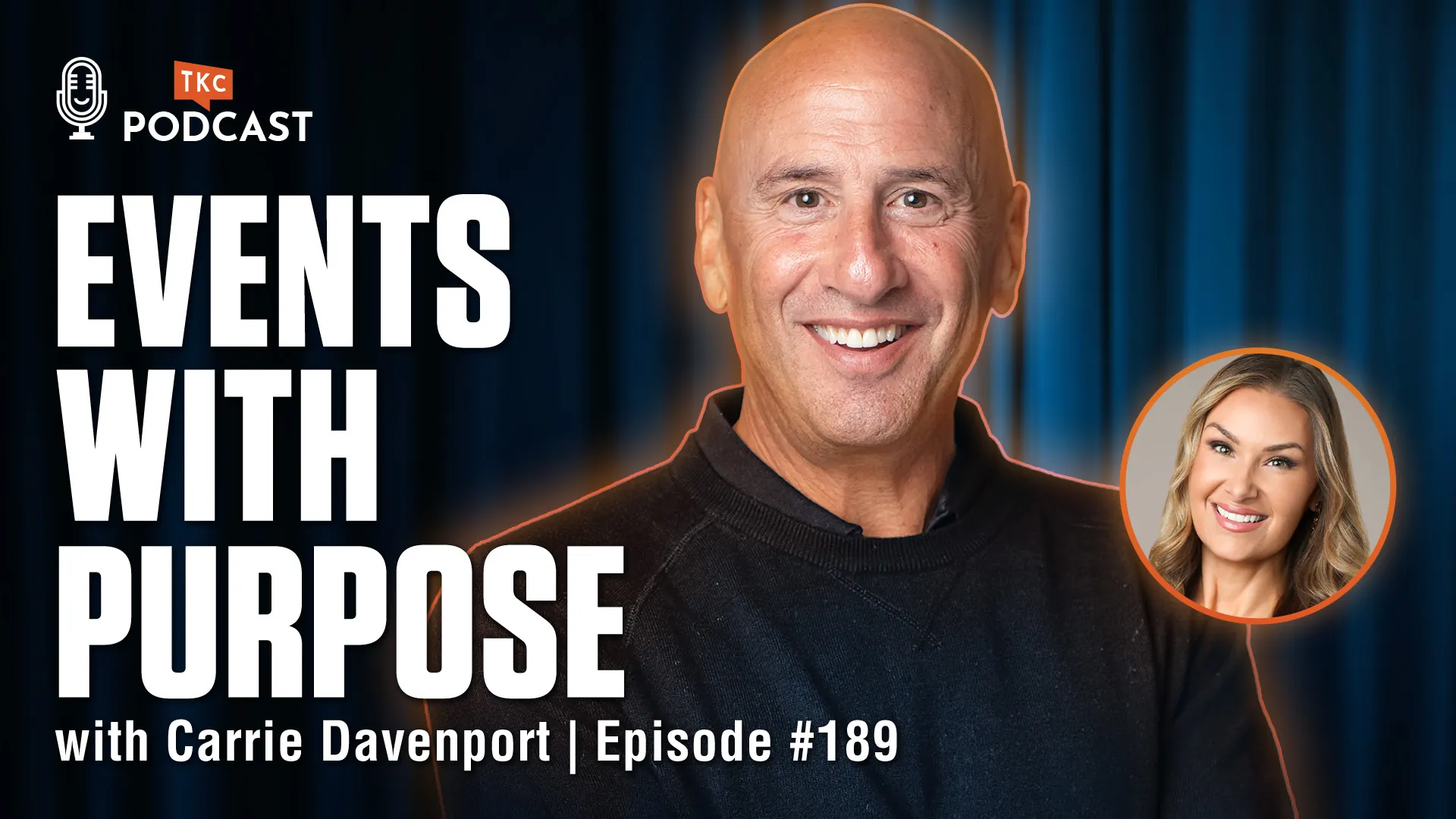
August 27, 2026How to Design Events People Actually Remember with Carrie Davenport
Carrie Davenport on why great events are built on human connection, not just agendas. Lessons for event planners, leaders, and teams.
Every event has two agendas. There’s the one you print on the program: keynote, breakout, lunch, panel, reception. And there’s the one people actually remember: the conversation during the coffee break, the person they met between sessions, the moment a room went quiet because someone said something true.
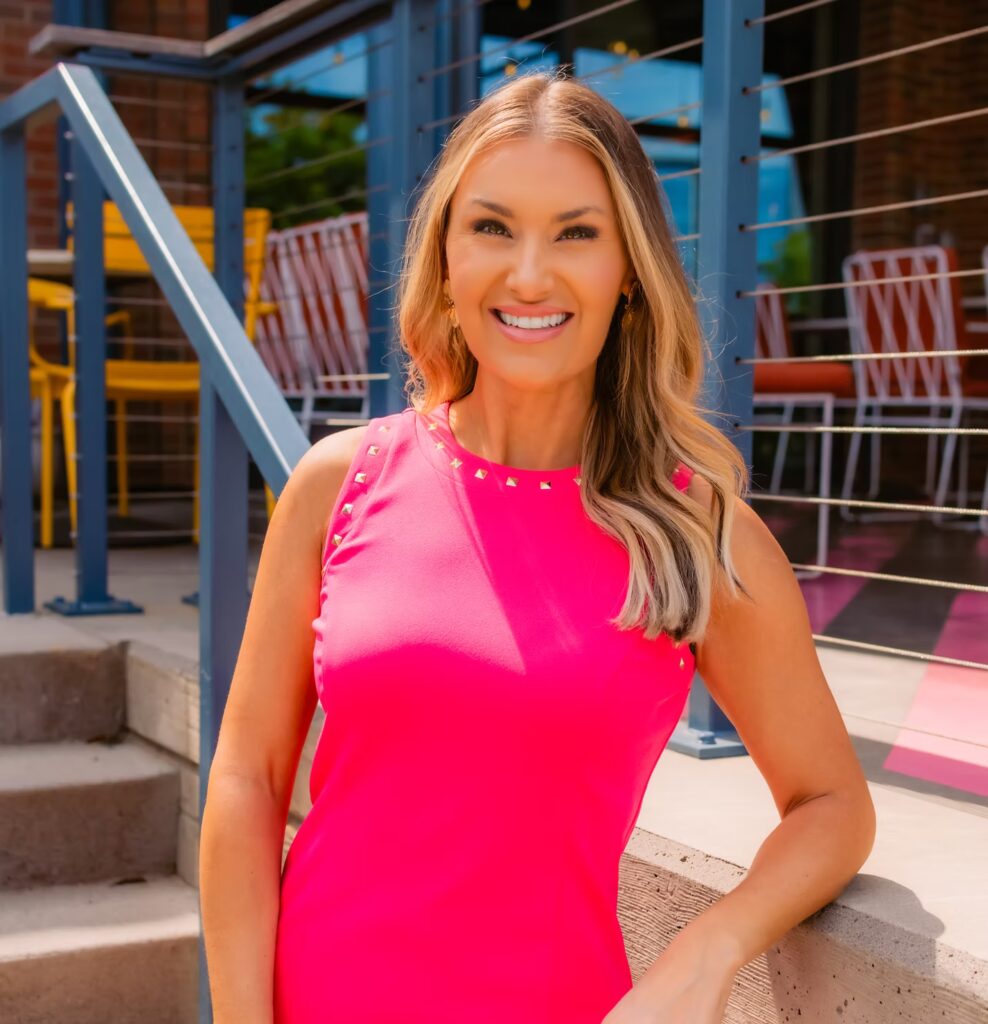
That second agenda is where Carrie Davenport lives. She has spent more than twenty years building large-scale events, and somewhere along the way she stopped thinking about events as things you organize and started thinking about them as things you design. That shift, from order-taker to strategist, is the whole conversation. And it’s why events keep showing up in her work not as a logistics problem, but as a business one.
🎧 Watch and listen to the podcast episode: YouTube • Spotify • Apple Podcasts • Amazon Music
The Event Nobody Remembers Planning
Ask someone about the best conference they ever attended and they rarely describe the agenda. They describe a person. A conversation. A moment that felt real in a room full of scheduled things.
That’s the part of events most planning documents don’t have a line item for. You can put “networking break” on a schedule, but you can’t schedule connection. You can build the room, but you can’t force the magic that happens in it. What struck me talking with Carrie is that she doesn’t treat this as a mystery to accept. She treats it as a variable to design for.
Most event planners are trained to manage the printed agenda well. Keep things on time. Keep speakers on brief. Keep the room fed and comfortable. That work matters, and Carrie has clearly mastered it over two decades in the events industry. But she’s also spent years paying attention to the second agenda, the unscripted one, because that’s usually the part attendees actually talk about afterward. If you’re only optimizing the schedule, you’re optimizing the part of events that people forget the fastest.
Why the Best Moments in Events Happen Between the Sessions
Here’s a pattern I’ve seen in a lot of industries, not just events: the most valuable moments often happen in the gaps. The hallway conversation after a hard meeting. The five minutes before a call starts. The unplanned exchange that ends up mattering more than the planned one.
Carrie sees this constantly in events. The coffee break where two strangers end up trading ideas. The reception where someone finally works up the nerve to introduce themselves to a person they’ve admired from afar. These moments look like downtime on a schedule. In reality, they’re often the highest-value part of the entire experience.
What makes this especially interesting is that you can’t force these moments, but you can create the conditions for them. That’s the strategic shift. Instead of treating the in-between time as a scheduling gap to fill, you treat it as a space to design. Where you place seating. How long a break actually is. Whether the room invites people to linger or pushes them to leave. Small choices like these shape whether connection has room to happen. This is where events planning stops being about logistics and starts being about human behavior.
Carrie Davenport’s Path to Becoming an Accidental Leader in Events
Carrie Davenport didn’t set out to become a leader in the events industry. Like a lot of people who end up running the room, she got there by doing the work nobody else wanted to do, and doing it well enough that people started asking her to do more.
I’ve seen this same pattern with a lot of leaders across different industries. Nobody hands them a leadership title on day one. They earn it by solving problems, by showing up when things go wrong, by being the person a team can count on when the pressure is highest. Events work is unforgiving in this way. There’s no rescheduling a live audience. There’s no pushing the deadline when three thousand people are already walking through the door. That kind of pressure either breaks people or builds them, and it clearly built Carrie into someone who leads with steadiness.
Her career eventually led her to co-found the Association for Women in Events and launch the Events Industry Sexual Harassment Task Force in 2016, work that has since been carried forward by the Events Industry Council. That’s not a small accomplishment. It’s the kind of thing that happens when someone stops asking permission to fix a problem and just starts fixing it. If you care about women leaders and how they actually rise in male-dominated corners of business, Carrie’s story is a good place to look.
The Leadership Philosophy of Caring Forward
One thing that came up again and again in our conversation is care. Not care as a soft value you put on a slide, but care as an operating principle that changes how a team actually functions.
Carrie’s approach to leading events teams is built on caring forward, which means taking the pressure and stress that inevitably comes with high-stakes events and absorbing it rather than passing it down. Anyone who has worked under a stressed-out manager knows what the opposite looks like. Stress rolls downhill fast, and it usually lands hardest on the people with the least power to push back.
The more I think about this, the more I think it’s the actual difference between a manager and a leader. A manager directs the work. A leader protects the people doing it, even when that means carrying more of the weight themselves. In an industry where deadlines are immovable and the show has to go on regardless of what broke behind the scenes, that kind of leadership isn’t optional. It’s the thing that keeps good people in events instead of burning them out and losing them to another field entirely. This connects directly to broader conversations about corporate culture and why some teams stay together under pressure while others fall apart.
Face It Till You Make It: Resilience as an Event Strategy
Most people have heard some version of “fake it till you make it.” Carrie’s version is different, and it’s better. She calls it “Face It Till You Make It.”
The distinction matters more than it might look like at first. Faking it implies pretending you have something you don’t. Facing it implies you show up to the hard thing anyway, without the pretense, and you do the work of getting through it honestly. It’s a small language shift that reflects a much bigger mindset. Confidence isn’t a costume you put on before you’re ready. It’s something you build by facing the situation directly, again and again, until you actually are ready.
In events, there is no shortage of situations that require this. Something will go wrong. A speaker cancels. A vendor doesn’t show. The AV fails five minutes before doors open. You cannot fake your way through a live crisis in front of a room full of people. You have to face it, solve it, and keep moving. That’s resilience in its most practical form, not as a personality trait but as a skill built through repetition under pressure.
Reframing Event Planning as Business Strategy
For a long time, events were treated as a support function. Something that happens after the real business decisions are already made. Book the room, book the vendors, execute the plan, and stay out of the way of the people doing the “real” strategic work.
Carrie pushes back on that framing, and she’s right to. Events are one of the few places where a brand’s strategy, culture, and message all show up in physical form, in real time, in front of the people who matter most to the business. A poorly run event doesn’t just waste a budget line. It damages how customers and employees experience the brand. A well-run one builds trust and loyalty in a way that no ad campaign can replicate. That’s why events strategy deserves a seat in the same conversation as marketing strategy, sales strategy, and business growth planning, not a separate table off to the side.
This reframing changes who gets invited into the planning process and how early. If events are treated as strategy, they get considered before the direction is locked in. If they’re treated as execution, they get handed a decision that’s already been made and told to make it work. The first approach tends to produce events people remember. The second tends to produce events people just get through.
The Missing Strategy Behind Booking a Keynote Speaker
A lot of organizations approach booking a speaker the way they approach filling any other agenda slot. Find someone with a recognizable name, confirm the date, move on to the next task. Carrie’s perspective on this is sharper than that, and it’s worth sitting with.
A keynote isn’t a placeholder. It’s the moment an audience will talk about on the drive home, or six months later when someone mentions your event. That means the choice of speaker should be driven by the outcome you want people to walk away with, not just the size of the name on the marquee. What do you want your audience feeling and thinking when they leave that room? That question should shape the search for a speaker, not follow it.
This is also where thinking about a moderator, host, or emcee becomes just as important as thinking about the keynote itself. A great speaker can still get undercut by a weak transition into or out of their session. The strategy behind booking talent for events has to consider the whole arc of the experience, not just the highlight reel moment.
Why Live Keynotes Still Matter in the Social Media Age
It would be easy to assume that in a world of infinite video content, a live keynote has lost some of its power. People can watch a talk on their phone whenever they want. Why does it matter whether they’re in the room?
Carrie’s answer gets at something true about human attention. A recorded talk competes with every other tab open on your screen. A live keynote in a room full of your peers doesn’t. There’s a kind of shared attention that happens when a few hundred or a few thousand people experience the same moment together, live, without the option to skip ahead. That collective focus is genuinely rare now, and it’s part of what makes in-person events valuable in a way that digital content simply can’t replace.
This is also where media and communication intersect in interesting ways. A great live keynote often becomes the source material for the content that follows: clips, quotes, recaps, the story people tell their colleagues who weren’t there. The live moment is the seed. Everything downstream depends on whether that seed was strong enough to grow into something people want to share.
The Strategic Role of a Great Emcee
If a keynote speaker is the highlight, the emcee is the thread that holds the whole day together. It’s an underrated role, and Carrie treats it with the seriousness it deserves.
A weak emcee makes an event feel like a series of disconnected segments. A strong one makes it feel like a single, coherent experience, even when the day includes six different speakers, three format changes, and a lunch break in the middle. The emcee sets the emotional tone, manages the energy in the room, and gives the audience permission to feel however the moment calls for, whether that’s serious, playful, reflective, or energized.
This connects to something bigger about employee engagement and customer experience at events. The audience doesn’t experience an event as a list of sessions. They experience it as one continuous story, and the emcee is often the narrator holding that story together. Get that role right, and the entire event feels intentional. Get it wrong, and even great individual sessions can feel disjointed.
The Small Details That Shape How People Feel at Events
Some of the most important decisions in events planning are ones the audience will never consciously notice. Lighting. Seating arrangements. Room temperature. The distance between the stage and the front row. None of these show up on a highlight reel, but all of them shape how people feel.
Carrie has spent years perfecting details like these, and the reason is simple: comfort and behavior are connected. A room that’s too cold makes people want to leave early. Seating that’s too rigid discourages the casual side conversations that make networking actually work. Lighting that’s too harsh makes people feel like they’re under inspection instead of invited in. None of these things are dramatic on their own, but stacked together, they determine whether an event feels effortless or exhausting to be part of.
This is the part of the job that rarely gets credit, because when it’s done well, nobody notices it at all. That’s actually the whole point. The best events feel like they simply worked, like the room was built for the people in it, and that feeling doesn’t happen by accident. It’s the result of dozens of small, deliberate choices made by someone who understands both strategy and human behavior well enough to design for both at once.
The Real Value of Events Is How People Feel Afterward
The lesson that stayed with me from this conversation is a simple one, even if it’s easy to lose sight of in the middle of planning a large event. The printed agenda is the container. The human connection inside it is the actual value.
Carrie Davenport’s work over more than twenty years in the events industry has been about closing the gap between those two things: building events that are logistically excellent and emotionally memorable at the same time. That’s a harder standard than just running things on time, and it’s the right one. Whether you’re planning a small internal gathering or a large-scale conference, the same question applies. Are you designing for the schedule, or are you designing for how people will feel when they leave?
The events that people talk about years later are rarely the ones that ran perfectly on paper. They’re the ones where something real happened between two people who otherwise would have never met. That’s the standard worth building toward, and it’s the one Carrie has spent her career pursuing.
🎤 Explore Carrie Davenport’s profile on our website
📞 Schedule a time to talk about booking Carrie for your event
📩 Email us your audience and event theme and we’ll tell you if she’s the right fit
🌐 Find more keynote speakers on our website
Discover More Insights

Get in TouchContact US
Fill out the form so we can best understand your needs.
A representative from The Keynote Curators will reach out to you.