

October 2, 2026Leadership Succession Planning Is the Advantage No One Is Building
Leadership succession planning is the biggest competitive advantage most companies ignore. Here's why the gap matters and how to close it.
By 2030, every baby boomer in the workforce will be old enough to retire. At the same time, AI is quietly wiping out many of the entry-level jobs that used to teach people how to lead. Put those two facts together, and you get a leadership gap that is already forming. Most companies are not tracking it, and fewer than 30% have a real leadership succession plan in place.
I’ve been thinking about that number for days. Less than a third. That means more than two out of three companies have no real answer to a simple question: who runs this place when the people running it now are gone? It is not a rare gap. It is the normal condition of business today, and it is treated like a problem for someday, not a problem for right now.
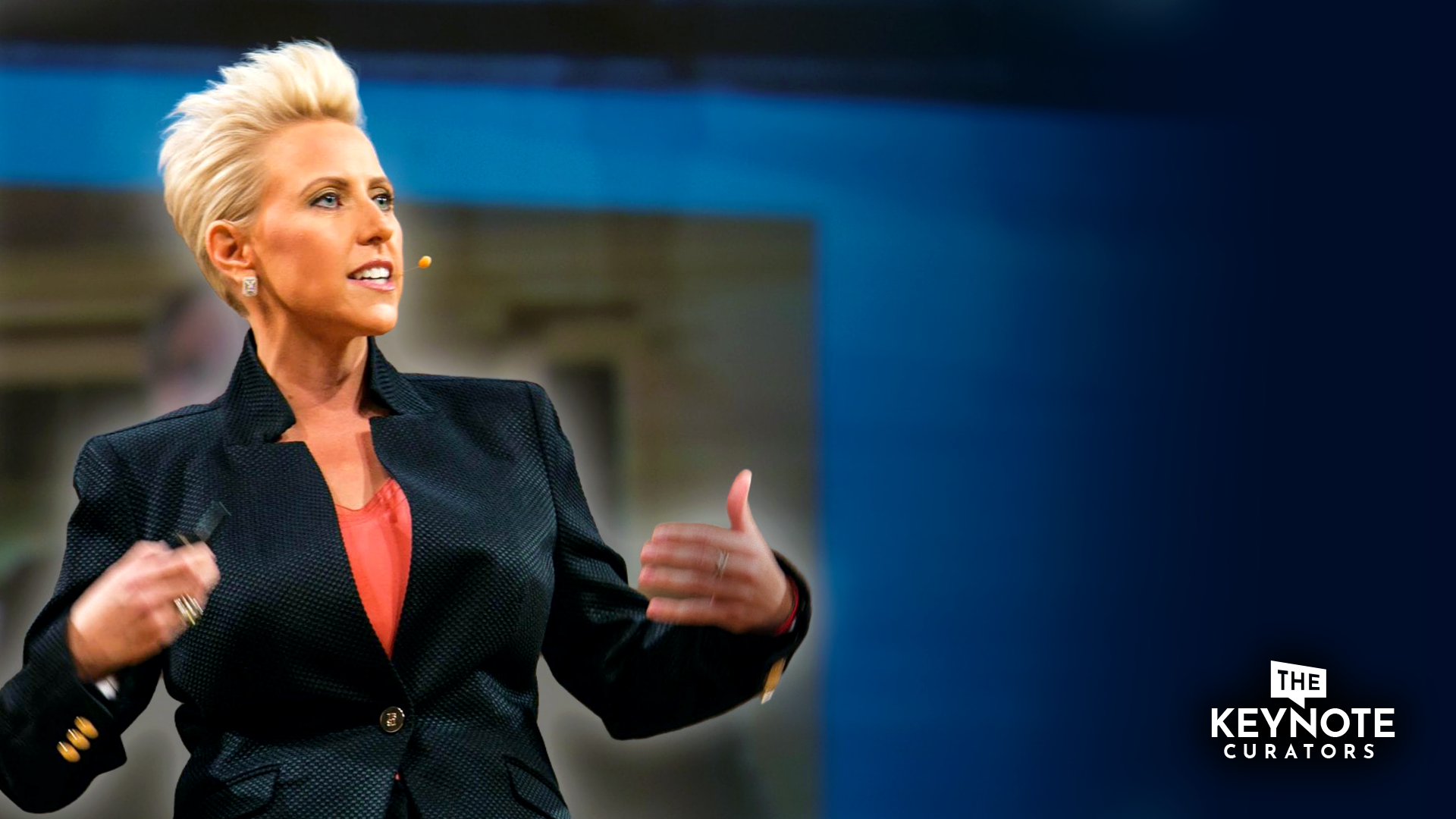
Meridith Elliott Powell made this case in a conversation that stuck with me long after it ended. She is an award-winning leadership keynote speaker, a Master Certified Business Growth Strategist, and the author of nine books, including Who Comes Next? Leadership Succession Planning Made Easy.
She has spent years inside organizations watching this gap grow, and her argument is simple. Succession planning is not an HR task. It is a leadership strategy, the one that moves the needle, and the companies that treat it that way are going to win.
🎤 Watch and listen to the full interview about leadership here
The Leadership Gap Nobody Is Tracking
Here is what struck me most about the way Meridith framed this. We talk about the retirement of baby boomers like it is a demographic footnote, something for HR to file away. But she pointed out that this wave is colliding with something else entirely: AI eliminating the entry-level jobs that used to be where people learned to lead.
Think about how leadership actually gets built. Nobody becomes a good leader by reading about it. They become one by making small decisions, watching them go wrong sometimes, and slowly building the judgment to make better ones. These jobs used to be the training ground for those starting out in their careers. Now those jobs are disappearing, and with them goes the pipeline that produces the next generation of leaders.
That is the real leadership gap. It is not just that experienced people are retiring. It is that the system that used to replace them is breaking down at the same time. Meridith’s point is that most companies have not connected those two dots yet, and the ones that do first will have a real head start.
Why Judgment Takes Time in the Saddle
Meridith used a phrase from her cycling days that I keep coming back to. She used to ride with a much better cyclist named William, and she kept asking him when she would catch up to his level. His answer was always the same: “it’s just time in the saddle.”
That is what leadership actually is. Not a set of tips. Not a framework you can download. It is time in the seat, making calls, living with the results, and slowly building the kind of instinct that cannot be rushed. You cannot compress ten years of judgment into a six week training program. You cannot give someone AI and expect it to hand them the discernment that only comes from experience.
This is the part that I think a lot of leadership development programs get wrong. They try to teach leadership like it is a subject you study. But the people who are actually good at it will tell you the same thing Meridith’s cycling partner told her. It takes time in the saddle, and there is no shortcut around that. If your company is not putting people in the saddle right now, giving them real decisions with real consequences, you are not building leadership. You are just hoping it shows up when you need it.
What AI Can Automate and What It Cannot
I want to be careful here, because it would be easy to read this as an anti-AI argument. It is not. Meridith was clear that AI is genuinely useful, and she is not telling companies to slow down on adopting it. Her point is more specific. There is a category of leadership skill that AI cannot replace, no matter how good the tools get.
She named it directly: anticipation, taste, discernment, and the calmness that comes only from having been through hard things before. Those are not things you can prompt your way into. They are built through repetition, through failure, through the slow accumulation of having seen a version of this problem before and knowing roughly how it plays out.
This connects to something else in the conversation that I found genuinely interesting. There was a mention of a study comparing college students who used AI to write essays against students who did the work by hand. The students who did the analog work retained far more, because they were engaged with the material the whole way through. The AI users got an output, but they were not really present for the process that produced it.
I think that is exactly what happens with leadership when companies lean too hard on shortcuts. You can get an answer out of a tool. You cannot get judgment out of one. Leadership is built the same way retention is built in that study: through being present, through doing the hard part yourself, through staying engaged with the process instead of skipping to the result.
The Anticipation You Cannot Fake
Meridith brought up tennis to make this point, and it landed with me. She talked about her husband, who has played his whole life, and how he can beat her even with a broken leg and a broken arm, because he anticipates shots she has not even considered yet. That anticipation was not something he was born with. It was built over decades on the court.
Leaders develop the same kind of anticipation, and it shows up in exactly the moments you would expect: a market downturn, a difficult client conversation, a decision made with incomplete information. Someone who has been through it before brings a calmness that cannot be manufactured. Someone facing it for the first time is guessing, even if they are guessing intelligently.
This is why the leadership pipeline matters so much right now. If the entry level roles that used to build this anticipation are disappearing, companies need to be intentional about creating other paths to the same experience. Otherwise you end up with leaders who have titles but not the anticipation the role actually requires.
Financial Services: A Preview of What’s Coming
Meridith pointed to financial services as a place where this leadership gap is already playing out, not as a future risk but as a current reality. A huge generation of financial advisors is heading toward retirement, and the wealth transfer that comes with it gets talked about constantly. What gets talked about far less is everything that leaves with those advisors besides the assets themselves.
It is not just a book of business. It is relationships built over decades, institutional knowledge about specific families, an understanding of what a client actually needs versus what they say they need. That kind of expertise does not transfer cleanly to a new advisor, no matter how talented, because it was built through years of direct contact, not through a handoff document.
I think financial services is a useful warning for every industry, not just because of the specific numbers, but because it shows what happens when a leadership gap is left unaddressed for too long. The knowledge does not wait around for someone to be ready to receive it. It leaves when the person carrying it leaves, and no amount of documentation fully replaces the judgment they built over a career.
Turning the Threat Into an Opportunity
Here is where Meridith’s perspective became genuinely useful instead of just accurate. She sees this gap as an opportunity, and her reasoning is worth sitting with. If less than 30% of companies have a real leadership succession plan, that means the ones who build one now are not competing against everyone. They are competing against a small group of prepared companies while the rest of the market scrambles.
That reframing matters more than it sounds like it should. Most leadership conversations about succession planning are framed around risk: what happens if your CEO leaves suddenly, what happens if a key leader gets poached. Those are real risks, but framing succession planning only as risk management undersells it. Meridith’s argument is that it is a growth strategy. Companies with a bench of prepared leaders can move faster, take more calculated risks, and recover from disruption more quickly than companies scrambling to fill a gap.
I have seen this pattern show up outside of leadership specifically. The advantage rarely goes to the company with the most resources. It goes to the company that was already prepared when the opportunity or the disruption showed up. Leadership succession planning is exactly that kind of preparation, quiet and unglamorous until the moment it matters enormously.
Succession Planning Is a Leadership Strategy, Not an HR Task
This might be the single most important reframe in the whole conversation. Most companies file succession planning under HR, somewhere near performance reviews and benefits enrollment. Meridith’s argument is that this classification is the actual problem. When succession planning lives in HR, it gets treated as compliance. When it lives with leadership itself, it gets treated as strategy.
The distinction is not just semantic. An HR exercise gets a checkbox and a template. A leadership strategy gets ongoing attention from the people actually running the company, because they understand what is at stake if it fails. Meridith’s point is that building leadership bench strength deserves the same level of investment and attention that companies give to technology, because the leadership gap is arguably the bigger risk to long term competitiveness.
I think this is worth sitting with if you are in any kind of leadership role right now. Ask yourself honestly whether your company treats leadership development as a strategic priority or as a program that runs in the background. The answer to that question probably tells you more about your company’s future than almost anything else you could measure.
Building the Bench Takes Longer Than You Think
One thing I appreciated about this conversation is that Meridith did not pretend there was a fast fix. Building leadership takes time, and no amount of urgency changes that math. If your company is just now realizing it has a leadership gap, the honest answer is that closing it will take years, not months.
That is uncomfortable to hear, but it is also the most useful thing anyone can tell you about leadership development. The companies that will be ready in 2030 are the ones building their bench right now, in 2026, with people who will not be fully ready for years. Waiting until the gap is obvious means starting the clock too late.
Meridith’s advice, distilled down, is straightforward. Identify the people who could grow into leadership roles. Give them real decisions to make, not simulated ones. Let them build the anticipation and judgment that only comes from time in the saddle. And treat this as an ongoing leadership priority, not a project with an end date.
What This Means for Companies Right Now
I want to end this section with something practical, because Meridith’s whole approach is built around practical solutions, not abstractions. If you are leading a team or a company right now, the leadership gap she describes is probably already forming inside your own organization, whether or not you have noticed it yet.
Start by asking who on your team is being developed right now to take on more responsibility, and be honest about whether that development is happening on purpose or by accident. Most companies default to accidental development, where people grow into leadership simply by surviving long enough, rather than through intentional leadership investment. That is a slow and unreliable way to build a bench.
The companies that will separate themselves over the next several years are not the ones with the best technology. They are the ones with a clear leadership pipeline, built deliberately, well before the gap becomes a crisis. Meridith’s work, including her own professional development programs, is built entirely around helping organizations make that shift before it is too late.
There is a version of success here that most people are not talking about. It is not the company that survives the retirement wave. It is the company that used the retirement wave as the moment it pulled ahead, because it had already been building leadership for years while everyone else was still catching up.
Meridith’s larger message, one she has built across her career in sales, business growth, and strategy, is that uncertainty is not something to survive. It is something to use. The leadership gap she describes is uncertain territory for most companies, but for the ones willing to invest early, it is also the clearest competitive opening available right now.
Leadership succession planning has always mattered, but the current moment makes it urgent in a way it has not been before. The retirement wave is real, the AI disruption to entry level roles is real, and the two together are creating a leadership shortage that most companies are not prepared for. What makes this especially interesting to me is how solvable it actually is, if companies are willing to start now instead of waiting for the crisis to force their hand.
The lesson that stayed with me from this conversation is simple. Leadership is not a title you assign. It is a capability you build, slowly, over years, through real decisions and real consequences. The companies that understand this and act on it are going to leave a lot of unprepared competitors behind. The ones that keep treating leadership succession as someday’s problem are going to find out, sometime around 2030, that someday arrived without an invitation.
Building That Bench Before You Need It

That is the real takeaway here. Leadership succession planning is not paperwork, and it is not something you get to later. It is the difference between a company that is ready for what is coming and one that finds out too late that it was not. Meridith Elliott Powell’s work makes a compelling case that the next decade will belong to the companies that started building their leadership bench today, not the ones still waiting for a reason to start.
🎧 Watch the full podcast conversation with Meridith Elliott Powell on leadership succession planning
📘 Explore Meridith Elliott Powell’s speaker profile to bring her insights to your organization
🧭 Browse more leadership keynote speakers and strategists
🚀 Learn more about business growth strategies from top experts
💬 Discover communication keynote speakers who help teams navigate change
Discover More Insights





Get in TouchContact US
Fill out the form so we can best understand your needs.
A representative from The Keynote Curators will reach out to you.