

March 10, 2026Positivity at Work Is a Trust Signal, Not a Mood
Positivity at work isn't a mood: it's a trust signal. Here's how to build the conditions where hope is rational and progress is real in your workplace.
We’re wrong about people. Not in a philosophical way. In a measurable, documented, slightly embarrassing way.
The World Happiness Report keeps surfacing the same finding: we consistently underestimate how kind people actually are. Strangers help more often than we expect. Lost wallets get returned more often than our cynical brains predict. And the gap between what we expect from people and what they actually do? That gap has consequences. Real ones, inside teams and organizations and cultures we’re either building or quietly eroding every single day.
Positivity isn’t about pretending things are fine. It’s about understanding what happens when we expect the worst — and what becomes possible when we don’t.
This week’s newsletter reflects on positivity and progress. Not the kind that asks you to smile through difficult circumstances or paste motivational quotes on the breakroom wall. The kind that’s rooted in trust, supported by design, and grounded in what the research actually says about how human beings function at their best.
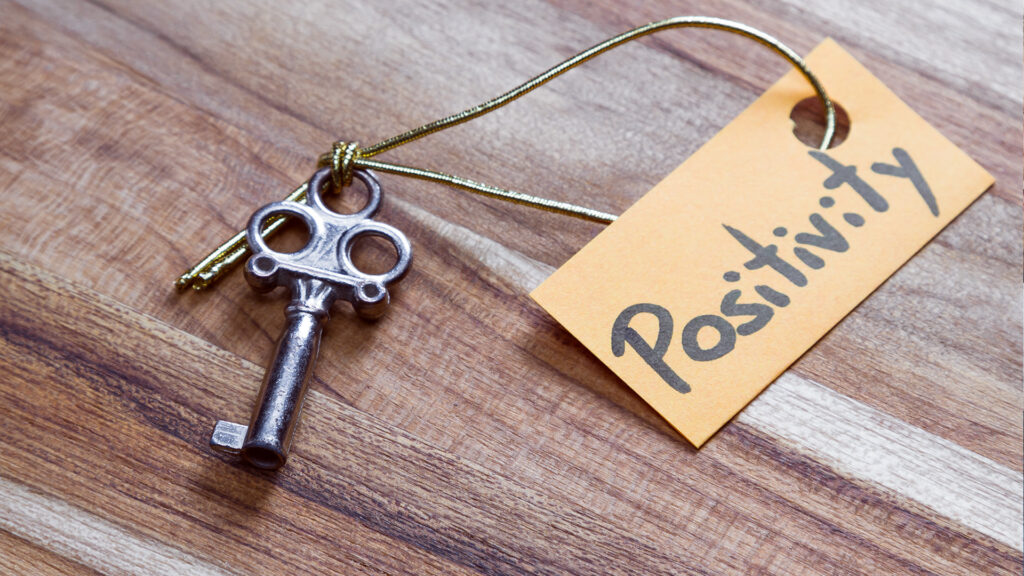
Why Positivity Is a Strategy, Not a Personality Trait
Here’s the uncomfortable part of the happiness research: most teams don’t fall apart because they lack talent or resources or a clear enough strategy. They fall apart because people stop giving each other the benefit of the doubt. And once that benefit of the doubt is gone, everything in the organization gets more expensive.
Feedback becomes political. Meetings become theater. The word “alignment” quietly becomes a synonym for avoidance. Progress slows down while busyness speeds up. People start making “just in case” decisions — hoarding information, assuming bad intent, armoring up against a threat that may not even exist — and in doing so, quietly create the very culture they were afraid of.
This is where positivity enters — not as a sentiment but as a structural choice. When your systems assume people are untrustworthy, you end up with more approval layers and less ownership. When your systems assume people can be trusted, you get faster decisions and cleaner accountability. Cynicism scales fast, but so does trust. The question worth sitting with is: which one are you actually scaling right now?
Positivity, in this context, is less about optimism as a personality trait and more about designing environments where cooperation is the rational default. That’s not soft. That’s leverage.
Jessica Weiss on Happiness as a System
One of the voices I’d put in front of any leadership team right now is happiness expert keynote speaker Jessica Weiss. Jessica doesn’t treat happiness like a perk. She treats it like operations.
What that means in practice: progress, support, healthy conflict, and the small design choices that make work feel doable instead of depleting. This is positivity without the toxic part — without the pressure to perform cheerfulness or pretend that hard things aren’t hard. Jessica’s approach is grounded in the idea that if you want people to actually thrive at work, you design for thriving. You don’t mandate it.
That distinction matters more than it might sound. Mandatory positivity is a morale killer. It signals to people that their real experience isn’t welcome. But positivity as a design principle — one where the structures, rhythms, and expectations of a workplace make it easier to bring your best — that’s something leaders can actually build toward.
Karen Allen on Interrupting Negative Loops
Positivity keynote speaker Karen Allen works in the space I’d describe as the moment-after-the-moment. The split second after something difficult happens — a hard conversation, a public failure, a tense exchange — where you either react from fear or respond with intention.
That moment is where culture is actually made. Not in the values statement. Not in the all-hands. In the split second when someone is under pressure and their response becomes the model everyone around them learns from.
Karen teaches leaders to interrupt negative loops and choose trust over control. To recognize when the instinct toward self-protection is actually making the culture more fragile, and to replace that instinct with something more intentional. What she offers isn’t a positivity workshop in the motivational-poster sense. It’s a practical toolkit for leading well when it’s genuinely hard.
✨ Watch the full interview with Karen Allen here
Shasta Nelson on Belonging as Protective Gear
Friendship expert keynote speaker Shasta Nelson says the quiet part out loud: stress is inevitable. Isolation is optional.
The research Shasta draws on is consistent and striking: connection buffers stress. Belonging changes health outcomes. Having one real friend at work can be the difference between resilience and slow burnout. And the organizations that treat belonging as a nice-to-have — a culture initiative, a team-building afternoon — are systematically underinvesting in the thing that determines whether people can sustain their performance over time.
Belonging, in other words, isn’t soft. It’s protective gear. And positivity in a workplace context isn’t really achievable without it. You can’t build a culture of trust and forward momentum if people feel fundamentally alone in the environment they spend most of their waking hours inside.
🤝 Watch the full interview with Shasta Nelson here
Other Voices Worth Putting on Your Stage
If you’re building a positivity and progress moment for your organization this year, a few other speakers pair beautifully with this theme and bring their own distinct angles.
Shawn Achor brings the neuroscience of happiness and performance — real research, no fluff — and makes it immediately applicable to how teams work.
Jon Gordon brings practical optimism and the kind of energy that raises a room without feeling manufactured or hollow.
Amber Selking, PhD works at the intersection of mental performance, identity, and leadership under pressure — which is where the positivity conversation gets genuinely interesting.
And Lucas Miller offers mindfulness that’s actually usable, especially for teams running at a pace that doesn’t naturally leave room for reflection.
Different rooms need different angles. But the common thread across all of these voices is the same: positivity works best when it’s supported by design. Not demanded. Not performed. Designed.
Rules for Being Human at Work in 2026
No commandments. Just patterns worth paying attention to.
The first is to expect decency — and then design for it. This isn’t naïveté; it’s a strategy. Cynical systems produce cynical behavior. When your organization signals distrust through its processes, people respond in kind. When you design for trust, you create the conditions where positivity is the rational choice, not the effortful one. This means auditing your actual systems, not just your stated values. Where do your processes assume the worst? Where do approval chains exist primarily because of a fear that once seemed justified but may no longer be? The organizations that take positivity seriously start here — with an honest look at what their systems are actually communicating.
The second is to choose progress over perfection. Perfection is a control strategy wearing a productivity mask. Progress is what builds capacity over time — in individuals, in teams, in culture. If someone is stuck, the answer isn’t “be more positive.” The answer is to make the next real step smaller and clearer and achievable. Progress-oriented cultures tend to be more resilient, more willing to learn from setbacks, and more capable of sustaining momentum over time than cultures organized around the avoidance of failure.
The third is to create at least one moment of genuine connection on purpose. Not networking. Not team-building activities with forced enthusiasm. A real moment. A conversation that isn’t performative. A friend at work. A check-in that isn’t actually a status update. The happiness research keeps arriving at the same place: connection isn’t a nice-to-have — it’s the infrastructure everything else runs on. One real relationship at work can shift a person’s entire experience of the environment they’re in. That’s not a small thing.
The fourth is to make kindness operational. Kindness isn’t just character; it’s behavior. And behavior can be designed for. If you want a culture of positivity, you don’t demand it — you build clearer expectations, fewer unnecessary time-sucks, easier collaboration pathways, recognition that doesn’t feel cringey, and conflict resolution processes that don’t punish honesty. Operationalized kindness also means removing the structural sources of friction that erode goodwill over time. That slow grind of unnecessary bureaucracy, of unclear ownership, of meetings that could have been an email — it costs more than people usually account for.
The fifth is to stop confusing optimism with denial. Optimism isn’t pretending everything is fine. Optimism is believing that effort matters — that we’re not permanently stuck, that we can try again, that the story of this team or this organization isn’t finished yet. That’s a fundamentally different thing than toxic positivity, and it’s worth being precise about the distinction. When positivity becomes mandatory and uncritical, it stops functioning as a cultural asset and starts functioning as a kind of dishonesty. Real optimism can hold the hard truths and still choose to move forward. That’s the version worth building toward.
The Trust Gap Is Costing More Than You Think
When I step back from all of this — the happiness research, the speakers doing this work, the patterns I keep seeing in organizational culture conversations — what strikes me is how consistently we underestimate the cost of low trust.
We treat positivity as a morale issue. A culture initiative. Something you address with an off-site or a survey. But the World Happiness Report data, and the work of every speaker I’ve mentioned here, point to something more fundamental. The trust gap isn’t a feelings problem. It’s a performance problem. It shows up in slower decisions, worse collaboration, higher turnover, and the quiet drain of people giving about 70% of what they’re actually capable of.
Positivity, built on real trust and genuine belonging, closes that gap. It’s not a mood. It’s a multiplier.
The question worth asking right now: what does your workplace actually expect from people? Not what it says in the values statement — what do the systems, the norms, the unspoken rules actually signal? Because people read those signals accurately, and they respond to what the environment actually rewards.
Think about it this way: every process you have, every approval chain, every meeting cadence, every norm around how feedback is delivered — all of it communicates something. It either communicates “we trust you to do good work and handle hard conversations” or it communicates “we assume you need to be managed carefully.” And people internalize those signals faster than any value statement can override them.
When an organization chooses positivity as a structural value rather than an aesthetic one, it creates a cascade of effects. Decision-making speeds up because people aren’t waiting for permission. Feedback actually lands because the relationship infrastructure can hold it. Innovation becomes more likely because the cost of a wrong move doesn’t feel existential. None of these outcomes happened because someone ran a positivity workshop. They happen because the environment itself stopped working against the people inside it.
This is what the speakers in this newsletter are collectively doing — each from a different angle, each with a different emphasis, but all pointing toward the same fundamental shift. Jessica builds the operational case for happiness. Karen works on the moment-level behavior that either reinforces or interrupts negative patterns. Shasta makes the case for belonging as something concrete and achievable rather than aspirational and vague. Shawn, Jon, Amber, and Lucas each add depth to specific dimensions of the same challenge.
The through-line is this: sustainable positivity in a workplace isn’t a campaign. It’s a set of conditions that leaders either create deliberately or fail to create by default.
Build the conditions where hope is rational. That’s the work.
What’s one “rule for being human” you wish your workplace would take seriously this year? One sentence is enough — I’ll read every reply, and with permission, I may share a few in a future note. The best culture advice isn’t a quote; it’s what people are actually living.
Delivering impact (and trust),
Seth
Ready to bring one of these voices to your next event? You can pick a time here to talk through the right fit for your audience. 📅
For more clips and full conversations, our YouTube channel has everything — and if this gave you something to think about, subscribe to the newsletter for more ideas on positivity, leadership, and building cultures that actually work. ✉️
Discover More Insights






Get in TouchContact US
Fill out the form so we can best understand your needs.
A representative from The Keynote Curators will reach out to you.
Our Services
Keynote Speakers Topics
© 2026 The Keynote Curators. All Rights Reserved | Terms and Conditions
The Keynote Curators, 8275 South Eastern Avenue, Suite 200, Las Vegas, NV 89123
Local (310) 299-4595 | Toll Free (888) 585-8715 | info@thekeynotecurators.com
The Keynote Curators - Top Keynote Agency, USA.