
Book Ray Kurzweil through The Keynote Curators
Biography
Ray Kurzweil has been described as “the restless genius” by The Wall Street Journal, and “the ultimate thinking machine” by Forbes. Inc. magazine ranked him #8 among entrepreneurs in the United States, calling him the “rightful heir to Thomas Edison,” and PBS selected Ray as one of 16 “revolutionaries who made America,” along with other inventors of the past two centuries. He is considered one of the world’s leading inventors, thinkers, and futurists, with a 30-year track record of accurate predictions.
Kurzweil was the principal inventor of the first CCD flatbed scanner, the first omni-font optical character recognition, the first print-to-speech reading machine for the blind, the first text-to-speech synthesizer, the first music synthesizer capable of recreating the grand piano and other orchestral instruments, and the first commercially marketed large-vocabulary speech recognition.
Ray Kurzweil and Stevie Wonder, with a Kurzweil Music synthesizer.
Kurzweil is the recipient of the $500,000 MIT-Lemelson Prize, the world’s largest for innovation. In 1999, he received the National Medal of Technology, the nation’s highest honor in technology, from President Clinton in a White House ceremony. And in 2002, he was inducted into the National Inventors Hall of Fame, established by the U.S. Patent Office.
He has received 20 honorary doctorates, and honors from three U.S. presidents. Kurzweil has authored seven books, five of which have been national bestsellers. The Age of Spiritual Machines has been translated into 9 languages and was the #1 bestselling book on Amazon in science.
Ray Kurzweil’s book, The Singularity Is Near, was a New York Times bestseller, and has been the #1 book on Amazon in both science and philosophy. His latest New York Times bestseller is How to Create a Mind: The Secret of Human Thought Revealed.
His website, KurzweilAI.net, tracks daily breakthroughs in science and technology and has over three million new readers annually.
In 2012, Ray Kurzweil was appointed a Director of Engineering at Google, heading up a team developing machine intelligence and natural language understanding.
Contact us for Ray Kurzweil fees and availability
Videos
Speech TopicsExpand each topic to learn more
At the onset of the 21st century, it will be an era in which the very nature of what it means to be human will be both enriched and challenged, as our species breaks the shackles of its genetic legacy, and achieves inconceivable heights of intelligence, material progress, and longevity. The paradigm shift rate is now doubling every decade, so the twenty-first century will see 20,000 years of progress at today’s rate. Computation, communication, biological technologies (for example, DNA sequencing), brain scanning, knowledge of the human brain, and human knowledge in general are all accelerating at an even faster pace, generally doubling price-performance, capacity, and bandwidth every year. Three-dimensional molecular computing will provide the hardware for human-level "strong" AI well before 2030. The more important software insights will be gained in part from the reverse-engineering of the human brain, a process well under way. While the social and philosophical ramifications of these changes will be profound, and the threats they pose considerable, we will ultimately merge with our machines, live indefinitely, and be a billion times more intelligent...all within the next three to four decades.
We are now at a pivotal time in health technologies. With the collection of the genome in 2003 and the advent of techniques such as RNA interference that can actually turn off the genes that promote disease and aging, medicine has transformed itself into an information technology. As such, medicine is now subject to the “law of accelerating returns,” meaning that these technologies will be a thousand times more powerful than today in ten years, and a million times more powerful in 20 years. Up until recently, health interventions were hit or miss. We'd find something that seemed to work with only crude models of how they worked. Drug development was called "drug discovery," basically finding things that worked rather than designing them. Today it is within our grasp to slow the aging process and take full advantage of advances in bio- and nanotechnology that have already begun and will be occurring at an accelerating pace in the years ahead. Ultimately, we will merge with our machines, vastly extending human health and longevity, and greatly increasing our intelligence.
The democratization of innovation is a turbulent process with rapid creation, violent destruction, many winners and many losers. Despite the apparent chaos, we can discern predictable patterns. The pace of innovation itself is doubling every decade. The overall price-performance and capacity of every form of information technology grows exponentially, generally doubling in a year or less. As information technology achieves each new level of price-performance and capacity, new applications become feasible and existing business models lose their viability. Another implication is that the tools of disruptive change have been democratized. A couple of students created Google on their thousand dollar laptops. A few years later, a couple of undergraduates created Facebook with tools that everyone has. The rate of change is now so rapid that even three to five year business plans need to consider that every level of an industry will undergo major changes during that period. It’s not just the devices we carry around that are influenced by these exponential changes. Health and medicine is now an information technology with the collection of the human genome, the means of changing genes in a mature individual, and the ability to design interventions on computers and to test them on biological simulators. Even energy will be transformed as we apply nanotechnology to the design of solar panels and energy storage devices. The means to change the world are in everyone’s hands.
At the onset of the 21st century, it will be an era in which the very nature of what it means to be human will be both enriched and challenged, as our species breaks the shackles of its genetic legacy, and achieves inconceivable heights of intelligence, material progress, and longevity. The paradigm shift rate is now doubling every decade, so the twenty-first century will see 20,000 years of progress at today’s rate. Computation, communication, biological technologies (for example, DNA sequencing), brain scanning, knowledge of the human brain, and human knowledge in general are all accelerating at an even faster pace, generally doubling price-performance, capacity, and bandwidth every year. Three-dimensional molecular computing will provide the hardware for human-level "strong" AI well before 2030. The more important software insights will be gained in part from the reverse-engineering of the human brain, a process well under way. While the social and philosophical ramifications of these changes will be profound, and the threats they pose considerable, celebrated futurist Ray Kurzweil presents an inspiring vision of our ultimate destiny in which we will merge with our machines, can live forever, and are a billion times more intelligent...all within the next three to four decades.
Booksby Ray Kurzweil
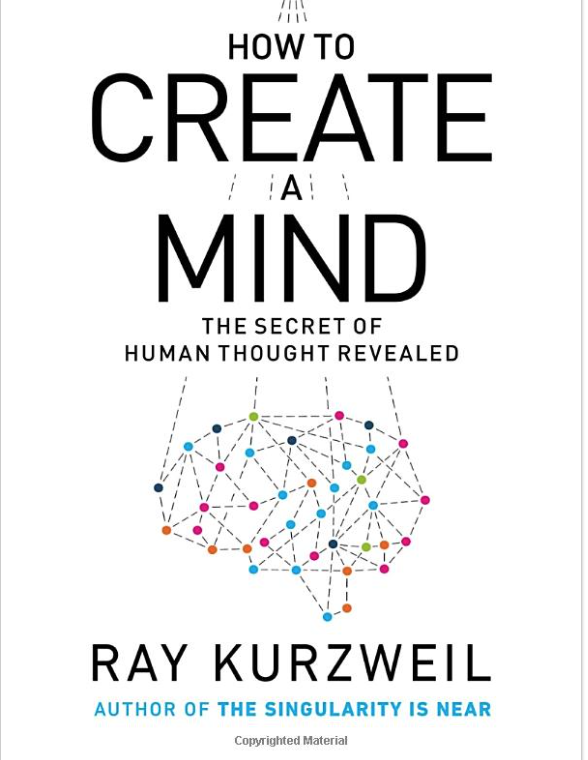
How to Create a Mind: The Secret of Human Thought Revealed
The Social Singularity
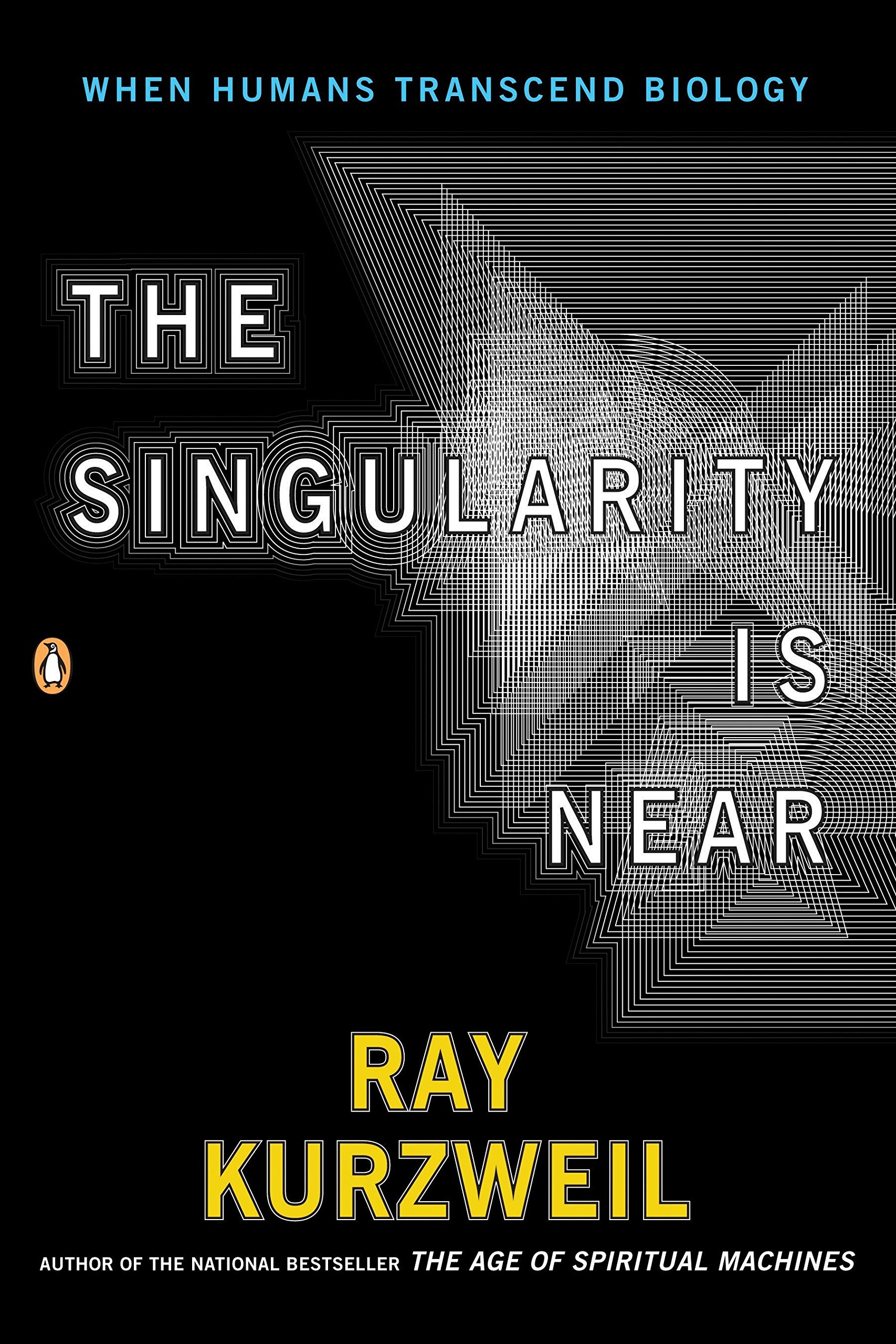
The Singularity Is Near
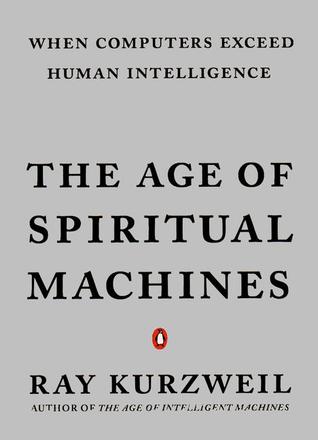
The Age of Spiritual Machines
For Meeting Planners


Get in TouchContact US
Fill out the form so we can best understand your needs.
A representative from The Keynote Curators will reach out to you.
Blog Posts

Self-Talk Only Works Under Pressure If It’s Rooted in Reality
Self-talk only works if you have lived it. Dr. Jannell MacAulay explains why credible self-talk beats generic positivity under pressure.
Read More
Team Culture Beats Raw Talent Every Time, with David Burkus
Team culture always beat raw talent. David Burkus explains the trust loop, real listening, and why a toxic high performer hurts every team.
Read More
Disability at Work Is Easy When Access Is Built In From the Start
Disability inclusion works best when access is built in, not requested. Explore how design, not exceptions, makes work ordinary for everyone.
Read More
Culture vs. Leadership: Which One Is Actually Driving Your Team?
Is company culture really the problem, or is it leadership? Chris Dyer says most culture issues start at the top.
Read More
Your Career Path Doesn’t Have to Be a Straight Line
Melissa Proctor's career went up, sideways, and back again. See how her jungle gym path shaped the way she leads.
Read More
How to Master AI to Deliver High-Value Results with Sam Richter
Learn how to master AI and deliver high-value results. Sam Richter explains where AI ends and human judgment begins.
Read More
Leading Through Uncertainty Starts With One Forward Step at a Time
Leading through uncertainty does not require the whole path. A story of loss, a marker, and the next step that keeps leaders moving.
Read More
Leadership Lessons From a Futurist on Hope and Resilient Teams
Leadership feels heavier right now. Almost every leader I talk with says some version of the same thing. The pace is faster, the news is louder, and the people they lead are tired. Many of...
Read More