
Book Alan November through The Keynote Curators
Biography
Alan November is recognized internationally as a leader in education technology. He began his career as an oceanography teacher and dorm counselor at an island reform school for boys in Boston Harbor. He has been a director of an alternative high school, computer coordinator, technology consultant, and university lecturer. As practitioner, designer, and author, Alan has guided schools, government organizations and industry leaders as they plan to improve quality with technology.
Alan is well known for applying his humor and wit to inspire us to think about applying technology to improve learning. His areas of expertise include information and communication technology, planning across the curriculum, staff development, long-range planning, building learning communities and leadership development. He has delivered keynote presentations and workshops in all fifty states, in every province in Canada, and throughout the UK, Europe and Asia .
Alan was named one of the nation’s fifteen most influential thinkers of the decade by Classroom Computer Learning Magazine. In 2001, he was named one of eight educators to provide leadership into the future by the Eisenhower National Clearinghouse. His writing includes dozens of articles and the bestselling book, Empowering Students with Technology. Alan was co-founder of the Stanford Institute for Educational Leadership Through Technology and is most proud of being selected as one of the original five national Christa McAuliffe Educators.
Contact us for Alan November fees and availability
Videos
Speech TopicsExpand each topic to learn more
Too many students are not sure how to separate fact from fiction on the Internet. The Internet can provide any version of the truth to support almost any belief. We can teach students how to read the “grammar” of the Internet and apply strategies to validate information on a website. This popular workshop provides step-by-step teaching tips that help students and teachers think critically about Internet information.
A powerful new culture of empowered teaching and fearless learning is emerging. Access to more timely information and communication tools can empower educators to focus on the individual learning needs of their students. These same tools can lead to more collegiality, build stronger community relationships and empower students to be more self-directed. This workshop presents clear examples of how this new culture has been achieved.
School design can have a significant impact on the culture of learning in your school. New models of school design are emerging that support a wide range of learning styles and take full advantage of global communications. Access to powerful technologies can free designers to build smaller, more intimate schools. Alan examines school models from around the US and UK to illustrate powerful new ways of creating learning spaces.
We now have tools to build and strengthen our learning communities. We have the opportunity to provide our students with authentic assessment relationships over the Web that can help dramatically improve student motivation. We can take advantage of the communication tools the Internet provides, such as blogs, IM, Skype, video conference or email. Research suggests many students are more willing to ask for help and accept criticism when they are online.
In an economy where global outsourcing is commonplace, students must be prepared to participate in an increasingly competitive job market. In many ways they are in competition with bright, energetic, hardworking students from all over the world. In this workshop Alan discusses some of the ways we can empower our students, help them build a strong work ethic and develop self-directed learning skills. We should not underestimate what our students are capable of achieving.
From Alan’s work as an educator on an island reform school to directing and alternative high school, much of his experience has focused on motivating at-risk students. Online communication can be a powerful tool for engaging students to be active learners. For example, students who never raise their hand in class can become eager to participate online. Many at-risk students are also more willing to accept criticism from an anonymous reviewer over the Internet. This workshop presents some creative ideas for using technological tools to help improve student motivation and focus on learning.
This workshop outlines essential skills for leadership and offers practical guidelines and creative solutions for building accountability into the planning process. Articulating vision and mission, managing change and aligning technology to primary goals are emphasized. A shift in planning from technology to the quality and application of information and communication is a critical next step.
This workshop targets the challenges beginning teachers and teacher educators often face. It explores critical skills teachers should know, such as information literacy. Practical ideas of moving curriculum and assessment to the Web are reviewed, along with suggestions on how to link students to primary sources, create authentic assessments and strengthen community support.
Data driven Web-based technologies can be a powerful tool to help manage and support standards. Technology can provide online-assessment, links to content-specific resources and activities, simulations, real time reporting to families, extensive portfolios of student work and much more. This workshop is designed to show how technologies can be aligned to support standards and how we can move beyond the standards.
Writing is an essential skill and a key to academic success. Technology can be harnessed to provide student writers with inspiration, boundless resource and an authentic audience. Students can publish their work or peer edit with anyone around the world. They can share ideas and projects in a global forum. Tapping into authentic audience can improve writing skills and motivation to write. This workshop is filled with hands on suggestions, websites and exercieses to get your students excited about writing.
This popular workshop provides a provocative and humorous look at ways to use technology to improve learning. Alan challenges participants to examine basic assumptions about how to move beyond flushing curriculum faster, to creating visions that provide students and communities with survival skills for a global economy. This workshop leads to a shift in thinking from technology to a focus on the quality of information and communication technology can offer.
Learning from primary resources can be far more meaningful than reading a textbook. Technology provides a mountain of primary resources, be it documents, museums or scientists at NASA. Learn how to effectively use these primary resources in your classroom and establish links to the outside community. Empower your students to become active participants in their learning and engaged researchers.
Testimonials
Booksby Alan November
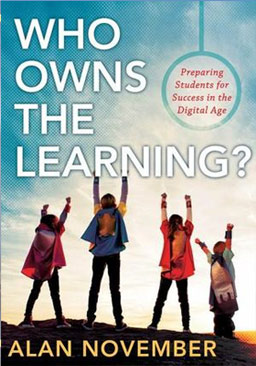
Who Owns The Learning?


Get in TouchContact US
Fill out the form so we can best understand your needs.
A representative from The Keynote Curators will reach out to you.
Blog Posts

Breast Cancer Awareness Needs More Than Pink Ribbons and Good Intentions
Breast cancer awareness doesn't end in October. Here is what real workplace support and easier access can look like all year.
Read More
How to Create Event Experiences People Will Always Remember
What makes an event memorable? Dr. Robyne Hanley-Dafoe explains why full presence beats polls, phones, and gadgets in any live room.
Read More
Leadership Succession Planning Is the Advantage No One Is Building
Leadership succession planning is the biggest competitive advantage most companies ignore. Here's why the gap matters and how to close it.
Read More
Workplace Culture Lessons on Trust and Safety with Danny Goldberg
Danny Goldberg explains how leaders can close the gap between the workplace culture they intend and the one employees actually feel.
Read More
Real Productivity Is About Deciding What Not to Finish Before Year-End
Real year-end productivity means finishing fewer things well rather than everything done. Here is how to choose what deserves your time before December 31.
Read More
What is Psychological Flexibility and Why Leaders Need It Before a Crisis Hits
Psychological flexibility keeps leaders steady in a crisis. Dr. Jannell MacAulay shares what the cockpit teaches about calm under pressure.
Read More
Workplace Communication Patterns That Are Costing You More Than You Think
Melina Palmer explains how poor communication quietly creates friction that costs businesses trust, sales, and loyalty.
Read More
Customer Service Strategies That Actually Work in the Real World
Brad Cleveland breaks down why good customer service is hard work in disguise, and what it takes to get it right in the AI era.
Read More