
Book Robert Waldinger through The Keynote Curators
Biography
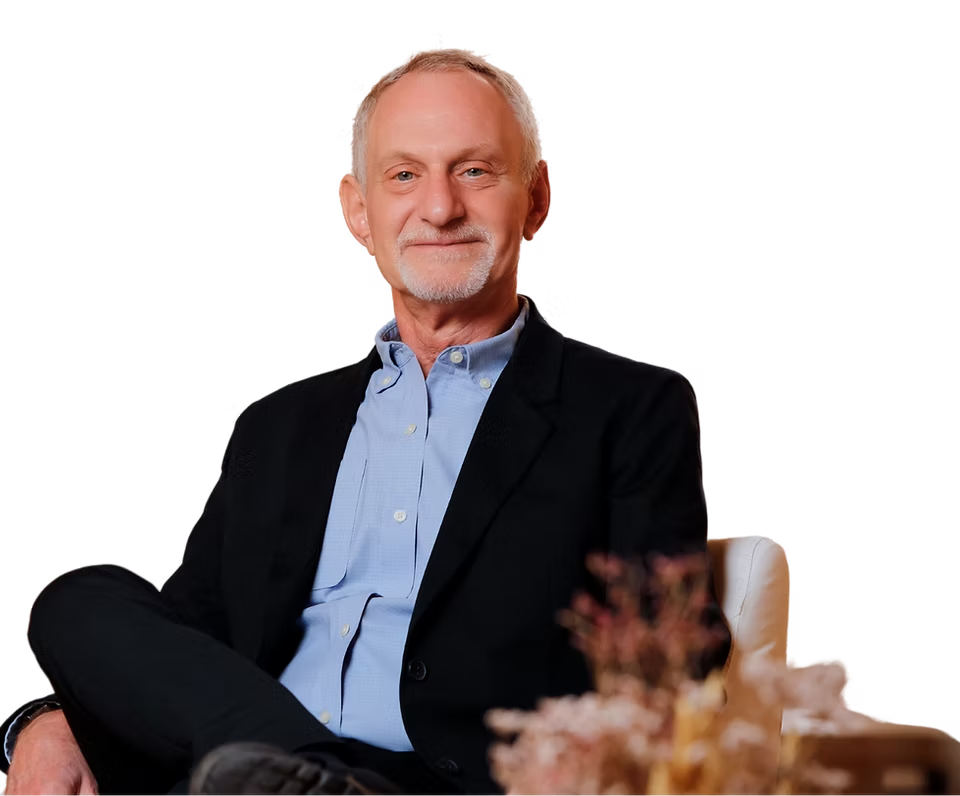
Robert Waldinger is a psychiatrist, psychoanalyst, and Zen priest. He is Clinical Professor of Psychiatry at Harvard Medical School and directs the Harvard Study of Adult Development, one of the longest-running studies of adult life ever done. The Study tracked the lives of two groups of men for over 78 years and now follows their Baby Boomer children to understand how childhood experience reaches across decades to affect health and well-being in middle age. He writes about what science can teach us about healthy human development.
Dr. Waldinger is the author of numerous scientific papers as well as two books, and he directs a teaching program in psychotherapy at Massachusetts General Hospital in Boston. He has won awards for teaching and research from the American Psychiatric Association, Harvard Medical School, and Massachusetts Psychiatric Society, and he is consistently named as one of the Best Doctors in America. He is also a transmitted teacher in Boundless Way Zen and teaches Zen throughout New England.
His TED talk on lessons from the longest study of happiness has had over 13 million views and is the fastest spreading talk in the history of TEDx events.
Contact us for Robert Waldinger fees and availability
Videos
Speech TopicsExpand each topic to learn more
What keeps us happy and healthy as we go through life? If you think it’s fame and money, you’re not alone—but, according to a long-running life study, you’re also mistaken. As the director of an 80-year-old study of adult development, Robert Waldinger has unprecedented access to data on what brings true happiness and satisfaction. In this talk, Waldinger shares three important lessons learned from the study as well as some practical, old-as-the-hills wisdom on how you can build a fulfilling, long life.
Would you rather be rich in things or experiences? Advertising, Facebook, and most media give the impression that material wealth is the key to a good life. On the other hand, wisdom traditions have long taught us that material wealth does not bring lasting joy. Science supports this wisdom, showing that material things make us less happy (and for shorter periods of time) than experiences, and personal connections bring more joy than physical objects. Taking findings from his lifespan research, the teachings of Zen, and examples from the media, Robert Waldinger shares the difference between what we expect to make us happy and what actually creates a sense of wellbeing.
Relationships are vital not only to our personal health and happiness — they’re also central to an organization’s success. Research has shown that productivity on a team and in larger organizations depends less on IQ and/or aggressiveness than on positive personal connections with others. The quality of these connections impacts loyalty, job satisfaction, collaboration, and innovation. Despite this, worker disengagement is running rampant, with loneliness in the workplace at an all-time high. So how do organizations cultivate a relationship-centric approach in order to empower a higher-functioning workforce? In this talk, Robert Waldinger shares research on how organizations can help or hinder people’s psychological and physical health and gives advice on how companies can create more healthy work environments.
How we deal with change has a profound effect on our work lives and personal contentment. Marriage and children, promotions and retirement, old habits and new behavior, vacation freedom and work pressure: We’re constantly facing transitions. Managing these life transitions well is central to our health, happiness, and productivity. In this talk, Robert Waldinger discusses how understanding the stages of adult life can play a critical role in dealing with the transitions all of us must face, how relationships are critical to dealing with these transitions, and how a game plan for transition is critical to happy, healthy and productive lives and organizations.
Booksby Robert Waldinger
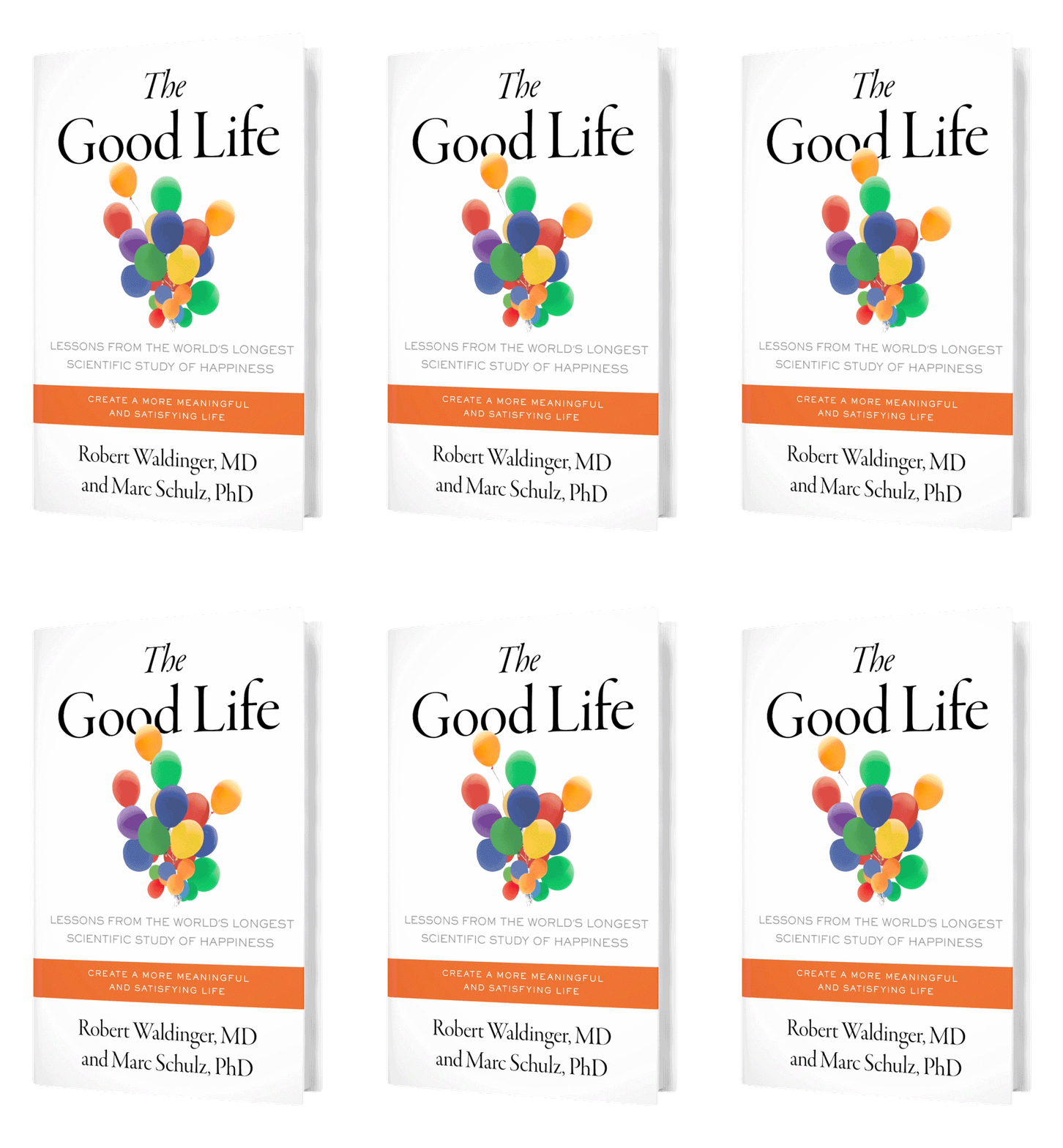
The Good Life

Fundamentals of Psychiatry
Psychiatry For Medical Students
For Meeting Planners



Get in TouchContact US
Fill out the form so we can best understand your needs.
A representative from The Keynote Curators will reach out to you.
Blog Posts

Disability at Work Is Easy When Access Is Built In From the Start
Disability inclusion works best when access is built in, not requested. Explore how design, not exceptions, makes work ordinary for everyone.
Read More
Culture vs. Leadership: Which One Is Actually Driving Your Team?
Is company culture really the problem, or is it leadership? Chris Dyer says most culture issues start at the top.
Read More
Your Career Path Doesn’t Have to Be a Straight Line
Melissa Proctor's career went up, sideways, and back again. See how her jungle gym path shaped the way she leads.
Read More
How to Master AI to Deliver High-Value Results with Sam Richter
Learn how to master AI and deliver high-value results. Sam Richter explains where AI ends and human judgment begins.
Read More
Leading Through Uncertainty Starts With One Forward Step at a Time
Leading through uncertainty does not require the whole path. A story of loss, a marker, and the next step that keeps leaders moving.
Read More
Leadership Lessons From a Futurist on Hope and Resilient Teams
Leadership feels heavier right now. Almost every leader I talk with says some version of the same thing. The pace is faster, the news is louder, and the people they lead are tired. Many of...
Read More
Why ‘Better Problems’ Are Better Than Perfect Plans
Learn why better problems beat perfect plans. Jason Feifer shares how to judge ideas by the problems you trade, not the ones you avoid.
Read More
Change Starts When You Embrace Your Emotions, with Cassandra Worthy
Change starts when you embrace your emotions. Cassandra Worthy shows how to read your feelings as signals and turn discomfort into forward movement.
Read More